
Choosing the right tuning fork requires a clear understanding of your primary goals, whether you are tuning an instrument for a collaborative musical performance or seeking a tool for personal wellness and sound therapy. The decision between 432Hz and 440Hz is not a matter of finding a universally superior frequency, but rather of matching the tool to your specific environment. While one serves as the global benchmark for modern musical collaboration, the other occupies a dedicated niche in alternative tuning and relaxation practices.
If your work involves playing alongside other musicians, teaching standard music curricula, or using digital backing tracks, the 440Hz tuning fork is the indispensable standard. This frequency ensures that your instruments align perfectly with the vast majority of modern musical equipment and ensembles worldwide. Selecting any other pitch in these settings will inevitably lead to noticeable dissonance and tuning conflicts.
Conversely, if your focus is solo meditation, sound therapy, or historical music performance, a 432Hz tuning fork offers a distinct acoustic profile that many practitioners find highly desirable. This frequency sits slightly lower than the modern standard, producing a warmer, rounder tone that integrates smoothly into personal wellness routines. By evaluating how and where you plan to use your tuning fork, you can confidently select the frequency that aligns with your practice.
Products mentioned in this guide
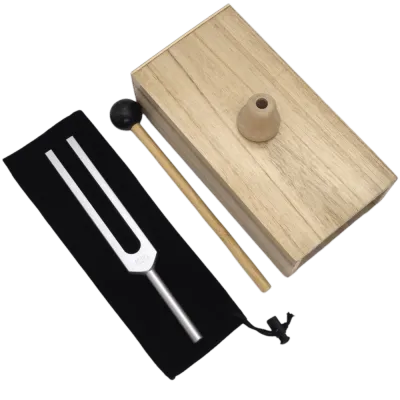
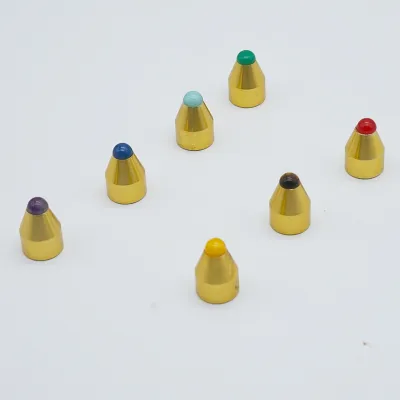
![[ooj mall]432 Hz Tuning Fork Sound Healing Instruments Sensory Therapy Instrument Set Clinical Grade Nerve/Sensory for Perfect Healing Musical Instrument Stress](https://img.lazcdn.com/g/p/a3b1170c031490e0f60612f91cab8029.jpg_400x400q80.jpg_.webp)
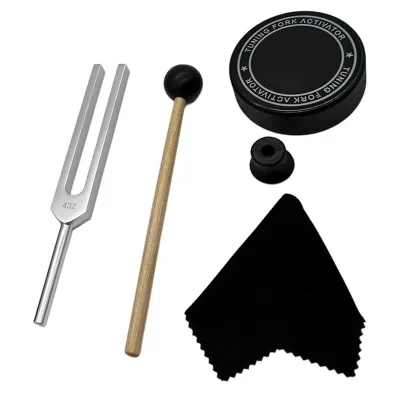
![[frthrthrt]432 Hz Tuning Fork Sensory Therapy Instrument Set Clinical Grade Nerve/Sensory for Perfect Healing Musical Instrument Stress](https://img.lazcdn.com/g/p/a5336d05799b8890985ee4427437231a.jpg_400x400q80.jpg_.webp)
Prices are valid at publication and may change. Please refer to the product page for the latest price.
Core Differences Between 432Hz and 440Hz Frequencies
To understand the practical differences between these two tuning forks, it is helpful to look at how frequency is measured and standardized. Frequency is measured in Hertz (Hz), which represents the number of vibrational cycles per second. A tuning fork calibrated to 440Hz vibrates exactly 440 times per second, producing the pitch known as A4 (the A note above middle C). This pitch serves as the universal reference point for tuning orchestral instruments, pianos, and digital synthesizers across the globe.
The 432Hz tuning fork, on the other hand, vibrates 432 times per second to produce the same A4 note, resulting in a pitch that is mathematically about eight vibrations per second slower. This difference represents a pitch interval of approximately 32 cents, which is just under a quarter-tone flatter than the modern standard. While this difference might seem subtle to an untrained ear, it is immediately noticeable when the two frequencies are played side by side or when trying to play along with standard recordings.
Historically, musical tuning was far from standardized, with different regions, orchestras, and eras utilizing a wide variety of reference pitches ranging from below 400Hz to well over 450Hz. The adoption of 440Hz as an international standard occurred in the mid-20th century to facilitate global instrument manufacturing, broadcasting, and collaborative performances. The 432Hz frequency remains a popular alternative tuning system, sometimes referred to as “Verdi tuning” or “philosophical pitch,” because of its historical associations and mathematical relationships to whole numbers.
Acoustically, the two frequencies produce distinct subjective listening experiences. Because 440Hz is slightly higher, it tends to sound brighter, more brilliant, and highly focused, which helps instruments project clearly in large concert halls. In contrast, 432Hz is often described by listeners as sounding warmer, softer, and more integrated, making it a popular choice for intimate settings where a less piercing tone is preferred. Ultimately, neither frequency possesses an inherent physical or aesthetic superiority over the other; the choice is entirely contextual.
When to Choose a 440Hz Tuning Fork
If your primary activity involves collaborating with other musicians, a 440Hz tuning fork is an absolute necessity. Modern instruments—including acoustic pianos, brass, woodwinds, and digital keyboards—are manufactured and calibrated to the 440Hz standard by default. Attempting to perform with an ensemble while tuned to 432Hz will create immediate, jarring dissonance, as your instrument will sound flat against the rest of the group.

This standard frequency is also essential for anyone engaged in formal music education, examinations, or classical training. Standardized curricula, instructional books, and digital tuning applications are built around the 440Hz reference pitch. Using a non-standard fork during lessons or practice sessions can confuse your pitch perception and make it difficult to develop a reliable sense of relative pitch that aligns with the broader musical community.
Furthermore, if you frequently play along with digital backing tracks, metronomes, or commercial recordings, you will need a 440Hz fork to keep your instrument in tune with the audio playback. Most recorded music produced over the last several decades is mastered at this standard pitch. Tuning your guitar, violin, or other stringed instrument to 432Hz while playing along with these tracks will result in a frustrating mismatch that cannot be easily resolved without retuning.
When to Choose a 432Hz Tuning Fork
The 432Hz tuning fork has found its primary modern home in the fields of sound healing, meditation, and holistic wellness. Practitioners in these disciplines often prefer the slightly lower pitch because they find its acoustic qualities more conducive to relaxation and introspective practices. If you are building a sound therapy toolkit, conducting guided meditation sessions, or practicing personal mindfulness, a 432Hz fork can serve as an excellent focal point for your sessions.
This frequency is also highly suitable for solo musicians who perform independently and wish to explore alternative tonal palettes. If you play solo acoustic guitar, handpans, native flutes, or singing bowls, tuning your instruments to 432Hz allows you to experience a warmer, more resonant acoustic response without worrying about clashing with other players. Many solo artists enjoy the unique character this tuning brings to their personal compositions and home recordings.
Before purchasing a 432Hz tuning fork for professional use, it is highly recommended to check the specific requirements of any wellness certification, training program, or educational curriculum you are following. Some sound therapy schools and professional organizations mandate specific frequencies or sets of forks for their standardized protocols. Verifying these guidelines beforehand ensures that your equipment complies with the training you receive.
Physical Specifications to Verify Before Purchase
Once you have decided on the appropriate frequency, you must evaluate the physical construction of the tuning fork to ensure it meets your operational needs. The first major design choice you will encounter is the distinction between weighted and unweighted tuning forks. Weighted forks feature small metal cylinders attached to the ends of the prongs, which alter the physical vibration of the metal. This design produces a stronger, longer-lasting physical vibration that can be felt through the stem, making weighted forks the preferred choice for placing directly on the body or joints during wellness sessions.
Unweighted tuning forks, by contrast, do not have these extra weights on the prongs. They are lighter, easier to strike, and produce a much clearer, louder audible tone that projects through the air. These forks are ideal for listening to the pitch directly near the ears, tuning acoustic instruments, or clearing the acoustic space of a room. Understanding how you intend to interact with the sound—whether through physical sensation or direct listening—will dictate which design is more appropriate for your practice.
The material and finish of the tuning fork are equally critical factors to inspect in the manufacturer’s specifications. Most modern tuning forks are crafted from either high-grade aluminum alloy or stainless steel. Aluminum forks are lightweight, highly resistant to corrosion, and tend to produce a longer sustain with a warmer tone, though they can be more sensitive to temperature changes. Steel forks are heavier, highly durable, and offer a very bright, clear ring, making them excellent for precise musical tuning.
Finally, you should verify the manufacturer’s stated accuracy tolerance, which is typically measured in cents or percentages of deviation. Professional-grade tuning forks often feature a tolerance of plus or minus 0.1% or better, ensuring that the frequency remains highly accurate under standard room temperatures. Checking the product label or technical specifications for this level of precision is essential if you require the fork for professional instrument calibration or certified therapeutic practices.
Decision Framework: Matching the Fork to Your Practice
To finalize your decision, consider the primary environment in which you will use the tool. If your work is collaborative, educational, or integrated with modern digital media, choose a 440Hz tuning fork. This option guarantees absolute compatibility with standard instruments, digital tuners, backing tracks, and formal musical ensembles, preventing any unwanted pitch conflicts during your performances or lessons.
If your focus is centered on solo musical exploration, personal meditation, or sound therapy, a 432Hz tuning fork is the more appropriate choice. This frequency allows you to explore a warmer acoustic profile and align your practice with alternative tuning systems favored in the wellness community. It provides a distinct, calming sonic signature that is ideal for solo environments where standard collaboration is not required.
Before making your final purchase, always verify the specific equipment requirements of any professional organization, ensemble, or certification program you are affiliated with. Some groups enforce strict standards that may require a specific frequency, material, or weighted design. Taking the time to confirm these details beforehand will ensure your tuning fork serves as a reliable, long-term asset to your musical or therapeutic practice.
Frequently Asked Questions (FAQ)
Can I use a 432Hz tuning fork to tune a standard guitar?
Yes, you can physically use a 432Hz tuning fork to tune a standard guitar, but doing so will lower the pitch of the entire instrument. When you tune the A string to 432Hz instead of the standard 440Hz, all other strings must be tuned down proportionally to maintain the correct intervals between them. This results in a guitar that is tuned slightly flat compared to standard concert pitch.
While this alternative tuning is perfectly fine for solo practice, songwriting, or recording, you should avoid it if you plan to play with other musicians who are tuned to the standard 440Hz. Your guitar will sound noticeably out of tune when played alongside standard instruments, pianos, or digital backing tracks. If you frequently switch between solo play and group sessions, keeping both a 432Hz and a 440Hz fork on hand is often the most practical solution.
How do I properly strike and hold a tuning fork?
To get the clearest sound and longest sustain from your tuning fork, you must hold it correctly by the stem or handle. Avoid touching the prongs (the two tines at the top), as any contact with them will immediately dampen the vibration and silence the tone. Hold the stem firmly but lightly between your thumb and index finger, allowing the prongs to vibrate freely without restriction.
When striking the fork, avoid hitting it against hard, unforgiving surfaces like metal, concrete, or bare wood, as this can nick the metal and permanently alter its frequency. Instead, strike the top third of one of the prongs against a firm but yielding surface, such as a rubber mallet, a specialized tuning fork activator, or even the soft side of your knee. This gentle impact will initiate a clean, clear vibration without damaging the instrument or creating harsh overtones.
Community discussion
Share your experience or ask a question. Comments are reviewed before publication.