
Starting your musical journey as an adult is an exciting venture, but choosing your first instrument can feel overwhelming. The market is filled with options ranging from compact, budget-friendly keyboards to full-sized digital pianos. The core decision comes down to a fundamental question: do you need an 88-key weighted digital piano, or is a 61-key keyboard enough to get you started?
For adult beginners aiming to learn classical piano, pass formal graded exams, or develop authentic acoustic-style playing habits, an 88-key weighted digital piano is highly recommended. However, if your goals are focused on casual pop songs, basic music theory, electronic music production, or if you have severe space and budget limitations, a 61-key keyboard can serve as a practical starting point. Understanding how key count, action, and hardware specifications align with your personal goals will help you make a smart, long-term investment.
Quick Diagnostic: Do You Need 88 Keys or Will 61 Suffice?
To make an immediate decision, evaluate your primary musical goals and commitment level. If you want to play traditional piano music, classical pieces, or sit for formal graded exams, you require an 88-key instrument with weighted keys. This setup replicates the physical resistance of an acoustic piano, which is essential for building finger strength and control.
Products mentioned in this guide
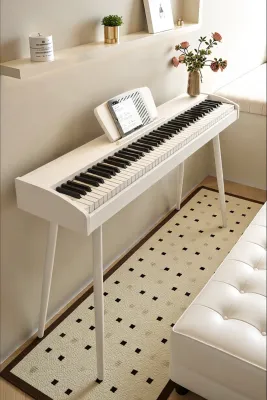
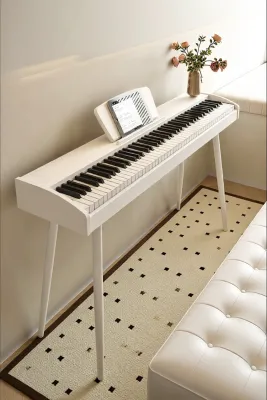
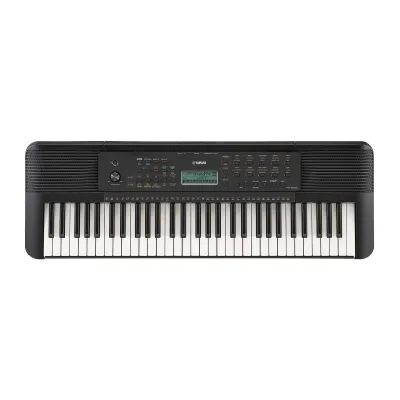
![Yamaha NP-15 Portable Keyboard Piano 61-Key Black/White Piaggero Digital Musical Instrument NP15 [LIMITED STOCK]](https://img.lazcdn.com/g/p/0ec95af5f3240a6cd4d0139cd77da0f4.jpg_400x400q80.jpg_.webp)
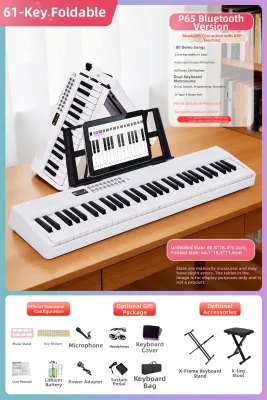
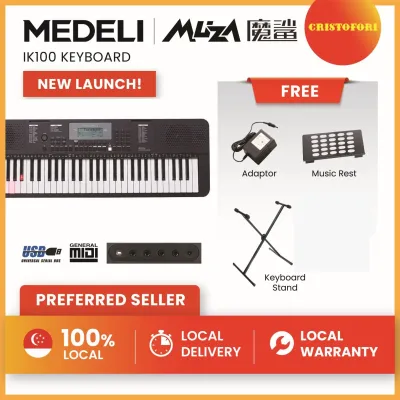
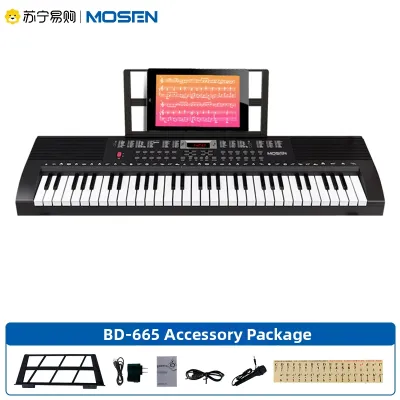
Prices are valid at publication and may change. Please refer to the product page for the latest price.
Conversely, if your goal is to learn basic chords, play modern pop melodies, produce electronic music, or simply test your interest without a major financial commitment, a 61-key keyboard is a practical starting point. It allows you to learn the fundamentals of music theory and hand coordination without the high upfront cost or physical bulk of a full-sized digital piano. Avoid paying for hundreds of built-in digital sounds, complex rhythm accompaniments, or advanced recording features if your primary goal is simply learning how to play.
Evaluating Key Count: Repertoire, Range, and Space Constraints
The number of keys on your instrument directly dictates what music you can physically play. A standard acoustic piano has 88 keys, spanning over seven octaves. Classical repertoire, from early intermediate pieces to advanced sonatas, frequently utilizes the extreme high and low registers of the instrument. If you attempt these pieces on a shorter keyboard, you will quickly run out of keys.

For beginners using standard method books, a 61-key keyboard (which covers five octaves) is usually sufficient for the first few months of practice. Most entry-level arrangements and basic chord exercises stay within this middle range. However, as you progress to two-handed classical pieces or complex arrangements, you will encounter octave range limits that require shifting the keyboard’s octave settings or omitting notes entirely.
Beyond musical genres, physical space is a major deciding factor, especially in compact apartments or HDB flats in Singapore. An 88-key digital piano typically measures around 1.3 meters in length and can weigh anywhere from 11 to over 25 kilograms, requiring a dedicated, permanent spot. A 61-key keyboard is significantly more compact, lightweight, and easy to store in a closet or under a bed when not in use, making it highly portable for those with limited floor space.
Understanding Key Action: Why Weighted Keys Matter for Technique
The mechanism beneath the keys is just as important as the total key count. Non-weighted or “synth-action” keys use simple plastic springs, offering almost no resistance. Semi-weighted keys add a small amount of spring tension or light weights to provide a slightly firmer feel, but they still do not mimic the physical behavior of a real piano.
Fully weighted keys, often called hammer-action keys, use actual mechanical hammers or levers inside the chassis to replicate the weight and resistance of an acoustic piano’s wooden keys. This resistance is crucial for developing finger independence, joint stability, and the muscle memory needed to control dynamics. Without weighted keys, it is incredibly difficult to practice playing softly (pianissimo) or loudly (fortissimo) with nuance, as the keys respond too easily to the slightest touch.
If you plan to transition to an acoustic piano in the future, practicing on non-weighted keys can create poor habits. Beginners who train on unweighted keyboards often struggle with weak finger joints and find acoustic piano keys heavy and exhausting to play. Investing in a fully weighted action from the start ensures your physical technique transfers seamlessly to any traditional piano.
Decision Matrix: Matching Your Learning Profile to the Right Setup
To choose the right instrument, identify which learning profile matches your current situation. The casual hobbyist profile prioritizes low initial cost, easy storage, and basic functionality. If you are unsure whether you will stick with the instrument, starting with a budget-friendly 61-key keyboard allows you to explore the hobby. Look for models that focus on a decent acoustic piano sound engine rather than hundreds of synthetic sound effects.
The serious student profile is for those committed to long-term learning, classical training, or taking formal music lessons. For this path, an 88-key digital piano with graded hammer action—where the lower keys feel heavier than the higher keys—is the standard requirement. This setup provides the necessary touch response to develop advanced expressive skills and ensures you will not need to upgrade your instrument within a year or two.
When allocating your budget, focus on the quality of the key action and the primary piano sound. A basic 61-key keyboard might cost under S$200, whereas a reliable 88-key weighted digital piano typically starts around S$600 to S$1,000. Many entry-level keyboards advertise thousands of instrument voices, auto-accompaniment rhythms, and flashing light-up keys. While these features can be entertaining, they often come at the expense of key action quality. Prioritize a solid stand, a sustain pedal, and realistic key resistance over digital novelties that do not contribute to your core playing technique.
Hardware Checklist: What to Verify Before You Buy
Before finalizing your purchase, verify several critical hardware specifications to ensure the instrument supports your learning journey. First, check the polyphony limit, which is the maximum number of individual notes the piano can sound simultaneously. For beginners, a minimum of 64-note polyphony is recommended, though 128-note or higher is ideal. Low polyphony can cause sustained notes to cut off abruptly when you use the damper pedal or play complex chords.
Next, evaluate the connectivity options on the rear panel. Ensure the instrument has a dedicated headphone jack (either 3.5mm or 6.35mm) for silent practice, which is essential for maintaining good neighborly relations in shared living spaces. Look for a USB-to-Host port or MIDI connectivity, which allows you to connect the instrument to a computer, tablet, or smartphone to use interactive learning apps and music notation software.
Finally, factor the cost of essential accessories into your overall budget. A flimsy X-stand can cause the keyboard to wobble during play, so look for a sturdy double-braced X-stand or a dedicated wooden furniture stand. You will also need an adjustable bench to maintain proper posture and a high-quality damper (sustain) pedal that mimics the physical feel of an acoustic pedal, rather than a cheap plastic foot switch.
Frequently Asked Questions (FAQ)
Can I start on a 61-key keyboard and upgrade to an 88-key piano later?
Yes, starting on a 61-key keyboard is a common way to test your interest. However, be prepared for a transition period when you upgrade. The physical weight of 88 weighted keys will feel significantly heavier, and your fingers may tire quickly at first. You will also need to adjust to the wider physical span of the instrument and learn how to coordinate your pedaling with the heavier key action.
Do I need built-in speakers, or can I rely entirely on headphones?
While you can practice entirely using headphones, having built-in speakers is highly beneficial. Playing without headphones allows you to experience how sound naturally disperses in a room, which helps you develop a better sense of acoustic dynamics. It also makes it easier to share your progress with family or teachers without needing to set up external amplification systems.
Community discussion
Share your experience or ask a question. Comments are reviewed before publication.