
Starting a home-based Tai Chi practice is an excellent way to improve balance, flexibility, and mental clarity. However, without an instructor present to correct your posture, choosing the right instructional book is critical. The ideal Tai Chi exercise book for a complete beginner must act as a silent coach, offering clear visual guides, structured progressions, and safety-focused instructions that prevent common training errors.
To build a safe and rewarding practice from home, you need to know exactly what features to look for when browsing online marketplaces or local bookstores. This guide breaks down the essential criteria, formatting choices, and content structures that make a Tai Chi book highly effective for self-directed beginners.
Key Criteria for Choosing a Beginner Tai Chi Book
When selecting a Tai Chi book for home practice, the first element to evaluate is the progression of the curriculum. A beginner-friendly book should never rush into complex, multi-step routines. Instead, it must dedicate its opening chapters to foundational stances, such as the horse stance (Ma Bu) and the bow stance (Gong Bu). The text should clearly explain the mechanics of weight-shifting, which is the core of all Tai Chi movement, helping you understand how to transition your weight smoothly from one leg to another without losing your center of gravity.
Products mentioned in this guide
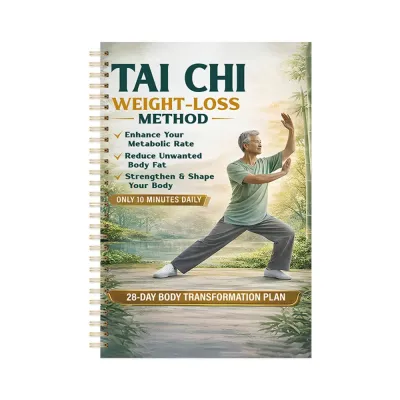
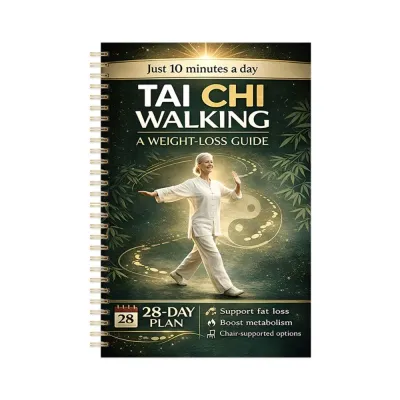
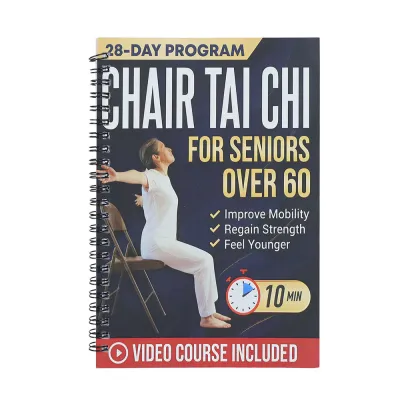
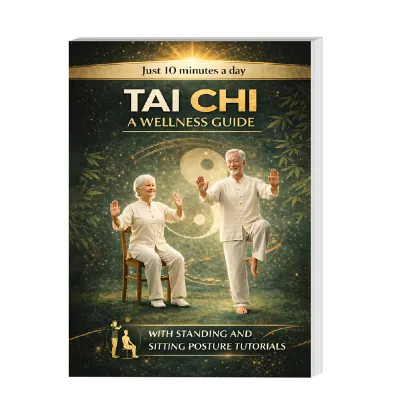
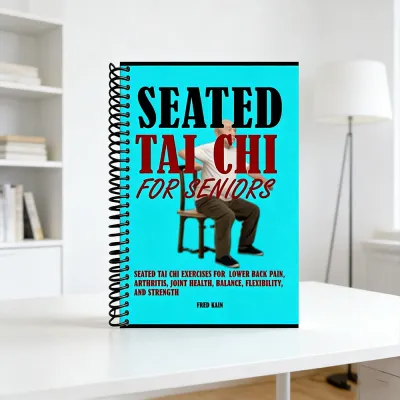
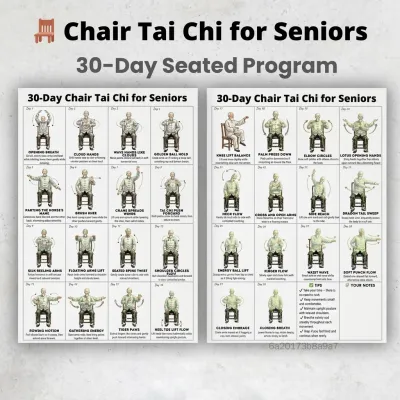
Prices are valid at publication and may change. Please refer to the product page for the latest price.
Safety and joint alignment must be central themes throughout the book. Because Tai Chi involves slow, deep knee bends and continuous pivoting, improper form can place unnecessary strain on your joints. Look for books that emphasize keeping the knees aligned with the toes and relaxing the hips (the Kua). The breathing instructions should be simple and natural, focusing on diaphragmatic breathing rather than complex, advanced breath-holding techniques that can elevate blood pressure.
An author’s credentials and teaching methodology will heavily influence how the material is presented. Authors with traditional martial arts lineages often provide deep insights into the historical context and internal energy mechanics of the forms. Conversely, authors with backgrounds in physical therapy, kinesiology, or modern sports science tend to offer highly accessible, health-focused adaptations. Both approaches are valuable, but absolute beginners usually benefit most from books that blend traditional forms with modern, easy-to-understand anatomical cues.
Essential Chapters and Content for Safe Home Practice
Before purchasing any instructional book, check the table of contents to ensure it includes a comprehensive warm-up routine. Tai Chi requires relaxed muscles and open joints to facilitate smooth movement. A high-quality guide will feature a dedicated section on joint mobility exercises, specifically targeting the neck, shoulders, spine, hips, knees, and ankles. These preparatory movements help lubricate the joints and prevent muscle strain during your practice.

The core of the book should focus on a simplified, short sequence rather than a long, complex form. For home practice, books that teach the 8-form or the standardized 24-form (Simplified Yang Style) are highly recommended. The book should break down each posture into distinct, manageable phases. This includes showing the footwork first, followed by the hand positions, and finally demonstrating how to coordinate the two movements into a single, fluid transition.
Self-correction is one of the greatest challenges of learning Tai Chi without a live instructor. To address this, look for books that feature dedicated troubleshooting guides or “common mistake” sidebars. These sections should highlight typical beginner errors, such as leaning too far forward, tensing the shoulders, or collapsing the chest. By providing clear physical cues and checklists, the book empowers you to evaluate and correct your own posture during practice.
Assessing Visual Aids and Book Formats for Movement Learning
Translating continuous, three-dimensional physical movement into a static, two-dimensional book format requires exceptional visual design. High-contrast, multi-angle photographs are far more effective for beginners than artistic illustrations. The best books feature sequential photos showing the transition between postures, accompanied by directional arrows that indicate the path of the hands and feet. Look for diagrams that include footprint maps, which visually represent where your weight should be distributed at each stage of the movement.
Modern instructional books often bridge the gap between print and digital media by incorporating QR codes or web links. These codes allow you to scan a page with your smartphone to instantly watch a video demonstration of the specific movement you are reading about. This hybrid approach is incredibly valuable for beginners, as it allows you to observe the continuous flow, tempo, and rhythm of the form, which is nearly impossible to capture fully on a printed page.
Finally, consider the physical layout and binding of the book. Since you will be standing and practicing while trying to read, a standard paperback that constantly snaps shut is highly impractical. Look for books with lay-flat binding, such as spiral or comb binding, which can sit open on a table or floor. Large, clear print and high-contrast headings are also essential, as they allow you to read the instructions from a distance of several feet while you are in the middle of a stance.
Building Your Starter Library: A Goal-Based Selection Framework
To help you narrow down your options when browsing online marketplaces, it is helpful to categorize books based on your primary fitness and wellness goals. Investing S$20 to S$40 in a well-targeted book ensures you receive instructions tailored to your specific physical needs.
Health and Relaxation Focus
If your main goal is stress reduction, mindfulness, and gentle exercise, prioritize books that integrate Tai Chi with Qigong. These guides focus less on the martial applications of the movements and more on deep breathing, energy cultivation, and slow, meditative sequences. Look for texts that feature simple, repetitive movements like the Shibashi (18 movements) which are easy to memorize and highly effective for relaxation.
Martial Arts Foundation
If you are interested in the martial roots and internal mechanics of the art, seek out books that detail structural alignment, rooting, and the application of force. These texts should introduce basic push-hands (Tui Shou) concepts and explain the self-defense applications behind each posture. Understanding the practical purpose of a movement can often help you execute the form with greater precision and intent.
Senior or Limited Mobility Readers
For individuals with balance concerns, joint pain, or limited mobility, specialized guides offer modified variations of traditional forms. Prioritize books that detail seated Tai Chi routines or suggest using a chair or wall for stability during standing exercises. These modifications allow you to enjoy the cognitive and circulatory benefits of the practice while minimizing the risk of falls.
Verification Checklist
Before finalizing your purchase, run through this quick verification checklist to ensure the book matches your needs:
- Author Background: Does the author have verifiable teaching experience or professional certifications in movement therapy?
- Publication Date: Is the book a modern edition that includes clear photography and digital video links?
- Reader Reviews: Do reviews from other beginners confirm that the step-by-step instructions are easy to follow without prior knowledge?
- Style Focus: Does the book focus on a beginner-friendly style, such as the Yang style, which features slow, even movements?
Common Pitfalls to Avoid When Buying Tai Chi Literature
One of the most common mistakes beginners make is purchasing books that are overly philosophical or historical. While understanding the Taoist philosophy and historical origins of Tai Chi is enriching, these texts often lack the practical, step-by-step exercise breakdowns required to establish a physical practice. Ensure the book you choose is primarily an instructional manual rather than a theoretical treatise.
Be cautious of advanced manuals that are marketed as beginner-friendly. Some books claim to be suitable for all levels but quickly dive into highly complex concepts, such as explosive power release (Fa Jin) or intricate Chen style silk-reeling movements. These advanced techniques require a deep understanding of body mechanics and can easily lead to joint strain or injury if attempted without proper foundational training.
Lastly, avoid books that rely on dense, text-heavy descriptions without adequate visual support. Reading a long paragraph describing a complex, multi-directional hand transition is incredibly difficult to translate into physical action. If a book does not feature clear, sequential photographs or diagrams on almost every page, it is likely to cause frustration and hinder your progress.
Frequently Asked Questions (FAQ)
Can I learn Tai Chi effectively just by reading a book?
You can establish a solid foundation and learn basic sequences using a book, but you must be proactive about self-correction. Because you do not have an instructor to physically adjust your posture, practicing in front of a full-length mirror or recording your practice sessions on a smartphone is highly recommended. By comparing your recorded movements to the book’s illustrations or companion videos, you can identify and correct alignment errors, such as leaning forward or locking your knees.
Which Tai Chi style is easiest to learn from a book?
The Yang style is widely considered the most accessible style for beginners learning from literature. Its movements are characterized by large, gentle, and evenly paced gestures, which are much easier to illustrate and follow on a printed page. Other styles, such as Chen style, involve rapid changes in tempo and explosive movements that are difficult to capture in static images, while Wu style features subtle forward leans that require precise, hands-on instruction to execute safely.
Community discussion
Share your experience or ask a question. Comments are reviewed before publication.