
Starting your drumming journey in Singapore is an exciting step, but choosing the right electronic drum kit requires balancing your musical goals with the realities of local living spaces. Unlike acoustic drums, which are far too loud for high-density residential estates, an electronic drum kit offers a practical, volume-controlled alternative that fits neatly into a bedroom or study. To find the ideal setup, you must evaluate key factors such as pad materials, module features, physical footprint, and noise-mitigation options. By focusing on these core elements, you can select an instrument that supports your skill development while keeping peace with your family and neighbors.
Identifying Your Space, Budget, and Learning Goals
Living in a high-density apartment, such as a Housing & Development Board (HDB) flat or a condominium, means physical space is always at a premium. Before purchasing any electronic drum kit, it is vital to measure your designated practice area. A standard entry-level kit typically requires a floor footprint of about 1.2 meters by 1.2 meters once fully assembled and configured for comfortable playing. If you have limited space, look specifically for kits designed with collapsible or foldable frames that allow you to pack the rack away into a closet or corner when not in use. Keep in mind, however, that frequently folding and unfolding a kit can wear down plastic joints and loosen cable connections over time, so a semi-permanent dedicated space is always preferable if possible.
Setting a realistic budget is the next crucial step in your decision-making process. In Singapore, entry-level electronic drum kits generally span from around S$400 to S$1,200. Kits at the lower end of this spectrum, under S$600, often compromise on build quality, utilizing basic rubber pads instead of mesh, and offering simpler sound modules with limited connectivity. As you move toward the S$800 to S$1,200 range, you will find more robust rack systems, dual-zone mesh pads that allow for realistic rim shots, and modules with superior sound sampling and coaching tools. Investing slightly more upfront can significantly improve the longevity of the instrument and keep you motivated as your playing skills advance.
Products mentioned in this guide
![Donner DED-70 Complete Set 7 Pieces Beginner Electronic Drums Foldable DED 70 Series [PREORDER]](https://img.lazcdn.com/g/p/855629ea0fba78ae6b998d76130c6571.png_400x400q80.png_.webp)
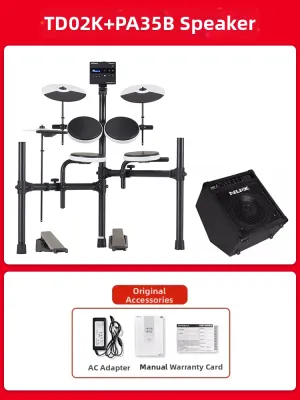
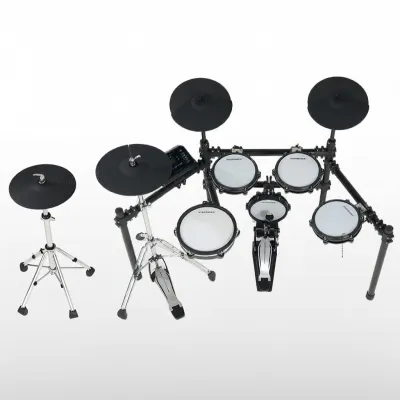
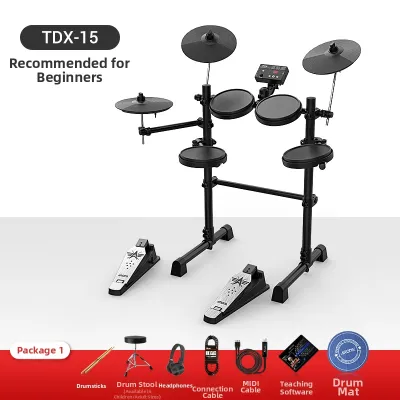

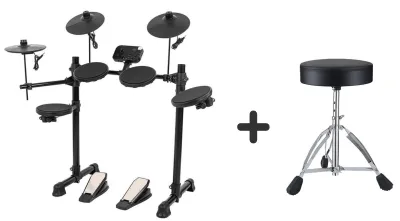

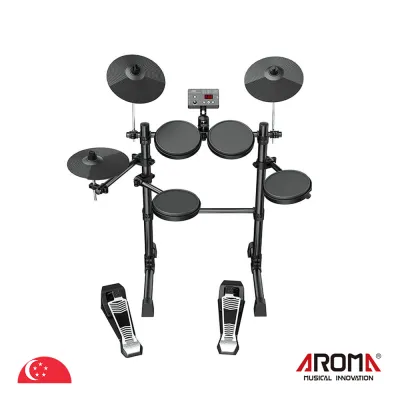
Prices are valid at publication and may change. Please refer to the product page for the latest price.
Your primary learning goals should also dictate which features you prioritize. If your main objective is quiet daily practice to build coordination, a basic kit with a reliable metronome and headphone output will suffice. However, if you plan to record your progress digitally or play along with backing tracks, you will need a module with robust USB/MIDI connectivity and auxiliary inputs. For those who eventually aim to transition to an acoustic drum kit for live performances or band rehearsals, prioritizing a realistic physical layout—including a physical kick pedal tower and a responsive hi-hat controller—is essential to build the correct muscle memory and foot technique.
Essential Features to Look for in Entry-Level Kits
The material of the drum pads is one of the most critical factors influencing both the playing experience and the volume of your practice sessions. Mesh heads are widely considered the gold standard for electronic drums because they closely mimic the tension and natural stick rebound of an acoustic drumhead. They also operate much more quietly than rubber pads, which produce a distinct, high-pitched click sound upon impact that can easily penetrate thin walls. Many modern entry-level kits feature mesh heads on the snare drum while using rubber pads for the toms to keep costs down. If your budget allows, opting for an all-mesh kit will provide a more consistent feel across the entire setup and significantly reduce ambient noise.

The sound module, often referred to as the “brain” of the electronic drum kit, is responsible for translating your physical strikes into digital audio. For a beginner, the complexity of the module is less important than the presence of essential practice utilities. Look for a module that includes a highly adjustable metronome with various time signatures, built-in coaching functions that grade your timing accuracy, and an auxiliary input or Bluetooth audio connectivity so you can play along with songs from your smartphone. Additionally, ensure the module has a USB-to-Host port, which allows you to connect the kit directly to a computer to trigger high-quality virtual instrument software or record MIDI data into a digital audio workstation.
Hardware stability is another area where entry-level kits can vary dramatically. A flimsy rack system will sway and slide across the floor as you play, which is incredibly frustrating and can disrupt your physical posture. Examine the rack joints; metal clamps and thick plastic connectors are highly preferable to thin, brittle plastic components. Furthermore, pay close attention to the kick drum configuration. Some budget kits use a simple, floating beaterless pedal that lacks physical resistance, while others include a dedicated kick pad tower designed to be struck by a standard acoustic bass drum pedal. A physical kick tower is highly recommended for beginners, as it teaches proper foot control and pedal technique that translates directly to acoustic kits. Similarly, look for a continuous hi-hat controller pedal that can smoothly transition from open to closed sounds, rather than a basic switch pedal that only offers binary on/off control.
Navigating Retail Channels and Testing Before You Buy
While online shopping offers undeniable convenience, purchasing a musical instrument is a highly tactile decision that benefits greatly from hands-on testing. Visiting specialized local music showrooms in Singapore allows you to sit at different kits, feel the rebound of various pad materials, and listen to the onboard sounds through high-quality headphones. This physical interaction is invaluable for assessing whether a kit’s physical dimensions suit your height and playing posture. Local showrooms also employ knowledgeable staff who can demonstrate module features and help you compare different models side-by-side based on your specific musical preferences.
Buying from an authorized local distributor or established music retailer also ensures that your investment is protected by a valid local warranty. Electronic drum modules are complex digital devices, and having access to local after-sales support, repair services, and replacement parts is a major advantage if a component fails. Additionally, authorized local stock is guaranteed to include the correct Type G power adapter suitable for Singapore’s electrical outlets, eliminating the need for potentially unsafe third-party travel adapters. Always verify the warranty terms before finalizing your purchase, ensuring it covers both the electronic module and the physical trigger pads, which are subject to constant physical impact.
Conversely, purchasing from unverified third-party sellers on general e-commerce platforms carries significant risks. These listings may feature parallel-imported goods that lack local warranty coverage, meaning you would have to ship a defective module overseas at your own expense for repairs. Be on the lookout for red flags such as missing manufacturer seals, vague product descriptions that do not specify the exact model number, and unclear return policies. If a deal seems too good to be true, it may involve older, discontinued stock with outdated sensor technology, or a kit that lacks essential accessories like the power supply, drum key, or mounting hardware. Stick to authorized channels to guarantee product authenticity and reliable customer support.
Managing Noise and Setting Up in an Apartment
One of the most common misconceptions about electronic drum kits is that they are completely silent. While headphones prevent the airborne sound of drum beats from filling the room, the physical action of striking the pads and stomping on the pedals creates significant structural vibration. This low-frequency impact noise travels easily through concrete floors and walls, manifesting as a dull, rhythmic thumping sound in the apartment directly below or adjacent to yours. Understanding this distinction between airborne noise and structural impact noise is crucial for maintaining good relations with your neighbors in Singapore’s high-density residential estates.
To mitigate structural vibration, you must isolate the drum kit from the floor. Placing a thick, high-density rubber drum mat or a specialized noise-absorbing carpet beneath the entire rack is an excellent starting point. For more substantial noise reduction, many apartment-dwelling drummers construct a DIY platform made of wooden boards and vibration-absorbing foam or tennis balls, which effectively decouples the kit from the building’s structure. Additionally, you can invest in specialized noise-eating pedal boards or vibration-isolation feet designed specifically for drum racks and pedal towers. Opting for mesh heads and low-volume, rubber-coated cymbal pads also helps minimize the sharp, high-frequency airborne clicks of your drumsticks.
Once noise-mitigation measures are in place, focus on the ergonomic layout of your kit to ensure comfortable, injury-free practice. Position your drum throne so that your thighs are slightly angled downward, with your knees bent at an angle slightly greater than 90 degrees. Arrange the snare, toms, and cymbals within easy reach so you do not have to stretch or twist your torso excessively while playing. Finally, pay close attention to cable routing. Use the included hook-and-loop fasteners or cable ties to secure the trigger cables neatly along the rack tubes. This not only prevents tripping hazards in tight apartment spaces but also protects the delicate cable jacks from being accidentally yanked out or damaged during energetic practice sessions.
Frequently Asked Questions (FAQ)
Do I need a dedicated amplifier for my electronic drum kit?
You do not strictly need a dedicated amplifier to practice on an electronic drum kit, as almost all modules feature a standard 3.5mm or 6.35mm headphone jack. Practicing with a good pair of studio monitor headphones is highly recommended for beginners, as it provides clear, detailed stereo sound while keeping your sessions completely silent to the outside world. However, if you want to play aloud for family members or jam with friends, you will need an external sound source. A dedicated drum amplifier is ideal because it is specifically designed to handle the wide dynamic range and deep low-end frequencies of a bass drum. Standard home stereo speakers or guitar amplifiers can easily distort or suffer permanent damage if pushed to reproduce these heavy transient signals.
Will practicing on an electronic kit translate to acoustic drums?
Yes, the fundamental skills of rhythm, coordination, hand-to-foot independence, and timing translate exceptionally well from an electronic kit to an acoustic drum kit. However, there are physical differences that you must adapt to when transitioning. Acoustic drums feature larger physical targets, and the rebound of a real drumhead or bronze cymbal feels different than a mesh pad or rubber cymbal trigger. Techniques like rimshots, cross-sticks, and subtle cymbal choking require more precise physical execution on an acoustic kit. To make the transition smoother, practice on an electronic kit that features a realistic physical layout, adjustable mesh head tension, and a physical kick pedal tower that allows you to develop authentic foot technique.
How do I know when the drum pads or mesh heads need replacing?
Electronic drum pads and mesh heads are highly durable, but they are subject to wear and tear over time. You will know a mesh head needs replacing when you observe physical signs of damage, such as fraying fibers, deep indentations, or a complete loss of tension that cannot be corrected by tightening the tension rods with a drum key. For rubber pads, look for cracking, peeling, or areas where the rubber has worn thin and no longer registers strikes consistently. If you notice that certain pads are dropping notes, triggering intermittently, or double-triggering even after adjusting the module’s sensitivity settings, it is likely that the internal piezo sensors or foam triggers have degraded and require professional servicing or replacement.

Community discussion
Share your experience or ask a question. Comments are reviewed before publication.