
Choosing the right guitar pick is one of the simplest yet most impactful decisions you can make when starting your musical journey. The thickness and shape of your pick dictate how easily you can strum chords, how much control you have over individual strings, and the overall tone your instrument produces. By matching these physical characteristics to your current skill level and playing goals, you can prevent hand fatigue and accelerate your learning progress.
While many beginners overlook this tiny piece of plastic, it serves as the primary connection between your hand and the guitar. A well-chosen pick acts as an extension of your fingers, allowing you to focus on learning chords and rhythm patterns without constantly fighting against string resistance. Finding the right fit is a highly personal process, but understanding the basic mechanics of pick design will help you make an informed choice from the start.
Why Pick Thickness and Shape Matter
Every time you strike a guitar string, the pick absorbs and transfers energy. The physical dimensions of the pick determine how much of that energy goes into the string and how much causes the pick itself to bend. This interaction directly influences the volume, clarity, and warmth of your music.
Products mentioned in this guide






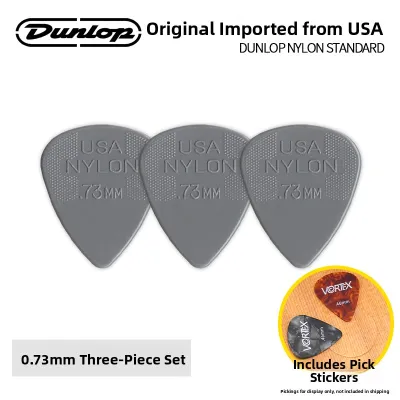
Prices are valid at publication and may change. Please refer to the product page for the latest price.
Beginners often struggle with pick control because they use a pick that does not match their current wrist flexibility. If a pick is too rigid for your strumming style, it can catch on the strings, causing the pick to spin in your fingers or fly out of your hand entirely. This friction frequently leads to an overly tight grip, which causes hand fatigue and tension in your forearm.
Flexibility also dictates your attack speed and volume. A flexible pick glides effortlessly over the strings, producing a soft, blended sound that is highly forgiving for rhythm playing. Conversely, a stiffer pick offers immediate response and higher volume, but it requires precise wrist movement to avoid a harsh, clunky sound. Finding the right balance is essential for developing proper technique.
Understanding Guitar Pick Thickness
Guitar pick thickness is generally categorized into thin, medium, and thick. While manufacturers use these broad labels, the actual feel can vary significantly between brands. It is always wise to check the product packaging or manufacturer specifications for the exact measurements, which are typically listed in millimeters.

Choosing a thickness involves a direct trade-off between strumming forgiveness and single-note precision. Flexible picks are highly forgiving when you are learning the basic back-and-forth motion of strumming. Rigid picks, on the other hand, do not bend when they hit a string, providing the stability needed to target and pluck individual notes accurately.
As you explore different thicknesses, remember that your choice is not permanent. Many guitarists switch between different thicknesses depending on whether they are playing acoustic rhythm parts or electric guitar solos. Starting with an understanding of each category will help you identify which feel matches your current practice routine.
Thin Picks
Thin picks are highly flexible and bend easily under light pressure. When you strum with a thin pick, it produces a bright, snappy, and percussive tone. This characteristic sound comes from the physical click of the plastic flexing against the strings, which adds a pleasant texture to acoustic strumming.
For beginners, the primary benefit of a thin pick is its forgiving nature. If your wrist is still stiff and your strumming motion is somewhat rigid, a thin pick will bend to accommodate your movement rather than catching on the strings. This flexibility helps you maintain a steady rhythm without feeling like you are fighting the instrument.
However, thin picks have notable limitations. They offer very little control for fast, individual note picking because the pick takes a split second to snap back into shape after hitting a string. Additionally, they tend to wear out or crack much faster than thicker alternatives, especially when used on heavy acoustic strings.
Medium Picks
Medium picks represent the middle ground of the guitar world, offering a balanced compromise between flexibility and rigidity. They provide enough give to allow for smooth, comfortable strumming, while retaining enough stiffness to deliver a clear, defined note when you pluck a single string.
This versatility makes medium picks highly suitable for players who alternate between basic rhythm strumming and simple melodic lines. You can transition from strumming an open-chord progression to playing a basic scale without needing to swap your pick. The physical feedback is balanced, giving you a clear sense of where the string is without jarring your hand.
Because of this balanced performance, medium picks are the most common starting point recommended by guitar instructors. Using a medium pick helps you establish a neutral baseline. From there, you can easily determine if you prefer a softer feel for lighter strumming or a stiffer feel for more precise control.
Thick Picks
Thick picks are rigid and offer virtually no flex when pressed between your fingers. This stiffness ensures that all the energy from your hand is transferred directly into the string, resulting in a warm, full-bodied tone with strong low-end frequencies and maximum volume.
These picks are preferred for single-note picking, lead playing, and navigating heavier string gauges. Because the pick does not bend, the response is instantaneous, allowing for highly articulate and fast playing. If you are practicing scales, guitar solos, or heavy riffs, a thick pick provides the precise control you need.
For beginners, the main challenge of a thick pick is its lack of forgiveness. If your wrist technique is not yet refined, a thick pick can easily catch on the strings during aggressive strumming, which often leads to a choppy sound and hand tension. It is usually best to approach thick picks gradually as your wrist relaxation improves.
Understanding Guitar Pick Shapes
The shape of a guitar pick influences two main factors: how the tip interacts with the strings and how securely the body sits between your fingers. Even a minor variation in shape can alter the tone and physical comfort of your playing.
The geometry of the pick tip is crucial for defining your attack. A rounded tip glides smoothly over the strings, producing a warmer, softer sound with less definition. A sharp, pointed tip releases the string quickly, creating a bright, aggressive attack with clear note separation.
The body shape determines the overall surface area available for your grip. A larger body gives your thumb and index finger more room to hold the pick securely, while a smaller body requires precise finger placement but allows for faster, more subtle movements. Before purchasing, it is helpful to visually inspect the tip and body shape under good lighting to ensure the edges are smooth and uniform.
Standard and Teardrop Shapes
The standard shape, often referred to as the classic heart-like profile, is the most widely available pick shape on the market. It features a wide, comfortable grip area that tapers down to a moderately rounded tip. The teardrop shape is similar but slightly narrower, offering a slightly more streamlined profile.
These shapes are the default choice for a reason: they offer a highly balanced feel that accommodates almost any playing style. Whether you are strumming an acoustic guitar in your living room or practicing basic chords on an electric guitar, standard and teardrop picks provide a reliable, familiar grip.
Because the tip of a standard pick is slightly rounded, it is highly forgiving for beginners. It glides across the strings smoothly, reducing the likelihood of the pick catching or twisting in your fingers. This makes it an excellent option for developing a consistent, relaxed strumming technique.
Jazz and Pointed Shapes
Jazz-style picks are smaller than standard picks and typically feature a sharp, pointed tip. They are designed specifically for precision, speed, and articulate single-note playing, making them a favorite among lead guitarists.
The pointed tip of these picks creates a bright, immediate attack. Because the body is smaller, your fingers sit closer to the tip, which can improve your accuracy and physical connection to the strings. This design minimizes wasted movement, allowing for highly efficient alternate picking.
For most beginners, however, jazz and pointed shapes can be difficult to use initially. The small surface area offers very little room for error, and if your grip slips even slightly, you may lose control of the pick. Consider these specialized shapes only if your practice is heavily focused on lead guitar techniques or intricate, single-note exercises.
Matching the Pick to Your Playing Style
To choose the right pick, you must align its physical traits with the specific techniques you plan to practice. A simple decision framework can help you narrow down your options based on your primary musical goals.
If your daily practice consists mostly of rhythm strumming on an acoustic guitar, a thin to light-medium standard pick is highly suitable. The flexibility will help you achieve a smooth, blended sound while keeping your wrist relaxed. If you are focusing on electric guitar riffs, power chords, and simple solos, a medium to thick standard pick will provide the necessary control and punch.
It is also important to consider how your pick interacts with your guitar’s string gauge. Light strings, common on electric guitars, require very little force to move and pair well with medium picks. Heavy strings, typical on acoustic guitars, require more physical force; using an excessively thin pick on heavy strings can feel inefficient, as the pick will bend completely before the string even moves.
Finally, think about the musical genres you enjoy. Folk, indie, and acoustic pop often favor the bright, breezy strumming sound of thinner picks. Rock, blues, metal, and jazz benefit from the warmth, volume, and precise note definition that only a thicker, more rigid pick can provide.
How to Test and Evaluate Your First Picks
The best way to find your ideal pick is to establish a simple, consistent testing routine. Sit down with your guitar in a quiet room where you can hear the subtle differences in tone and feel how your hand responds to each option.
Start by playing a basic progression of open chords. Focus on steady downstrokes and upstrokes, keeping your wrist as relaxed as possible. Pay attention to how easily the pick glides across the strings and whether it feels secure in your grip. Next, play a simple scale or a series of single notes, listening closely to the clarity and volume of each note.
Watch out for physical warning signs during your test. If your hand begins to cramp, or if you find yourself squeezing the pick tightly to keep it from rotating, the pick may be too thick, too small, or too smooth for your current grip. If the pick makes a loud flapping sound and you struggle to produce a clear, strong tone, it is likely too thin.
Because picks are inexpensive, the most practical approach is to purchase an assorted variety pack containing different thicknesses, shapes, and materials. This allows you to systematically compare them side-by-side in a single practice session. Over time, your preferences will naturally evolve as your hand strength and wrist technique improve.
Frequently Asked Questions (FAQ)
Does the material of the guitar pick matter for beginners?
Yes, the material of a guitar pick significantly affects its grip, tone, and overall flexibility. Common materials like celluloid, nylon, and polyacetal have distinct physical properties. Nylon is highly flexible and often features molded, textured grips, making it an excellent choice for beginners whose hands tend to sweat during practice. Celluloid offers a traditional, smooth feel with a bright attack, but it can become slippery if your grip relaxes. Always check the product specifications for material details, as visual appearance alone cannot confirm how a pick will feel under your fingers.
How often should a beginner replace their guitar picks?
Guitar picks are consumable items that wear down gradually with use. You should inspect your picks regularly for visual and tactile signs of wear, such as a rounded-off tip, rough or frayed edges, or deep grooves where the pick contacts the strings. A worn pick can catch on the strings, produce a dull tone, and hinder your technique development. To ensure you always have a fresh, reliable pick available, it is a good habit to keep several spares in your guitar case or accessory pouch.
Can I use the same pick for both acoustic and electric guitars?
While you can physically use any pick on any guitar, the differences in string tension and gauge usually mean you will prefer different picks for each instrument. Acoustic guitars typically feature heavier strings and are used primarily for strumming, which pairs beautifully with the flexibility of a thin or medium pick. Electric guitars have lighter, highly flexible strings that respond well to the precision and immediate attack of a medium or thick pick. Experimenting with different combinations on each instrument will help you find the most comfortable and responsive setup for your hands.
Community discussion
Share your experience or ask a question. Comments are reviewed before publication.