
Starting your musical journey with a 61-key keyboard is one of the most practical decisions a beginner in Singapore can make. This instrument size strikes an ideal balance between functionality, affordability, and space efficiency. While an 88-key digital piano is the standard for classical training, its large footprint and higher cost can be daunting for someone just testing the waters. A 61-key model offers five full octaves, which is more than enough to learn basic music theory, practice two-handed coordination, and play a vast library of popular songs. However, navigating the crowded market of keyboard brands requires a clear understanding of what features actually support your learning journey and which ones are merely marketing distractions.
Is a 61-Key Keyboard the Right Starting Point?
A 61-key keyboard typically measures around 90 to 95 centimeters in width and weighs less than 5 kilograms. In Singapore, where residential space in HDB flats and condominiums is highly optimized, finding room for a full-sized 88-key piano can be a challenge. A 61-key keyboard fits easily on a standard study desk, can be tucked under a bed when not in use, or set up on a folding X-stand in a corner. This high level of portability also means you can easily transport the instrument to music lessons, school performances, or community jam sessions without needing a large vehicle.
Five octaves (61 keys) cover the standard range needed for the vast majority of pop songs, rock anthems, electronic music, and basic jazz arrangements. Most modern music production and songwriting are done within this range. For beginners, early-stage method books focus heavily on the middle registers of the keyboard, meaning you will rarely find yourself running out of keys during your first year or two of practice. It is an excellent sandbox for mastering scales, chords, and simple melodies.
Products mentioned in this guide
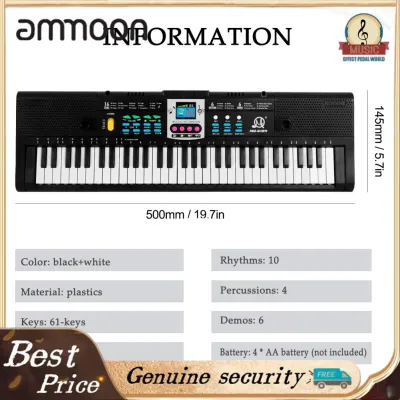
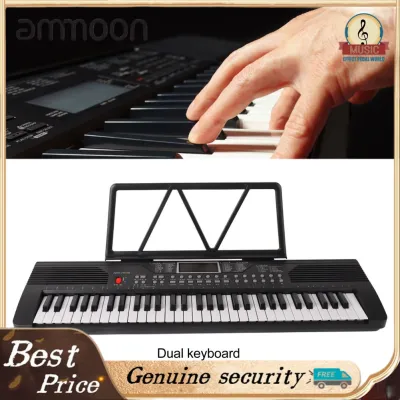
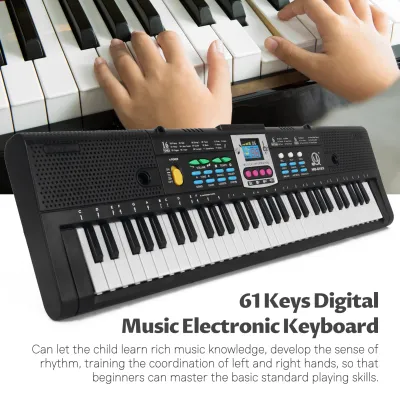
![[✅SG Ready Stock] 61 Key High Quality Music Keyboard Piano kids toys new player beginner Electric Piano](https://img.lazcdn.com/g/p/1f34b80fc1c4ffa462a06ed0ad2ca2fd.jpg_400x400q80.jpg_.webp)
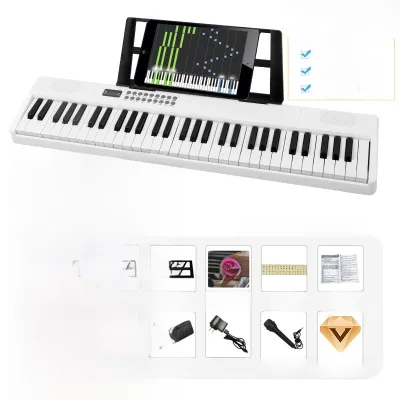
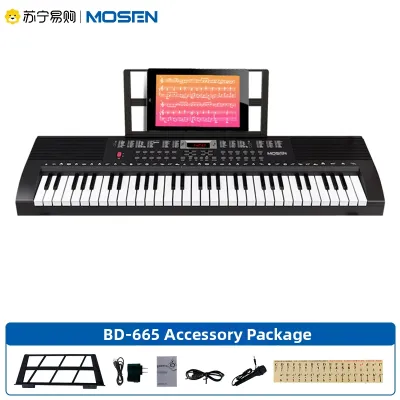
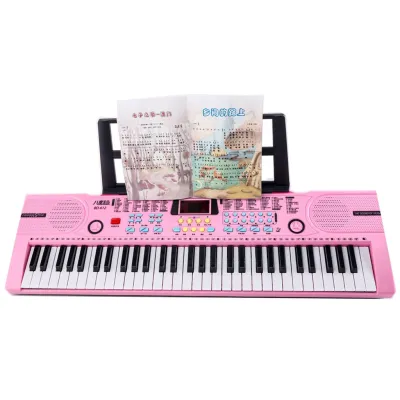
Prices are valid at publication and may change. Please refer to the product page for the latest price.
The primary limitation of a 61-key keyboard becomes apparent when you transition to classical piano repertoire. Pieces by classical composers often require the extended bass notes and high treble registers found only on a full 88-key instrument. If your long-term goal is to sit for formal classical examinations, such as those graded by the Associated Board of the Royal Schools of Music (ABRSM), a 61-key keyboard will eventually act as a bottleneck. Understanding this limitation early helps you set realistic expectations and plan for a future upgrade when your skills demand it.
Core Specifications to Compare Across Keyboard Brands
The physical feel of the keys is the most critical factor in developing proper playing technique. Many entry-level keyboards feature “synth-action” keys, which are light, springy, and offer very little resistance. While easy on young fingers, they do not prepare you for the heavy, weighted feel of an acoustic piano. To build finger strength and control, look for brands that offer touch-sensitive (or velocity-sensitive) keys. This feature ensures that the volume of the sound changes based on how hard or soft you press the key, allowing for expressive playing. Some mid-range models offer semi-weighted keys, which provide a compromise by adding small weights to the keys to mimic a piano’s resistance.

A keyboard’s sound engine determines how realistic its instrument voices sound. Reputable brands use high-quality stereo sampling to record real acoustic grand pianos and other instruments, translating those recordings into the digital sounds you hear. When comparing brands, pay close attention to the maximum polyphony specification. Polyphony refers to the number of individual notes or voices the keyboard can produce at the exact same time. For a beginner, a minimum of 48-note polyphony is recommended. If you play a chord while using a sustain pedal, or if you play along with a built-in backing track, the keyboard must generate dozens of sounds simultaneously. Low polyphony (such as 32 notes or fewer) can cause older notes to cut off abruptly, ruining the flow of your music.
Modern learning relies heavily on digital integration, making connectivity ports a vital consideration. Ensure any keyboard you evaluate features a USB-to-Host port, which allows you to connect the instrument to a computer, tablet, or smartphone. This connection turns your keyboard into a MIDI controller, enabling you to interact with interactive learning software, sheet music apps, and digital audio workstations (DAWs). Additionally, a dedicated headphone jack is essential for practicing quietly at any hour without disturbing family members or neighbors in close-proximity housing. Look for standard 3.5mm or 6.35mm audio outputs if you plan to connect the keyboard to external speakers or amplifiers in the future.
Assessing Built-in Learning Tools and Software Ecosystems
Many manufacturers design their beginner keyboards with integrated educational suites. These features often include step-by-step lesson programs that break down built-in songs into left-hand and right-hand parts. Some systems use visual cues, such as LCD screens showing which keys to press, or even light-up keys that guide your fingers. While light-up keys can be helpful for absolute beginners to get started quickly, they should be used as a stepping stone rather than a permanent crutch, as they do not teach you how to read traditional sheet music.
Beyond the hardware, the software ecosystem surrounding a brand can significantly accelerate your progress. Most modern keyboards are compatible with popular third-party interactive learning applications. These apps listen to your playing via the USB-MIDI connection and provide real-time feedback on your accuracy and timing. Before making a purchase, verify that the keyboard model is officially supported by the specific learning platform you plan to use, as some older or budget-brand models may suffer from latency issues or connection dropouts.
Major keyboard manufacturers often develop their own proprietary companion applications, available for download on iOS and Android devices. These apps serve multiple purposes: they can act as a visual remote control to easily change sounds and settings on your keyboard, offer interactive music games, or provide digital songbooks with interactive sheet music. Evaluating the user interface and features of these brand-specific apps can give you a clear indication of how much support the manufacturer provides to self-taught beginners.
Buying in Singapore: Power, Warranty, and Retail Channels
When purchasing electronic instruments in Singapore, power specifications require careful verification. Singapore operates on a 230V AC, 50Hz electrical system and utilizes Type G three-pin plugs. If you are tempted to purchase a keyboard from overseas online retailers to save on upfront costs, you must check the power adapter specifications. Keyboards designed for markets like Japan (100V) or the United States (120V) will require a step-down transformer or a compatible local power adapter to operate safely. Using an incorrect power supply can permanently damage the keyboard’s internal circuitry and void any warranty.
Purchasing your keyboard through an authorized local distributor or retailer is highly recommended for long-term peace of mind. Authorized products come with a local manufacturer’s warranty, typically covering parts and labor for 12 months. If your keyboard develops a sticky key, a faulty screen, or a broken port, you can easily bring it to a local service center in Singapore for professional repair. Parallel imports or models bought from unauthorized overseas sellers often lack local warranty coverage, meaning you would have to ship the heavy instrument back to the country of origin at your own expense for repairs.
Singapore offers a variety of retail options for purchasing musical instruments. Specialized music showrooms, often located in central areas like Bras Basah Complex or Peninsula Plaza, allow you to physically test different models side-by-side. These physical stores provide valuable face-to-face advice, reliable return policies, and often bundle essential accessories like stands, benches, and headphones together. On the other hand, general online marketplaces and ecommerce platforms may offer competitive pricing and convenient home delivery. When buying online, always verify the seller’s reputation, check if they are an authorized dealer, and read their return policy regarding bulky items to avoid unexpected return shipping fees.
Building Your Shortlist: A Step-by-Step Decision Guide
To build an effective shortlist, start by identifying how you intend to use the keyboard. If your primary goal is to eventually transition to a real piano, you must prioritize touch-sensitive keys and realistic piano tones. If you are interested in music production, songwriting, or electronic music, look for a keyboard with a robust USB-MIDI interface, a wide variety of instrument sounds, and built-in drum rhythms. For casual hobbyists who simply want to play familiar tunes, built-in lesson features and an intuitive user interface should be your main focus.
Setting a clear budget in S$ helps narrow down your options quickly. In the Singapore market, entry-level 61-key keyboards generally fall into three price tiers. Under S$200, you will find basic models that often lack touch sensitivity and advanced sound engines; these are best suited for very young children or casual experimentation. The S$200 to S$400 range is the sweet spot for most adult beginners, offering touch-sensitive keys, decent polyphony, and reliable build quality. Models priced above S$400 often include semi-weighted keys, advanced synthesizer controls, or premium sound engines, which are excellent if you have the budget to invest in a long-term instrument.
Once you have a shortlist of two or three models, visit a local music store to test them in person. Begin by pressing the keys without the power turned on to evaluate the physical action; the keys should feel smooth, responsive, and not overly noisy or clacky. Next, turn on the keyboard, plug in a pair of headphones, and play a simple scale to assess the sound quality. Navigate through the menus to see how easy it is to switch between different instrument sounds or adjust the metronome speed. Finally, unplug the headphones and play at a moderate volume to check if the built-in speakers produce a clear, balanced sound without distorting or rattling the keyboard’s plastic casing.
Frequently Asked Questions (FAQ)
Is a 61-key keyboard enough to learn piano properly?
While a 61-key keyboard is an excellent and cost-effective tool for learning basic music theory, hand coordination, and simple songs, it is not sufficient for comprehensive classical piano training. Classical piano music is written for a full 88-key keyboard and relies heavily on the weighted key action of an acoustic piano to develop finger strength and expressive dynamics. If you plan to take formal piano exams or study classical repertoire, you will likely need to upgrade to an 88-key digital piano with fully weighted keys within your first year of study. However, for pop music, synthesizer playing, or casual learning, 61 keys remain highly practical.
Do I need an external amplifier for a 61-key keyboard?
For home practice in a typical Singapore apartment, you do not need an external amplifier. Almost all beginner-focused 61-key keyboards come equipped with built-in stereo speakers that provide more than enough volume for personal practice and small room environments. In fact, keeping the volume moderate is often necessary to maintain good relations with neighbors in high-density housing. An external amplifier or keyboard monitor is only necessary if you plan to perform in larger venues, jam with a loud band, or if you want to experience a deeper bass response that small built-in speakers cannot physically reproduce.
What is the difference between a keyboard and a digital piano?
The primary differences lie in key action, sound focus, and portability. A standard electronic keyboard focuses on versatility, offering hundreds of different instrument sounds, auto-accompaniment rhythms, and lightweight, non-weighted keys designed for easy portability. A digital piano, on the other hand, is designed to replicate the experience of playing an acoustic piano as closely as possible. It typically features 88 fully weighted keys that mimic the hammer action of a real piano, focuses on high-fidelity acoustic piano sounds, and is often housed in a heavier, more permanent cabinet. For beginners, a keyboard is more portable and budget-friendly, while a digital piano is better for serious piano students.
Community discussion
Share your experience or ask a question. Comments are reviewed before publication.