
The most effective self-help books for career growth are not universal cure-alls. Instead, they are highly targeted tools that align with your specific professional stage, offer structured and verifiable frameworks, and address immediate workplace bottlenecks. To make a successful purchase, you must look past generic motivational slogans and evaluate books based on their practical applicability, the author’s industry credibility, and the compatibility of the format with your daily routine.
Navigating the vast sea of professional development literature requires a systematic approach. Rather than buying a book simply because it tops a bestseller list, you should treat the purchase as a strategic investment in your professional toolkit. By establishing clear selection criteria, you can avoid cognitive overload and ensure that every page you read translates into measurable career advancement.
Understanding Your Career Development Needs
Before browsing any online marketplace or local bookstore, you must diagnose your current professional situation. Career growth is not a linear path, and a book that helps a senior executive refine their organizational strategy will offer little practical value to a fresh graduate trying to navigate their first corporate role. Identifying your exact career phase is the first step toward narrowing down your reading list.
Products mentioned in this guide
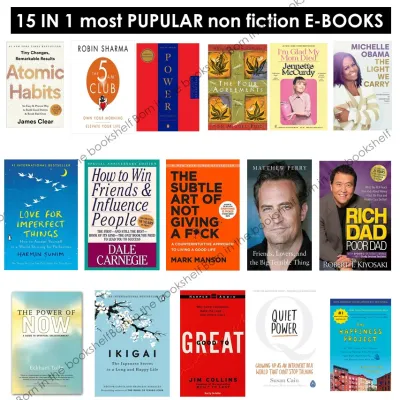




Prices are valid at publication and may change. Please refer to the product page for the latest price.
Early-career professionals typically need to focus on execution, basic productivity, and adapting to corporate culture. At this stage, the most beneficial books are those that teach fundamental work habits, basic communication, and task prioritization. You need to build a reputation for reliability and competence, which requires practical guides on managing your time and understanding workplace dynamics.
Mid-career professionals, on the other hand, often face bottlenecks related to influence, project management, and cross-functional collaboration. If you are transitioning from an individual contributor to a team lead, your technical skills are no longer your primary driver of success. You must seek out literature that addresses lateral leadership, delegation, and the psychological aspects of managing diverse teams.
For those in executive leadership or aspiring to reach the C-suite, the focus shifts entirely to strategic foresight, organizational design, and high-stakes negotiation. Books for this level should challenge your long-term thinking and help you navigate complex corporate politics. Understanding these distinctions prevents you from wasting time on advice that is either too basic or entirely irrelevant to your daily responsibilities.
To maximize the return on your reading investment, define one or two measurable outcomes you expect to achieve. For example, instead of aiming to “improve communication,” set a goal to “learn a framework for delivering constructive feedback to underperforming team members.” This specificity allows you to evaluate books based on whether they contain the exact tools required to solve your immediate workplace challenges.
Key Criteria for Evaluating Career-Focused Self-Help Books
With thousands of titles published annually, separating high-value professional guides from superficial motivational books is essential. The first criterion to evaluate is the author’s professional background. An author who has spent decades leading multinational corporations or conducting rigorous academic research brings a different level of authority than a career influencer whose primary experience is writing self-help content.

When researching an author, look for verifiable industry experience or academic credentials related to the book’s topic. If you are buying a book on negotiation, an author who served as a lead hostage negotiator or a corporate mergers-and-acquisitions lawyer is highly credible. Conversely, be cautious of authors who write broadly across unrelated fields without deep, specialized experience in any of them.
Another critical factor is the distinction between actionable frameworks and purely motivational content. Motivational books often rely on inspiring anecdotes and emotional appeals to create a temporary sense of enthusiasm. While this can be uplifting, the effect quickly fades once you return to your daily routine. Actionable books, by contrast, provide step-by-step methodologies, diagnostic templates, and concrete exercises that you can implement immediately.
To identify actionable books, look at the table of contents and sample chapters. High-quality professional development books often feature structured summaries, implementation checklists, and self-assessment questionnaires at the end of each chapter. If a book consists entirely of narrative stories without clear, generalized principles you can apply to your own career, it may not be the practical tool you need.
Finally, analyze reader reviews with a critical eye. Avoid relying solely on the overall star rating, as these can be skewed by marketing campaigns. Instead, search for detailed reviews from verified buyers who describe exactly how they applied the book’s concepts in their professional lives. Look for mentions of long-term impact, potential limitations of the author’s advice, and how well the concepts adapt to modern, hybrid, or remote work environments.
Matching Book Themes to Professional Goals
To prevent information overload, match the book’s core theme directly to your current quarterly or annual professional development goals. Aligning your reading material with your immediate workplace pain points ensures that you can practice what you learn in real time, reinforcing the concepts and accelerating your skill acquisition.
Leadership and Management Skills
If your goal is to transition into a management role or improve your current leadership style, look for books that focus on emotional intelligence, conflict resolution, and strategic delegation. Effective leadership literature should move beyond theoretical discussions of power and focus on the daily realities of guiding a team toward shared objectives.
When evaluating leadership books, check if the author includes case studies from various organizational sizes and industries. A framework designed for a massive multinational corporation may not translate well to a lean startup or a local small-to-medium enterprise. Ensure the book addresses modern management challenges, such as leading distributed teams, managing cross-cultural communication, and fostering psychological safety in high-pressure environments.
Productivity and Time Management
For professionals struggling with heavy workloads, constant distractions, or burnout, productivity books offer systemic solutions. However, you must distinguish between books that promote superficial “life hacks” and those that offer deep, systemic approaches to work design. Quick hacks, such as clearing your inbox to zero daily, rarely address the root causes of inefficiency.
Look for books that explore the psychology of habit formation, the mechanics of deep focus, and the design of personal workflows. The proposed methods must be adaptable to your specific work environment. For instance, if your role requires constant availability and client interaction, a productivity system that demands four hours of uninterrupted isolation every morning may be completely impractical.
Communication and Interpersonal Skills
Success in any professional field relies heavily on your ability to communicate clearly, negotiate effectively, and build strong professional networks. When selecting books in this category, prioritize those that offer concrete scripts, psychological principles, and real-world scenarios over vague advice like “be a good listener.”
It is also important to consider your natural communication style. Some interpersonal self-help books assume an extroverted, highly assertive personality, which can feel unnatural or counterproductive if you are naturally introverted. Look for authors who offer strategies tailored to different personality types, showing you how to leverage your natural strengths—such as deep listening or structured preparation—to influence others.
How to Verify Book Editions and Formats Before Purchase
Once you have identified a promising title, you must verify the specific edition and format to ensure you receive the most relevant and usable version. Workplace dynamics, technology, and business practices evolve rapidly, making the publication date a crucial factor in your decision-making process.
Always check the publication year and whether a revised or updated edition is available. A book on professional networking written in the early 2000s may focus heavily on physical business cards and formal luncheons, largely ignoring digital networking platforms and virtual relationship building. A newer edition will integrate modern tools and hybrid workplace etiquette, saving you from outdated advice.
If you are purchasing a translated book, pay close attention to the translation quality and the publisher’s reputation. Technical terms, cultural nuances, and professional idioms do not always translate cleanly between languages. Reading sample pages can help you assess whether the translation is natural and whether the core professional concepts remain clear and actionable.
Additionally, consider regional publishing variations. Some publishers release specific international editions that may contain different case studies, localized examples, or updated statistics relevant to your region. Ensuring you purchase the correct edition prevents confusion and guarantees that the examples used resonate with your local business environment.
| Format | Best Suited For | Key Advantages | Potential Limitations |
|---|---|---|---|
| Physical Book | Deep study, active note-taking, and desk reference. | Easy to highlight, write marginalia, and quickly flip between chapters. | Bulky to carry during daily commutes; higher physical storage needs. |
| E-Book | Commuting, frequent travel, and quick keyword searching. | Highly portable; adjustable text size; instant delivery to devices. | Can be harder to navigate non-linear content like diagrams and tables. |
| Audiobook | Passive learning during commutes, exercise, or routine tasks. | Hands-free consumption; excellent for narrative-driven professional memoirs. | Difficult to take detailed notes, highlight key passages, or reference diagrams. |
When budgeting for your professional development, compare the costs of these formats. In Singapore, a physical paperback typically ranges from S$20 to S$40, while e-book versions are often more budget-friendly and eliminate shipping wait times. Choose the format that aligns best with your learning style and daily schedule to ensure you actually finish the book.
Frequently Asked Questions (FAQ)
How many career self-help books should I read at the same time?
To ensure proper application of the concepts, you should focus on only one core career self-help book at a time. Reading multiple books simultaneously often leads to cognitive overload, as different authors may advocate for conflicting frameworks or productivity systems. Trying to implement too many changes at once can dilute your focus and lead to frustration.
Instead, adopt a sequential approach. Read one book thoroughly, identify one or two key frameworks that apply to your current goals, and spend at least two to four weeks actively practicing them in your workplace. Once these new habits or techniques are integrated into your daily routine, you can move on to the next book on your list.
Are audiobooks as effective as physical books for professional development?
The effectiveness of an audiobook depends heavily on the nature of the content and your personal learning style. Audiobooks are highly effective for narrative-driven self-help, professional memoirs, or books that focus on high-level conceptual ideas. They allow you to utilize transit time on the MRT or daily exercise sessions for professional development.
However, for highly technical books, or those containing complex frameworks, step-by-step instructions, and diagnostic diagrams, physical books or e-books are far superior. These formats allow you to pause, reflect, highlight key passages, and easily refer back to previous chapters. If you prefer audiobooks for convenience, consider purchasing a physical or digital copy of the accompanying PDF worksheets to ensure you do not miss the actionable elements of the book.
Community discussion
Share your experience or ask a question. Comments are reviewed before publication.