
Quick Answer: Which Bible Format is Right for Your Spiritual Journey?
When evaluating how to nurture your faith, there is no single format that universally serves every stage of spiritual development. The choice between these two formats depends on your current spiritual maturity, learning style, and immediate spiritual goals.
The Action Bible is an exceptional tool for initial engagement, visual storytelling, and capturing the sweeping historical narrative of scripture. It excels at breaking down complex historical timelines into digestible, high-impact sequences that keep readers engaged.
By contrast, traditional Bibles provide the textual depth, precise wording, and extensive study tools necessary for advanced theological study, verse memorization, and deep personal reflection. The two formats do not compete but rather complement different stages of a believer’s journey.
Products mentioned in this guide


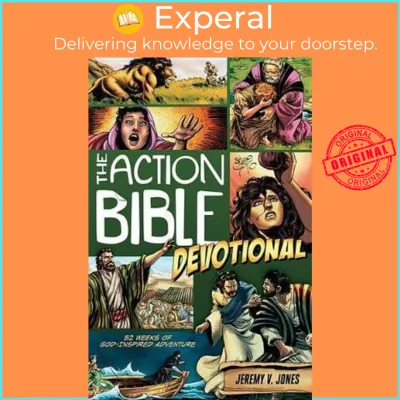
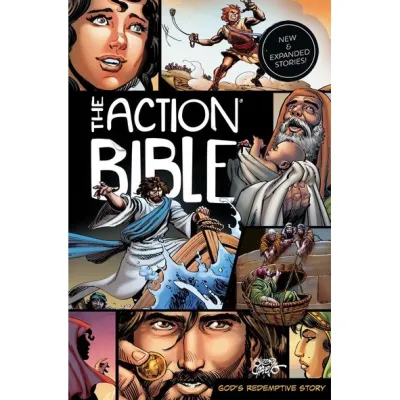
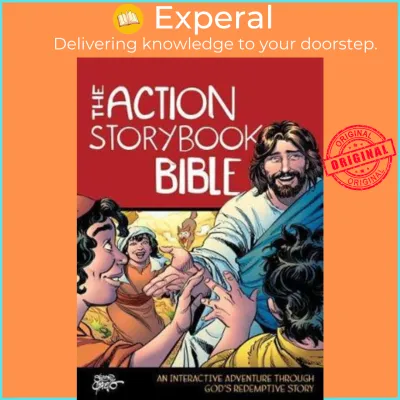
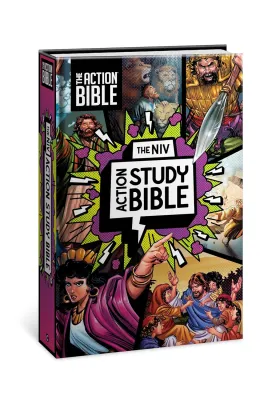
Prices are valid at publication and may change. Please refer to the product page for the latest price.
Defining the Formats: Visual Storytelling vs. Textual Depth
To understand how each format influences spiritual growth, it is essential to establish what they are and how they present biblical content.

The Action Bible: Graphic Narratives and Visual Engagement
The Action Bible is a highly popular graphic novel adaptation of the scriptures, illustrated by renowned comic book artist Sergio Cariello. Rather than a word-for-word translation of original Hebrew, Aramaic, and Greek texts, it is a curated, chronological retelling of major biblical stories.
It utilizes vivid, dynamic illustrations and sequential panels to bring historical events, battles, and key figures to life. The focus is heavily placed on narrative movement, character action, and dramatic tension. This format makes the historical and cultural settings of the ancient Near East and first-century Greco-Roman world immediately visible, bypassing the need for readers to mentally construct these unfamiliar environments from text alone.
Traditional Bibles: Direct Translations and Textual Study
Traditional Bibles represent direct translations of ancient manuscripts into contemporary languages, operating across a wide spectrum of translation philosophies. On one end, formal equivalence translations (such as the ESV or NASB) prioritize word-for-word accuracy, aiming to preserve the original grammatical structures as closely as possible.
On the other end, dynamic equivalence translations (such as the NLT or NIV) focus on thought-for-thought clarity, translating the ancient idioms into modern equivalents. These text-based Bibles rely on footnotes, cross-references, and concordances to guide the reader. They present the scriptures without visual mediation, leaving the reader to interpret, visualize, and analyze the text through their own cognitive and spiritual reflection.
How Each Format Impacts Your Spiritual Growth
Spiritual growth is multi-faceted, involving the cultivation of daily disciplines, the intellectual pursuit of theological truth, and the emotional internalization of scripture.
Building Consistent Daily Reading Habits
Establishing a consistent daily reading habit is often the first major hurdle in personal spiritual development. The Action Bible excels in lowering this barrier to entry. For individuals with busy schedules, those who struggle with dense text, or visual learners, the graphic format provides an approachable entry point.
In a fast-paced environment like Singapore, where commutes on the MRT or bus can be noisy and filled with distractions, the visual pacing of a graphic novel allows readers to quickly engage with a story and maintain focus. The digestible panels and narrative momentum make it easy to complete a story arc in a single sitting, fostering a sense of accomplishment that encourages daily return.
Conversely, traditional Bibles require a higher degree of initial discipline and cognitive effort. Reading dense text without visual aids can feel daunting, particularly in the genealogies of Chronicles or the complex laws of Leviticus.
However, once a reading habit is established, traditional Bibles offer a deeply immersive, quiet, and uninterrupted environment. The lack of pre-drawn illustrations allows the mind to slow down, encouraging a meditative state that is highly conducive to deep spiritual listening and personal devotion.
Exploring Theological Depth and Nuance
As a believer seeks to mature, the need for theological precision and doctrinal clarity becomes paramount. Traditional Bibles are indispensable for this stage of growth. They preserve the exact wording, complex metaphors, poetic structures, and theological nuances of the original texts.
For instance, understanding the Pauline epistles requires a careful, verse-by-verse analysis of theological arguments regarding justification, grace, and sanctification. Traditional study Bibles enhance this process by providing extensive commentary, historical context notes, and original language insights that allow the reader to unpack deep doctrines.
The Action Bible, by virtue of its medium, must simplify and condense these complex texts. It is structurally impossible to represent the theological arguments of Romans or the poetic depth of the Psalms fully within a comic panel format.
Consequently, the Action Bible often omits non-narrative books or condenses them significantly. While it successfully conveys the overall message of God’s redemptive history, it cannot provide the granular theological detail required for rigorous doctrinal study. The visual elements also introduce the illustrator’s personal interpretation of characters and events, which may subtly influence how a reader understands a passage.
Memorization and Personal Reflection
Internalizing scripture through memorization and contemplation is a cornerstone of self-improvement and spiritual discipline. Traditional Bibles serve as the standard tool for these practices. The structured verse-and-chapter numbering system makes it straightforward to locate, highlight, and memorize specific passages. Practices such as lectio divina (divine reading) rely entirely on slowly chewing on individual words and phrases, allowing the text to speak directly to the reader’s current life circumstances.
The Action Bible impacts memory in a different way. It is highly effective for visual memory, helping readers retain the chronological sequence of events and the relationships between historical figures.
Understanding how the story of Joseph connects to the Exodus, or how David’s lineage leads to the exile, is made much clearer through visual storytelling. However, it is not designed for exact verse memorization. Because the dialogue is paraphrased and adapted for dramatic flow, attempting to memorize text from the Action Bible will not yield the standard translations used in corporate worship or study groups.
Choosing Between a Traditional Bible and the Action Bible: A Decision Guide
Selecting the right format requires assessing your current spiritual needs, learning preferences, and the context in which you will use the book.
Choose the Action Bible if:
- You are a visual learner who retains information better through illustrations and sequential art.
- You are new to the scriptures and want to understand the overarching narrative arc from Genesis to Revelation without getting bogged down in complex genealogies or laws.
- You struggle to maintain a daily reading habit and need an engaging, fast-paced format to build consistency.
- You are a parent or educator looking to introduce biblical history to younger readers in an accessible way.
Choose a Traditional Bible if:
- You are seeking deep theological study, systematic doctrine, and historical-critical analysis.
- Your spiritual goals include exact verse memorization and close textual meditation.
- You prefer to interpret the scriptures directly from the text without the visual influence of an illustrator.
- You are participating in a structured church small group, theological course, or academic study.
Consider Using Both if:
- You want to use the Action Bible as a quick, refreshing overview of the historical context and narrative flow before diving into a traditional study Bible for deep-dive topical study and reflection.
Verify before purchasing: Before making a purchase, especially if you are buying for a specific study group, church curriculum, or academic course, verify the required translation and edition. Traditional Bibles come in many translations (ESV, NIV, NKJV, etc.), and choosing the wrong one may make it difficult to follow along in group settings.
Additionally, check the physical or digital format. If buying a physical copy, consider the paper quality, binding durability, and font size. Singapore’s humid climate can cause thin, delicate Bible pages to cockle or warp over time, making sturdy bindings and thicker paper highly desirable. If opting for a digital edition, ensure device compatibility, screen readability, and file format completeness from an authorized source. Never infer edition contents or translation accuracy solely from a title or cover design.
Maximizing Your Spiritual Growth With Your Chosen Format
Regardless of the format you select, intentionality is key to translating reading into genuine spiritual growth and self-improvement.
To get the most out of your reading, establish a consistent time and a quiet space free from digital distractions. If you are using the Action Bible, avoid reading it like a standard comic book. Instead, focus on complete story arcs or chapters to maintain historical context, and take time to reflect on the character traits, ethical dilemmas, and divine interventions depicted in the illustrations.
If you are using a traditional Bible, utilize a structured reading plan (such as a chronological or one-year plan) to prevent aimless flipping. Keep a journal nearby to write down insights, questions, and personal applications. Make active use of the study aids, such as cross-references and footnotes, to connect different parts of scripture.
Finally, pay attention to the physical care and specifications of your book. For physical copies, look for sturdy Smyth-sewn bindings and thicker paper that can withstand frequent highlighting and local humidity. Whether you are looking at a budget-friendly softcover or investing in a premium S$60 leather-bound traditional study edition, protecting your investment ensures it remains a lifelong companion. For digital formats, adjust the contrast and font size to prevent eye strain during extended reading sessions, and verify that your digital reader supports easy navigation through chapters and study notes.
Frequently Asked Questions (FAQ)
Is the Action Bible considered a complete and accurate translation?
No, the Action Bible is not a complete or literal translation of the biblical texts. It is an artistic adaptation and abridgment designed to highlight the narrative and action-oriented portions of scripture. It omits several books entirely—particularly the highly theological Epistles, complex prophetic books, and poetic literature—and condenses others to fit the graphic novel medium. It should be viewed as a supplementary tool to aid engagement and narrative understanding, rather than a replacement for a complete, direct translation.
Can I use the Action Bible for academic or deep theological study?
The Action Bible is not suitable for academic, linguistic, or rigorous theological study. Because it relies on paraphrased dialogue and visual interpretations, it does not provide the precise wording, textual variants, or literary structures required for formal analysis. For academic pursuits or deep theological exploration, you should use a traditional study Bible equipped with cross-references, historical-cultural footnotes, concordances, and original language word studies.
Community discussion
Share your experience or ask a question. Comments are reviewed before publication.