
Quick Answer: Core Criteria for a Beginner's Guitar Rack
When you bring home your first guitar, keeping it safe and accessible is the first priority. A reliable guitar rack ensures your instrument does not end up leaning against a wall, where a simple bump can cause expensive neck fractures or finish chips. For beginners, the primary goal is securing the instrument safely without overspending on premium aesthetic features.
To achieve this, you must focus on three non-negotiable features: a stable base that resists tipping, protective padding at all contact points, and proper neck support to keep the instrument upright. While high-end racks offer premium hardwoods or integrated storage, beginners can safely skip these luxury additions. Focusing on structural integrity over visual flair allows you to find an excellent, budget-friendly option that protects your investment.
Essential Features You Cannot Compromise On
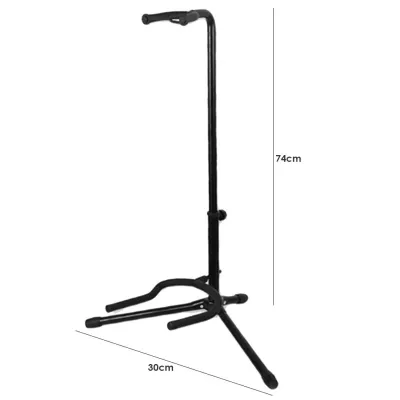
The primary job of any guitar rack is to counteract gravity and accidental bumps. Base stability and weight distribution are the most critical factors in preventing tipping. A high-quality budget rack must have a wide footprint relative to its height. For single vertical stands, a tripod base with a wide spread offers the best resistance against lateral forces. If the base is too narrow, the high center of gravity of an upright guitar—especially a heavier solid-body electric guitar—makes it highly susceptible to falling over when brushed against.
Products mentioned in this guide
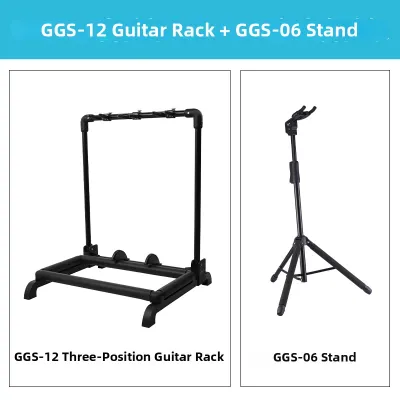

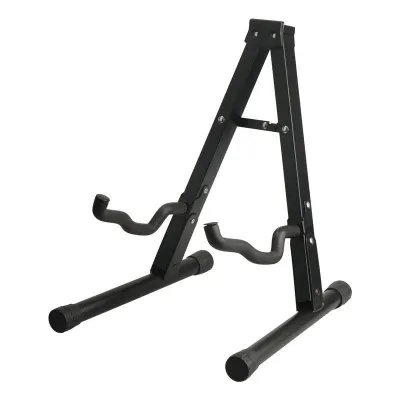
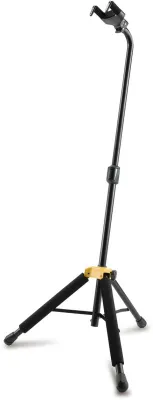
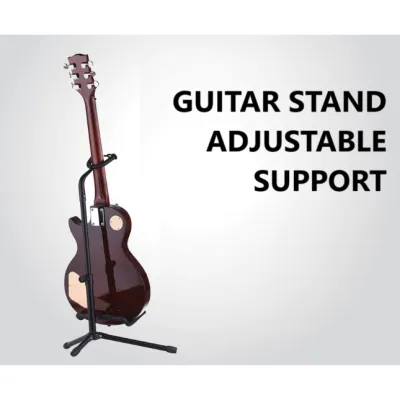

Prices are valid at publication and may change. Please refer to the product page for the latest price.

Protective padding is another critical safety feature that cannot be overlooked. Every point where the guitar rests against the rack must be covered in a soft, non-abrasive material. This padding prevents scratches on the body and neck, which can ruin the look and resale value of your instrument. Look for high-density foam or specialized rubber sleeves that are securely attached to the metal frame. Loose or thin padding can quickly wear through, exposing the raw metal of the stand directly to your guitar’s finish.
Neck support design is the final pillar of basic instrument safety. The cradle at the top of the stand must hold the neck securely without applying uneven pressure. For instruments with asymmetrical headstocks, such as certain electric guitars, a self-adjusting yoke that pivots to match the angle of the headstock is highly beneficial. Additionally, a physical barrier, such as a safety strap or a gravity-activated gate across the yoke, prevents the guitar from slipping forward if the stand is bumped from behind.
Where Beginners Can Safely Compromise to Save Money
Staying within a budget requires knowing which features are essential and which are merely convenient. One of the easiest ways to save money is by matching the rack’s capacity strictly to your current collection. While multi-guitar racks are excellent for players with several instruments, a single-guitar stand is highly cost-effective for a beginner. Purchasing a single rack keeps your initial costs low and saves valuable floor space in smaller living areas.
Material choices also offer significant opportunities for cost savings. While premium wooden racks look beautiful and blend seamlessly with home furniture, they carry a significant price premium. Standard tubular steel stands offer comparable, if not superior, structural strength at a fraction of the cost. Durable plastics and composite materials used in joints and adjustment collars are also perfectly acceptable, provided they are thick and well-molded rather than thin and brittle.
Finally, beginners should skip built-in accessories that drive up the retail price. Features like integrated cable hooks, pick holders, sheet music clips, or built-in humidification systems are convenient but unnecessary. These add-ons do not contribute to the core stability of the stand. By choosing a minimalist design that focuses solely on holding the guitar securely, you ensure that every dollar of your budget goes toward structural safety rather than secondary conveniences.
How to Verify Quality and Stability Before Buying
When shopping for a budget-friendly guitar rack, verifying quality before making a purchase prevents future headaches. Start by checking the manufacturer’s specifications for weight limits and base dimensions. A reliable stand should explicitly state the maximum weight it can support. Compare this limit to the weight of your instrument, keeping in mind that solid-body electric guitars and bass guitars are significantly heavier than acoustic models. The base dimensions should show a wide, stable footprint that matches your available floor space.
Evaluating user reviews on online marketplaces or music forums is another excellent way to gauge real-world performance. Look specifically for feedback regarding tipping incidents, padding degradation over time, or neck slipping. If multiple users report that a stand feels top-heavy or that the padding crumbles after a few months of use, it is best to look elsewhere. Pay close attention to reviews written by owners of similar guitar models to ensure compatibility.
If you are shopping at a physical music store in Singapore, take the opportunity to perform a hands-on inspection. Gently push the top of the stand to test its wobble resistance; a stable stand should settle quickly without lifting its feet. Inspect the density of the foam or rubber padding by squeezing it to ensure it does not compress completely to the metal. Finally, check the joint welds and adjustment screws. Welds should be smooth and continuous, and screws should tighten securely without stripping the threads.
Common Pitfalls and Hidden Costs to Avoid
One of the most common and costly mistakes beginners make is ignoring finish compatibility. Standard rubber or foam padding on budget stands can react chemically with certain guitar finishes, particularly nitrocellulose lacquers found on vintage or high-end instruments. This chemical reaction can melt the finish, leaving permanent, unsightly marks on the neck and body. Always verify whether the stand’s padding is safe for your specific guitar finish, or plan to use a protective cotton cloth barrier over the contact points.
Singapore’s high humidity can also accelerate the degradation of cheap foam padding, causing it to become sticky or crumble prematurely. This degradation not only ruins the stand but can also leave stubborn residue on your guitar’s neck or body. Choosing high-density rubber or wrapping the contact points can prevent this issue.
Hidden costs can also quickly inflate the price of an otherwise budget-friendly purchase. When ordering online, heavy metal stands can incur high shipping fees due to their weight and bulk. Always check the total price, including delivery, before finalizing your purchase. Additionally, some budget stands require self-assembly but arrive with missing hardware or poor instructions. Opt for models that come fully assembled or include all necessary tools and clear assembly guides to avoid extra trips to the hardware store.
Finally, avoid the temptation to use makeshift solutions or non-dedicated stands. Leaning a guitar against a chair, placing it on a standard utility shelf, or using a cheap, unbranded stand with no safety features increases the risk of accidents. A single fall can result in broken headstocks or cracked bodies, leading to repair bills that far exceed the cost of a high-quality, dedicated guitar rack. Investing in a proper stand from the start is the most cost-effective way to protect your instrument and your budget.
Frequently Asked Questions (FAQ)
Is a floor stand or an A-frame stand better for small apartments?
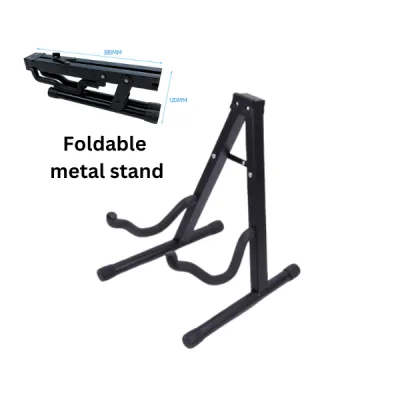
For small apartments where floor space is limited, an A-frame stand is often highly appealing due to its compact footprint and ability to fold flat for easy storage. However, A-frame stands lack neck support, relying entirely on a lower cradle to hold the guitar. This design gives them a lower center of gravity but makes the instrument more vulnerable to being knocked over by pets, vacuum cleaners, or foot traffic.
If your living space has high traffic or minimal open areas, a vertical floor stand with a tripod base and neck support is generally the safer choice. Although it occupies slightly more vertical space, the added neck cradle and safety strap provide significantly better protection against accidental bumps. If you choose an A-frame stand to save space, place it in a low-traffic corner or next to a heavy piece of furniture to minimize the risk of accidental contact.
Do I need a special rack if my guitar has a nitrocellulose finish?
Yes, if your guitar features a nitrocellulose finish, you must take extra precautions when choosing a guitar rack. Nitrocellulose is a chemically sensitive lacquer that reacts easily with the petroleum-based solvents found in standard surgical rubber, neoprene, and cheap foam padding. Over time, contact with these materials causes a chemical reaction that softens, discolors, or eats away the lacquer, leaving permanent damage on your instrument.
To protect a nitrocellulose finish, look for guitar racks that are explicitly labeled as safe for nitro finishes. These stands use specially formulated materials that do not react with the lacquer. If you cannot find a certified stand within your budget, you can create a safe barrier by wrapping the contact points of a standard stand with 100% cotton cloth, clean cotton socks, or genuine leather wraps. This simple modification prevents direct contact between the sensitive finish and the reactive padding.
Community discussion
Share your experience or ask a question. Comments are reviewed before publication.