
Choosing the right Quran edition in Singapore involves balancing personal reading proficiency, learning goals, and physical handling preferences. While the Al-Quran At-Tibyan has gained popularity for its structured learning aids and study-focused layouts, other editions—such as standard Madinah (Uthmani) prints or Indo-Pak script editions—cater to different visual habits and recitation styles. Finding the most suitable copy requires looking beyond the cover design to evaluate the script style, translation accuracy, and physical durability that match your daily routine.
Understanding the Al-Quran At-Tibyan Edition
Editions carrying the At-Tibyan name are typically designed as comprehensive study Qurans. They often feature helpful aids such as word-for-word translations, thematic breakdowns, and color-coded tajweed rules. These features make them widely used among students, educators, and those looking to deepen their understanding of the Arabic text alongside translation.
However, “At-Tibyan” is not a single, universally standardized layout produced by only one printer. Different publishers may release their own versions under this title or series name. Therefore, you must check the publisher’s exact specifications, as the layout, translation language (such as English or Malay), and supplementary notes can vary significantly between editions.
Products mentioned in this guide
![A4] Al Quranulkarim Tartil - Al Quran Tajwid Mudah Tartil](https://img.lazcdn.com/g/p/2a8e9f4252b8a9e503578a97ec0bc7f4.png_400x400q80.png_.webp)
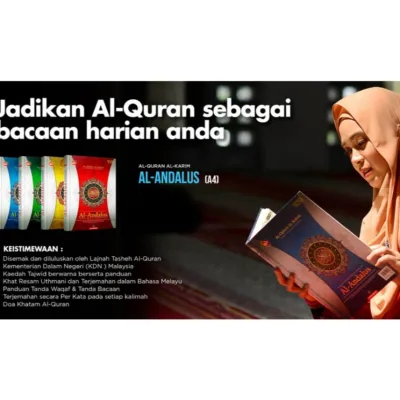
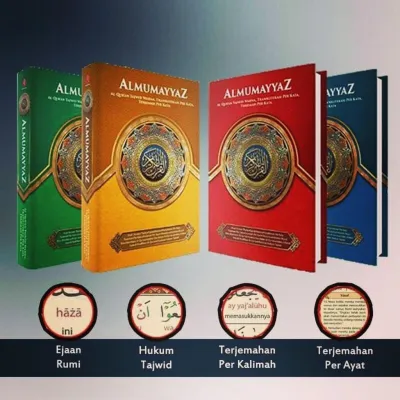
![Alquran Al -Hadi [Terjemahan & Transliterasi(Rumi) Per Kata] (B6/B5/A4/JUMBO SIZE) (Hardcover & Softcover)](https://img.lazcdn.com/g/p/b5798fb57c9d567a28d33c47197f5d4c.jpg_400x400q80.jpg_.webp)
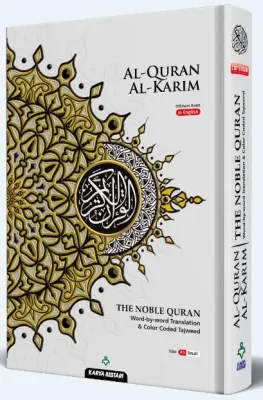
Prices are valid at publication and may change. Please refer to the product page for the latest price.
These editions are commonly available in various physical formats, from large desk-friendly hardcovers to medium and compact paperbacks. Large hardcovers are suitable for home study or classroom use, while compact paperbacks are designed for daily commuting or travel. The choice of format directly impacts how and where you will use the book.
Key Dimensions for Comparing Quran Editions
Selecting the right copy requires a systematic comparison based on functional criteria rather than aesthetic appeal alone. The primary dimensions to evaluate include the script style, the presence of learning aids, the depth of translation or commentary, and the physical build quality of the volume.

Script Style and Readability
The Arabic script style is perhaps the most critical factor for reading comfort. The two most common styles found in Singapore are the Uthmani script (frequently associated with the standard Madinah editions) and the Indo-Pak script (often chosen by those who learned to read using traditional South Asian methods). The Uthmani script features specific calligraphic conventions and vowel markings standardized for modern printing, while the Indo-Pak script uses bolder, more distinct letterforms and different diacritical placements that some readers find easier to decipher.
Beyond the script style itself, visual ergonomics play a major role in preventing eye strain during extended reading sessions. Font size, line spacing, and the width of the page margins all affect readability. A layout with cramped lines or tiny text can make daily recitation difficult, especially for elderly readers or beginners. Conversely, generous margins provide space for personal notes and keep the text from feeling cluttered.
Because digital screens and cover photos can be misleading, you should always verify the text clarity before making a purchase. If buying in person, open the book to various pages to check the print sharpness. If purchasing from an online marketplace, look for high-resolution preview images of the inner pages or request a sample layout from the seller to ensure the font style matches your visual preferences.
Tajweed Rules and Learning Aids
For readers focusing on correct pronunciation, tajweed aids are highly practical. Many modern editions, including several At-Tibyan versions, utilize color-coded letters to indicate specific recitation rules, such as elongation (madd), nasalization (ghunnah), or clear pronunciation (izhar). However, because there is no single global standard for these color schemes, the colors used by one publisher may differ from those of another. It is essential to check the legend printed at the bottom of the pages or in the appendix to understand the specific system used.
In contrast, standard black-text editions do not feature color coding, relying entirely on the reader’s existing knowledge of tajweed rules and standard diacritical marks. While minimalist layouts offer a clean, traditional reading experience free of visual distractions, they may pose a challenge for intermediate learners who still benefit from active visual cues during recitation.
Additionally, some editions incorporate supplementary learning aids directly onto the page or packaging. These can include transliterations (phonetic spellings of the Arabic words using the Latin alphabet), pronunciation guides in the margins, or QR codes that link to audio recitations of the specific page. Checking for these features helps ensure the edition supports your current learning stage.
Translations, Tafsir, and Supplementary Content
If your goal extends beyond recitation to understanding the meaning of the text, the choice of translation and commentary (Tafsir) is paramount. Arabic-only editions are streamlined and focused purely on recitation. In contrast, bilingual or multilingual editions offer translations in English, Malay, or other languages, often accompanied by brief explanatory footnotes or thematic summaries to provide historical and linguistic context.
When selecting a translated edition, it is crucial to verify the translator’s credentials and the translation methodology. This information is typically detailed on the copyright or introductory pages. Some translations focus on a literal, word-for-word rendering, which is excellent for vocabulary building, while others prioritize a smooth, idiomatic flow that captures the overall meaning of the verses.
There is a practical trade-off between the amount of supplementary content and the physical portability of the book. Editions that include extensive word-for-word translations, detailed Tafsir, and historical notes require significantly more pages, resulting in a thicker, heavier volume. If you plan to carry your Quran in a bag daily, a minimalist text or a compact translation edition may be more practical than a comprehensive study edition.
Matching the Edition to Your Reading Goals
Selecting the right Quran edition is ultimately a highly personal decision that depends on your specific usage scenarios and learning objectives. To guide your choice, consider a conditional framework based on your primary goals. If you are actively studying the linguistic meaning of the verses and benefit from structured visual aids, an edition like the Al-Quran At-Tibyan—with its word-for-word translation and color-coded tajweed—is highly suitable.
If your primary focus is smooth, uninterrupted daily recitation or memorization (Hifz), a standard Uthmani script edition without extensive translations or margin notes may be preferable. The clean layout minimizes visual distractions, allowing you to focus entirely on the flow of the Arabic text. On the other hand, if you learned to read using the Indo-Pak script, sticking with that style will prevent confusion and ensure your recitation remains fluent and comfortable.
Different scenarios also demand different physical formats. For academic study or teaching, a large hardcover with ample margin space for notes is ideal. For gifting, an edition with an elegant, durable cover and high-quality paper makes a thoughtful and lasting present. For daily commuting on public transport, a compact, lightweight paperback or a multi-volume set (where the Quran is split into individual Juz) offers the greatest convenience. Ultimately, your personal comfort with the text layout and how the book feels in your hands should be the deciding factors.
What to Verify Before Purchasing
Before finalizing your purchase, a thorough physical and editorial inspection is necessary to ensure the book’s longevity and accuracy. Start by examining the binding and paper quality. In Singapore’s warm and humid climate, low-quality paper can absorb moisture quickly, leading to yellowing, warping, or ink bleed-through that makes the text on the reverse side difficult to read. Look for editions printed on high-opacity, acid-free paper with a sturdy sewn binding rather than simple glued pages, ensuring the book can open flat repeatedly without falling apart.
Next, verify the editorial details on the copyright page. Check the publisher’s reputation, the printing year, and the presence of any official authenticity seals or certifications from recognized Islamic affairs authorities. These certifications provide assurance that the text has been meticulously proofread and is free from typographical errors.
Finally, confirm the completeness of the edition. Ensure that all 30 Juz are present, the page numbering is sequential, and the index accurately reflects the surah names and page numbers. If you are purchasing a translated edition, double-check that the translation language matches your preference and that the text includes all the necessary supplementary sections you require for your study.
Frequently Asked Questions (FAQ)
How do I know if a specific Al-Quran edition is authentic?
To verify the authenticity and accuracy of a Quran edition, look for official certification seals or approval stamps from recognized religious authorities or ministries of Islamic affairs on the copyright page. These seals indicate the text has undergone rigorous proofreading. Additionally, check for standard publishing identifiers like an ISBN and a reputable publisher logo. To minimize the risk of purchasing misprinted or unauthorized copies, always buy from established local bookstores, recognized Islamic bookshops, or official publisher distribution channels.
Does the paper quality really matter for daily reading?
Yes, paper quality significantly impacts your daily reading experience and the book’s durability. High-quality, thicker paper prevents ink bleed-through, ensuring that the text on the back of the page does not shadow through and distract you while reading. It also reduces glare under bright indoor lighting, which helps prevent eye strain. Furthermore, durable paper and robust binding are essential for a book that is handled daily, preventing the pages from tearing, warping in humid conditions, or detaching from the spine over time.
Community discussion
Share your experience or ask a question. Comments are reviewed before publication.