
Choosing the right violin strings is one of the most direct ways to alter your instrument’s voice and responsiveness. Thomastik-Infeld Dominant strings have long served as a benchmark in the violin community, known for their highly flexible, multi-strand synthetic core that aims to mimic the warm, complex tonal characteristics of traditional gut strings without the extreme sensitivity to temperature and humidity. However, whether they are the right choice for your specific setup depends on your current playing level, the inherent acoustic profile of your violin, and how well you manage the physical transition to a new set of strings.
In regions with high relative humidity, such as Singapore, selecting strings that maintain tuning stability while offering a balanced, reliable tone is crucial. While Dominant strings are highly versatile, they are not a universal fix for every tonal issue or playing style. Understanding how these synthetic core strings interact with your bow technique and your instrument’s physical setup will help you determine if they are a worthwhile investment for your musical journey.
Identify If Your Current Strings Are Limiting Your Progress
Before purchasing a new set of strings, evaluate whether your current setup is actively hindering your technical and musical development. Strings do not last indefinitely, and their physical degradation is often gradual, making it easy to overlook the slow decline in sound quality.
Products mentioned in this guide
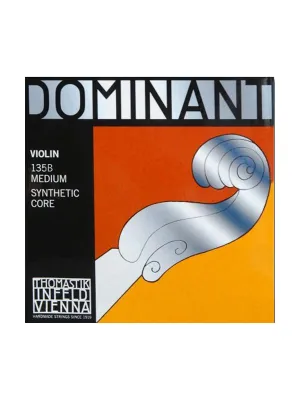
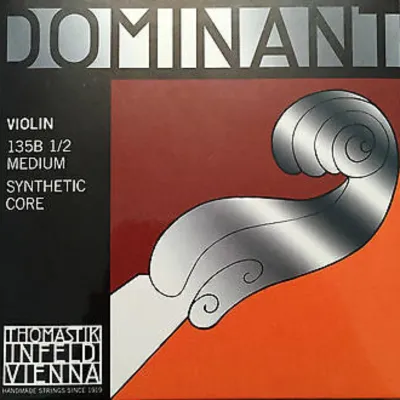
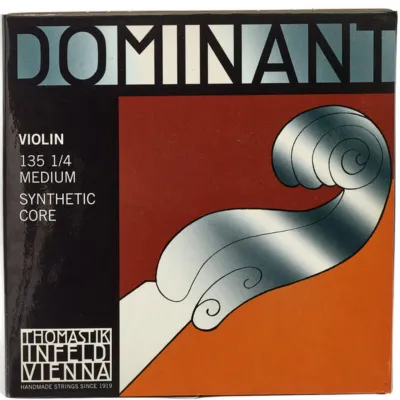

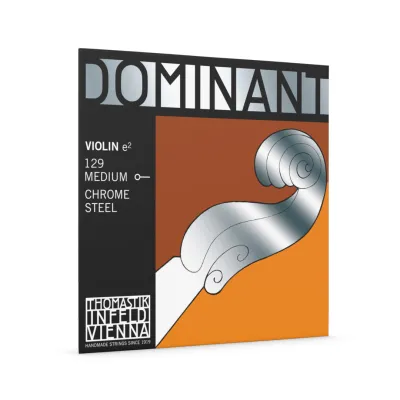
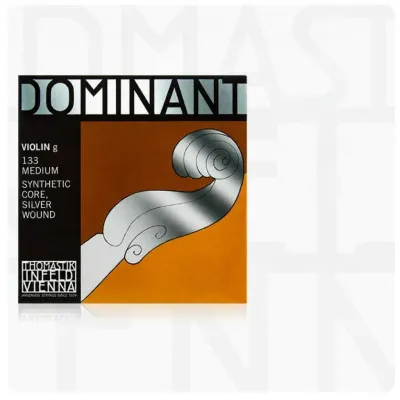
Prices are valid at publication and may change. Please refer to the product page for the latest price.
One of the most obvious signs that your strings need replacement is visible physical wear. Inspect the entire length of each string, paying close attention to the fingerboard contact areas and where the bow crosses. Fraying, unraveling of the outer metal winding, or discoloration indicates that the structural integrity is compromised, leading to persistent tuning instability.
Tonal limitations also indicate that your strings have reached the end of their useful life. Over time, synthetic and steel strings lose their elasticity, resulting in a muffled, dead sound that lacks dynamic projection. If you find yourself working harder to produce a clear, resonant tone, the strings are likely fatigued.
Your own skill progression can also outgrow your current string setup. Many student violins come fitted with basic steel-core strings, which are durable but offer a stiff feel and a highly direct, sometimes piercing tone. As you learn vibrato, shifting, and more nuanced bowing techniques, these rigid strings can limit your ability to explore a wider palette of colors. Upgrading to a responsive synthetic core string set can open up new avenues for expressive playing.
Match String Response to Your Current Technical Level
The physical response of a string—how quickly it speaks when the bow makes contact and how much resistance it offers—must align with your physical control. Synthetic core strings behave differently than steel or pure gut options, and their suitability varies across different stages of learning.

For beginners, the primary goal is to establish consistent bow speed, pressure, and placement. Standard-tension synthetic strings are highly forgiving, offering a moderate amount of resistance that helps novice players feel the string “catch” under the bow hair. This tactile feedback is crucial for developing a straight bow stroke and learning to control dynamics. The relatively stable tension also means less time spent tuning and more time focused on fundamental mechanics.
Intermediate players require a string that supports more advanced articulation and a broader range of overtones. At this stage, you are likely working on shifting to higher positions, where string tension and thickness significantly affect playability. A responsive synthetic string allows for faster speaking times, meaning the sound initiates immediately upon bow contact. This responsiveness helps intermediate students refine their intonation and experiment with subtle tonal variations.
Advanced and professional players demand a high level of tonal complexity, projection, and reliability under intense performance conditions. While some advanced violinists prefer specialized high-tension strings to maximize projection in large concert halls, many continue to use standard synthetic strings for their balanced, neutral character. This neutrality allows the player to shape the sound entirely through their technique, providing a reliable canvas for solo, chamber, and orchestral repertoire.
Align Tonal Characteristics with Your Violin and Repertoire
Every violin possesses a unique natural resonance, often categorized as bright, dark, or neutral. Selecting the right strings involves finding a pairing that balances these inherent acoustic properties rather than exaggerating them.
When pairing strings with your instrument, consider how the synthetic core’s tension and winding materials interact with the wood. If you play an exceptionally bright or harsh-sounding violin, fitting it with highly brilliant strings can result in a piercing, thin tone. In such cases, a standard synthetic string with a warmer profile can help tame the harsh high frequencies. Conversely, if your violin is naturally dark, you may want to look for strings designed to add clarity and brilliance to prevent the overall sound from becoming muddy.
Your musical style and repertoire also dictate your string requirements. Classical violinists often favor synthetic strings for their rich harmonic profile and ability to blend well within an ensemble. Folk, fiddle, and jazz players, however, may prioritize a faster bow response and a slightly punchier, more direct sound. While synthetic strings are highly versatile across genres, players who frequently use extended techniques or alternative tunings must ensure the strings can withstand these physical demands without losing their tonal focus.
Before installing any new set of strings, verify the physical condition of your instrument’s contact points. Check the grooves in the wooden nut near the pegbox and the bridge to ensure they are smooth and of the correct depth. If a groove is too narrow or has sharp edges, it can pinch the string, causing the winding to unravel prematurely or causing the string to snap. Applying a small amount of graphite from a soft pencil to these grooves acts as a dry lubricant, allowing the string to slide smoothly as you tension it.
Prepare for Installation and the Break-In Period
Installing a new set of violin strings requires patience and careful attention to detail. Synthetic core strings undergo a distinct physical transition when first brought up to pitch, and understanding this process prevents premature disappointment with their sound.
When you first tension a new set of synthetic strings, they will stretch significantly over the first few days. This stretching causes temporary tuning instability, requiring frequent adjustments during practice. Additionally, brand-new synthetic strings often exhibit a bright, slightly metallic edge to their tone. This initial harshness is entirely normal and typically settles into a warmer, more balanced sound after several hours of active playing.
To ensure a safe installation, always change your strings one at a time rather than removing all four at once. Removing all strings simultaneously releases the downward pressure on the violin’s top plate, which can cause the soundpost inside the instrument to fall over—an issue that requires a professional luthier to correct. As you wind each new string onto its peg, ensure the winding progresses neatly toward the pegbox wall without overlapping, which helps prevent peg slippage. Keep a close eye on the bridge as you tune; the forward pull of the strings can cause the bridge to tilt forward, and if left uncorrected, it may warp or collapse.
If you encounter significant resistance while turning a peg, or if you notice that the bridge is visibly warped or the string grooves are badly worn, stop the installation immediately. Forcing a stuck peg can crack the pegbox, while tuning on a warped bridge can cause structural damage to the violin’s top. In these situations, consulting a qualified luthier is the safest course of action to ensure your instrument remains in optimal playing condition.
Frequently Asked Questions (FAQ)
When to Replace Synthetic Core Strings Based on Wear
Synthetic core strings do not have a fixed calendar lifespan, as wear depends heavily on individual playing habits and environmental conditions. Instead of waiting for a string to break, look for signs of tonal degradation, such as a loss of resonance, difficulty tuning, or a dull, lifeless response. Physical indicators like worn windings near the bridge or fingerboard also signal that a replacement is due. If you practice daily for an hour or more, you may need to replace your strings every four to six months, whereas casual players might stretch this period longer. In humid climates like Singapore, moisture and sweat can accelerate the corrosion of metal windings, making regular inspection even more important.
Risks and Conditions for Mixing String Brands
Mixing different string brands or core materials on a single violin is a common practice, but it requires careful consideration of tension and balance. The most frequent modification is pairing a synthetic G, D, and A string with a distinct steel E string to avoid the whistling common to some synthetic E strings. However, mixing strings with wildly different tensions can create uneven pressure across the bridge, potentially affecting the instrument’s structural balance and making it difficult to achieve a smooth tonal transition when crossing strings. Before mixing brands, check the manufacturer’s tension specifications to ensure they are compatible, or consult a luthier to maintain an even setup.
Community discussion
Share your experience or ask a question. Comments are reviewed before publication.