
When preparing for advanced high school mathematics, choosing the right study materials can make the difference between academic frustration and exam success. In Singapore, students facing the rigorous GCE A-Level curriculum often find themselves at a crossroads: should they stick to standard, syllabus-aligned reference books, or should they invest their time in the globally acclaimed art of problem solving (AoPS) series? The choice depends entirely on your immediate academic goals, your learning style, and how much time you can realistically allocate alongside your other subjects.
Standard A-Level reference books are designed with a singular, highly focused objective: to help you master the specific syllabus, formulas, and exam techniques required to score an ‘A’ in the Singapore-Cambridge GCE A-Level H2 Mathematics exam. They are highly efficient, directly aligned with the Singapore Examinations and Assessment Board (SEAB) guidelines, and essential for learning how to navigate standard exam questions under tight time constraints.
On the other hand, the art of problem solving curriculum is designed to foster deep mathematical maturity, logical reasoning, and creative problem-solving skills from first principles. It is the gold standard for students preparing for prestigious math competitions like the Singapore Mathematical Olympiad (SMO) or aiming for competitive university admissions interviews. However, AoPS does not align with the A-Level syllabus and lacks coverage of critical exam-specific modules like applied statistics. For pure exam performance, standard books are mandatory; AoPS is best treated as an enriching supplement for specific, high-level academic pathways.
Products mentioned in this guide
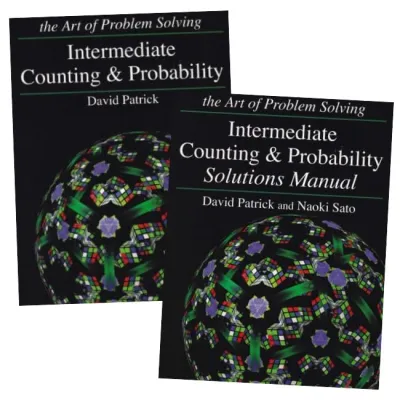
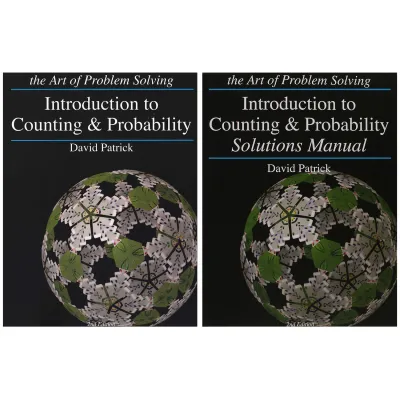
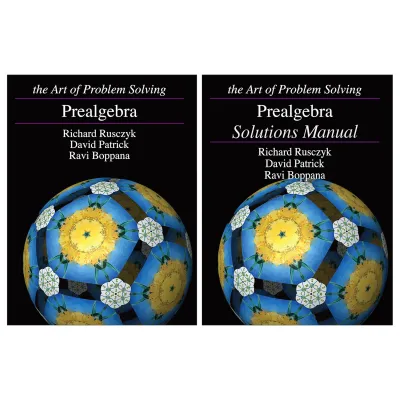
Prices are valid at publication and may change. Please refer to the product page for the latest price.
Core Differences: Exploration vs Exam Technique
To understand which resource suits you better, it is necessary to examine the fundamental philosophy behind each option. Standard reference books are built around the concept of structured, scaffolded learning, where students are guided step-by-step through known mathematical pathways. The art of problem solving methodology, conversely, is built on the principle of productive struggle, where students are expected to grapple with challenging, unfamiliar problems before they are shown the elegant mathematical tools used to solve them.
Learning Objectives and Syllabus Alignment
Standard A-Level reference books strictly mirror the official SEAB H2 Mathematics syllabus. This means they dedicate significant pages to topics like calculus (including differential equations and Maclaurin series), vectors in three-dimensional space, complex numbers, and a massive statistics section covering probability, discrete random variables, normal distribution, hypothesis testing, and correlation. These books ensure that every single learning outcome specified in the syllabus is systematically covered and practiced.
In contrast, the art of problem solving books focus heavily on classical, competition-style mathematics: algebra, geometry, number theory, and counting & probability (combinatorics). While their algebra and pre-calculus books offer unparalleled depth, they do not align with the specific modular structure of the A-Level exam. For example, AoPS does not cover the highly applied statistical methods, hypothesis testing, or linear regression models that constitute a major portion of the H2 Math Paper 2. Furthermore, AoPS introduces advanced concepts in number theory and geometry that, while intellectually stimulating, are completely absent from the A-Level syllabus.
Problem-Solving Style and Rigor
The pedagogical approach of standard reference books is highly algorithmic. They present a mathematical concept, provide a formula, show several worked examples demonstrating how to apply that formula to common question types, and then offer a series of practice questions that gradually increase in difficulty. This method is highly effective for building speed, accuracy, and pattern recognition. It teaches students to quickly identify the “type” of question they are facing and execute the correct sequence of steps to secure marks.
Take the topic of mathematical induction as an example. Standard reference books teach induction as a highly structured, four-step template. Students are drilled to write the exact concluding sentence required by examiners to secure full marks. AoPS, however, treats mathematical induction as a deep conceptual tool, exploring the well-ordering principle, strong induction, and structural induction, with problems that require creative leaps to formulate the inductive hypothesis. While this builds immense mathematical grit and the ability to construct rigorous, formal proofs, it is highly time-consuming. In a standard A-Level exam, where you are graded on your ability to produce highly structured, standard solutions within a strict three-hour window, the elegant, non-routine methods taught by AoPS are rarely rewarded with extra marks, and the time spent deriving formulas from scratch can be a major liability.
Navigating the Singapore A-Level (H2 Math) Exam Environment
The Singapore-Cambridge GCE A-Level H2 Mathematics exam is widely regarded as one of the most demanding pre-university math exams in the world. It is designed not just to test basic mathematical literacy, but to push students to apply their knowledge to complex, real-world contexts. However, the exam still operates within a highly structured framework.

To succeed in this environment, students must master specific exam-taking skills that are completely unique to the local curriculum. For instance, a significant portion of the H2 Math exam requires the expert use of a Graphing Calculator (GC) to solve systems of linear equations, plot complex graphs, find coordinates of intersection, and perform statistical calculations. Standard local reference books and topical guides are filled with step-by-step GC instructions, screenshots, and tips on how to use these devices efficiently. AoPS books, being designed for a global and often calculator-free competition audience, offer zero guidance on graphing calculator operations.
Additionally, local marking schemes are incredibly precise. Examiners look for specific intermediate working steps, correct mathematical notation (such as vector arrows and set notation), and clear explanations of statistical assumptions. Standard reference books, especially past-year compilations and topical revision guides, are written by experienced local educators who understand these marking rubrics intimately. They train students to avoid common “exam traps” and write answers that align perfectly with what Cambridge examiners expect. Relying primarily on AoPS can leave a student with brilliant mathematical intuition but poor exam discipline, leading to lost marks due to non-standard notation, missing steps, or poor time management.
At a Glance: Art of Problem Solving vs Standard A-Level Books
| Feature | Art of Problem Solving (AoPS) | Standard A-Level Reference Books |
|---|---|---|
| Primary Goal | Build deep mathematical maturity, logical reasoning, and creative problem-solving skills. | Master the specific syllabus, formulas, and exam techniques required for top grades. |
| Syllabus Coverage | Covers algebra, geometry, number theory, and combinatorics deeply; lacks applied statistics and mechanics. | Strictly follows the official SEAB H2 Mathematics syllabus, including all statistics and calculus modules. |
| Problem Types | Non-routine, proof-based, and highly challenging competition-style problems. | Standardized, template-based questions that mirror actual exam papers and past-year series. |
| Proof & Rigor | Extremely high; emphasizes first-principles derivations and formal proof writing. | Moderate; focuses on application, calculation, and adhering to specific marking rubrics. |
| Time Efficiency | Low for exam prep; requires deep, unstructured hours to work through complex topics. | High; designed for rapid revision, pattern recognition, and targeted practice. |
| Best Target Audience | Olympiad contestants, future math/computer science majors, and students aiming for top-tier university interviews. | Junior College students prioritizing their H2 Mathematics grades and preparing for the GCE A-Level exams. |
Decision Framework: Which Path Should You Take?
Choosing between these two resources requires a clear assessment of your current academic standing, your future aspirations, and your available study time.
Choose Standard A-Level Reference Books if:
- Your primary academic goal is securing an 'A' grade in H2 Math to maximize your University Admission Score.
- You need to master the specific graphing calculator techniques, statistical distributions, and vector proofs required by the SEAB syllabus.
- You are on a tight timeline (e.g., preparing for the exams within a year or two) and need to maximize your study efficiency.
- You want to build reliable pattern recognition and speed to avoid careless mistakes under high-pressure exam conditions.
Choose Art of Problem Solving if:
- You are actively preparing for competitive mathematics olympiads like the Singapore Mathematical Olympiad (SMO).
- You are aiming for top-tier global university programs in mathematics, physics, or computer science that require specialized entrance exams (like STEP or MAT) or rigorous academic interviews.
- You want to build a deep, lifelong conceptual understanding of mathematics and enjoy the challenge of solving complex, non-routine problems.
- You have a strong mathematical foundation and want to stretch your cognitive limits beyond the standard high school curriculum.
Verify first if:
- You plan to use both resources. Ensure you have a solid foundation in the standard syllabus before allocating time to AoPS. Assess whether your current academic workload in Junior College (including other demanding H2 subjects like Physics, Chemistry, or Economics) allows for the deep, unstructured hours that AoPS requires. If time is tight, prioritize standard topical guides and past-year papers.
Frequently Asked Questions (FAQ)
Can I use Art of Problem Solving books to prepare for A-Level exams?
Using the art of problem solving books as your primary preparation tool for A-Level exams is highly inefficient. While AoPS builds incredible cognitive capacity and logical reasoning, it does not align with the specific structure of the SEAB H2 Mathematics syllabus. It completely omits critical exam components like applied statistics, hypothesis testing, and linear regression, while dedicating hundreds of pages to topics like advanced number theory and Euclidean geometry that are not tested at the A-Level. Furthermore, AoPS does not teach the specific graphing calculator skills or exam presentation formats required to secure full marks. It should only be used as a supplementary enrichment tool for gifted students who have already mastered their standard school curriculum.
Are standard A-Level reference books enough for university math interviews?
Standard A-Level reference books are highly effective for securing top grades, but they are often insufficient on their own for rigorous university admissions interviews at top-tier global institutions. Interviews at universities like Oxford or Cambridge, or specialized mathematics entrance exams like STEP (Sixth Term Examination Paper) and MAT (Mathematics Admissions Test), are designed to test your adaptability and how you think when presented with completely unfamiliar, non-routine problems. Because standard reference books focus heavily on routine algorithms and pattern recognition, they do not train you to think from first principles in high-pressure, conversational interview settings. For these specific pathways, the creative, proof-based thinking fostered by the art of problem solving curriculum is highly beneficial and often necessary to stand out.
Community discussion
Share your experience or ask a question. Comments are reviewed before publication.