
Quick Answer: Is Art of Problem Solving the Right Fit for PSLE?
The classic international Art of Problem Solving (AoPS) series is not a direct fit for standard Singapore Primary School Leaving Examination (PSLE) exam drilling, but it is an exceptional supplementary tool for building deep, non-routine conceptual reasoning and heuristic mastery. If your child is aiming for an Achievement Level 1 (AL1) or AL2 grade, has already mastered the core Ministry of Education (MOE) syllabus, and needs to develop mathematical resilience when facing unfamiliar, high-weightage Paper 2 problem sums, AoPS resources are highly beneficial.
Conversely, if your child needs to improve calculation speed, reduce careless errors, or become familiar with the specific formats of Singapore’s national exam, mainstream topical drill books from local publishers are far more effective. The optimal choice depends entirely on your child’s current mathematical foundation, their target AL score, and their specific learning gaps.
Understanding the "Art of Problem Solving" Approach
The Art of Problem Solving is a highly acclaimed, United States-based mathematics curriculum and publisher known for its focus on deep mathematical inquiry and competitive math preparation. Unlike traditional curricula that present a mathematical formula and ask students to practice it repeatedly, the AoPS philosophy centers on discovery-based learning. Students are presented with challenging, multi-layered problems first, encouraging them to struggle productively, experiment with different strategies, and discover the underlying mathematical principles themselves.
Products mentioned in this guide
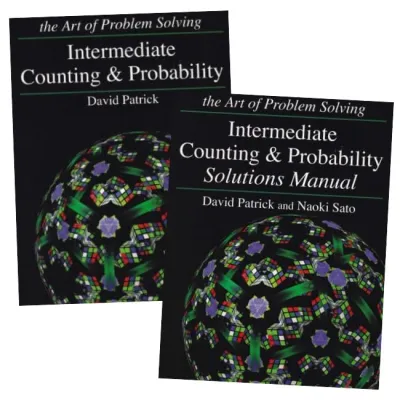
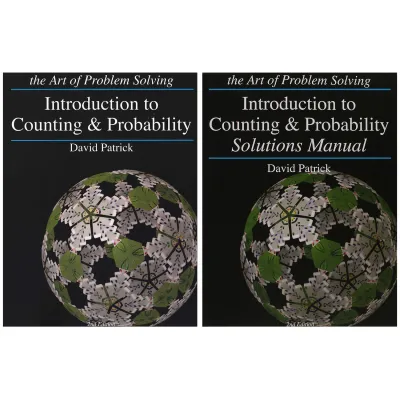
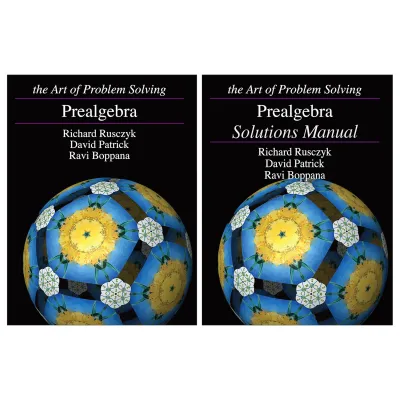
Prices are valid at publication and may change. Please refer to the product page for the latest price.

This approach differs structurally from the standard Singapore MOE primary mathematics syllabus, which is highly structured around the Concrete-Pictorial-Abstract (CPA) pedagogical framework and specific, localized heuristic methods. While both systems value conceptual depth over rote memorization, their execution is distinct. Singapore’s curriculum uses highly defined visual representations, such as bar models and the “units and parts” framework, to solve complex algebraic problems at a primary level.
Under Singapore’s AL grading system, the PSLE Math paper, particularly Paper 2, features non-routine, high-weightage questions designed to test application, logical reasoning, and spatial visualization. The cognitive demands of these challenging PSLE questions align closely with the problem-solving mindset fostered by AoPS. However, because AoPS is written for an international audience, it does not use Singapore-specific terminology or exam formats, and it covers topics in a different sequence. Parents must therefore treat it as a supplementary cognitive training tool rather than a syllabus-aligned exam guide.
Key Criteria for Evaluating PSLE Math Assessment Books
Before purchasing any mathematics resource for a student in Singapore, parents should evaluate the material against four critical dimensions to ensure it serves a clear, targeted purpose in the revision cycle.
Syllabus Alignment The primary hazard of utilizing international resources or outdated local guides is curriculum mismatch. A suitable PSLE math book must align precisely with the latest MOE syllabus. This means it must exclude topics that have been phased out of the primary curriculum and focus intensely on the exact depth of topics currently tested, such as speed, circles, pie charts, and rate.
Problem-Solving Approach Different books serve different cognitive functions. Some focus on procedural fluency through repetitive drills, which is essential for securing marks in Paper 1. Others focus on heuristic application, teaching students how to systematically break down complex word problems using techniques like supposition, working backwards, or spatial visualization. Parents must assess whether a book teaches these strategies explicitly or merely presents them in the solutions.
Difficulty Progression A well-designed assessment book should feature a clear learning scaffold. It should begin with basic recall and procedural questions (foundational level) before progressing to intermediate multi-step word problems, and finally to higher-order thinking skills (HOTS) that mimic the challenging four-mark and five-mark questions at the end of PSLE Paper 2. Without this progression, students can easily become demotivated.
Answer Key Quality For independent study, the answer key is just as important as the questions. A high-quality book must provide complete, step-by-step worked solutions that explain the logical reasoning behind each step. For Singapore Math, this means showing clear model diagrams, unit-method steps, or logical tables. Books that only provide final numerical answers offer very little educational value for students trying to diagnose their own mistakes.
Art of Problem Solving vs. Mainstream PSLE Alternatives
To understand where AoPS fits in a Singaporean student’s study plan, it is helpful to compare it directly against three major categories of local assessment books available in Singapore bookstores.
Art of Problem Solving vs. Standard Topical Drill Books
Standard topical drill books are designed for volume, consistency, and format familiarization. These books divide the MOE syllabus into neat chapters—such as Fractions, Ratio, and Percentage—and provide dozens of similar questions for each concept. This high-repetition approach is highly effective for building muscle memory, improving calculation speed, and eliminating careless errors in Paper 1.
In contrast, the Art of Problem Solving approach eschews repetitive drilling. Instead of solving twenty identical ratio questions, a student using AoPS might tackle five highly distinct, complex problems that require integrating ratio, geometry, and logical deduction simultaneously. While topical drills build the stamina and speed necessary to complete the exam within the tight two-hour limit, AoPS builds the mental agility needed when a student encounters a completely novel question format that they have never seen in school worksheets. Therefore, topical drills are best for baseline preparation, while AoPS-style problem-solving is best for breaking through score plateaus.
Art of Problem Solving vs. Dedicated Heuristics and Model Drawing Guides
Singapore is famous for its dedicated heuristics books, which isolate specific Singapore Math heuristics (like “constant total,” “constant difference,” or “external transfer”) and teach students to recognize the linguistic cues that signal which method to use. They rely heavily on visual aids, particularly bar models, to make abstract algebraic concepts concrete for primary school students.
The Art of Problem Solving takes a more open-ended approach to heuristics. Rather than teaching a student to categorize a problem into a pre-defined box, AoPS encourages students to play with numbers, draw custom diagrams, and find multiple algebraic or logical pathways to the solution. While local heuristics guides are superior for teaching structured, visual step-by-step methods that match the marking rubrics of PSLE examiners, AoPS is highly valuable for students who find rigid model drawing restrictive and prefer to develop a broader, more flexible mathematical intuition that prepares them for secondary-level mathematics.
Art of Problem Solving vs. Advanced or Olympiad Prep Books
For high-achieving students, the choice often comes down to advanced PSLE preparation books versus Math Olympiad preparation materials. It is crucial to understand that the PSLE, while difficult, is still bound by the MOE primary syllabus. Math Olympiad books and the core AoPS series often introduce concepts that are far outside the PSLE scope, such as modular arithmetic, advanced combinatorics, and formal algebraic proofs.
If a student’s primary goal is to secure an AL1 in the PSLE, spending excessive time on pure Olympiad training can be counterproductive. It may introduce out-of-syllabus methods that are not accepted in the PSLE marking scheme, or cause unnecessary cognitive overload. However, the introductory levels of AoPS (such as Beast Academy 5 or AoPS Prealgebra) can bridge the gap beautifully for students who find standard school work trivial. They provide a healthy intellectual challenge that keeps mathematically gifted students engaged without necessarily forcing them into the highly competitive, specialized track of local Math Olympiads.
How to Choose the Right Math Book for Your Child's Needs
Selecting the right combination of math books requires a realistic assessment of your child’s academic standing, learning style, and available preparation time. Parents should avoid buying multiple books from the same category, as this often leads to “assessment book fatigue” and incomplete learning.
Choose “Art of Problem Solving” if: Your child already consistently scores 85% or higher in school examinations (equivalent to AL1 or AL2), possesses strong reading comprehension skills, and enjoys the process of mathematical discovery. This resource is ideal if your child gets bored with repetitive homework and needs to build emotional resilience when tackling difficult, multi-step problems that cannot be solved in under a minute.
Choose Mainstream Topical Books if: Your child’s primary obstacles are careless calculation errors, poor time management, or a lack of confidence with standard exam formats. If your child is scoring in the AL3 to AL5 range, their immediate priority should be securing all available marks in Paper 1 and the structured questions of Paper 2. High-quality topical books from local publishers will provide the targeted, syllabus-aligned practice they need to build exam stamina.
Choose Dedicated Foundation Books if: Your child is struggling with basic fraction operations, decimal conversions, or fundamental geometric properties (scoring AL6 or below). In this scenario, complex heuristics and international problem-solving guides will only cause frustration. Focus instead on books that offer heavily scaffolded, bite-sized practices with clear visual aids to rebuild their mathematical foundation.
Verify First: Before purchasing any math book, parents must perform a few essential verification checks. First, check the publication or reprint year to ensure the book aligns with the current MOE syllabus. Second, verify the authorized source of the book—especially when buying international titles like AoPS online—to ensure you are receiving a complete, high-quality print edition rather than a poorly scanned copy. Finally, open the book to the answer key: ensure the solutions are written in a language and format that you or your child can easily follow, as a dense, purely algebraic key may be of little use to a primary school student. Expect to pay between S$15 and S$35 for high-quality local assessment books, while imported AoPS volumes generally range from S$30 to S$60 depending on the retailer and shipping costs.
Frequently Asked Questions (FAQ)
Can my child use Art of Problem Solving as their only PSLE math revision book?
No, relying solely on the Art of Problem Solving is highly risky and generally insufficient for PSLE preparation. Because AoPS is an international curriculum, it does not cover the specific formatting, marking rubrics, or topical distribution of the Singapore PSLE. For example, it will not prepare your child for the specific time constraints of Paper 1 (where calculators are prohibited) or teach them how to write out steps that align with the MOE marking scheme. A balanced revision strategy must pair deep conceptual tools like AoPS with local past-year school exam papers and topical drills to ensure both mathematical depth and exam-specific readiness.
What is the best time to start using problem-solving guides for PSLE?
The ideal time to introduce advanced problem-solving guides is during Primary 5. This is the year when the MOE math syllabus experiences a significant leap in difficulty, introducing complex multi-step topics like ratio, average, and percentage. Introducing heuristic frameworks early gives your child a full year to absorb and practice these thinking patterns before the high-pressure environment of Primary 6. Waiting until the middle or end of Primary 6 to suddenly switch to a heavy problem-solving curriculum can cause immense stress, as the student will be trying to learn new cognitive strategies while simultaneously dealing with exam anxiety.
Do I need to buy the latest edition of PSLE assessment books every year?
While core mathematical concepts and heuristics do not change from year to year, buying the latest edition is highly recommended for the final year of PSLE preparation. Local publishers closely monitor the actual PSLE papers set by the Singapore Examinations and Assessment Board (SEAB) each year. When a new style of question appears in the national exam, publishers quickly update their latest editions to include similar practice problems. Purchasing the latest edition ensures your child is not surprised by recent syllabus tweaks, changes in question trends, or updated marking rubrics. For earlier years of practice, slightly older editions or secondhand books are perfectly acceptable for general conceptual reinforcement.
Community discussion
Share your experience or ask a question. Comments are reviewed before publication.