
Quick Answer: Which Book Should You Read?
Choosing between Atomic Habits by James Clear and The Power of Habit by Charles Duhigg depends entirely on what you want to achieve. If you are looking for a highly practical, step-by-step manual to optimize your daily routines, Atomic Habits is the ideal choice. If you are more interested in the psychological science, neurological research, and real-world case studies of how habits shape organizations and societies, The Power of Habit is the better fit.
Neither book is universally superior to the other. Instead, they offer complementary approaches to behavior change. One provides the actionable blueprint for personal growth, while the other delivers a deep, narrative-driven understanding of human behavior. Identifying your current learning style and immediate goals will help you make the right purchase.
Core Philosophy: Systems vs. The Habit Loop
The foundational theories of these two books approach behavior change from different angles. In Atomic Habits, James Clear introduces the concept of identity-based habits. He argues that true behavior change does not stem from setting goals, but from focusing on the systems you build and the person you wish to become. Clear structures his philosophy around the Four Laws of Behavior Change: make it obvious, make it attractive, make it easy, and make it satisfying. To break bad habits, he suggests reversing these laws: make it invisible, make it unattractive, make it difficult, and make it unsatisfying. This framework emphasizes continuous, incremental improvements—the idea that getting one percent better each day compounds into massive long-term results.
Products mentioned in this guide
![[ready stock ] Atomic Habits:Establish A Good Habit English Original](https://img.lazcdn.com/g/p/2200d28e1723dc0621cd45277dae0165.jpg_400x400q80.jpg_.webp)


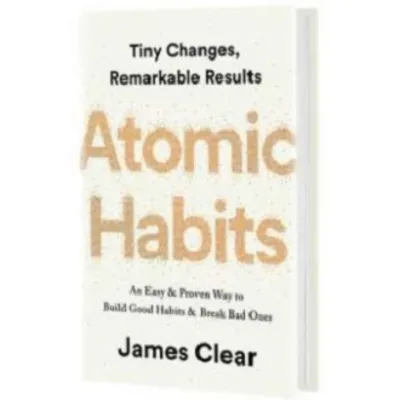
Prices are valid at publication and may change. Please refer to the product page for the latest price.

In contrast, The Power of Habit by Charles Duhigg focuses on the neurological mechanics of behavior. Duhigg introduces the “Habit Loop,” a three-step neurological cycle consisting of a cue, a routine, and a reward. His philosophy centers on the idea that once a habit is formed, the brain stops fully participating in decision-making for that behavior. Duhigg also introduces “keystone habits,” which are foundational routines that naturally trigger widespread positive changes across other areas of life and work. He emphasizes the “Golden Rule of Habit Change,” which states that you cannot truly erase a bad habit; you can only replace the routine while keeping the same cue and reward.
While Clear focuses heavily on personal accountability and daily system optimization, Duhigg explores the broader psychological and organizational mechanics. Clear’s model is designed to help you actively engineer new behaviors from the ground up. Duhigg’s model is designed to help you diagnose existing behaviors by identifying the hidden cravings and cues that drive them. Understanding this distinction helps you choose whether you need a tool for active daily construction or a framework for behavioral diagnosis.
Actionability: Practical Frameworks and Daily Application
When it comes to applying these concepts to your daily life, the two books offer very different reading experiences. Atomic Habits is structured specifically as an actionable workbook. Each chapter concludes with clear summaries, visual diagrams, and practical templates. Clear provides highly specific formulas, such as “habit stacking”—pairing a new habit with an established one—and the “two-minute rule,” which helps overcome procrastination by scaling down new habits to their simplest forms. This structured layout makes it incredibly easy to close the book and immediately implement a new routine.
The Power of Habit takes a narrative-driven, investigative approach. Duhigg uses compelling case studies—ranging from corporate turnarounds at major companies to the training regimens of Olympic athletes—to illustrate how habits function. While these stories are highly engaging and offer deep insights into human nature, the book does not provide a step-by-step personal guide in the main text. Instead, readers must extract the core lessons from the narratives and design their own strategies. However, Duhigg does include a practical four-step framework in the appendix to help readers identify their routines, experiment with rewards, isolate cues, and establish a plan.
If you prefer a structured, instructional reading experience that guides you through daily exercises, Atomic Habits is highly effective. If you prefer rich storytelling, historical examples, and investigative journalism that allow you to draw your own conclusions about human behavior, The Power of Habit will be more satisfying.
Target Audience: Who Benefits Most from Each Book?
The ideal reader for Atomic Habits is someone focused on personal development, individual productivity, and immediate lifestyle changes. If you are a student trying to build better study habits, a professional looking to optimize your workflow, or an individual trying to break a specific personal vice, Clear’s direct advice is tailored for your needs. The book speaks directly to the individual seeking to master their own daily environment.
The ideal reader for The Power of Habit is someone interested in leadership, management, marketing, or sociology. Duhigg’s exploration of how habits influence corporate culture, consumer purchasing patterns, and social movements makes it a valuable resource for business leaders and organizers. If you want to understand how to change the collective behavior of a team, a company, or a target market, this book provides the necessary macro-level perspective.
Ultimately, these books can be highly complementary. The Power of Habit provides the scientific “why” behind our routines, explaining how the brain processes automatic behaviors. Atomic Habits provides the practical “how,” offering the concrete tools needed to build those behaviors day by day. Reading both can give you a comprehensive understanding of habit formation from both a scientific and a practical standpoint.
Formats, Editions, and Reading Experience
Before purchasing either book, it is important to verify the format, edition, and language to ensure they match your reading preferences and device compatibility. Both titles are widely available in physical formats, e-books, and audiobooks across various online marketplaces.
If you prefer physical books, Atomic Habits benefits greatly from a hardcover or paperback edition. The book contains numerous charts, tables, and visual diagrams that are easier to reference, highlight, and revisit in a physical format. While e-book versions are highly convenient, you should ensure your e-reader renders images and diagrams clearly so you do not miss these visual aids.
For those who prefer audiobooks, The Power of Habit is exceptionally well-suited to this format. Its narrative, story-heavy style reads like an engaging podcast or documentary, making it easy to follow during a commute or workout. When purchasing an audiobook on any digital platform, always verify that the version is explicitly marked as “unabridged” to ensure you receive the complete, unedited text. Additionally, check the narrator’s style and listen to a sample to ensure it matches your listening preferences before finalizing your purchase.
Finally, pay attention to regional editions and publishers. Cover designs and paper quality can vary depending on the publisher and your location. Checking the publication details and verifying the language edition will help ensure you receive the exact version you intend to read.
Final Decision Framework: Choose Based on Your Goals
To make your final purchasing decision, consider which of the following scenarios best aligns with your current needs:
**Choose Atomic Habits if:**
- You want a highly structured, step-by-step blueprint with immediate action steps.
- Your primary goal is to optimize personal productivity, daily routines, and individual self-discipline.
- You prefer bulleted summaries, practical templates, and visual diagrams over long narrative stories.
**Choose The Power of Habit if:**
- You want to understand the neurological science, psychology, and history behind how habits form.
- You are interested in how habits operate within businesses, organizations, and larger social movements.
- You enjoy narrative non-fiction, detailed case studies, and investigative storytelling.
Read both if:
- You want a complete mastery of habit formation. In this case, start with The Power of Habit to understand the scientific mechanics of the brain, and then read Atomic Habits to implement those insights into your daily life.
Frequently Asked Questions (FAQ)
Do I need to read The Power of Habit before reading Atomic Habits?
No, there is no strict prerequisite or required reading order between the two books. Atomic Habits is designed to be a fully standalone, practical guide. While James Clear builds upon some of the foundational habit science discussed in Duhigg’s work, he presents his concepts in a unique, self-contained framework. You should choose which book to read first based on your immediate goals and preferred reading style rather than their chronological publication dates.
Are the audiobook versions worth listening to instead of reading the physical books?
Both formats have distinct advantages depending on the book’s style. The Power of Habit is highly narrative and driven by case studies, making its audiobook version engaging and easy to follow. Atomic Habits contains many visual models, tables, and actionable summaries that are often easier to reference, highlight, and revisit in a physical or e-book format. If you decide to purchase the audiobook version of either title, remember to verify that it is the unabridged edition and check your device compatibility before buying.
Community discussion
Share your experience or ask a question. Comments are reviewed before publication.