
Starting your guitar journey is incredibly exciting, but walking into a music store or browsing online marketplaces can quickly lead to information overload. You are confronted with walls of colorful gadgets, specialized tools, and cleaning solutions, all claiming to be essential for your progress. The truth is that you only need a handful of basic tools to start playing comfortably and keeping your instrument in tune.
Overspending on complex gear too early can actually hinder your learning process by distracting you from the core task of building finger strength and muscle memory. By focusing on a lean, functional set of accessories, you protect your budget and keep your practice space clutter-free. Let’s break down exactly which items deserve a spot in your starter kit today, which ones can wait a few months, and how to spot the signs that it is finally time to upgrade.
The Absolute Must-Haves for Your First Month
To get the most out of your first few weeks of practice, your immediate focus should be on keeping the instrument in tune, holding it comfortably, and protecting it from basic environmental hazards. You do not need premium, professional-grade gear to achieve this; simple, budget-friendly options will serve you perfectly.
Products mentioned in this guide
![Jim Dunlop Standard TORTEX Black Guitar pick Authentic [SG Distributor] Made in USA](https://img.lazcdn.com/g/p/5b084d6bf4bd363e1d0c17a86b835858.jpg_400x400q80.jpg_.webp)


Prices are valid at publication and may change. Please refer to the product page for the latest price.
A reliable tuner is the single most critical accessory you will buy. Guitars naturally slip out of tune due to temperature changes, string stretching, and playing tension. While free smartphone tuning apps are highly convenient for quiet bedrooms, they rely on your phone’s microphone and can struggle in noisy environments. A basic clip-on tuner is an excellent, inexpensive alternative. These devices clip directly onto your guitar’s headstock and detect the pitch via the physical vibrations of the wood, making them incredibly accurate even when other people are talking in the room.
Next, you will want a variety pack of guitar picks. Picks come in various thicknesses, measured in millimeters, ranging from extra thin (under 0.50 mm) to heavy (over 1.0 mm). Thin picks flex easily, making them highly forgiving for strumming chords on an acoustic guitar. Heavy picks offer precise control and instant response, which is ideal for playing individual notes and scales on an electric guitar. Buying a mixed variety pack allows you to test different gauges and discover what feels most natural in your hand before committing to a specific style.
A comfortable, adjustable guitar strap is also essential, even if you plan to practice primarily while sitting. A strap stabilizes the guitar against your body, preventing it from slipping off your lap and helping you maintain a consistent neck angle. This consistency is vital for building correct muscle memory in your fretting hand. Look for a simple woven nylon or cotton strap with secure leather ends that fit tightly over your guitar’s strap buttons.
Finally, a padded gig bag is non-negotiable for protecting your investment. Even if your guitar rarely leaves your room, a gig bag shields it from dust, pet hair, and accidental scratches. In humid climates like Singapore, where indoor air conditioning can cause rapid temperature and humidity swings, keeping your guitar zipped in a bag when not in use helps buffer the wood against these sudden environmental changes. Look for a bag with at least 10mm of foam padding and comfortable shoulder straps.
Comfort and Maintenance Upgrades to Buy Next
Once you have established a consistent daily practice routine and feel confident that you will stick with the instrument, you can begin introducing accessories that improve convenience and help maintain your gear. These are the “second wave” purchases that make practicing more inviting and extend the lifespan of your strings.

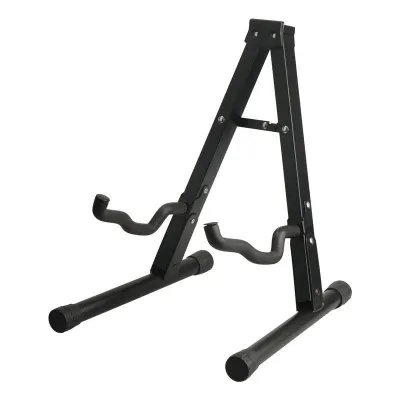
A sturdy guitar stand is one of the best investments you can make to encourage regular practice. When a guitar is packed away in its gig bag, the physical barrier of unzipping it can often be enough to deter a quick ten-minute practice session. Keeping your guitar on an A-frame or neck-cradle stand makes it highly visible and instantly accessible. Just ensure the stand is placed in a safe corner away from direct sunlight, air conditioning vents, or high-traffic pathways where it could be knocked over.
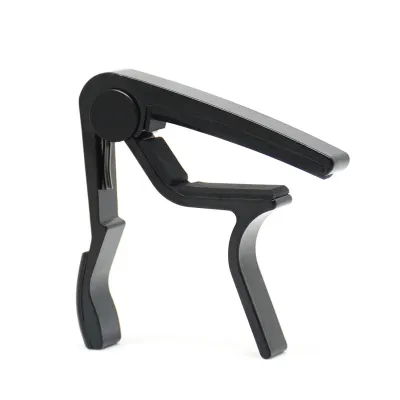
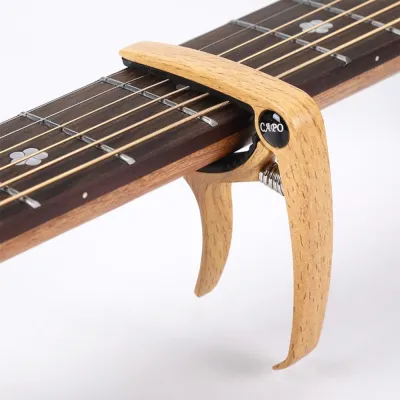
For acoustic players, a capo is a highly useful tool that unlocks hundreds of popular songs. A capo is a spring-loaded clamp that clips across the fretboard, effectively shortening the neck and raising the pitch of the strings. This allows you to play songs in different keys using the basic open chords you already know, bypassing the need to learn complex barre chords during your first few months. A simple trigger-style capo is highly recommended for its ease of use and quick adjustments.
Basic maintenance tools will also save you time and frustration during your first string change. A string winder with a built-in wire cutter is an inexpensive multi-tool that makes replacing old, dull strings incredibly fast. Winding pegs by hand can be tedious, but a manual winder speeds up the process significantly, while the integrated cutter allows you to snip off excess string ends safely.
Additionally, keep a clean microfiber cloth in your case or gig bag. After every practice session, take thirty seconds to wipe down the strings and the back of the neck. Your fingers naturally leave behind sweat, oils, and dead skin cells, which quickly corrode metal strings and make the fretboard feel sticky. Regular wiping prevents premature rust, preserves your tone, and keeps the neck feeling smooth and fast.
What Can Wait: Avoiding the Beginner Gear Trap
It is incredibly easy to fall into the “gear acquisition syndrome” trap, where you spend more time researching and buying accessories than actually practicing. Many products marketed to guitarists are designed for specific performance scenarios or advanced playing styles and offer very little practical value to a beginner.
Effects pedals are perhaps the most common distraction for new electric guitarists. While the idea of recreating your favorite band’s spacey delays or heavy distortions is tempting, adding complex pedalboards early on can severely hinder your progress. Pedals can mask fundamental technique flaws, such as poor finger placement or sloppy picking, behind a wall of sound. Focus on developing a clean, clear tone with your fingers first; the time to explore effects is when your physical technique is consistent.
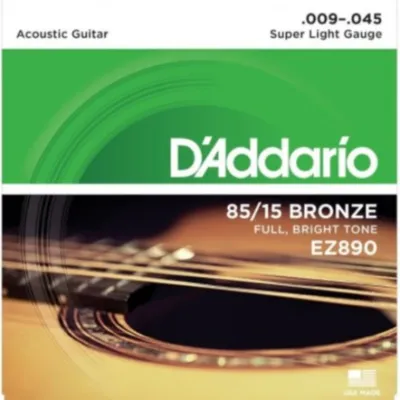
Similarly, avoid boutique or specialized guitar strings. High-end coated strings or exotic metal alloys can cost three to four times as much as a standard set of nickel-plated or bronze strings. As a beginner, you are highly likely to break strings occasionally due to overtuning or rough picking, and your ears will not yet be sensitive enough to appreciate the subtle tonal differences of premium alloys. Standard, budget-friendly strings from reputable manufacturers are more than adequate.
Heavy-duty flight cases are another unnecessary expense for beginners. These hard-shell cases are designed to withstand the extreme pressures of airline baggage holds and rough touring schedules. They are incredibly heavy, awkward to carry, and can cost hundreds of dollars. Unless you are regularly traveling by air with your instrument, a lightweight, well-padded gig bag is far more practical for local travel and home storage.
You should also skip expensive mechanical metronomes and specialized strap locks. While practicing with a steady beat is crucial, free smartphone metronome apps offer identical functionality without costing a cent. Standard guitar straps generally fit securely enough for home use, making premium locking systems an unnecessary upgrade until you start performing active movements on a live stage. A simple rule of thumb: if an accessory solves a problem you are not currently experiencing in your daily practice, leave it on the shelf.
How to Know When It Is Time to Upgrade
As your skills progress, your physical demands on your gear will change. You do not need to upgrade your accessories on a fixed schedule; instead, look for specific, observable signals that your current basic gear is starting to limit your progress or put your instrument at risk.
For instance, you will know it is time to transition from a basic clip-on tuner to a dedicated pedal tuner when you start playing with other musicians. If you begin attending group classes, jam sessions, or band rehearsals, the ambient noise of other instruments can make it difficult for clip-on tuners to register vibrations accurately. A pedal tuner plugs directly into your guitar’s signal chain, completely bypassing room noise and allowing you to tune silently and instantly between songs.
The decision to upgrade from a soft gig bag to a hard-shell case is usually triggered by travel. If you begin taking regular weekly lessons, commuting on public transit, or traveling to local gigs, your guitar faces a much higher risk of physical impact. Furthermore, Singapore’s high relative humidity can cause solid-wood acoustic guitars to swell, leading to high action or structural warping. If you own a solid-wood acoustic instrument and transport it frequently, upgrading to a hard-shell case equipped with a small, specialized humidity-control pack will protect it from both physical impacts and environmental moisture.
When it comes to tonal upgrades like effects pedals or premium strings, wait until you can clearly identify what is missing from your sound. Once you can play several songs cleanly and notice that your basic practice amp’s built-in settings no longer satisfy your creative goals, that is your cue to research a multi-effects pedal or a specific overdrive. Upgrades should always be a response to a clear, identified need in your playing journey rather than a desire for novelty.
Frequently Asked Questions (FAQ)
Do I need an amplifier if I buy an electric guitar?
No, you do not need a large, traditional amplifier to start learning the electric guitar. While an unplugged electric guitar is too quiet for performance, a massive amp can be impractical and loud for home practice. Excellent, budget-friendly alternatives exist for beginners. A small headphone amplifier plugs directly into your guitar’s output jack, allowing you to hear your playing through headphones with realistic amp sounds. Alternatively, you can use a compact modeling practice amp, which provides great sound at low volumes, or an audio interface to connect your guitar directly to a computer or tablet.
Are expensive guitar cables worth it for beginners?
No, premium high-end cables are not necessary when you are first starting out. The primary job of a guitar cable is to transmit the electrical signal from your guitar to your amplifier without introducing hum or interference. Standard, well-shielded cables from established, mid-range brands offer excellent durability and clear signal transmission at a fraction of the cost. The subtle improvements in high-frequency response offered by expensive, low-capacitance cables are completely unnoticeable on beginner practice amplifiers and during early learning stages. Focus your budget on a reliable, mid-tier cable with sturdy, molded connectors instead.
Community discussion
Share your experience or ask a question. Comments are reviewed before publication.