
Finding the right practice instrument in Singapore often means balancing space constraints, noise considerations in high-density housing, and the challenging tropical climate. For beginners, headless and silent guitars offer an innovative solution to these hurdles, allowing for quiet late-night practice sessions and easy transport on public transit. Choosing the right brand requires understanding how these modern designs function, evaluating their hardware stability, and ensuring reliable local support for maintenance and parts.
While traditional guitars remain popular, the unique lifestyle demands of living in Singapore have driven a surge of interest in alternative guitar architectures. Whether you are commuting on the MRT with a compact gig bag or practicing in a cozy HDB flat at midnight, these specialized instruments provide practical advantages that standard acoustic or electric guitars cannot match. By focusing on build quality, local warranty availability, and ergonomic design, beginners can find an instrument that supports their learning journey without causing friction with neighbors or family members.
Decoding Headless, Silent, and "Stringless" Guitar Designs
To make an informed purchase, it is essential to understand the distinct design philosophies behind headless, silent, and so-called “stringless” guitars. While these terms are sometimes used interchangeably by beginners, they represent very different instruments designed for different purposes. Clarifying these differences ensures you invest in an instrument that aligns with your learning goals and practice environment.
Products mentioned in this guide





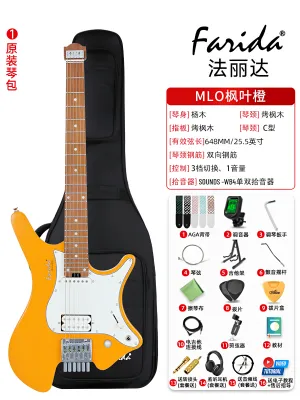

Prices are valid at publication and may change. Please refer to the product page for the latest price.
Headless guitars are characterized by the complete absence of a traditional headstock at the end of the neck. Instead, the tuning mechanisms are relocated to the bridge at the body of the guitar, and the strings are secured at the top of the neck with a locking nut system. This design drastically reduces the overall length of the instrument, making it highly portable and shifting the center of gravity closer to the player’s body. The result is a highly balanced instrument that eliminates neck dive and reduces shoulder strain during long practice sessions.
Silent guitars, on the other hand, are designed primarily to solve acoustic noise issues. These instruments typically feature a minimalist, skeletal frame that outlines the shape of a traditional guitar body, leaving the center empty. Because they lack a hollow acoustic chamber or a heavy solid body, they produce almost no acoustic sound when unplugged. Instead, they rely on built-in preamps, piezo pickups under the saddle, or magnetic pickups to send a rich, simulated acoustic or electric guitar signal directly to your headphones. This allows you to play with full volume and expression while remaining virtually silent to those around you.
The term “stringless guitar” frequently appears in search queries but is often a misnomer or refers to a different category of device. True stringless instruments are typically digital MIDI controllers, synthesizer interfaces, or laser-based learning gadgets that use touchpads, buttons, or optical sensors instead of physical metal or nylon strings. While these devices are excellent for music production or casual gaming, they do not translate the physical muscle memory, finger strength, or calluses required to play a traditional guitar. If your goal is to learn standard guitar techniques, you should focus on headless or silent models that utilize physical strings.
These specialized designs directly address the unique lifestyle challenges faced by musicians in Singapore. High-density housing estates, such as HDB flats and condominiums, mean that sound travels easily through shared walls and floors, making traditional acoustic practice difficult after hours. Furthermore, Singapore’s hot and humid tropical climate can cause traditional wooden guitars to warp, swell, or crack if not kept in climate-controlled environments. Many modern headless and silent guitars utilize composite materials, carbon fiber, or highly seasoned woods that offer superior resistance to humidity fluctuations, making them exceptionally durable in local conditions.
Core Selection Criteria for Entry-Level Models
When evaluating entry-level headless or silent guitars, beginners must look beyond aesthetic appeal and focus on practical features that affect playability, sound quality, and long-term durability. Because these instruments use non-traditional hardware, standard guitar evaluation rules do not always apply. Prioritizing the right technical specifications will help you avoid common pitfalls associated with cheap, poorly manufactured alternative designs.

Playability and ergonomics should be your primary concern when choosing a beginner instrument. The neck profile—the shape and thickness of the neck—should feel comfortable in your hand, with a modern C-shape or slim taper generally being the most accommodating for beginners. Scale length, which is the distance between the nut and the bridge, should ideally match standard guitar measurements (typically 25.5 inches for electric styles or 25 inches for acoustic styles) to ensure that the fret spacing feels natural and prepares you for playing traditional guitars later on. Additionally, pay close attention to the body shape; some headless guitars have radical, minimalist designs that require a strap to sit comfortably on your lap, while others feature detachable frames or built-in leg rests that mimic traditional body contours.
The electronics and audio output system are the heart of any silent guitar. Since you will spend most of your time practicing with headphones, the quality of the built-in preamp is critical. Look for models that feature an active preamp with onboard volume, bass, and treble controls, which allow you to shape your tone without needing external gear. The headphone jack should be robust and securely mounted; a standard 3.5mm jack is highly convenient for consumer headphones, while a 6.35mm jack is common on professional gear and may require an adapter. An auxiliary input is an invaluable feature for beginners, enabling you to plug in your smartphone or tablet to play along with metronomes, backing tracks, or online video lessons directly through your headphones.
Aligning your expectations with realistic budget brackets in Singapore is essential for making a smart purchase. Entry-level headless and silent guitars generally range from S$300 to S$900 in the local market. While models priced below S$400 are highly accessible, they often feature basic preamps with noticeable background hiss or cheaper tuning hardware that requires frequent adjustment. Stepping up to the S$600 to S$800 range typically secures significantly better build quality, including quieter electronics, smoother fretwork, and more robust tuning mechanisms that hold their pitch over long playing sessions.
Hardware stability is particularly critical for headless guitars because the tuning system is integrated into the bridge. On traditional guitars, cheap tuning pegs are easily replaced, but a faulty headless bridge can render the entire instrument unusable. Inspect the bridge assembly to ensure it is made from durable materials like solid brass, steel, or high-grade aluminum rather than soft zinc alloys. The tuning knobs or rollers should turn smoothly without binding, and the string-locking mechanism at the top of the neck must clamp the strings securely without slipping or cutting into the metal core.
Verifying Brand Reliability and Local Support in Singapore
Purchasing a specialized instrument like a headless or silent guitar requires a clear strategy for long-term maintenance and support. Because these guitars use proprietary hardware and electronics, you cannot rely solely on generic guitar repair shops for replacement parts or specialized setups. Verifying a brand’s local retail presence and distributor network in Singapore is crucial to protecting your investment.
Identifying authorized local distributors versus parallel imports is the first step in ensuring a worry-free ownership experience. Authorized distributors work directly with manufacturers to provide official warranties, which typically cover electronic defects, structural wood failures, and hardware malfunctions for at least one year. If you purchase a parallel import from an unauthorized online seller, you may find that local service centers will refuse to honor the warranty, leaving you to pay out of pocket for repairs or ship the instrument back to an overseas warehouse at your own expense.
The availability of proprietary replacement parts is a major factor that separates reputable brands from generic, no-name alternatives. Headless tuning systems, custom bridge saddles, and specialized preamp circuit boards are rarely standardized. If a critical component breaks on a generic online-only brand, finding a replacement part can be incredibly difficult, often turning a minor issue into a permanent breakdown. Established brands with local representation maintain inventories of official spare parts, ensuring that if a tuning knob strips or an input jack wears out, a replacement can be sourced quickly through local channels.
Evaluating a brand’s physical presence in Singapore’s retail landscape allows you to conduct hands-on testing before spending your money. Iconic music retail hubs, such as Bras Basah Complex and Peninsula Shopping Centre, house numerous specialized guitar shops where you can try different models side by side. Testing an instrument in person allows you to evaluate the weight distribution, feel the neck profile, and listen to the preamp’s noise floor through your own headphones. Furthermore, purchasing from a physical store often includes a professional setup service, where a technician adjusts the string height and intonation, making the guitar significantly easier for a beginner to play.
Pre-Purchase Inspection and Buying Checklist
Before finalizing your purchase, whether in a physical showroom or through an online storefront, conducting a thorough physical and electronic inspection is vital. This checklist will help you identify potential manufacturing defects or setup issues that could hinder your learning progress or require costly repairs down the road.
Begin your physical inspection by checking the fretwork along the edges of the neck. Run your thumb and index finger gently along both sides of the fretboard; the metal fret ends should feel smooth and flush with the wood. If the fret ends feel sharp or snag your skin, it indicates that the wood has shrunk due to humidity changes, a common issue in Singapore’s air-conditioned environments. Next, tune the guitar to pitch and play every single note up and down the neck to check for fret buzz or dead notes, which indicate an uneven fretboard or an improper neck relief adjustment.
For silent and electronic-heavy models, a thorough electronic check is mandatory. Plug in a pair of high-quality headphones and turn on the built-in preamp. Rotate all the control knobs slowly while listening for any crackling, popping, or scratching noises, which suggest dirty or low-quality potentiometers. Keep the guitar quiet and listen to the background noise; a faint hiss is normal for active preamps, but a loud hum or buzzing that changes when you touch the metal parts indicates a grounding issue or poor internal shielding.
Verify that all essential accessories are included in the package before leaving the store or accepting the delivery. Because headless guitars have unique, compact dimensions, standard guitar gig bags are usually too long and loose to protect them properly; ensure a custom-fitted, padded gig bag is included. Check if the instrument requires specific tools, such as proprietary hex keys or magnetic tuning wrenches, to change strings or adjust the truss rod, and confirm these tools are present. For silent guitars, verify whether the package includes the necessary power adapter, auxiliary cables, or starter batteries.
Finally, navigate the purchase terms carefully based on your chosen retail channel. If buying from a physical showroom, ask the retailer to perform a final setup to optimize the playability for a beginner. If purchasing from an online ecommerce platform, double-check the seller’s return window and read the fine print regarding return shipping costs for defective items. Ensure you register your product online with the official distributor immediately after purchase to activate your local warranty coverage.
Frequently Asked Questions (FAQ)
Can I use standard guitar strings and accessories on a headless or silent guitar?
Most silent guitars with traditional headstocks use standard acoustic or electric guitar strings without any issues. Headless guitars, however, vary by design. Some headless models require double-ball-end strings, which have brass balls at both ends and must be purchased in specific lengths. Other modern headless designs feature a locking nut system at the top of the neck, allowing you to use standard single-ball-end strings by cutting them to size and clamping them securely. Always check the manufacturer’s specifications to confirm which string type and gauge are compatible with your chosen model.
Do silent guitars require specific amplifiers, or can I use standard headphones?
Active silent guitars feature an onboard preamp powered by batteries or an external adapter, allowing you to plug standard headphones directly into the instrument for immediate monitoring. Passive silent guitars do not have an internal preamp and output a weak, unamplified signal; these models require an external headphone amplifier, an audio interface, or a traditional guitar amplifier to be heard. When using headphones, check the jack size on the guitar. Most modern silent models use a standard 3.5mm jack, but some professional models use a 6.35mm jack, which will require a simple gold-plated adapter to connect standard consumer headphones.

Community discussion
Share your experience or ask a question. Comments are reviewed before publication.