
Starting a musical journey is an exciting milestone, and choosing the right first instrument is the most critical decision you will make. For beginners, the traditional route often leads to standard spruce or mahogany acoustic guitars. However, bamboo guitars have emerged as an increasingly popular, highly durable, and environmentally conscious alternative. If you are looking for an instrument that can withstand environmental changes while delivering a bright, clear tone, bamboo is an excellent candidate. This guide will help you understand what makes bamboo unique, how to evaluate its features, and how to select the perfect instrument to support your learning journey.
Why Consider a Bamboo Guitar for Your First Instrument?
One of the greatest challenges for guitar owners, particularly in tropical regions like Singapore, is managing humidity. Traditional tonewoods are highly porous and sensitive to fluctuations in moisture. High humidity can cause wood to swell, leading to high string action, warped necks, and lifting bridges, while dry air-conditioned rooms can cause the wood to shrink and crack. Bamboo, which is technically a fast-growing grass rather than a tree, possesses a dense, uniform fiber structure. When processed into guitar tonewood, it exhibits remarkable dimensional stability. It resists warping and cracking far better than traditional woods, making it an incredibly low-maintenance option for beginners who may not yet have dedicated climate-controlled storage.
Beginners need an instrument that provides clear, encouraging feedback. Bamboo is a naturally stiff and dense material, which translates to a bright, articulate, and punchy sound. It offers excellent projection and sustain, meaning the notes you play will ring out clearly and cleanly. This brightness is particularly helpful for beginners, as it makes it easier to hear individual notes within a chord, helping you identify and correct mistakes during practice. While it may lack some of the deep, warm low-end frequencies found in aged mahogany or rosewood, its balanced mid-range and crisp highs are highly suited for a wide variety of musical genres.
Products mentioned in this guide
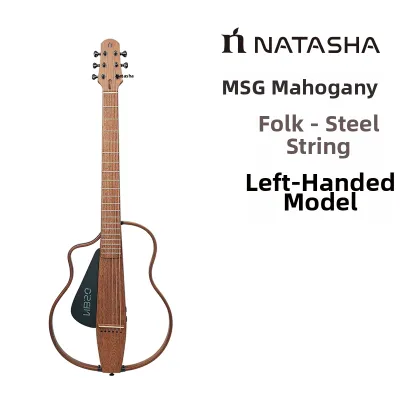

Prices are valid at publication and may change. Please refer to the product page for the latest price.
For eco-conscious players, bamboo is one of the most sustainable materials available. Traditional tonewoods like ebony, rosewood, and even certain species of mahogany are slow-growing and face severe over-harvesting pressures, leading to strict trade regulations. In contrast, bamboo reaches maturity in just three to five years and regenerates naturally from its root system without needing to be replanted. Choosing a bamboo guitar reduces the demand on vulnerable forest ecosystems, allowing you to start your musical journey with a smaller ecological footprint.
While bamboo offers numerous benefits, beginners must also be aware of its unique physical properties. Bamboo is naturally heavier than many traditional lightweight woods like spruce or cedar. A solid bamboo guitar will feel noticeably heavier in your lap or on a strap, which might cause slight fatigue during long practice sessions. Additionally, because bamboo is processed by gluing strips together, the quality of the manufacturing process is paramount. Poorly constructed bamboo guitars can suffer from joint separation along the laminated seams if subjected to extreme physical stress.
Key Features to Evaluate in Beginner Bamboo Guitars
The physical shape of your guitar directly impacts how comfortable you feel while practicing. For beginners, a guitar that is too large can cause shoulder strain and make it difficult to reach the fretboard. Dreadnought shapes are popular for their loud volume and deep bass, but their bulky profiles can be challenging for smaller players. Concert, Grand Auditorium, or Orchestral (OM) shapes offer a narrower waist and a shallower body depth, making them much easier to hold comfortably while sitting. If you plan to travel frequently or have limited storage space in a typical apartment, a travel-sized or parlour bamboo guitar provides excellent portability without sacrificing too much acoustic volume.

The neck of the guitar is where your hand will spend all of its time, so its shape and dimensions are critical. Beginners should look for a slim “C-shape” neck profile, which fits naturally into the curve of the hand and reduces thumb fatigue. Scale length—the distance between the nut and the saddle—also plays a major role in playability. Shorter scale lengths (around 24 inches or less) reduce the tension of the strings, making them softer and easier to press down. String action, which is the height of the strings above the frets, must be set correctly. High action requires excessive finger pressure, leading to sore fingertips and discouragement, while excessively low action causes annoying fret buzz.
A guitar is only as good as its hardware. Tuning machines (the pegs at the headstock) must turn smoothly and hold their position under string tension. Look for sealed, die-cast tuning gears rather than open-gear designs, as sealed gears are protected from dust and moisture, ensuring smoother operation over time. The bridge, which holds the strings to the body, must be made of a dense, durable material like synthetic bone or high-quality composite wood. Because bamboo is exceptionally hard, the bridge must be perfectly fitted and glued to ensure optimal vibration transfer from the strings to the soundboard.
When shopping, you will encounter both solid bamboo and laminated bamboo constructions. Solid bamboo instruments are constructed from multi-layered sheets of real bamboo stalks that have been flattened and laminated together. These instruments offer superior resonance, richer harmonics, and a more organic look, but they are generally more expensive. Laminated bamboo guitars utilize a thin veneer of bamboo over a core of utility wood or composite material. While laminated options are highly durable, impact-resistant, and budget-friendly, they do not vibrate as freely as solid bamboo, resulting in a slightly flatter, less resonant tone.
How to Verify Build Quality and Playability
Before finalizing your purchase, conduct a thorough visual check of the instrument. Examine the joints where the neck meets the body and where the bridge is glued to the top. There should be no visible gaps, cracks, or dried glue squeeze-out. Run your hand gently along both sides of the neck. The metal fret ends should feel smooth and flush with the edge of the fretboard. If you feel sharp metal edges sticking out—a phenomenon known as “fret sprout”—it indicates that the fretboard material has shrunk, which can make playing uncomfortable and even scratch your fingers.
To check the straightness of the neck, hold the guitar body and look down the edge of the fretboard from the headstock to the bridge. The neck should not be perfectly flat like a ruler, nor should it bow backward. Instead, it should have a very slight, almost imperceptible forward curve (neck relief) to allow the strings room to vibrate. Next, check the string action at the 12th fret. For an acoustic guitar, a comfortable beginner action is typically around 2.0mm to 2.5mm on the low E string. If the gap is significantly wider, the guitar will be painful to play; if it is too narrow, the strings will buzz against the frets when plucked.
Tune the guitar carefully using an electronic tuner. Play each string open, then press down gently at the 12th fret and play the note again. The tuner should show that the fretted note at the 12th fret is perfectly in tune and exactly one octave higher than the open string. If the fretted note is sharp or flat, the guitar’s intonation is off, which means chords played higher up the neck will sound out of tune. Additionally, play a few chords and bend the strings slightly to see if the tuning pegs slip or if the guitar detunes quickly.
Be on the lookout for structural warning signs. Any visible separation of the bamboo layers, particularly along the sides or back seams, is a major red flag that indicates poor manufacturing or structural failure. Press down gently on the soundboard around the bridge; there should be no flexing, creaking, or lifting. Peer inside the soundhole to inspect the internal bracing. The wooden braces glued to the inside of the top and back should be clean, secure, and free of loose ends or splintering.
Building Your Shortlist: Where to Buy and What to Check
When looking to buy a bamboo guitar in Singapore, you have several avenues to explore. Visiting a local physical music store is highly recommended, as it allows you to physically hold the guitar, feel its weight, and hear its acoustic voice in person. Authorized brand dealers offer the highest level of security, ensuring you receive a genuine product with official manufacturer backing. Online marketplaces and ecommerce platforms offer convenience and often competitive pricing, but you must exercise caution. Only purchase from highly rated sellers who specialize in musical instruments, and avoid generic discount stores that do not inspect or set up their instruments before shipping.
A musical instrument is a long-term investment, and having reliable after-sales support is invaluable for a beginner. Ensure your purchase comes with a clear warranty—typically 12 months—covering manufacturing defects, structural failures, and hardware malfunctions. Ask the retailer if they provide a complimentary setup service. Over the first few weeks of playing, the guitar strings and neck will settle, and having a professional technician adjust the truss rod or saddle height can make a massive difference in how easy the instrument is to play.
For a reliable, entry-level bamboo guitar, expect a price range between S$250 and S$600. Instruments priced below S$200 often compromise on hardware quality, fretwork, or structural stability, which can hinder your learning progress. When comparing options, look for packages that include essential accessories. A padded gig bag is crucial for protecting your instrument from scratches and minor impacts during transport. Other helpful accessories to look for include a clip-on electronic tuner, a comfortable guitar strap, a few medium-gauge picks, and a basic cleaning cloth.
To ensure you are making an informed decision, do not hesitate to ask the seller specific questions before buying. Useful questions include:
- Has this guitar been adjusted or set up for the local climate?
- What brand and gauge of strings are currently installed on this model?
- Does this instrument feature a dual-action truss rod for neck adjustments?
- What are your specific recommendations for cleaning and maintaining the bamboo finish?
A knowledgeable and reputable seller will be happy to answer these questions and guide you toward the right choice.
Frequently Asked Questions (FAQ)
Do bamboo guitars require special humidity control?
While bamboo is significantly more stable and resistant to humidity fluctuations than traditional tonewoods like spruce or mahogany, it is not completely impervious to extreme environmental changes. In Singapore’s tropical climate, where relative humidity is consistently high, bamboo performs exceptionally well and is less prone to swelling or warping. However, rapid transitions between hot, humid outdoor air and cold, dry air-conditioned rooms can still place stress on the glue joints and hardware. It is best to store your guitar in its padded gig bag when not in use, away from direct air conditioning vents or direct sunlight. If you notice any signs of moisture-related stress, such as sticky-feeling wood or a sudden change in string action, consult a local technician.
Can I upgrade the strings on a beginner bamboo guitar?
Yes, upgrading the strings is one of the easiest and most cost-effective ways to improve both the playability and tone of your bamboo guitar. Most beginner guitars come fitted with standard light-gauge bronze strings from the factory. If you find that your fingers are sore or that pressing the strings is too difficult, you can temporarily switch to extra-light strings (such as .010 or .011 gauge) to make fretting easier while your calluses develop. Keep in mind that different string materials interact uniquely with bamboo’s natural brightness; phosphor bronze strings can add a touch of warmth and sweetness to the tone, while 80/20 bronze strings will enhance the instrument’s crisp, bright projection. Whenever you change string gauges significantly, it is wise to have a professional technician check the neck relief to ensure the guitar remains comfortable to play.
Is a bamboo guitar a good long-term investment for a beginner?
A well-constructed bamboo guitar is an excellent long-term companion for any player. Unlike traditional wood guitars, which undergo a complex aging process where the wood dries and matures tonally over decades, bamboo remains highly consistent in its tonal output over time. This predictability means your guitar will sound just as bright and clear years down the road as it did the day you bought it. As your skills advance, you may eventually want to explore different tonewoods or body shapes to suit specific playing styles, but a durable bamboo guitar will always serve as a reliable, low-maintenance practice or travel instrument. When it comes to resale value, choosing a recognized brand with a solid reputation in the acoustic guitar community will ensure that your instrument retains a reasonable portion of its value on the secondary market should you decide to upgrade.
Community discussion
Share your experience or ask a question. Comments are reviewed before publication.