
Mastering the art of spending is not about deprivation, nor is it about tracking every single cent until financial anxiety takes over. True financial wellness occurs when your daily expenditures align seamlessly with your deepest personal values. In a fast-paced, highly competitive environment like Singapore, where lifestyle creep and consumer temptations are constant, learning how to consume intentionally is one of the most protective skills you can develop.
While traditional personal finance advice often focuses heavily on saving and investing, how you choose to distribute your discretionary income dictates your day-to-day happiness. Books on intentional consumption offer a framework for making these decisions without guilt. By studying the psychology of money alongside structured budgeting systems, you can transform your relationship with material wealth from one of mindless accumulation to one of purposeful utility.
Master the Art of Spending: How to Match Your Habits with the Right Book
Before purchasing any personal finance book, it is vital to diagnose your specific financial pain points. Reading a highly technical guide on spreadsheet budgeting will do little to curb your habits if your primary struggle is emotional spending after a stressful week at work. Conversely, a philosophical text on the meaning of wealth will not help you allocate your monthly salary if you do not know how to structure your bank accounts. Matching your current behavioral patterns with the correct category of literature ensures that the advice you receive is actionable.
Products mentioned in this guide
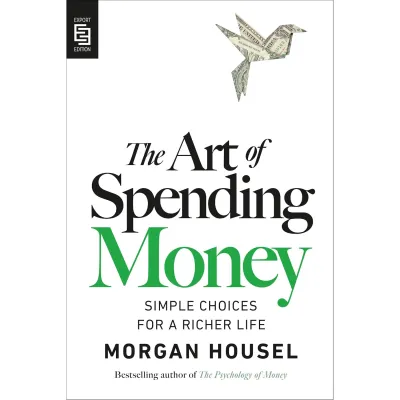
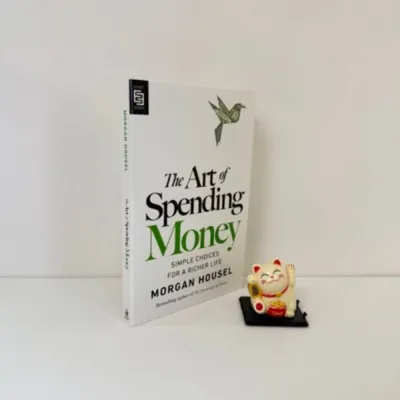
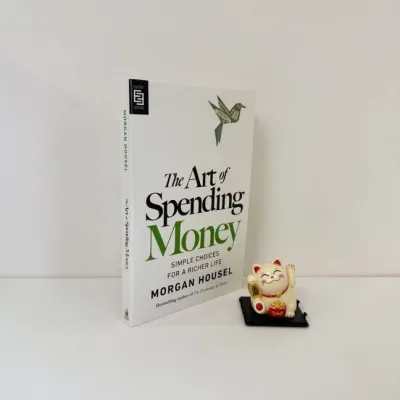
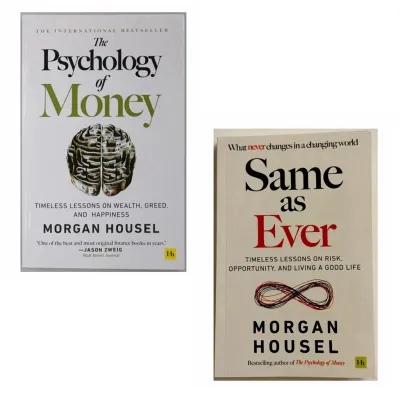

Prices are valid at publication and may change. Please refer to the product page for the latest price.
To begin this self-assessment, you must distinguish between money psychology and tactical spending systems. Money psychology focuses on the “why” behind your financial decisions. It explores behavioral economics, childhood conditioning, and the emotional triggers that lead to impulse buying. Tactical spending systems, on the other hand, provide the “how.” These are the practical frameworks, rules of thumb, and cash-flow structures that dictate how you track, allocate, and automate your funds on a weekly or monthly basis.
If you find yourself frequently purchasing items you do not need, upgrading your lifestyle the moment you receive a raise, or feeling a persistent sense of financial anxiety despite earning a comfortable income, your primary need is a mindset shift. You need to explore books that challenge your definition of “enough” and help you decouple your self-worth from your net worth. These texts help you recognize that intentional consumption is not about extreme frugality; it is about maximizing the utility and joy of every dollar spent.
If your mindset is already aligned with intentional living but you struggle with cash flow, forget to pay bills, or feel overwhelmed by the mechanics of budgeting, you require a tactical system. These books offer structured methodologies like zero-based budgeting or conscious spending plans. They teach you how to set up friction-free automation so that your savings, investments, and fixed costs are handled before you ever have the chance to spend the remaining balance.
Curated Examples of Books on the Art of Intentional Consumption
The following books represent some of the most widely recognized and respected works in the personal finance space. They are not presented as an exhaustive or ranked list, but rather as diverse entry points into the philosophy and mechanics of mindful spending. Each title addresses different aspects of the financial journey, allowing you to select the approach that best fits your lifestyle.

Books for Shifting Your Money Mindset
The Psychology of Money by Morgan Housel
This book explores the premise that doing well with money is less about what you know and more about how you behave. Housel presents nineteen short stories that illustrate the strange ways people think about wealth, greed, and happiness. He emphasizes that financial decisions are rarely made on a spreadsheet; instead, they are made at the dinner table, heavily influenced by personal history, pride, and unique worldviews.
- Core Philosophy: True wealth is what you do not see—the cars not purchased, the diamonds not bought, and the renovations deferred. Managing money successfully relies on behavioral control rather than mathematical genius.
- Target Audience: This book is ideal for those who suffer from persistent financial anxiety, struggle with peer comparison in high-cost cities, or find themselves trapped in a cycle of lifestyle inflation.
- Limitations: It does not offer step-by-step budgeting templates, specific investment formulas, or concrete tools for daily cash-flow management.
Your Money or Your Life by Vicki Robin and Joe Dominguez
This classic text offers a radical approach to conscious living by asking readers to calculate the true cost of their purchases in terms of “life energy.” By calculating your real hourly wage—subtracting the cost of commuting, work clothes, and stress relief from your income—you learn to view every purchase as a direct trade-off against the hours of your life spent earning that money.
- Core Philosophy: Money is something you trade your life energy for. Realizing this relationship naturally curbs impulse buying and shifts your focus toward achieving financial independence.
- Target Audience: Perfect for individuals feeling burnt out by corporate life, those seeking to transition to more meaningful work, or anyone wanting to break free from consumerism.
- Limitations: The manual tracking exercises can feel incredibly tedious, and some of the investment advice requires updating to fit modern financial markets.
Happy Money: The Science of Happier Spending by Elizabeth Dunn and Michael Norton
Written by two behavioral scientists, this book investigates how individuals can get the most happiness out of the money they spend. Instead of focusing on how to save, the authors present five research-backed principles of smart spending: buy experiences instead of things, make favorite purchases a treat, buy time by outsourcing chores, pay now and consume later, and invest in others.
- Core Philosophy: The way you spend your money matters just as much as how much money you make. Shifting your spending toward experiences and time-saving services yields far greater long-term life satisfaction.
- Target Audience: Excellent for mid-to-high earners who feel that their rising incomes have not resulted in a corresponding increase in personal happiness.
- Limitations: This is an academic and observational study rather than a structured personal finance program or budgeting guide.
Books for Practical Budgeting and Spending Systems
I Will Teach You to Be Rich by Ramit Sethi
Sethi presents a highly practical, non-judgmental approach to personal finance that completely rejects the traditional narrative of cutting out daily coffees. Instead, he advocates for creating a “Conscious Spending Plan,” which encourages you to automate your finances so you can spend guilt-free on the things you truly love, while ruthlessly cutting costs on the things you do not care about.
- Core Philosophy: Spend extravagantly on the things you love, as long as you cut costs mercilessly on the things you do not. Automation is the key to removing cognitive fatigue from budgeting.
- Target Audience: Young professionals who want a modern, highly automated system that allows for guilt-free discretionary spending without manual tracking.
- Limitations: The book is heavily focused on the United States financial system, requiring readers in other regions to translate terms like 401(k) and Roth IRA into local equivalents like Singapore's Central Provident Fund (CPF) or Supplementary Retirement Scheme (SRS).
You Need a Budget by Jesse Mecham
Based on the popular software of the same name, this book outlines a simple four-rule budgeting philosophy designed to help you break the paycheck-to-paycheck cycle. The system forces you to give every single dollar a job the moment it enters your account, plan for large infrequent expenses, remain flexible when overspending occurs, and build a buffer so you are living on money earned at least thirty days ago.
- Core Philosophy: Every dollar must have a specific purpose. By proactively allocating your funds before you spend them, you eliminate financial stress and gain total control over your cash flow.
- Target Audience: Individuals who struggle with irregular income, those who frequently face unexpected expenses, or anyone who feels they have no control over where their salary goes.
- Limitations: To get the most out of this system, readers generally need to use the accompanying paid software, which requires a continuous subscription and active daily maintenance.
The One-Page Financial Plan by Carl Richards
Richards, a certified financial planner, demystifies the financial planning process by showing readers how to fit their entire financial strategy onto a single sheet of paper. By focusing on your personal values first, you can simplify your spending, saving, and investing decisions, removing the complexity that often paralyzes people.
- Core Philosophy: Financial planning is not about beating the market; it is about alignment. A simple plan that you actually follow is infinitely better than a complex plan you abandon.
- Target Audience: People who feel overwhelmed by complex spreadsheets, financial jargon, and highly detailed budgeting rules.
- Limitations: The book focuses heavily on high-level strategy and simplification, meaning it lacks the granular, step-by-step tracking mechanics some readers require.
Crucial Checks Before Buying Personal Finance Books
When purchasing literature in the personal finance category, it is easy to buy the wrong format or an outdated edition, leading to frustration and inapplicable advice. Because financial systems, tax regulations, and digital tools evolve rapidly, you must perform several checks before finalizing your purchase.
First, verify the edition and publication year. A personal finance book written in the early 2000s may contain outdated advice regarding investment platforms, tax-advantaged accounts, or budgeting software. Look for revised or anniversary editions where the author has updated the content to reflect the modern digital economy, online banking, and current market realities.
Second, pay close attention to regional restrictions and tools. Many popular personal finance authors reside in the United States or the United Kingdom. Consequently, their tactical advice will heavily reference specific national systems, such as the 401(k), ISA, or specific credit scoring systems. If you are living in Singapore, you must be prepared to translate these concepts into local equivalents, such as the Central Provident Fund (CPF), SRS, or local tax structures. Additionally, check if any digital companion tools, calculators, or websites mentioned in the book are accessible and functional in your region.
Third, consider the medium and format of the book. Your choice should align with how you plan to use the information:
- Physical Books: Best for tactical budgeting books. They allow you to easily flip back and forth between chapters, highlight key passages, write in the margins, and reference complex charts, tables, or worksheets.
- E-books: Excellent for portability and quick keyword searches. Ensure your e-reader handles financial tables and diagrams clearly without distorting the formatting.
- Audiobooks: Highly effective for narrative-driven mindset books. However, they are often poorly suited for system-heavy books that require you to analyze spreadsheets, fill out worksheets, or follow mathematical formulas.
Finally, if you are purchasing a translated version of a financial book, verify the language and translation quality. Financial terminology can be highly technical, and poor translations can easily distort crucial nuances, making the advice confusing or outright incorrect.
Turning Reading into Intentional Spending Habits
Consuming financial literature is only valuable if it leads to sustained behavioral change. To bridge the gap between reading about mindful spending and actually practicing it in your daily life, you should implement a series of structured habits.
Start by performing a comprehensive spending audit. Before applying any new book concept, download your last three months of bank and credit card statements. Categorize every transaction to establish an honest baseline of your current spending habits. Facing this raw data is often the catalyst needed to spark genuine change.
Next, establish a mandatory cooling-off period for all non-essential purchases. For any discretionary item above a set threshold—such as S$100—force yourself to wait forty-eight hours or even thirty days before completing the transaction. This simple friction point effectively neutralizes the dopamine-driven impulse buying that online marketplaces are designed to exploit.
To remove cognitive fatigue, automate your financial allocations. Set up automatic transfers to occur on your monthly payday. Ensure your savings, investments, and fixed bills are paid first. By automating these essential components, the remaining balance in your checking account becomes truly guilt-free money that you can spend according to your preferences.
Finally, define your top three personal values and use them as a strict filter for all major purchasing decisions. Whether your values are health, family, travel, or career growth, check every significant expense against this list. If a potential purchase does not actively support one of these core values, consciously choose to redirect those funds elsewhere.
Frequently Asked Questions (FAQ)
Are audiobooks effective for learning financial systems?
Audiobooks are highly effective for consuming narrative-driven personal finance books that focus on psychology, mindset, and behavioral economics. However, they are generally inefficient for tactical books that rely heavily on spreadsheets, formulas, and visual diagrams. If you prefer the audio format for system-heavy titles, ensure you download the accompanying PDF companion worksheets, or pair the audiobook with a physical copy for easy reference.
How often should I re-read personal finance books?
Mindset-focused books are best revisited during major life transitions, such as a career change, marriage, parenthood, or relocation, as these milestones naturally shift your spending habits and financial priorities. Tactical budgeting books, however, should be reviewed every few years or whenever you update your digital tracking systems to ensure your daily financial habits remain aligned with modern tools and current economic realities.
Community discussion
Share your experience or ask a question. Comments are reviewed before publication.