
Understanding the core mechanics of business advisory does not require years of elite corporate experience or an expensive business school degree. With the right foundational literature, anyone can grasp how professional problem-solvers diagnose organizational bottlenecks, structure complex data, and persuade senior stakeholders. Having consulting management explained through structured texts allows aspiring consultants, corporate strategists, and business owners to adopt a rigorous, analytical mindset.
To build a strong foundation, you must look beyond generic business advice. The most effective books in this category offer concrete frameworks, logical methodologies, and interpersonal strategies that have been tested across global industries. By focusing on books that target specific pillars of the profession—such as analytical problem-solving, client relationship management, and structured communication—you can systematically develop the skills required to navigate complex business challenges.
How to Choose the Right Consulting Book for Your Goals
Selecting the most appropriate literature requires a clear understanding of your current professional gaps and learning objectives. Not all business books serve the same purpose; some focus heavily on quantitative frameworks, while others prioritize the interpersonal dynamics of client advisory. To maximize your study time, you should evaluate potential titles against specific criteria that match your career stage and learning preferences.
Products mentioned in this guide
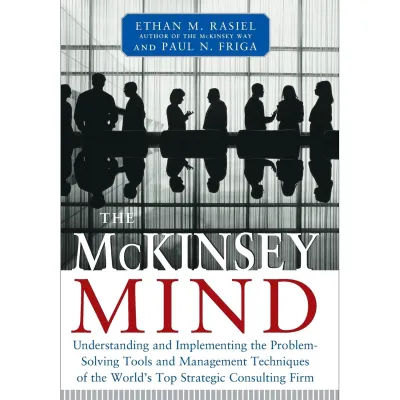
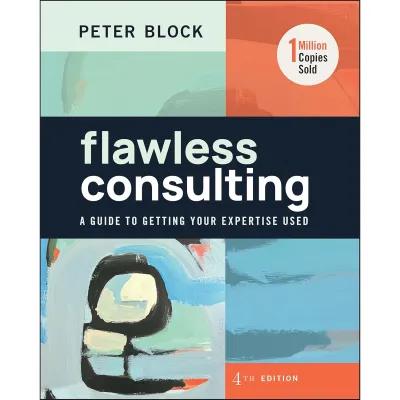
![PROJECT MANAGEMENT: A SYSTEMS APPROACH TO PLANNING SCHEDULING AND CONTROLLING 13TH EDITION [Hardback] by Harold Kerzner](https://img.lazcdn.com/g/p/60fc10b504e4fefee9787b8b182b6f52.jpg_400x400q80.jpg_.webp)
Prices are valid at publication and may change. Please refer to the product page for the latest price.
First, consider the background and credibility of the author. Books written by former management consultants from top-tier global firms tend to emphasize practical, field-tested methodologies, structured frameworks, and case-based problem-solving. Conversely, books written by academic researchers or business school professors often provide broader theoretical context, historical business analyses, and macroeconomic perspectives. If your goal is to acquire immediate, actionable tools for project delivery, prioritize authors with direct industry experience.
Second, align the book’s core focus with your immediate developmental needs. If you struggle with organizing your thoughts or presenting data to stakeholders, look for texts dedicated to structured communication and logical thinking. If your primary challenge is managing stakeholder friction, negotiating project scopes, or building professional trust, focus on books that address emotional intelligence, facilitation, and client relationship management.
Third, always verify the publication date and the specific edition of the book. The consulting industry is highly dynamic, with modern engagements heavily influenced by digital transformation, agile methodologies, and data analytics. While classic frameworks remain relevant, older editions may feature outdated case studies or ignore modern digital business models. Checking for the most recent edition ensures that the examples and methodologies align with the current corporate landscape in Singapore and globally.
Finally, evaluate the format of the medium before making a purchase. Consulting concepts are highly visual, often relying on issue trees, matrix diagrams, and flowcharts to explain complex relationships. While audiobooks are excellent for narrative-driven topics such as client management or industry histories, they can be highly ineffective for learning structured problem-solving frameworks. For books that teach analytical methodologies, physical print editions or high-resolution e-books are generally superior, as they allow you to study diagrams and refer back to visual models easily. Additionally, ensure that the edition you select is fully compatible with your reading devices and is sourced from authorized distributors to guarantee complete content, including any supplementary digital resources.
Top Foundational Books for Consulting Concepts and Frameworks
To help you navigate the vast landscape of business literature, we have curated a selection of foundational books that address the essential pillars of advisory work. Having consulting management explained through these distinct categories ensures you develop a balanced skill set, combining rigorous analytical logic with the soft skills required to manage client relationships. Our selection methodology prioritizes books that are highly regarded by industry professionals, accessible to beginners, and structured for self-study.

When building your personal library, remember that consulting literature is not static. Publishers frequently update these texts to reflect changing market realities, and many editions include access to online portals, downloadable templates, or interactive case studies. Before purchasing, verify the exact edition and check for any supplementary materials that can enhance your learning experience.
By studying across different categories—problem-solving, client relations, and industry-specific recruitment—you will avoid the common pitfall of becoming a one-dimensional professional. The following recommendations represent the gold standard in their respective areas, providing the theoretical clarity and practical exercises needed to master the fundamentals of consulting management.
Best Pick for Core Problem-Solving Frameworks
For mastering the structural mechanics of business analysis, The Minto Pyramid Principle: Logic in Writing, Thinking, and Problem Solving by Barbara Minto remains the definitive text. Written by the first female MBA hire at McKinsey & Company, this book introduces readers to the structural discipline required to analyze complex situations and present recommendations persuasively. The core concept revolves around the “pyramid principle,” a top-down thinking and communication structure that forces professionals to state their conclusions first, followed by supporting arguments grouped logically.
This text is ideal for analytical beginners, corporate strategists, and professionals transitioning from highly technical fields—such as engineering, software development, or finance—into advisory roles. It teaches readers how to apply the MECE (Mutually Exclusive, Collectively Exhaustive) framework to break down any business problem into distinct, non-overlapping components. By mastering this approach, you can ensure that your diagnoses are thorough and that your recommendations are logically airtight.
However, readers should be aware of certain limitations. Because the foundational concepts were developed several decades ago, the book does not address modern agile project management, design thinking, or rapid digital prototyping. The writing style is highly academic and rigorous, which some beginners may find dry or dense. To ensure this matches your learning style, check the table of contents and sample chapters before purchasing.
When preparing to buy, verify that you are purchasing the authorized edition published by Minto International. Because the book relies heavily on nested diagrams, organizational charts, and visual pyramids, we highly recommend acquiring a physical hardcover copy. Low-resolution digital copies or poorly formatted e-books can make the crucial structural diagrams difficult to read, significantly diminishing the book’s instructional value. Expect physical copies to retail in the broader price band of S$70 to S$110 due to its specialist nature and import requirements in Singapore.
Best Pick for Client Management and Soft Skills
While analytical frameworks are essential, a consultant’s success ultimately depends on their ability to influence people. For this dimension of consulting management, The Trusted Advisor by David H. Maister, Charles H. Green, and Robert M. Galford is the industry standard. This book shifts the focus from quantitative analysis to the interpersonal dynamics of professional relationships, explaining how to build, maintain, and repair trust with clients and stakeholders.
The target audience includes professionals moving into client-facing roles, senior advisors, and internal corporate consultants who must influence decision-makers without having formal authority. The book’s centerpiece is the “Trust Equation,” a conceptual model that balances credibility, reliability, and intimacy against self-orientation. It provides practical advice on how to handle difficult client conversations, manage resistance, and transition from a transactional service provider to a strategic partner.
The primary limitation of this book is its lack of quantitative tools, financial models, or structured problem-solving frameworks. It is entirely a guide on soft skills and relationship management. If you are looking for step-by-step instructions on data analysis or business strategy, this book will not fulfill those needs.
Before purchasing, check the format and language availability. Because the content is highly narrative and conversational, The Trusted Advisor is exceptionally well-suited for audiobook formats, making it a great option for listening during commutes in Singapore. However, keep in mind that client relationship dynamics can be culturally sensitive. While the book’s core principles of integrity and empathy are universal, some of the specific communication tactics are designed around Western corporate norms. Readers operating in Singapore and the wider Southeast Asian market should read with an eye toward adapting these techniques to local business etiquette and consensus-driven decision-making styles.
Best Pick for Industry Overview and Case Interview Prep
For those who need to bridge theoretical business concepts with the practical realities of consulting recruitment and real-time problem-solving, Case in Point: Complete Case Interview Preparation by Marc P. Cosentino is highly recommended. Often referred to as the “bible” of case interview preparation, this book provides a comprehensive overview of how consulting firms evaluate candidates, while detailing the exact business scenarios and frameworks used in modern consulting engagements.
This book is specifically designed for university students, MBA candidates, and career switchers who are actively preparing for the rigorous consulting recruitment process. It introduces the “Ivy Case System,” a set of flexible frameworks designed to tackle diverse business problems, such as market entry, product pricing, mergers and acquisitions, and operations growth. By walking readers through dozens of interactive practice cases, it demystifies how consultants structure their thoughts under pressure and communicate complex financial estimates.
A key limitation is that the book is highly optimized for recruitment and interview performance. Established professionals or internal corporate managers who are not preparing for interviews may find the format too transactional or overly focused on rapid, high-level estimation rather than deep, long-term project implementation.
To get the most value from this text, it is critical to verify that you are buying the latest edition (such as the 12th or 13th edition). Consulting firms constantly update their interview methodologies to include digital strategy, sustainability metrics, and platform economics. Older editions of this book will not prepare you for these modern case variations. Additionally, check if your purchase includes access to online interactive resources or practice partner networks, which are invaluable for simulating real-world scenarios.
Comparing the Recommended Consulting Books
To help you decide which foundational text to prioritize, the table below compares our top recommendations across key decision-driving dimensions. Each book targets a distinct aspect of consulting management, and selecting the right one depends on your immediate professional goals and preferred learning format.
| Book Title | Primary Focus | Target Audience | Key Concepts Covered | Best Format for Learning |
|---|---|---|---|---|
| The Minto Pyramid Principle by Barbara Minto | Structured thinking and top-down communication | Analytical beginners, engineers, technical professionals | MECE framework, logic trees, structured writing | Physical Print (due to detailed structural diagrams) |
| The Trusted Advisor by David Maister et al. | Interpersonal trust and client relationship management | Client-facing professionals, account managers, advisors | The Trust Equation, active listening, managing resistance | Audiobook or E-book (highly narrative style) |
| Case in Point by Marc P. Cosentino | Case interview preparation and rapid business analysis | Students, MBA candidates, career switchers | Ivy Case System, market entry, pricing strategies | Physical Print or Tablet E-book (for interactive case practice) |
When using this table to guide your purchase, match the “Best Format for Learning” to your daily routine. If you spend significant time commuting on the MRT or bus in Singapore, starting with the audiobook version of The Trusted Advisor allows you to absorb relationship-management concepts on the go. Conversely, if you are preparing for a career transition or need to restructure your corporate reporting, dedicating quiet study time to the physical print edition of The Minto Pyramid Principle will yield much better results, as you will need to actively sketch logic trees and analyze complex visual hierarchies.
How to Apply Consulting Frameworks in Real-World Scenarios
Acquiring these books is only the first step; true mastery of consulting management fundamentals requires moving from passive reading to active, practical application. Theoretical frameworks can easily become rigid academic exercises if they are not continuously tested against messy, real-world business data. To bridge this gap, you must establish a structured approach to practicing and adapting these methodologies.
Begin by practicing active reading with current business events. When reading financial news or corporate analyses in Singapore-focused business publications, try to map the situations to the frameworks you have learned. For example, if a major local retail brand announces an expansion into a neighboring regional market, use the market entry frameworks from Case in Point to structure the potential risks and opportunities. Draft an issue tree using the MECE principles from The Minto Pyramid Principle to organize your hypotheses regarding their operational success.
Next, apply these methodologies directly to your current workplace projects, even if you do not work in a formal consulting role. When drafting internal emails, reports, or presentations, force yourself to use the top-down pyramid structure: state your primary recommendation in the first sentence, followed by three mutually exclusive supporting pillars. If you are leading a cross-functional project, use the active listening and trust-building techniques from The Trusted Advisor to manage stakeholder expectations and address resistance from other departments.
Finally, remember that real-world business challenges rarely fit perfectly into a single textbook framework. Professional consultants use these models as starting points, not rigid scripts. You must practice adapting frameworks to accommodate incomplete data, shifting timelines, and unique organizational cultures. Keep a dedicated learning journal to document which structures worked, where they failed, and how you modified them to fit the specific context of your project. Over time, this iterative practice will transform theoretical knowledge into intuitive, professional capability.
Frequently Asked Questions (FAQ)
Do I need an MBA to understand these consulting books?
You do not need a Master of Business Administration (MBA) or prior corporate experience to understand these foundational consulting books. The selected texts are specifically designed to demystify complex business concepts for beginners and professionals from non-traditional backgrounds. However, having a basic familiarity with general business terms—such as revenue, fixed and variable costs, profit margins, and market share—will make the reading experience much smoother. If you encounter unfamiliar financial or strategic concepts, you can easily bridge the gap by using free online business glossaries or introductory educational videos alongside your reading.
Are audiobooks effective for learning consulting frameworks?
The effectiveness of an audiobook depends entirely on the specific focus of the book. For narrative-driven, interpersonal topics like those found in The Trusted Advisor, audiobooks are highly effective and convenient for learning during daily routines. However, for books that teach structured problem-solving and analytical frameworks, such as The Minto Pyramid Principle or Case in Point, audiobooks are generally not recommended. These texts rely heavily on visual aids, including logic trees, mathematical estimations, and complex structural diagrams, which are difficult to comprehend through audio alone. For technical and framework-heavy subjects, physical print or high-resolution e-books are superior choices.
Community discussion
Share your experience or ask a question. Comments are reviewed before publication.