
Selecting the right Burmese-English dictionary is one of the most critical decisions you will make as a language learner. Burmese (Myanma bhasa) is a tonal, pitch-register language with a unique script and a grammatical structure that differs significantly from English. Because direct word-for-word translations often fail to capture the nuances of postpositional particles, polite registers, and colloquial usage, your choice of reference materials will directly shape your speaking, reading, and comprehension skills.
The ideal dictionary for your studies depends on your current proficiency level, learning environment, and specific goals. While absolute beginners often benefit from portable, phonetically transcribed pocket guides, intermediate and advanced students require authoritative print volumes or sophisticated digital databases that support the native Burmese script. By understanding how to evaluate these resources, you can build a highly effective study toolset that accelerates your path to fluency.
How to Evaluate a Burmese-English Dictionary for Learning
To choose a dictionary that genuinely supports your learning journey, you must look beyond basic word counts and examine how the resource handles the unique linguistic features of the Burmese language. A poorly designed dictionary can lead to pronunciation errors, grammatical confusion, and frustration.
Products mentioned in this guide

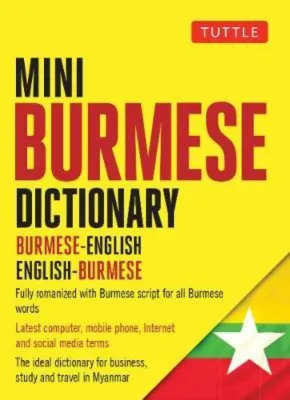
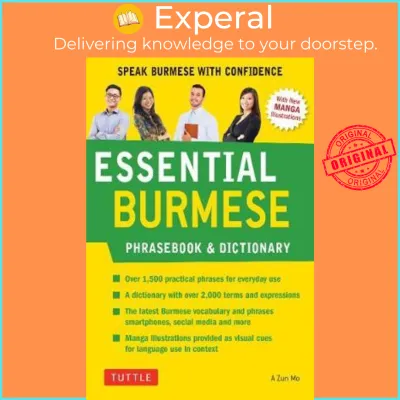
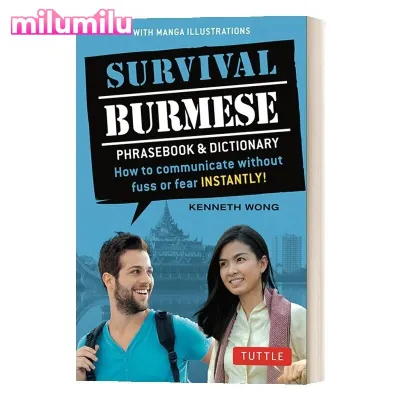
Prices are valid at publication and may change. Please refer to the product page for the latest price.
Script Support and Alphabetization
First and foremost, evaluate how the dictionary presents the Burmese script (Myanma akkhara). While some introductory resources rely entirely on romanized phonetic spellings, this approach quickly becomes a bottleneck. A high-quality dictionary should display the Burmese script clearly alongside any phonetic transcriptions. Furthermore, you should check how the dictionary is indexed; print editions should follow the traditional Burmese alphabetical order, which is based on the 33 consonants of the Brahmi-derived script, followed by vowel symbols and medials. Learning to navigate this system is an essential milestone for any serious student.
Phonetic Transcriptions and Tonal Guides
Burmese is a tonal language featuring three primary tones (low, high, and creaky) along with a short, stopped tone. Without precise phonetic transcriptions, you cannot pronounce words correctly from text alone. Look for dictionaries that utilize the International Phonetic Alphabet (IPA) or a highly consistent, clearly explained romanization system. The guide must explicitly mark tones—typically using accents, numbers, or punctuation marks—so you can distinguish between words that look similar in romanization but have completely different meanings based on pitch and duration.
Grammatical Context and Particle Explanations
Unlike English, which relies heavily on word order and prepositions, Burmese uses postpositional particles to indicate grammatical relationships, tense, and politeness levels. A simple translation of a verb or noun is rarely sufficient. An excellent dictionary provides contextual example sentences showing how words function within a sentence, which particles must accompany them, and how the meaning shifts in formal versus informal registers. Look for entries that label parts of speech accurately and offer notes on verb conjugations and noun classifiers.
Publication Date and Vocabulary Relevance
Language is a living entity, and Burmese is no exception. Modern colloquialisms, technological terms, and administrative vocabulary have evolved significantly over the last few decades. While historical dictionaries are invaluable for reading classical literature, they may lack contemporary vocabulary or contain archaic terms that sound unnatural to modern native speakers. Check the publication date or the last digital update to ensure the vocabulary aligns with the contemporary language spoken in Myanmar today.
Print Dictionaries for Deep and Structured Study
For many learners, physical books remain the gold standard for deep, focused study. Print dictionaries encourage active recall, prevent the digital distractions of smartphone notifications, and allow you to build a spatial memory of where words reside on a page.

Comprehensive Editions for Advanced Learners
Serious students who aim to read Burmese literature, news broadcasts, or official documents require heavy-duty, academic print dictionaries. These comprehensive volumes contain extensive word lists, historical etymologies, and formal registers that are rarely found in basic digital apps.
- Linguistic Authority: Look for dictionaries compiled by established academic institutions, government language commissions, or recognized university presses. For example, the Myanmar-English Dictionary compiled by the Myanmar Language Commission is widely regarded as an authoritative reference for official and literary Burmese.
- Traditional Indexing: These works are indexed strictly by the traditional Burmese alphabetical order. Navigating them requires you to understand consonant-vowel combinations, which reinforces your reading and spelling skills.
- Physical and Procurement Considerations: Because these are substantial, multi-page volumes, they can be heavy and bulky. When purchasing online from international booksellers or specialized distributors in Singapore, always verify the specific edition, print quality, and binding durability. Hardcover editions are highly recommended for long-term reference, as paperbacks of this size can wear out quickly under constant use.
Compact Editions for Beginners and Travelers
If you are in the early stages of learning or planning a trip, a massive academic dictionary can be overwhelming and impractical. Compact or pocket-sized print dictionaries serve a very different, highly valuable purpose.
- Portability and Layout: These editions are designed to fit easily into a backpack or travel bag. They prioritize high-frequency vocabulary, essential survival phrases, and everyday conversational terms.
- Reliance on Romanization: Many compact dictionaries feature prominent romanized pronunciation guides alongside the Burmese script, allowing you to quickly find and pronounce words even if you have not yet fully mastered the alphabet.
- Linguistic Limitations: The trade-off for portability is a lack of depth. Compact editions typically omit complex grammatical explanations, literary terms, and extensive example sentences. They are excellent for quick reference on the go, but you should plan to transition to a comprehensive edition once you begin constructing complex sentences and reading authentic texts.
Digital Apps and Online Tools for Quick Lookups
In today’s fast-paced learning environment, digital dictionaries are indispensable. They offer instant search capabilities, audio playback, and portability, making them perfect for daily practice and on-the-go reading.
Standalone Mobile Apps with Offline Features
Mobile applications turn your smartphone or tablet into a powerful linguistic database. However, not all dictionary apps are created equal, and learners must select their software carefully.
- Offline Functionality: When traveling or studying in areas with spotty internet coverage, offline access is crucial. Ensure the app allows you to download the entire dictionary database directly to your device so you can perform lookups without an active connection.
- Native Audio Playback: One of the greatest advantages of digital tools is the ability to hear how words are pronounced by native speakers. Look for apps that feature high-quality audio recordings rather than synthetic text-to-speech engines, which often struggle with the subtle tonal variations of Burmese.
- Input Methods and Search Tools: A great app should support multiple search methods. Look for features like handwriting recognition, which allows you to draw Burmese characters directly on your screen—an incredibly helpful tool when you encounter a character you do not know how to type or spell.
- Compatibility and Storage: Before downloading, check the app's compatibility with your device's operating system (iOS or Android) and review its storage requirements. Some databases with extensive audio files can occupy significant storage space.
- A Warning on Machine Translation: Be cautious of generic translation apps that rely solely on automated machine learning models. These tools frequently misinterpret Burmese syntax, honorifics, and postpositional particles, leading to grammatically incorrect or socially inappropriate translations. Stick to dedicated dictionary apps with curated, expert-verified databases.
Web-Based Platforms and Browser Tools
For those who read digital articles, watch videos, or study at a computer, web-based dictionaries and browser extensions offer unparalleled convenience.
- Institutional Databases vs. Crowd-Sourced Sites: Web-based dictionaries generally fall into two categories. Institutional databases—such as those hosted by university linguistics departments or established lexicographical projects—are highly accurate and offer deep grammatical insights. Crowd-sourced translation platforms, while useful for modern slang, often contain user-generated errors and lack systematic grammatical labeling. Always prioritize verified institutional databases for serious academic study.
- Browser Extensions for Reading: If you read Burmese web pages, look for browser extensions that offer hover-translation or pop-up dictionary features. These tools allow you to hover your cursor over a Burmese word to instantly view its English translation, phonetic pronunciation, and grammatical category, streamlining your digital reading practice.
- Cross-Referencing Best Practices: Because online databases can vary in quality, make it a habit to cross-reference unfamiliar words across at least two different digital platforms. If you encounter conflicting translations, consult an authoritative print dictionary or a qualified language instructor to verify the correct usage.
Matching the Dictionary Format to Your Proficiency Level
To maximize your study efficiency, your choice of dictionary should align with your current language proficiency and immediate learning objectives. Using a tool that is too simple or too complex can hinder your progress.
- Beginner Level (A1–A2): At this stage, your primary goals are mastering pronunciation, learning the Burmese script, and building a foundational vocabulary of high-frequency words. Focus on resources that provide clear phonetic transcriptions, native audio playback, and basic phrasebooks. A combination of a user-friendly mobile app with audio features and a compact pocket dictionary for quick physical reference is ideal for this phase.
- Intermediate Level (B1–B2): As you begin reading short texts and writing your own sentences, you must transition away from romanized guides. Choose dictionaries that emphasize the Burmese script, provide detailed explanations of grammatical particles, and offer contextual example sentences. This is the stage where you should learn to navigate traditional alphabetical indexing, as it builds the structural awareness needed for advanced reading.
- Advanced Level (C1–C2): Advanced learners reading literature, historical texts, or professional documents require comprehensive print volumes or academic digital databases. These resources allow you to explore literary registers, classical vocabulary, regional idioms, and nuanced etymologies.
- Building a "Dictionary Stack": Rather than relying on a single resource, successful learners often build a personal "dictionary stack." For instance, you might use a browser extension for fast reading on your laptop, a mobile app with handwriting recognition for quick lookups on your phone, and a heavy, authoritative print dictionary at your desk for deep, focused study sessions. This multi-layered approach ensures you have the right tool for every learning scenario.
Pre-Purchase and Download Verification Checklist
Before you invest in a print dictionary or download a digital application, use this checklist to ensure the resource meets your technical and educational requirements.
- Verify Language Direction: Confirm whether the dictionary is English-to-Burmese (designed to help you produce Burmese), Burmese-to-English (designed to help you comprehend and translate Burmese), or fully bidirectional. Bidirectional dictionaries are highly recommended for comprehensive learning.
- Check Font Encoding (Unicode vs. Zawgyi): This is a critical technical consideration unique to the Burmese digital landscape. For many years, Myanmar used a non-standard font encoding system called Zawgyi, but the country has officially transitioned to the international Unicode standard. Ensure any digital app, website, or browser extension you use is fully Unicode-compliant. Using outdated Zawgyi-based apps can cause text to display as unreadable characters (often referred to as "tofu" or gibberish) on modern devices.
- Assess Technical Compatibility: For digital tools, verify that the app is compatible with your current mobile or desktop operating system version. Check if the offline database requires an additional manual download after installation.
- Review Physical Specifications: If ordering a print dictionary from an online marketplace, check the physical dimensions, weight, and binding. A book that is too heavy may end up staying on your shelf, while a poorly bound paperback may fall apart under daily use.
- Confirm Linguistic Authority: Research the authors, editors, or publishing institutions behind the resource. Look for works associated with established universities, national language boards, or recognized linguists who specialize in Southeast Asian languages.
Frequently Asked Questions (FAQ)
Do I need to know the Burmese script to use these dictionaries?
While absolute beginners can start with dictionaries that rely heavily on romanized phonetic spellings, learning the Burmese script (Myanma akkhara) is highly recommended for long-term study. Most comprehensive print dictionaries and advanced digital databases index words solely by their native script. Relying entirely on romanization will eventually limit your ability to look up new words, read authentic texts, and progress past an elementary level.
Are free online dictionaries reliable for learning Burmese?
Free online dictionaries can be reliable, but their accuracy depends heavily on who maintains them. Databases curated by academic institutions, university linguistics departments, or established language preservation projects are generally highly accurate and offer valuable grammatical context. Conversely, crowd-sourced translation platforms or automated machine translators often lack grammatical accuracy, fail to explain postpositional particles, and can introduce spelling errors or unnatural phrasing.
How do I type Burmese characters to search in a digital dictionary?
To search for words in a digital dictionary using the Burmese script, you must install a Burmese keyboard layout on your device’s operating system. The standard, internationally recognized layout is the Myanmar Unicode keyboard. Once installed, you can easily toggle between your native language keyboard and the Burmese keyboard. Alternatively, many high-quality dictionary apps feature built-in virtual keyboards or handwriting recognition tools that allow you to draw characters directly on the screen.
Community discussion
Share your experience or ask a question. Comments are reviewed before publication.