
To succeed in the cfa 2027 Level 1 exam through independent self-study, selecting the right preparation bundle is one of the most critical decisions you will make. Without classroom instruction, your study materials must act as your personal tutor, guide, and progress tracker. The optimal prep bundle for you depends heavily on your academic background, professional experience, and preferred learning style. Most candidates find success by choosing between comprehensive textbook-focused packages, highly visual video-driven courses, or adaptive, practice-intensive platforms that focus on exam simulation. By understanding the core requirements of the updated curriculum and matching them to your personal study habits, you can build a highly efficient study routine that maximizes your chances of passing on your first attempt.
Core Requirements for Self-Studying the 2027 CFA Level 1 Exam
The self-study path to passing the CFA Level 1 exam in 2027 demands an extraordinary level of discipline, especially for candidates balancing full-time careers or academic commitments. Without the rigid structure of a physical classroom or live weekly lectures, independent learners must act as their own project managers. This isolation makes a highly structured, intuitive study planner the absolute backbone of any successful prep bundle. A planner must do more than just list reading assignments; it needs to dynamically adjust to your study pace, account for busy work weeks, and keep you on track to complete the curriculum with ample time left for review.
Beyond scheduling, the clarity of the material is paramount. The official CFA curriculum is famously exhaustive, often running into thousands of pages of dense, academic text. For a self-study candidate, trying to digest this raw information without synthesis can lead to cognitive fatigue and wasted hours. A premium prep bundle must translate these complex financial concepts into clear, jargon-free explanations. It should highlight the core principles of each topic, allowing you to grasp the “why” behind financial formulas rather than relying on rote memorization.
Products mentioned in this guide
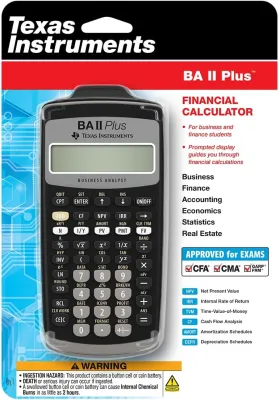
Prices are valid at publication and may change. Please refer to the product page for the latest price.
Absolute alignment with the 2027 Learning Outcome Statements (LOS) is non-negotiable. The CFA Institute regularly updates its curriculum to reflect the evolving demands of the global financial industry, introducing new topics, shifting topic weights, or restructuring entire modules. Relying on outdated study materials—even those from a year or two prior—can be a critical mistake, as even minor changes in formula applications or regulatory standards can cost you valuable points on exam day. Your chosen bundle must be explicitly built for the 2027 exam windows.
In addition to traditional exam topics, the modern CFA Level 1 curriculum requires candidates to complete Practical Skills Modules (PSMs) in areas such as financial modeling, Python programming, or analyst skills. While these modules are not graded on the multiple-choice exam itself, completing them is a mandatory requirement to receive your exam results. A forward-looking prep bundle should offer guidance or integrated support for these modules, helping you navigate the practical applications of your theoretical knowledge without adding unnecessary stress to your study schedule.
A complete self-study bundle must offer a balanced ecosystem of four core components: condensed study notes, visual video lectures, a robust question bank (QBank), and full-length mock exams. Study notes provide the initial conceptual framework, while video lectures help break down highly technical subjects like Fixed Income, Derivatives, and Financial Statement Analysis (FSA). The QBank allows for active retrieval practice, and mock exams simulate the high-pressure environment of the actual computer-based test. If any of these pillars are weak or missing, your self-study routine will require costly supplementary purchases.
Finally, because you will not have an instructor monitoring your progress, the bundle’s performance tracking and analytical tools must serve as your virtual mentor. Advanced dashboards should automatically analyze your quiz results, highlighting specific sub-topics where your accuracy dips below the passing threshold. By identifying these knowledge gaps early, you can target your review sessions precisely, ensuring you do not waste time re-reading material you have already mastered while leaving critical weaknesses unaddressed.
Moreover, the psychological toll of self-study should not be underestimated. Spending months studying in isolation can lead to burnout and a loss of motivation. The best self-study bundles address this by fostering a sense of community, offering access to online study groups, candidate forums, or peer-ranking systems. Knowing how your progress compares to other candidates globally can provide a healthy competitive drive, while community forums offer a space to share study tips, clarify confusing concepts, and find encouragement during challenging phases of your preparation.
Matching Prep Bundle Types to Your Learning Style
Every candidate processes information differently, and there is no single “best” prep bundle that fits everyone. A format that works wonders for a seasoned accountant might leave a career switcher feeling completely lost. To maximize your study efficiency and maintain momentum over several months, you must match the structure of your prep bundle to your personal learning style. Broadly, the market is divided into three distinct methodologies: textbook-focused, video-driven, and practice-intensive.

Comprehensive Textbook and Summary Bundles
Textbook-focused bundles are built around highly condensed, written study guides and quick-reference formula sheets. These materials are designed to strip away the academic fluff of the official curriculum, presenting the core concepts in a highly structured, bulleted format that is easy to scan and digest. They typically include physical or digital study volumes, a standard question bank for end-of-chapter practice, and quick-study sheets that summarize key formulas and definitions for rapid review.
This style of bundle is exceptionally well-suited for candidates who possess a strong foundational background in finance, economics, or accounting. If you already understand the mechanics of balance sheets, the time value of money, and basic statistical concepts, you likely do not need hours of video lectures explaining these topics from scratch. Instead, you need an efficient way to review the specific CFA exam focus areas, memorize formulas, and move straight into practice.
To get the most out of a textbook-focused bundle, self-study candidates should adopt a hybrid reading strategy. Use the condensed third-party notes as your primary reading source to grasp the core concepts quickly, which saves immense time. However, keep the official curriculum nearby as a reference. If a third-party explanation of a highly technical accounting standard or a complex statistical formula feels too brief, immediately cross-reference that specific section in the official text to gain a deeper, more comprehensive understanding.
However, these bundles have clear limitations for independent learners. Because the text is highly summarized, it can occasionally feel dry or overly mechanical. If you encounter a complex topic that you have never studied before—such as the nuances of option pricing models or foreign currency translation—a brief textual summary may not provide enough context. In these instances, candidates often find themselves stuck, needing to search for external video explanations or consult the lengthy official curriculum to bridge the gap.
Video-Lecture and Concept-Driven Bundles
Concept-driven bundles place video instruction at the absolute center of the learning experience. Instead of starting with a heavy textbook, candidates begin each topic by watching high-quality video lectures led by experienced instructors who explain complex theories using visual aids, real-world analogies, and step-by-step whiteboard calculations. These bundles usually include comprehensive video libraries (often broken down into bite-sized, 15-minute segments), accompanying slide decks that you can print or annotate, and short diagnostic quizzes after each video to verify comprehension.
This visual and auditory approach is ideal for career switchers, non-finance majors, or anyone who finds reading dense financial textbooks tedious. If you are transitioning from an engineering, technology, or humanities background, having an instructor visually map out the flow of cash flows or explain the yield curve can make these abstract concepts immediately tangible. It helps build a deep, intuitive understanding of the material rather than just memorizing steps to solve a specific question.
A key advantage of modern video-driven bundles is the flexibility of digital learning platforms. Features such as adjustable playback speed (e.g., watching at 1.25x or 1.5x speed) allow you to breeze through familiar topics while slowing down for challenging concepts. Furthermore, high-quality video bundles often include downloadable audio-only versions of lectures, enabling you to turn passive time—such as your daily commute or gym sessions—into productive review opportunities. This multi-sensory approach reinforces memory retention and helps keep the material fresh in your mind.
The primary trade-off with video-heavy bundles is the sheer volume of time they require. It is incredibly easy to fall into the trap of passive learning—spending hours watching videos and feeling productive, only to realize you cannot solve a practice problem on your own. To make these bundles effective for self-study, you must actively engage with the content by taking detailed notes, pausing the videos to attempt calculations yourself, and immediately pairing every hour of video watching with active question practice.
Practice-Intensive and Mock Exam Bundles
Practice-intensive bundles deprioritize extensive reading materials and video lectures, focusing instead on providing massive, highly sophisticated question banks and realistic mock exams. These platforms are built around the philosophy of “learning by doing.” They feature thousands of high-quality practice questions that mimic the style, difficulty, and trickiness of the actual CFA exam. Crucially, they back every single question with incredibly detailed explanations that explain not only why the correct answer is right, but exactly why the other options are incorrect.
This style of prep is highly effective for candidates who already have solid theoretical knowledge, such as finance professionals working in investment banking or asset management, as well as repeat test-takers looking to refine their exam technique. It is also invaluable for mastering time management, as these platforms often include customizable quizzes where you can practice answering questions under strict time constraints, helping you build the mental stamina required for the actual exam day.
Furthermore, the value of realistic exam simulation cannot be overstated. The actual CFA Level 1 exam is a computer-based test (CBT) administered at official testing centers. Top-tier practice-intensive bundles design their mock exams to mirror the exact user interface, navigation, and timing constraints of the testing software used on exam day. By practicing in an environment that looks and feels identical to the real test, you can significantly reduce exam-day anxiety and build the muscle memory needed to navigate questions efficiently under pressure.
Despite their effectiveness, practice-intensive bundles are generally not recommended as a standalone resource for complete beginners. Trying to learn the entire CFA curriculum solely through practice question explanations can lead to fragmented knowledge. You risk memorizing how to solve specific types of questions without understanding the broader underlying theories, which can leave you highly vulnerable if the actual exam presents a concept from an unexpected angle.
How to Verify a Bundle is Ready for the CFA 2027 Curriculum
Investing in a CFA prep bundle is a significant financial and emotional commitment, and the last thing you want is to discover midway through your study journey that your materials are outdated. The CFA Institute updates its curriculum annually to ensure it remains aligned with current global financial practices. Therefore, your first step must be a rigorous verification of the provider’s curriculum update status. Do not rely on generic marketing claims; visit the provider’s official website and look for explicit, written confirmation that their materials have been fully updated to match the cfa 2027 Learning Outcome Statements (LOS).
The 2027 curriculum introduces specific structural updates that make older materials obsolete. For instance, the CFA Institute frequently refines the depth of topics like Quantitative Methods, Economics, and Financial Statement Analysis to ensure they reflect modern market realities. When verifying a prep bundle, look for a detailed syllabus breakdown on the provider’s website that explicitly lists these updated topics. If a provider is still selling materials that group topics under outdated structures, it is a clear sign that the bundle has not been thoroughly revised for the 2027 exam.
It is also vital to understand how your third-party bundle will integrate with the official CFA Institute Learning Ecosystem (LES). When you register for the exam, the CFA Institute provides access to their digital portal, which contains the complete official curriculum, a massive QBank, and official mock exams. A high-quality third-party bundle should not seek to replace the LES entirely. Instead, it should act as a complementary accelerator. You should use the third-party notes and videos to learn the concepts quickly and efficiently, but always return to the official LES to practice the official end-of-chapter questions, as these are the closest representation of the actual exam’s tone and style.
Another critical factor to investigate is the provider’s policy on mid-year updates and curriculum corrections. The CFA Institute occasionally releases errata or minor adjustments to the curriculum after prep providers have published their materials. Before purchasing, check whether the provider offers free, automatic digital updates for their study notes and QBanks. A reputable provider will have a clear mechanism for pushing these updates to your digital dashboard, ensuring you are never studying incorrect or outdated formulas.
Lastly, self-study does not mean you have to be completely on your own when you hit a wall. Even the most comprehensive materials cannot prevent occasional confusion on highly complex topics. When evaluating a prep bundle, check if it includes access to active candidate discussion forums, moderated Q&A boards, or direct email support from qualified instructors. Having a reliable channel where you can ask a quick question about a difficult accounting treatment or a complex derivative calculation can save you hours of frustration and keep your study momentum from grinding to a halt.
Aligning Your Choice with Your Schedule and Background
Once you understand the different types of bundles and how to verify their currency, the final step is to align your choice with your personal background, daily schedule, and budget. In Singapore’s fast-paced professional environment, where many candidates balance demanding corporate jobs in financial hubs like Raffles Place or Marina Bay with intensive study hours, efficiency is everything. You must carefully assess your starting point; if you already hold a degree in finance or accounting from institutions like NUS, NTU, or SMU, you can comfortably opt for a more streamlined, practice-heavy bundle, potentially saving both study hours and money. Conversely, if you are entering from a non-financial sector, investing in a premium bundle with comprehensive video instruction is a wise choice that will pay dividends in comprehension.
Time management is the single biggest factor determining success or failure on the CFA Level 1 exam. The CFA Institute recommends a minimum of 300 hours of study, but many self-study candidates find they need closer to 350 or 400 hours to fully master the material. Before committing to a bundle, calculate how many hours you can realistically dedicate each week. If your schedule only allows for 10 to 12 hours of weekly study, you need a bundle with a highly efficient, adaptive study planner that helps you maximize every session, perhaps utilizing mobile-friendly flashcards and bite-sized video lectures during your daily MRT commutes.
To put the recommended 300+ hours into perspective, a typical six-month study plan requires dedicating roughly 12 to 15 hours per week. In Singapore, this might look like studying for one hour during your morning MRT commute, doing a quick 20-minute quiz during your lunch break, and dedicating four hours on both Saturday and Sunday to deep-focus study. If your professional commitments in demanding sectors like investment banking, consulting, or corporate law make weekend study unpredictable, you will need a highly flexible prep bundle that allows you to front-load or back-load your study hours without losing track of your overall progress.
Budget is another practical consideration, as prep bundles represent a significant financial layout alongside the official registration fees (which are priced in USD). Prices for third-party bundles vary widely, typically ranging from basic digital packages around S$400 to S$800, up to premium, all-inclusive packages that can exceed S$1,500 to S$2,500. While it is tempting to go for the cheapest option, consider the long-term value: if a slightly more expensive bundle prevents you from failing and having to pay the hefty registration fees to retake the exam, it is a highly cost-effective investment. Always check the providers’ official sites for their current package tiers and promotional pricing.
Before entering your credit card details, always take full advantage of free trials and sample materials. Most major prep providers offer a limited-time free trial or sample chapters of their study notes and video lectures. Use these trials to test the user interface, assess the quality of the video and audio, and determine if the writing style of the notes resonates with you. Additionally, carefully read the provider’s refund policies and look for “pass protection” guarantees, which offer free access to updated materials for subsequent exam windows if you do not pass on your first attempt, providing a valuable safety net for your investment.
Frequently Asked Questions (FAQ)
Do I still need the official CFA Institute curriculum if I buy a third-party prep bundle?
Yes, the official CFA Institute curriculum remains an indispensable tool even if you purchase a comprehensive third-party prep bundle. While third-party materials are excellent for simplifying complex concepts and saving you time during the initial learning phase, the official curriculum is the ultimate source of truth for the exam. You must use the official Learning Ecosystem (LES) to complete all end-of-chapter (EOC) practice problems and take the official mock exams. The actual exam questions are written by the CFA Institute, so familiarizing yourself with their specific phrasing, terminology, and question formatting is critical for success.
When is the best time to purchase a 2027 CFA prep bundle?
The best time to purchase a 2027 prep bundle is immediately after the CFA Institute officially releases the 2027 curriculum and opens registration for the 2027 exam windows. This ensures that the materials you receive are fully updated for the latest Learning Outcome Statements (LOS) and that you have access to the most current question banks. If you wish to begin studying early before the official 2027 materials are released, you can start by reviewing core, stable topics like Quantitative Methods or Economics using older materials, but you should verify with your prep provider that they offer a free upgrade to the 2027 digital suite once it becomes available.
Community discussion
Share your experience or ask a question. Comments are reviewed before publication.