
Handwriting is not merely an aesthetic concern; in the Singapore Primary School Leaving Examination (PSLE) Chinese papers, legible and accurate character construction directly impacts grading. In Paper 1 (Composition) and Paper 2 (Language Use and Comprehension), markers must decipher student handwriting under tight evaluation timelines. Clear, correctly proportioned characters ensure that examiners can easily read and award marks for your child’s ideas, vocabulary, and comprehension answers.
Careless mistakes, such as a missing dot (点), an extra stroke, or confusing similar-looking characters (形近字), lead to immediate mark deductions in spelling and writing components. Regular practice with a dedicated Chinese character copybook (字帖) helps eliminate these errors by training the hand to execute precise stroke movements. When writing mechanics become second nature, students can dedicate more cognitive energy to planning their composition plots and analyzing comprehension passages.
Selecting the correct difficulty level for a copybook is essential to prevent academic frustration and maintain consistent study habits. A book that is too advanced will discourage a younger child with overly complex characters, while an overly simplistic book will fail to prepare an older student for the rigors of the national exam. Matching the copybook to your child’s specific primary level ensures that practice remains highly productive, encouraging steady progress over time.
Products mentioned in this guide
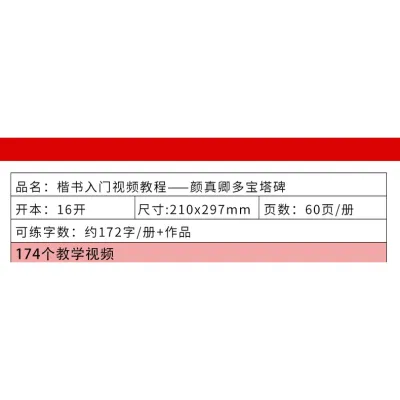
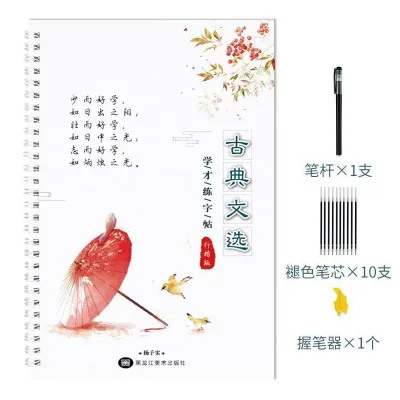
Prices are valid at publication and may change. Please refer to the product page for the latest price.
How to Match Copybook Types to Your Child's Primary Level
The Ministry of Education (MOE) Chinese curriculum, currently structured around the Huan Le Huo Ban (欢乐伙伴) syllabus, progresses systematically from basic character recognition to complex linguistic application. Lower Primary focuses heavily on foundational stroke mechanics and radical recognition, ensuring children can physically write characters with correct proportions. Middle Primary introduces a steep increase in vocabulary volume, requiring students to transition from single characters to word pairings and basic sentence structures. Upper Primary demands rapid retrieval of high-frequency exam vocabulary and the ability to write advanced, descriptive paragraphs under timed conditions.
Using a copybook designed for Upper Primary when your child is only in Primary 2 creates unnecessary cognitive strain and can damage their confidence. At that young age, the fine motor skills required to write complex characters in small grids are not yet fully developed. Conversely, allowing a Primary 5 student to continue using basic tracing books does not build the writing stamina or the contextual vocabulary application required to excel in the PSLE. Parents must evaluate their child’s current academic stage and select a copybook that addresses their specific developmental needs.
To optimize preparation, view the copybook not just as a handwriting tool, but as an active vocabulary reinforcement aid. The transition from tracing to independent writing should mirror the school’s progression. By aligning home writing practice with the specific demands of each primary level, you help your child build a seamless connection between neat handwriting, correct stroke order, and exam-ready vocabulary recall.
Recommended 字帖 Categories for Lower Primary (P1-P2)
Stroke Order and Radical Practice Books
During the transition into Primary 1 and 2, children are developing the fine motor skills and hand-eye coordination required for precise pencil control. Copybooks designed for this stage must feature large grid sizes, typically Tian Zi Ge (田字格) or Mi Zi Ge (米字格) measuring at least 1.5cm to 2cm per square. These generous visual grids provide clear reference points, helping young learners understand where characters should begin, turn, and end to maintain structural balance.

For effective foundational training, look for copybooks that feature clear stroke direction arrows, color-coded stroke sequences, and highlighted radicals (偏旁部首). Understanding that a radical like 氵 (water) or 讠 (speech) carries a specific semantic meaning helps young children categorize and memorize characters logically. This structural awareness prevents them from viewing characters as random collections of lines, reducing the likelihood of missing or misplaced strokes in school assessments.
Textbook-Synchronized Character Books (课本同步字帖)
To make home practice highly relevant to your child’s daily school life, choose copybooks that are explicitly synchronized chapter-by-chapter with the current MOE Huan Le Huo Ban textbook. These books are widely available in Singapore and are usually labeled as Ke Ben Tong Bu (课本同步). Practicing the exact characters taught in school during the same week reinforces classroom learning and directly prepares your child for their weekly spelling tests (听写).
This immediate application of handwriting practice creates a positive feedback loop, boosting your child’s confidence as they see their copybook efforts translate directly into better school grades. Furthermore, synchronized copybooks ensure that young students are not exposed to vocabulary beyond their syllabus level, keeping their learning focused and stress-free. This targeted reinforcement solidifies their foundational vocabulary, making future primary levels much easier to navigate.
Recommended 字帖 Categories for Middle Primary (P3-P4)
Vocabulary and Phrase Copybooks (词语与短语字帖)
As students enter Primary 3 and 4, the Chinese curriculum shifts from individual character recognition to the mastery of multi-character vocabulary words and basic four-character idioms (成语). Copybooks for this stage should move away from single-character grids and focus instead on common collocations and word pairings. Writing words in their complete context helps students understand how individual characters combine to form specific meanings.
This contextual practice is highly effective in reducing homophone errors (同音字), which are incredibly common among Singaporean students who primarily communicate in English. For instance, practicing the word “极其” (extremely) alongside “极力” (sparing no effort) helps clarify the correct usage of “极” in different scenarios. By training the hand and brain to write words as cohesive units, students learn to select the correct characters automatically during writing tasks.
Sentence Pattern Practice Books (句型练习字帖)
Writing isolated words is insufficient for the academic demands of Middle Primary, where students must begin constructing complete, grammatically correct sentences. Sentence pattern copybooks introduce students to essential grammatical structures, conjunctions, and sentence-completion templates. By physically copying well-structured sentences, students develop an intuitive feel for Chinese syntax (语感), which is crucial for both comprehension and composition.
This systematic copying helps eliminate common “Singlish-translated” Chinese sentence structures that often plague student compositions. Regular practice with sentence-level copybooks teaches students how to transition smoothly between clauses and apply correct punctuation marks. Over time, this builds the structural writing stamina required for the longer narrative paragraphs they will encounter in Upper Primary assessments.
Recommended 字帖 Categories for Upper Primary (P5-P6)
PSLE Core Vocabulary and High-Frequency Words
For students in the final stretch of primary school, copybook practice must become highly strategic and exam-oriented. Parents should select copybooks that focus exclusively on the official MOE PSLE vocabulary lists (commonly referred to as the Zi Ci Biao 字词表). These specialized books target high-yield vocabulary, with a strong emphasis on easily confused characters (形近字) and characters with multiple pronunciations (多音多义字).
To maximize study efficiency, look for copybooks that include brief English definitions, pinyin, and short sample sentences alongside the writing grids. This layout allows your child to revise vocabulary meanings, pronunciation, and writing mechanics simultaneously, saving precious study time. Regular exposure to these core words ensures they can write them quickly and accurately under the time constraints of the actual PSLE paper.
Composition Sentence and Paragraph Copybooks (作文佳句字帖)
To secure high marks in the PSLE Chinese Composition paper, students must demonstrate the ability to use advanced vocabulary, vivid descriptive phrases, and varied sentence structures. Composition-focused copybooks provide curated lists of “good words and sentences” (好词好句) categorized by common exam themes, such as honesty, public consideration, or overcoming challenges. Copying these model sentences helps students internalize sophisticated descriptive sequences for emotions, actions, and environmental settings.
Furthermore, practicing full-paragraph copying helps students understand paragraph transitions, logical flow, and rhetorical devices. When students physically write out these high-scoring model paragraphs, the language patterns become deeply ingrained in their muscle memory. During the actual exam, they will find it much easier to recall and adapt these advanced expressions, elevating the overall quality of their composition writing.
What to Check Before Buying a Chinese Copybook
Before purchasing any Chinese character copybook for your child, it is essential to evaluate several physical and editorial specifications to ensure it is suitable for effective learning:
- Paper Quality and Thickness: Ensure the paper is sufficiently thick, ideally 80gsm or higher, to prevent ink bleeding or ghosting. This is particularly critical if your child uses a gel pen or a fountain pen, as thin paper that bleeds through makes the reverse side of the page unusable and frustrating to write on.
- Font Style: Verify that the printed font uses standard regular script (楷书 Kai Shu) that matches the typeface in MOE textbooks. Avoid copybooks that feature stylized calligraphy, running script (行书 Xing Shu), or artistic fonts, as these can confuse students and lead to stroke distortions that PSLE markers may penalize as incorrect.
- Binding and Layout: Look for lay-flat binding, such as thread-sewn or specialized flexi-binds, which allow the book to remain completely flat on the desk without being held down. A book that constantly springs shut disrupts your child's writing posture, grip, and concentration. Additionally, ensure there is adequate spacing between lines to prevent hand cramping.
- Syllabus Alignment and Edition Verification: Always check the publication date, edition details, and preface to confirm that the book aligns with the latest MOE Chinese syllabus updates. Verify that the copybook is an authorized source and matches the current Huan Le Huo Ban curriculum, as outdated editions may contain characters or vocabulary lists that are no longer tested in the PSLE.
Frequently Asked Questions (FAQ)
How many minutes a day should my child practice with a 字帖?
For the best results, aim for short, highly focused daily sessions of 10 to 15 minutes, rather than long, grueling sessions on the weekend. Short, consistent practice sessions prevent physical hand fatigue and help your child maintain high concentration levels, which are essential for learning correct stroke order and character structure. Consistent daily practice builds stronger muscle memory and prevents the writing exercises from feeling like an overwhelming chore.
Should my child use a pencil, gel pen, or fountain pen for copybook practice?
For Lower Primary (P1-P2), a standard 2B pencil is highly recommended as it allows young children to learn pressure control and easily erase mistakes. For Middle Primary (P3-P4), students can gradually transition to a gel pen to build confidence. By Upper Primary (P5-P6), students should practice exclusively with the exact pen type required for the actual PSLE exam—typically a reliable 0.5mm or 0.7mm black or blue gel pen. This ensures they develop realistic muscle memory, control ink flow, and manage their writing speed under exam-like conditions.
Community discussion
Share your experience or ask a question. Comments are reviewed before publication.