
Selecting the right Chinese character copybook (字帖) for Primary School Leaving Examination (PSLE) preparation is a strategic decision that directly impacts a student’s confidence, writing speed, and overall exam performance. In Singapore’s primary school curriculum, Chinese handwriting is not merely about aesthetic appeal; it is a critical component of academic assessment. Clear, legible, and structurally balanced handwriting ensures that examiners can easily read and grade a student’s composition and comprehension answers. Conversely, messy or illegible characters can lead to unnecessary mark deductions, even if the student’s underlying linguistic comprehension is strong.
Because every child develops language skills at a different pace, a one-size-fits-all approach to handwriting practice rarely yields the best results. A student who struggles to remember basic stroke orders will find advanced composition copybooks overwhelming, while a high-achieving student will gain little benefit from tracing isolated characters. By matching the copybook format to your child’s specific Chinese proficiency level, you can transform daily handwriting practice from a tedious chore into a highly targeted exam preparation tool.
How to Match Copybooks to Your Child's Proficiency Level
To select the most effective copybook, parents must first evaluate their child’s current writing ability and identify where they stand on the spectrum of PSLE preparation. This evaluation can be framed across three distinct proficiency tiers:
Products mentioned in this guide
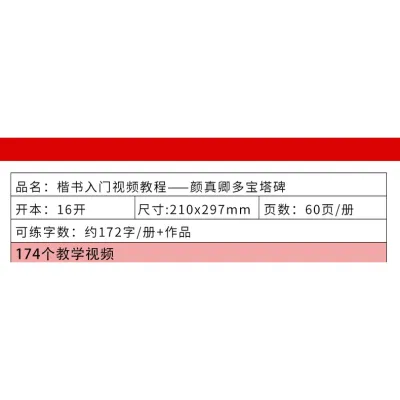
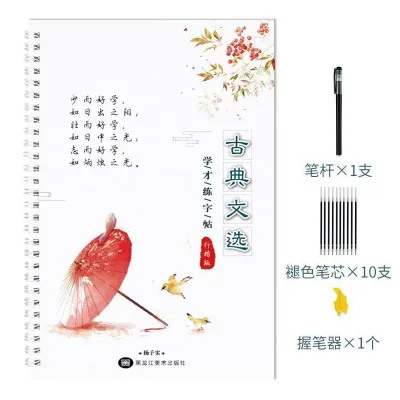
Prices are valid at publication and may change. Please refer to the product page for the latest price.
- Foundation Tier: Students in this category struggle with character retention, frequently omit or add strokes, and often write characters with incorrect stroke order (笔顺). They may find spelling tests (听写) highly stressful and require significant visual guides to keep their writing neat.
- Intermediate Tier: These students can write individual characters accurately but struggle to apply them correctly in sentences. They often make homophone errors (同音字), write characters with disproportionate structures, or struggle to transition from isolated words to complete clauses.
- Advanced Tier: Students at this level have a strong grasp of character structure and stroke order. Their primary need is refinement—learning to write more quickly and legibly under exam conditions, mastering spatial layout on unguided paper, and integrating sophisticated vocabulary and idiomatic expressions (成语) into their written work.
Understanding the core PSLE Chinese Language writing requirements is essential when making this choice. The PSLE syllabus has shifted significantly from rote memorization toward contextual application. In Paper 1 (Composition) and Paper 2 (Comprehension and Language Application), students must demonstrate that they can not only write characters correctly but also use them to express complex ideas clearly. Therefore, copybook practice should eventually bridge the gap between physical writing and active cognitive recall.
When evaluating copybooks, parents should pay close attention to the structural layout of the practice pages. The choice of grid type plays a major role in how a child develops spatial awareness. Tian Zi Ge (田字格) grids divide the square into four quadrants, which is highly effective for teaching basic horizontal and vertical symmetry. Mi Zi Ge (米字格) grids add diagonal guidelines, providing a more detailed reference point for the starting, turning, and ending points of complex strokes. Tracing formats (描红) build physical muscle memory, while blank copying grids test the student’s independent recall and spatial planning.
Finally, always ensure that the copybook’s vocabulary aligns with the latest Ministry of Education (MOE) Chinese Language syllabus (currently “欢乐伙伴” or Companion for Happy Learning). Practicing characters that are no longer tested or missing out on newly introduced vocabulary can make practice sessions inefficient. The right copybook should directly reinforce the specific vocabulary lists your child is expected to master for their school assessments.
Recommended Copybook Formats for Foundation Learners
For students who are struggling to retain basic characters, copybooks must focus on building fundamental character recognition, correct stroke order, and physical muscle memory. At this stage, the primary objective is to make character writing less intimidating and more structured. Copybooks featuring prominent stroke-by-stroke breakdowns are invaluable for these learners. When a child can see exactly which stroke comes first, they are less likely to “draw” the character randomly, which is a common habit among struggling students that leads to slow and messy writing.

Grid-based copybooks with built-in tracing (描红) exercises are highly recommended for foundation learners. Tracing over faint red or grey characters allows the child to feel the correct proportions and flow of the strokes without the pressure of empty space. Additionally, look for copybooks that highlight radicals (偏旁部首). Radicals serve as the building blocks of Chinese characters; when a child learns to recognize common radicals, they can break down complex characters into manageable parts, significantly improving their character retention and spelling accuracy.
For English-dominant students who rely heavily on phonetic cues, copybooks that integrate Hanyu Pinyin and simple English translations are incredibly beneficial. Having the pronunciation and meaning printed directly alongside the character ensures that the student is not practicing in a vacuum. It helps them connect the physical act of writing with the actual meaning of the word, reducing cognitive fatigue and making the practice sessions feel more purposeful.
When shopping for foundation-level copybooks, look for publications by established local educational publishers that organize characters by PSLE thematic topics or school chapters rather than simple alphabetical or radical lists. This thematic organization ensures that the characters practiced in the copybook directly support what the child is learning in school that week, providing immediate reinforcement for their upcoming school spelling tests.
However, parents must keep in mind the limitations of this tier. Foundational copybooks focus heavily on isolated characters and repetitive tracing. While this is excellent for building muscle memory and confidence, it does not prepare students for the sentence construction, comprehension, or composition components of the PSLE. Once a child can reliably write basic characters with correct stroke order, they should be transitioned to intermediate-level formats to prevent their learning from plateauing.
Recommended Copybook Formats for Intermediate Learners
Intermediate learners require copybooks that help them bridge the gap between writing isolated characters and applying them naturally within sentences. For these students, repetitive single-character tracing is no longer the most efficient use of time. Instead, parents should look for vocabulary and sentence-level copybooks (词语与句子字帖). These formats transition the student from large single-character grids to smaller, double-character or four-character phrases, encouraging them to think about how words fit together structurally and contextually.
An effective intermediate copybook should include active learning features rather than just passive copying. Look for books that incorporate short cloze passages (选词填空), sentence rewriting exercises (仿写句子), and common error correction (病句修改) sections. These exercises target frequent PSLE pitfalls, such as the misuse of homophones or structurally unbalanced sentences. By practicing handwriting within these exercises, the student is forced to engage their brain to select the correct character before writing it down, reinforcing both spelling and grammar simultaneously.
To maximize the utility of these copybooks for the PSLE composition paper, select formats that group vocabulary by common exam themes. Themes such as “A Memorable Event” (难忘的一件事), “An Act of Honesty” (诚实的行为), or “A School Incident” (校园风波) are staples of the PSLE Chinese composition exam. When a copybook groups related verbs, adjectives, and descriptive phrases under these thematic headings, it helps the student build a ready-to-use mental word bank. As they write these phrases repeatedly, they memorize both the physical strokes and the contextual situations where these words can be deployed.
Another essential feature for this level is the inclusion of clear answer keys or guided explanations for sentence structures. Many parents in Singapore may not possess native-level Chinese fluency and can find it challenging to correct their child’s sentence structure or word choice. A copybook with a comprehensive, easy-to-understand answer key allows parents to verify their child’s progress, identify recurring grammatical errors, and ensure that the handwriting practice is yielding accurate linguistic habits.
Recommended Copybook Formats for Advanced Exam Sprint
For high-achieving students entering the final preparation phase, copybook practice should be highly specialized, focusing on composition refinement, advanced vocabulary acquisition, and time-management skills. At this level, model essay copybooks (范文字帖) and idiom/phrase accumulation books are the most effective tools. These copybooks do not feature single-character grids; instead, they present entire high-scoring paragraphs or full model essays printed in a clean, elegant font for the student to copy.
Model essay copybooks offer a double benefit: they refine handwriting while simultaneously exposing the student to sophisticated sentence structures (好词好句), smooth transitional phrases, and precise idioms (成语). By copying well-written essays, advanced students internalize the natural rhythm, flow, and structural organization of top-tier writing. This passive absorption of excellent writing styles directly translates into more cohesive and engaging compositions during the actual exam.
Another critical feature for the advanced exam sprint is the inclusion of timed writing practice grids. The written component of the PSLE Chinese exam is highly time-sensitive. In Paper 1, students have only 50 minutes to plan and write a composition of at least 100 characters. Many advanced students lose marks simply because their handwriting deteriorates rapidly under time pressure, or because they fail to manage the spatial layout of their writing on the exam sheet. Copybooks that provide timed practice grids help students train their writing speed while maintaining legibility and proper character spacing.
Despite these benefits, parents must be aware of the limitations and risks associated with model essay copybooks. There is a danger that students might resort to the rote memorization of complete model essays without truly understanding how to adapt them. If a student attempts to force a memorized essay onto a slightly different exam prompt, they risk writing an off-topic composition (离题), which carries heavy mark penalties. Copybook practice should be used to memorize versatile phrases and structural frameworks, not to copy entire narratives blindly.
Essential Pre-Purchase Checks for PSLE Chinese Copybooks
Before purchasing a copybook from a local bookstore or online marketplace, parents should perform several practical checks to ensure the book is physically suitable, up-to-date, and conducive to daily practice.
- Syllabus Alignment: Always verify the publication or reprint year and ensure the copybook explicitly states alignment with the current Singapore MOE Primary Chinese curriculum (欢乐伙伴). The syllabus undergoes periodic updates, and using an outdated copybook can lead to your child wasting time practicing characters or vocabulary lists that are no longer tested.
- Paper Quality and Ink Compatibility: Check the thickness and texture of the paper. PSLE preparation involves significant writing volume, and students often prefer using gel pens (such as 0.5mm or 0.7mm black gel pens) or fountain pens for smoother writing. Ensure the paper is thick enough (ideally 80 gsm or higher) to prevent ink bleed-through (透墨) or feathering, which can ruin subsequent pages and frustrate the learner.
- Binding and Layout: Opt for lay-flat or spiral-bound designs. Standard perfect-bound books that resist staying open force the child to use one hand to hold the book down while writing with the other. This disrupts their writing posture, increases hand fatigue, and makes it incredibly difficult to write neatly near the inner margins of the page.
- Content Completeness: Verify that the copybook includes all necessary supplementary materials. Check if there are detachable answer keys for easy grading, digital audio resources (often accessible via QR codes) to assist with correct pronunciation, or online dictation tools that help parents conduct spelling tests at home without needing perfect pronunciation themselves.
Frequently Asked Questions (FAQ)
How many minutes a day should my child spend on copybook practice?
For the best results, your child should engage in short, consistent daily sessions of 15 to 20 minutes rather than long, infrequent weekend cramming sessions. Handwriting is heavily reliant on muscle memory and cognitive retention, both of which are optimized through regular, brief exposure. A daily 15-minute session keeps the hand muscles conditioned and ensures that vocabulary is constantly reinforced in the child’s mind.
To maintain a balanced PSLE preparation routine, copybook practice should be integrated strategically with other Chinese language components. For example, you can use copybook writing as a low-stress warm-up activity before your child tackles more demanding tasks like comprehension worksheets or oral practice. This keeps the daily study routine varied and prevents the child from experiencing burnout.
Can digital writing tablets replace physical copybooks for PSLE prep?
While digital writing tablets and styluses offer convenience and paperless practice, they cannot fully replace physical paper copybooks for PSLE preparation. Writing on a smooth glass screen provides significantly less tactile feedback and friction than writing on paper. This physical resistance is crucial for developing proper pen control, stroke precision, and spatial awareness in young learners.
Furthermore, because the PSLE Chinese written papers are currently conducted using traditional pen and paper, practicing on physical copybooks is essential for building exam-specific hand stamina. Students must be physically conditioned to write continuously for up to 50 minutes during the composition paper. Practicing on the same medium they will face in the exam hall ensures there are no surprises on exam day.
What type of pen is best for practicing Chinese characters?
Selecting the right writing instrument can significantly improve the quality of a child’s handwriting. Ballpoint pens are generally not recommended for practicing Chinese characters because the ink flow can be inconsistent, and the slippery ball tip makes it difficult to control the precise start and stop of strokes. Fountain pens offer excellent line variation but can be messy and require a specific writing angle that may frustrate younger students.
For most primary school students, a high-quality gel pen with a consistent ink flow and a nib size between 0.5mm and 0.7mm is the ideal choice. This line width provides enough thickness to show clear stroke differentiation—such as the contrast between thin upward strokes and thicker downward presses—within standard copybook grids. Ensure the pen has an ergonomic grip to reduce finger fatigue during extended writing sessions.
Community discussion
Share your experience or ask a question. Comments are reviewed before publication.