
Selecting the right classical music recordings to support a student preparing for the Associated Board of the Royal Schools of Music (ABRSM) Piano Grade 2 exam is a critical step in developing musicality, precise articulation, and rhythmic security. While digital options exist, physical media like CDs and vinyl records remain highly prized by educators and collectors for their distraction-free listening experience, superior audio fidelity, and tangible documentation. However, the most important task before purchasing any recording is ensuring that the tracks perfectly align with the active ABRSM Piano Grade 2 syllabus.
To match recordings successfully, buyers must meticulously cross-reference the tracklist of any physical release with the official, active syllabus booklet. Because the ABRSM updates its requirements periodically, relying on generic album titles or outdated compilations can lead to preparing retired pieces. By understanding how to verify editions, identifying reputable classical record labels, comparing the practical benefits of CD versus vinyl, and knowing where to source authentic pressings, parents, teachers, and students can acquire the exact reference recordings needed for exam success.
How to Match Recordings to the Current ABRSM Piano Grade 2 Syllabus
The ABRSM piano syllabus is updated periodically to keep the repertoire fresh, engaging, and balanced across different musical eras. For example, during transitions between syllabus cycles (such as the transition to the 2025–2026 cycle), several pieces are retired while new ones are introduced. This means that a physical CD or vinyl compilation labeled generically as “ABRSM Grade 2 Piano” from a few years ago will likely feature pieces that are no longer eligible for the current examination. Relying on these older recordings without verification can result in a student dedicating weeks of practice to an incorrect piece.
Products mentioned in this guide
Prices are valid at publication and may change. Please refer to the product page for the latest price.
To prevent purchasing mismatched media, you must cross-reference the tracklist printed on the back sleeve of the CD or vinyl record with the official ABRSM syllabus booklet or the official ABRSM website. Do not make assumptions based on the album cover design or the prominent display of the composer’s name. Every piece in the syllabus is categorized under one of three lists: List A (typically focusing on Baroque and Classical era pieces that require finger independence and structural clarity), List B (often featuring Romantic and expressive works that demand cantabile phrasing and dynamic control), and List C (containing 20th-century, jazz, or contemporary pieces emphasizing rhythm and character). Your physical recording must match the specific pieces chosen from these lists.
When verifying a tracklist, look beyond the basic title of the piece. You must confirm the exact composer, the key signature, the opus or catalog number (such as BWV for J.S. Bach, Hob. for Haydn, or Op. and D. numbers for other composers), and the specific movement required. Many classical compilations only include partial movements or alternative arrangements that do not match the strict edition requirements of the syllabus. For instance, if the syllabus requires the second movement (Andante) of a specific sonatina, a recording that only contains the first movement (Allegro) will not serve as an accurate reference for the student.
Finally, avoid relying on generic “Grade 2” labels on third-party compilations found on online marketplaces. These are frequently marketing terms used by independent publishers to group simplified arrangements of famous classical melodies. The actual ABRSM syllabus requires specific, unsimplified historical editions. Always verify that the recording features the original, unarranged version of the piece as specified in the official syllabus before finalizing your purchase.
Reliable Record Labels and Series for Exam Reference
Navigating the vast world of classical music recordings can be overwhelming, but focusing on established record labels and dedicated exam series simplifies the process. These labels maintain high standards of performance and audio engineering, ensuring that the reference material is both musically accurate and pleasant to hear.

ABRSM Signature Editions and Official Compilations
The most direct way to ensure complete syllabus alignment is to seek out the official recordings produced by the ABRSM. For each syllabus cycle, the board releases official compilation albums containing recorded performances of the pieces printed in the core exam books. These recordings are typically available on CD or as high-quality digital downloads, and they serve as the gold standard for exam preparation.
These official recordings feature performances by accomplished concert pianists and educators who interpret the pieces with strict adherence to the printed score. While examiners do not expect students to copy these performances mechanically, the recordings provide an invaluable baseline for understanding appropriate tempos, clean articulation, balanced dynamics, and stylistic conventions. Listening to these tracks helps students internalize the rhythmic drive of a List A dance or the lyrical breathing space required for a List B melody.
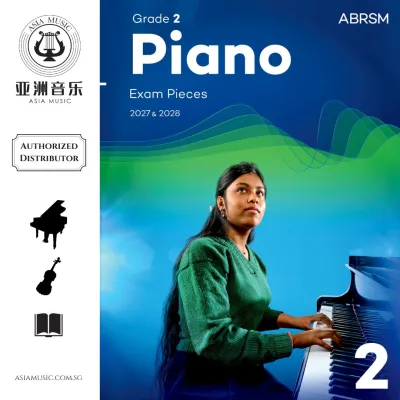
To identify these official releases, look for the distinctive, authorized ABRSM logo on the front cover and spine of the packaging. The cover will also clearly state the specific instrument, the grade, and the active syllabus years (for example, “Piano Exam Pieces 2025 & 2026, Grade 2”). Verifying these visual markers ensures you are purchasing an authorized product designed specifically for the current exam cycle.
Major Classical Labels and Composer-Specific Albums
While the official ABRSM compilations are highly convenient, they do not always include the alternative pieces listed at the bottom of each syllabus category. When a student chooses to play an alternative piece, you must look to major classical record labels to find high-quality performances. Reputable labels such as Naxos, Hyperion, Deutsche Grammophon, and Decca maintain extensive catalogs of complete classical works.
For List A and List B pieces, which frequently feature works by foundational composers like Johann Sebastian Bach, Joseph Haydn, Wolfgang Amadeus Mozart, or Ludwig van Beethoven, purchasing a composer-specific album is often highly beneficial. For example, instead of searching for a single track on a multi-grade compilation, buying a dedicated CD of Bach’s Notebook for Anna Magdalena Bach or a collection of Clementi’s introductory sonatinas provides a broader musical context. This approach is highly cost-effective and enriches the student’s overall musical education by exposing them to the composer’s wider style.
To locate the exact piece on these major label releases, use the catalog numbers and composer indexes available on the labels’ official websites. By searching the specific catalog number (such as a Naxos catalog number) or the work’s historical identifier (such as “Hob. XVI:1”), you can pinpoint the exact album and track containing the required movement. This methodical search ensures that you obtain a professionally recorded, historically accurate performance rather than a simplified or altered version.
CD vs. Vinyl: Choosing the Best Format for Practice and Listening
When deciding between Compact Discs (CDs) and vinyl records for ABRSM Grade 2 preparation, it is important to weigh the practical advantages and limitations of each format. Both media types offer distinct benefits depending on whether the primary goal is active, repetitive practice or general musical appreciation.
CDs are highly functional and remain the most practical physical format for daily exam preparation. The digital nature of CDs provides exceptional audio clarity, which is essential for a Grade 2 student who needs to hear the precise release of a staccato note, the subtle transition of a legato phrase, or the exact moment a pedal is depressed. Furthermore, CDs offer unmatched convenience: players allow instant track-skipping, precise indexing, and the ability to program a single track to play on repeat. A student struggling with a specific 45-second List C piece can easily loop that track without any physical wear to the media, making the CD a highly efficient study tool that can be used easily in a study room, classroom, or car.
Vinyl records, on the other hand, offer a warm, expansive analog soundstage that can make the acoustic grand piano sound incredibly lifelike and resonant. Listening to classical music on vinyl encourages a focused, ritualistic listening experience; the physical act of cleaning the record, placing it on the platter, and lowering the tonearm demands undivided attention. This format is excellent for helping a young student develop a deeper emotional connection to classical music and a finer appreciation for tone quality. However, vinyl has significant practical limitations for active exam prep. Pinpointing a short, specific Grade 2 track on a 12-inch LP is difficult and can easily lead to accidental scratches on the vinyl surface. Additionally, vinyl playback requires a properly calibrated turntable; any speed fluctuations (wow and flutter) can alter the pitch of the music, which can confuse a student’s developing ear.
For the most effective preparation, a hybrid approach is highly recommended. Use CDs near the piano for active, repetitive practice, score-following, and technical analysis. Reserve vinyl records for relaxed, holistic listening sessions in the living room, allowing the student to absorb the overall musical character, style, and expression of the classical era without the pressure of immediate practice.
Sourcing and Verifying Authentic Classical Records in Singapore
Sourcing authentic classical CDs and vinyl records in Singapore requires a combination of local retail knowledge and careful online verification. Because physical media distribution has become highly specialized, knowing where to look and how to verify your purchase is key to avoiding counterfeit or incorrect editions.
For those who prefer a hands-on shopping experience, visiting specialized brick-and-mortar music stores and dedicated classical departments in major Singapore shopping complexes is highly recommended. Establishments located in hubs like the Adelphi (near City Hall), the Esplanade, or major shopping centers along Orchard Road often carry curated selections of classical CDs and high-quality vinyl pressings. Shopping in person allows you to inspect the physical packaging directly, and the knowledgeable staff can often assist you in verifying whether a particular import matches the active ABRSM syllabus requirements.
When shopping on online marketplaces or international e-commerce platforms, extra precautions must be taken. Always prioritize reputable sellers with high ratings who specialize in classical music distribution. Look for listings labeled as “new and sealed” to ensure the accompanying booklet or tracklist index is intact. Before purchasing, verify the authenticity of the item by matching the 13-digit EAN or UPC barcode printed on the product listing against the official database of the record label. This step ensures that the physical copy you receive is an authorized pressing and not a low-quality bootleg with altered track orders or compressed audio.
Additionally, buyers in Singapore must consider the local climate when purchasing and storing physical media. Singapore’s high relative humidity can cause mold growth on vinyl surfaces and paper liners, as well as a phenomenon known as “CD bronzing” (where the reflective layer of older CDs oxidizes and degrades). To protect your investment, store your classical record collection vertically in a well-ventilated, air-conditioned room, or utilize dedicated dry boxes and silica gel packs to keep the media free from moisture damage. Avoid buying second-hand compilations where the original tracklist insert is missing, as you will have no way of confirming the recording’s syllabus year or authenticity.
Frequently Asked Questions (FAQ)
Can I use streaming services instead of buying CDs or vinyl for ABRSM preparation?
While streaming platforms offer vast catalogs and convenient access to official ABRSM playlists, physical media like CDs and vinyl records provide distinct advantages for serious study. Physical discs offer guaranteed audio consistency, complete ownership of the specific edition, and a highly focused, distraction-free listening environment. Many piano teachers prefer physical media because it prevents students from being distracted by mobile notifications, advertisements, or algorithmic recommendations during dedicated study sessions.
What should I do if I accidentally buy a recording for an older ABRSM syllabus?
If you purchase an outdated recording, first check the current syllabus to see if any of the pieces have been carried over, as some core classical repertoire remains valid across multiple exam cycles. If none of the tracks match the active requirements, do not discard the album; it remains highly valuable for general musical exposure, ear training, and sight-reading practice. If the item was mislabeled or falsely advertised as matching the current syllabus by an online retailer, contact their customer service department immediately to request a return or exchange.
Are there specific tempos I must follow from the official ABRSM recordings?
Official ABRSM recordings provide an excellent, professional guide for tempo, but the speeds chosen by the recording artists are not mandatory targets that students must match exactly. Examiners prioritize a steady, rhythmic, and musically expressive performance over raw speed. A student who plays a Grade 2 piece slightly slower but with complete accuracy, clear articulation, and controlled dynamics will score much higher than a student who attempts a fast tempo but suffers from uneven rhythm and missed notes.
Community discussion
Share your experience or ask a question. Comments are reviewed before publication.