
Economics is often called the “dismal science,” a reputation that stems from its heavy reliance on abstract models, complex graphs, and dense academic terminology. For secondary school students preparing for the Singapore-Cambridge GCE O-Level Economics examination (Syllabus 2286), the sudden transition from concrete subjects to theoretical concepts like market failure, price elasticity, and macroeconomic policy can be incredibly daunting. This is where visual and comic-style study guides play a transformative role in the learning process.
By combining narrative storytelling with graphic illustrations, an economics comic book leverages dual coding theory—a cognitive science principle demonstrating that the brain processes visual and verbal information through separate, parallel channels. When a student reads a text definition of “opportunity cost” while simultaneously viewing a humorous comic strip depicting a consumer choosing between a bubble tea and a movie ticket, the concept becomes anchored in long-term memory much more effectively than through rote memorization alone. Complex diagrams, such as the shifting of demand and supply curves or the deadweight loss associated with taxes, are simplified into step-by-step visual sequences that demystify how market forces interact.
However, students and parents in Singapore must navigate a specific market reality: pure, narrative-driven comic books tailored precisely to the Singapore Examinations and Assessment Board (SEAB) O-Level syllabus do not exist as standard school textbooks. Instead, the local educational landscape offers a spectrum of visual materials. This includes highly illustrated revision guides, infographic-heavy assessment books, and conceptual mind maps, alongside internationally published graphic novels that cover foundational economic theories. Understanding how to select and combine these visual formats is key to building both an intuitive grasp of the subject and the academic rigor required to excel in the national exams.
Products mentioned in this guide

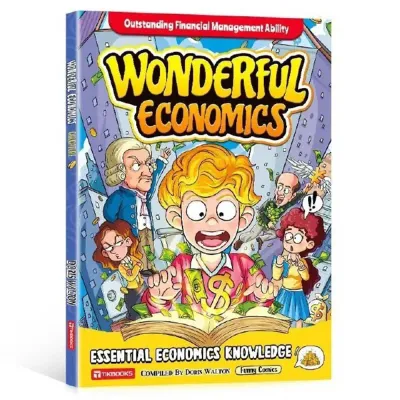
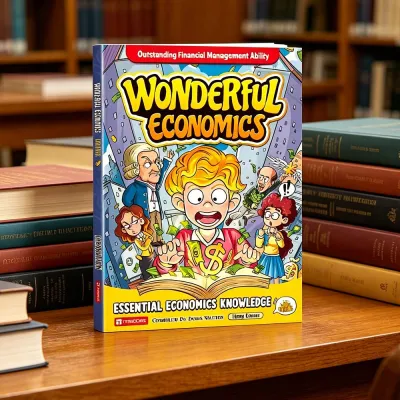
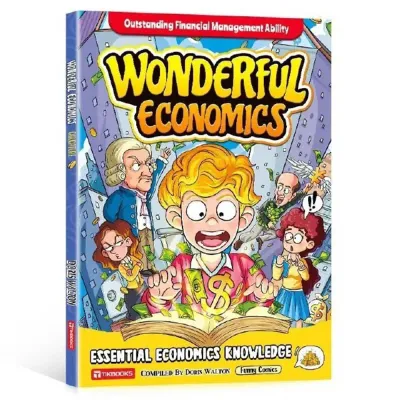
Prices are valid at publication and may change. Please refer to the product page for the latest price.
Key Criteria for Choosing an O-Level Economics Graphic Guide
Selecting the right visual study aid requires looking beyond engaging illustrations to ensure the material supports actual exam performance. The first and most critical criterion is strict alignment with the SEAB O-Level Economics syllabus. Because economics is taught and tested differently across international jurisdictions, a general graphic novel published in the United States or the United Kingdom may omit core topics required in Singapore, or conversely, include complex theories that are irrelevant to the O-Level curriculum. Parents and students must verify the publication year, the edition, and whether the content maps directly to the key thematic units of Syllabus 2286, such as the basic economic problem, the allocation of resources, microeconomic decision-makers, government and the macroeconomy, and the global economy.
Beyond syllabus coverage, conceptual accuracy and terminology must be evaluated. In the O-Level marking scheme, examiners look for precise key phrases and formal economic terms. A comic book that oversimplifies terms—for instance, describing “inflation” merely as “things getting more expensive” without explaining it as a “sustained increase in the general price level”—can inadvertently teach students habits that lead to lost marks. The visual representations must also adhere to standard academic conventions; demand and supply curves must be accurately labeled, and the relationship between variables must be mathematically and theoretically sound.
Finally, a successful study guide must strike a delicate balance between visual engagement and academic depth. While cartoon illustrations are excellent for introducing a concept and reducing study anxiety, they often lack the structural depth needed to answer high-weight essay and structured questions. An effective guide should use visual elements to scaffold understanding, but must also provide concrete text-based explanations, sample case studies, and structured response templates. Students should look for books that transition from a colorful visual summary to a formal, exam-style explanation, ensuring they can translate their intuitive understanding into high-scoring written answers.
Categories of Comic and Illustrated Economics Books to Consider
To help students choose the most effective resources, we can categorize available visual materials into two primary groups: SEAB-aligned illustrated revision guides and general graphic introductions to economics. Each category serves a distinct purpose in a student’s preparation strategy, offering different trade-offs between exam relevance and narrative engagement.

| Dimension | SEAB-Aligned Illustrated Guides | General Graphic Economics Books |
|---|---|---|
| Syllabus Match | High (specifically designed for Syllabus 2286) | Low to Moderate (covers foundational concepts only) |
| Visual Style | Infographics, flowcharts, and cartoon mascots | Narrative comic strips and graphic novel layouts |
| Local Context | High (uses Singaporean policies and examples) | Low (often US- or globally focused) |
| Best Use Case | Last-minute revision, exam preparation, and structuring answers | Building early interest and intuitive conceptual understanding |
| Depth of Theory | Exam-focused, includes precise definitions and formulas | Broad overview of historical and theoretical systems |
SEAB-Aligned Illustrated Revision Guides
These publications are crafted by local educational specialists and experienced educators specifically for the Singapore market. Rather than presenting a continuous narrative story, these guides utilize infographic layouts, colorful mind maps, and cartoon-assisted explanations to break down the O-Level syllabus. Publishers such as Marshall Cavendish Education, Shing Lee Publishers, and Singapore Asia Publishers (SAP) frequently incorporate visual summaries into their assessment books to help students digest complex information quickly.
The primary advantage of these local guides is their absolute alignment with the SEAB exam format and the inclusion of local economic contexts. For example, when explaining government intervention, these books will use highly relevant local examples such as Singapore’s Electronic Road Pricing (ERP) system to illustrate negative externalities, or the Central Provident Fund (CPF) and SkillsFuture grants to explain merit goods. They also teach students the specific analytical steps required for O-Level questions, showing exactly how to draw and label diagrams to secure maximum marks.
However, the trade-off is that these guides may lack the continuous, entertaining narrative of a traditional comic book. They are fundamentally study aids designed for academic efficiency rather than leisure reading. The visual style is highly structured, focusing on clear data presentation and logical flowcharts rather than character-driven storylines. For students who are highly visual learners, these guides provide the perfect bridge between raw academic text and visual clarity, making them indispensable during the intense revision phases leading up to the preliminary and national examinations.
General Graphic Introductions to Economics
For students who struggle with initial interest in the subject or find standard textbooks completely dry, internationally acclaimed graphic novels offer an excellent alternative. These books use traditional comic book layouts, complete with recurring characters, narrative plots, and humorous dialogue, to explain how economic systems function.
One of the most prominent examples is The Cartoon Introduction to Economics by Yoram Bauman and Grady Klein. Split into volumes covering microeconomics and macroeconomics, this series uses witty illustrations to explain concepts like utility, supply and demand, market structures, and international trade. Another highly recommended title is Economix: How Our Economy Works (and Doesn’t Work) in Words and Pictures by Michael Goodwin, which frames economic theory within a historical narrative, showing how real-world events shaped the ideas of economists like Adam Smith, Karl Marx, and John Maynard Keynes.
While these books are outstanding for building deep intuitive understanding and genuine interest, they have clear limitations for O-Level candidates. They do not align with the specific structure of the Singapore syllabus, meaning students will encounter topics that are not tested (such as advanced monetary history) while missing out on specific exam techniques. Furthermore, the terminology used can sometimes reflect regional variations (such as American spelling or policy terms) that differ from the British English and SEAB standards required in Singapore. Therefore, these books should be treated as high-value supplementary reading to be enjoyed during holidays or early in the secondary school journey, rather than primary study guides.
How to Integrate Visual Guides into Your O-Level Study Plan
To maximize the value of visual and comic-style study guides, students must integrate them systematically into their existing study routines. Relying solely on a graphic book is insufficient for the rigorous demands of the O-Level exam, but when paired correctly with traditional resources, they can significantly boost retention and performance.
During the initial learning phase, visual guides should be used for pre-study and concept mapping. Before a school teacher introduces a new topic—such as macroeconomic policies—a student can spend fifteen minutes reading the corresponding section in a graphic guide. This builds a strong visual framework in the student’s mind, making the subsequent, more detailed school lecture much easier to follow and digest. It also helps students identify the core questions they need to ask during class, as the visual guide will have already highlighted the main relationships between economic variables.
As the exam period approaches, visual guides become powerful tools for combatting study fatigue. When a student is too exhausted to read through pages of dense text, reviewing colorful infographics or comic-style summaries can keep the brain active without causing burnout. These guides are particularly effective for quick active recall sessions, where students can look at a visual summary of a market failure diagram and practice reproducing it on a blank sheet of paper, ensuring they remember the correct placement of axes, curves, and shading.
However, the crucial step is transitioning from visual understanding to formal exam writing. To achieve this, students must practice translating the visual concepts they have learned into structured essays using the “D-D-E-E” framework: Define the economic terms, Draw the relevant diagram, Explain the diagram step-by-step, and Evaluate the policy or situation. Students should pair their visual guides with the official SEAB-approved textbooks to ensure they have the complete academic vocabulary, and then apply this knowledge directly to past-year papers using the Ten-Year Series (TYS). This structured approach ensures that the fun, intuitive concepts learned from comics are successfully converted into precise, high-scoring exam scripts.
Where to Find and Verify Economics Study Materials in Singapore
Finding high-quality visual study guides and graphic economics books in Singapore requires visiting specialized retail locations and utilizing online platforms effectively. For local, SEAB-aligned visual revision guides, physical bookstores remain the most reliable starting point. Major retail chains like Popular Bookstore, particularly their larger flagship branches such as those at Bras Basah Complex, Jurong Point, or Toa Payoh, feature extensive assessment book sections dedicated to secondary school education. These physical locations allow students and parents to flip through the pages to evaluate the visual layout, check the clarity of the diagrams, and confirm that the content matches their learning preferences.
For international graphic novels like The Cartoon Introduction to Economics or Economix, independent and major bookstores with strong non-fiction or graphic novel sections are excellent resources. Books Kinokuniya, located at Ngee Ann City, offers an unparalleled selection of international educational comics. Alternatively, students can access these titles through the National Library Board (NLB) Singapore digital and physical catalog, which often stocks educational graphic novels in both their physical branches and via e-book platforms.
When purchasing materials through online marketplaces or digital bookstores, verification is paramount. Buyers must carefully inspect the book details, including the publisher, publication year, and the specific syllabus code if advertised. It is highly recommended to purchase from authorized sellers or official publisher storefronts to ensure the physical book is complete and free of printing errors. If buying second-hand copies from local online classified platforms, always request clear photos of the table of contents and a few sample pages to verify that the book is clean, legible, and represents the correct syllabus edition.
Frequently Asked Questions (FAQ)
Can I rely solely on an economics comic book to pass O-Level Economics?
No, you cannot rely solely on an economics comic book or graphic guide to pass the O-Level examination. While these visual materials are outstanding for building intuitive conceptual understanding, simplifying complex theories, and reducing study anxiety, they lack the structural depth, comprehensive content, and formal terminology required by the SEAB marking scheme. To secure a high grade, you must pair visual guides with standard school textbooks, teacher-provided notes, and consistent practice with the Ten-Year Series (TYS) to master essay-writing structures and case study analysis.
Are there manga-style textbooks specifically for the Singapore O-Level syllabus?
Currently, there are no official manga-style textbooks designed specifically for the Singapore O-Level Economics syllabus (Syllabus 2286). The closest alternatives available in the Singapore market are highly illustrated local revision guides, infographic-heavy study notes, and conceptual mind maps published by local educational experts. For a pure narrative comic format, students can read general graphic economics books as supplementary material to build interest, but must rely on standard local publications for exam-specific preparation.
Do visual guides help with O-Level Economics case study questions?
Yes, visual guides are highly beneficial for the initial stages of analyzing case study questions. They help students quickly identify the underlying economic theories—such as market failure or inflation—embedded within the case study texts. However, case study questions also require students to extract data from tables and charts, perform calculations, and write balanced evaluations. While a visual guide clarifies the theory, you must still practice actual past-year papers to develop the critical thinking and data-handling skills required for the exam.
Community discussion
Share your experience or ask a question. Comments are reviewed before publication.