
For aspiring drummers in Singapore, choosing a high-quality electric drum kit is the most practical way to embark on a musical journey. Unlike traditional acoustic drums, which are notoriously loud and physically demanding to house, modern electronic options provide a highly customizable, quiet, and space-efficient alternative. Selecting the right entry-level kit requires balancing realistic playing feel, sound quality, physical durability, and educational features, ensuring the instrument supports your development from a complete novice to an intermediate player.
To make an informed investment, you must understand how different hardware configurations, pad materials, and sound modules impact your learning curve. This guide breaks down the essential factors of selecting an entry-level kit, details the physical and technical specifications to look for, and provides practical advice on setting up your practice space to maintain harmony with your neighbors.
Advantages of choosing an electric drum for beginners in Singapore
Practicing the drums requires consistent, repetitive physical training to build muscle memory, limb independence, and rhythmic accuracy. In a high-density urban environment like Singapore, where the majority of residents live in Housing & Development Board (HDB) flats or private condominiums, an acoustic drum kit is rarely a viable option. Acoustic drums easily exceed 110 decibels, which can cause immediate disturbance to neighbors and risk violating local noise regulations. An electric drum kit solves this fundamental challenge by converting physical strikes into digital signals, allowing you to practice silently using a pair of headphones. The only acoustic sound produced is the low-level physical tap of the drumsticks on the pads, which is easily contained within a single room.
Products mentioned in this guide
![Yamaha DTX6K3-X Electronic Drums Digital Drum DTX6KX DTX 6K3 X DTX 6K3X DTX6 [LIMITED STOCK]](https://img.lazcdn.com/g/p/eff698a0eedd30e663d759209d4fad53.jpg_400x400q80.jpg_.webp)

Prices are valid at publication and may change. Please refer to the product page for the latest price.
Space efficiency is another critical advantage of electronic percussion. A standard acoustic drum kit requires a large, dedicated area and is difficult to move once assembled. In contrast, electronic drum kits are designed with a much smaller physical footprint, making them ideal for compact bedrooms or study rooms. Many entry-level models feature lightweight, adjustable frames that can be partially folded and tucked against a wall or into a closet when not in use, preserving valuable living space.
Beyond physical convenience, electronic drum kits offer powerful digital learning tools that acoustic kits cannot replicate. The sound module, often referred to as the “brain” of the kit, comes equipped with built-in metronomes that allow you to practice playing in perfect time across various time signatures. Most modules also include pre-recorded play-along tracks spanning multiple musical genres, giving you the experience of playing with a full band. Furthermore, integrated coaching functions provide real-time feedback on your timing accuracy, while onboard recording capabilities allow you to record your practice sessions and listen back to identify areas for improvement.
Core Features to Evaluate in an Entry-Level Electric Drum Kit
When shopping for your first kit, it is easy to get overwhelmed by product specifications and marketing jargon. To ensure you choose an instrument that will actively support your skill development and last for years, you should focus your evaluation on three core areas: pad construction, sound module capabilities, and physical connectivity.

Pad Material and Rebound
The physical surface you strike plays a massive role in how realistic the kit feels and how quietly it operates. Entry-level drum pads generally utilize either rubber or mesh heads, and the differences between them are substantial:
- Mesh Heads: These are constructed from a woven fabric membrane that closely resembles the look and feel of an acoustic drumhead. Mesh heads can be tightened or loosened using a standard drum key, allowing you to adjust the tension and rebound to match your personal preference. They are exceptionally quiet, absorbing the physical impact of the stick and producing a very low acoustic sound. This realistic rebound is crucial for developing proper stick control, hand endurance, and double-stroke rolls.
- Rubber Pads: Commonly found on budget-friendly entry kits, rubber pads offer a firm, durable striking surface. However, they produce a much louder, higher-pitched acoustic click when struck, which can be distracting to others in your home. Rubber pads also provide a highly bouncy, uniform rebound that does not accurately mimic the feel of an acoustic drum, which can lead to poor technique habits if you transition to acoustic kits later.
In addition to the material, you must verify the trigger zones of the pads. Standard entry-level snare pads should ideally feature dual-zone triggering, which allows the module to play a standard snare sound when you hit the center of the pad, and a rimshot or rim-click sound when you strike the outer edge. For cymbals, dual-zone pads allow you to trigger distinct sounds from the bow (the flat surface) and the edge, and they should support a physical “choke” function, enabling you to silence the cymbal sound instantly by grabbing the edge with your hand.
Sound Module and Learning Tools
The sound module is the computer that translates your physical strikes into digital audio. For a beginner, the quality of the onboard drum samples is far more important than the quantity of different drum kits available. Look for a module that features dynamically responsive samples. This means that when you strike a pad lightly, it produces a soft, quiet drum sound, and when you strike it harder, the sound becomes louder and changes in tonal character—just like an acoustic drum.
An effective beginner module should feature an intuitive user interface with a clear LCD screen and dedicated buttons for the metronome and volume controls. The built-in “Coach” mode is a vital educational asset; it should offer structured exercises such as timing checks, tempo-change challenges, and quiet-count modes (where the metronome silences itself for a few measures to test your internal clock). These tools help you build a rock-solid sense of rhythm without the need for external software.
Connectivity and Expandability
Your drum kit must be able to interface with the modern digital tools you use for learning and recording. Ensure the sound module features a USB-MIDI port, which is the industry standard for connecting your kit to a computer, tablet, or smartphone. This connection allows you to use your electric drum kit as a MIDI controller for interactive learning apps, educational software, and digital audio workstations (DAWs) to record your playing.
Wireless connectivity is another highly convenient feature to consider. Modules equipped with Bluetooth MIDI allow you to connect wirelessly to mobile learning applications, while Bluetooth Audio lets you stream songs directly from your phone into the drum module. This mixes the backing track with your live drumming in your headphones, eliminating the need for extra cables.
Finally, check the physical input panel on the back of the module for expandability. As your skills progress, you may want to add an extra crash cymbal or an additional tom pad to your setup. A module with open auxiliary trigger inputs (often labeled “Crash 2” or “Tom 4”) allows you to expand your hardware gradually without needing to purchase an entirely new sound module.
Typical Beginner Configurations and Performance Expectations
Electronic drum kits are generally structured into two primary physical configurations at the entry-level price point. Understanding these setups will help you align your budget, available space, and musical goals with the right instrument.
Compact and Foldable Kits
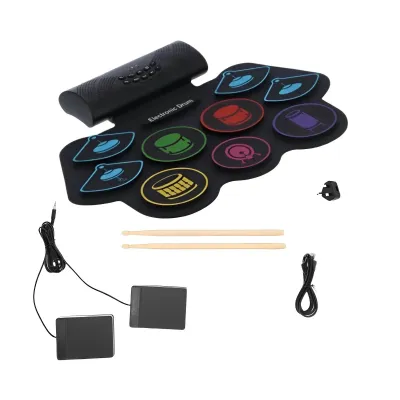
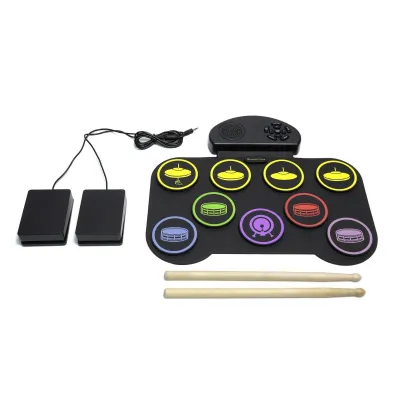
Compact and foldable kits are engineered specifically for ultra-tight spaces and maximum portability. These setups typically feature smaller pad sizes (usually 6 to 8 inches in diameter) mounted on a simplified, lightweight two-post rack system. To keep costs and physical weight to a minimum, these kits often utilize rubber pads or basic, non-adjustable mesh heads. The hi-hat and kick drum controllers in these configurations are usually free-standing, electronic switch-style foot pedals that do not use physical beaters or towers.
While these kits are highly affordable and can be stored in a closet, they come with significant compromises in playability. The switch-style kick pedal does not feel like a real bass drum pedal, which prevents you from developing the ankle control and foot muscle memory needed for acoustic drumming. Additionally, the small, tightly packed layout can restrict your physical movement, making it difficult to practice proper posture and arm extension. These kits are best suited for young children, casual hobbyists, or those with severe space limitations who prioritize storage over realistic playability.
Standard 5-Piece Mesh Kits
A standard 5-piece configuration is the recommended benchmark for anyone serious about learning the drums. This setup closely mirrors the layout of a traditional acoustic drum kit, consisting of a snare drum, three tom pads, a hi-hat cymbal, a crash cymbal, a ride cymbal, and a dedicated kick drum tower. The pads are typically larger (8 to 10 inches) and are mounted on a sturdy, four-post rack that remains stable even during energetic practice sessions.
The defining feature of this configuration is the physical kick drum tower. Instead of a simple electronic foot switch, this setup utilizes a real bass drum pedal with a physical beater that strikes a vertical pad. This design allows you to develop authentic foot techniques, adjust pedal spring tension, and even upgrade to a double-bass pedal later. Opting for an all-mesh standard 5-piece kit provides the best long-term value, as the realistic layout and physical response translate directly to acoustic drums, ensuring your technique remains clean and correct.
Essential Accessories and Space Setup Considerations
Buying the electric drum kit itself is only part of the equation. To create a safe, comfortable, and highly functional practice environment, you must budget for and carefully select several essential accessories.
- Drum Throne: Never use a standard household chair, stool, or wheeled office chair. A dedicated drum throne is essential for maintaining correct posture and preventing lower back injuries. Look for a height-adjustable throne with a sturdy, double-braced tripod base and high-density foam padding. When seated, your hips should be positioned slightly higher than your knees, allowing your legs to move freely and comfortably over the foot pedals.
- Audio Output: To hear your playing, you will need a dedicated audio output device. For private practice, invest in a pair of high-quality, closed-back studio headphones. Standard consumer earbuds or open-back headphones often leak sound and lack the frequency response required to reproduce the deep low-end of a bass drum and the crisp high-end of cymbals. Closed-back headphones provide physical sound isolation, blocking out the acoustic clicking of your sticks on the pads. If you want to play aloud, you must use a dedicated drum amplifier or a full-range flat-response (FRFR) active monitor. Avoid standard guitar amplifiers, as they cannot handle the deep, low-frequency transient spikes of an electronic kick drum and can easily suffer speaker damage.
- Sticks and Pedals: Beginners should start with a standard pair of 5A wooden drumsticks featuring nylon tips. Nylon tips are highly recommended for electronic drums because they are smooth and will not splinter; splintered wood tips can easily snag and tear delicate mesh heads. Additionally, verify if your chosen kit includes a physical kick pedal. If it does not, select a durable, single-chain drive pedal with adjustable spring tension so you can customize the pedal's resistance to your liking.
- Vibration Control in High-Rise Buildings: While headphones prevent airborne noise from disturbing your household, they do not stop structural vibrations. In Singapore's concrete HDB flats and condominiums, the physical impact of your foot striking the kick pedal and hi-hat controller travels directly through the floorboards. This low-frequency vibration can resonate through the building's concrete structure, sounding like a dull hammer to neighbors living directly below. To prevent complaints, place your drum rack and pedals on a thick, high-density noise-isolation mat. For advanced vibration absorption, many local drummers construct a DIY "tennis ball riser"—a platform made of two wooden boards sandwiching split tennis balls—which effectively decouples the kit from the floor and absorbs the mechanical energy.
Pre-Purchase Checklist for Local and Online Buying
Before you finalize your purchase, run through this practical checklist to ensure your new electric drum kit is fully compatible with your home, covered by local support, and ready to play straight out of the box.
- Power and Voltage Compatibility: Singapore operates on a standard 230V supply voltage at 50Hz. If you are purchasing your kit online from international retailers, verify that the included power adapter is rated for 230V and features a standard UK-style Type G 3-pin plug. Using an incorrect power supply can damage the sensitive digital components inside your sound module.
- Warranty and Local Distributor Support: Electronic drum modules are specialized computers, and drum pads contain sensitive piezo sensors that can occasionally fail under repeated physical impact. It is highly recommended to purchase your kit from authorized local dealers or reputable online music stores that offer a valid local distributor warranty. Confirm the warranty duration (typically 1 to 2 years) and ensure it covers both the digital sound module and the physical trigger pads.
- Physical Showroom Testing: Whenever possible, visit a physical music showroom in Singapore to test different kits in person. Sit on the throne, adjust the pad heights, and feel the physical rebound of the mesh or rubber heads. Interact with the sound module's interface to ensure it is intuitive, and check that the physical foot pedals do not slip or slide on the floor surface.
- Box Contents and Package Completeness: Carefully read the product specifications to confirm exactly what is included in the box. Many entry-level kits are sold as "shell packs" or basic configurations that omit essential items like a drum throne, kick pedal, headphones, or drumsticks. Ensure you budget for these accessories separately, or look for comprehensive starter bundles offered by authorized retailers to ensure you have everything you need to start playing immediately.
Frequently Asked Questions (FAQ)
Do I need a special amplifier for an electric drum kit?
Yes. If you choose to play without headphones, you must use an amplifier specifically designed for electronic drums or a full-range flat-response (FRFR) active PA speaker. Standard electric guitar amplifiers are designed to highlight mid-range frequencies and cannot handle the deep, low-frequency transient spikes of an electronic kick drum. Attempting to use a guitar amp can result in heavily distorted sound and can easily tear or blow the speaker cone. Drum monitors are engineered with specialized high-power woofers and tweeters to cleanly reproduce the entire frequency spectrum of an electronic kit.
Can I connect my electric drum kit to learning apps?
Yes. Almost all modern electric drum modules can connect to computers, tablets, and smartphones via USB-MIDI or Bluetooth MIDI. By connecting your kit to these devices, you can use interactive gamified learning platforms, instructional software, or digital audio workstations (DAWs). These apps track your physical hits in real-time, providing immediate visual feedback on your timing, rhythm, and overall playing accuracy, which is highly beneficial for self-guided beginners.
How much space does a standard beginner kit require?
A standard 5-piece beginner electric drum kit typically requires a dedicated floor space of approximately 1.2 meters to 1.5 meters in both width and depth. This footprint accommodates the physical drum rack, the extended cymbal arms, the kick pedal tower, and provides sufficient clearance behind the kit for the drum throne and the player’s natural arm movements. Always measure your designated practice area and compare it against the manufacturer’s exact setup dimensions before purchasing.
Community discussion
Share your experience or ask a question. Comments are reviewed before publication.