
Selecting your first English translation of the quran is a deeply personal and significant step. Because the original text was revealed in classical Arabic, any English version is technically an interpretation of its meanings rather than a direct replacement. For beginners, finding an edition that balances linguistic accessibility, historical context, and reading flow is essential to maintaining a consistent and rewarding reading habit.
To make an informed decision, you must consider how you intend to engage with the text. Some readers approach the scripture for spiritual reflection and daily devotion, while others seek academic understanding or historical knowledge. By identifying your personal goals and reading preferences, you can narrow down the vast selection of available editions to find the one that resonates most with your learning style.
Understanding Your Needs as a Beginner
Before browsing different editions, clarify your primary purpose for reading the text. If you are reading out of general curiosity or for spiritual exploration, a translation that prioritizes smooth, modern English will help you grasp the core narratives and moral lessons without getting bogged down in complex sentence structures. Conversely, if your goal is academic study or deep theological reflection, you will benefit more from an edition that includes extensive commentary, historical background, and cross-references.
Products mentioned in this guide
![[SG SELLER] The Clear Quran (Paperback) NORMAL & GIFT EDITION By Dr. Mustafa Khattab](https://img.lazcdn.com/g/p/3063d5df3f68237fc968e227cd577e14.jpg_400x400q80.jpg_.webp)
Prices are valid at publication and may change. Please refer to the product page for the latest price.
Your personal English reading proficiency plays a major role in how easily you will absorb the text. Some readers find comfort in classical, poetic phrasing that mirrors the solemnity of traditional religious texts. Others find that archaic pronouns and complex syntax create an unnecessary barrier to comprehension. Honest self-assessment of your language preferences will prevent reading fatigue and help you stay engaged with the chapters.
Beginners must also decide how much contextual support they require. The historical events surrounding the revelation of specific verses greatly influence their meaning. If you prefer an uninterrupted, fluid reading experience, a clean text with minimal footnotes is ideal. However, if you want to understand the historical circumstances behind the verses, look for an edition that incorporates concise introductory notes and thematic headings.
Finally, consider the trade-off between linguistic flow and strict literalism. A word-for-word translation can sometimes result in awkward, disjointed English phrasing because Arabic and English grammar structures differ fundamentally. A meaning-for-meaning translation, on the other hand, focuses on conveying the spirit and intent of the message in natural English, which is generally much more suitable for someone reading the text for the first time.
Key Factors to Consider When Choosing a Translation
When evaluating different English versions of the quran, the translation methodology is the first major factor to analyze. Translators generally operate on a spectrum between formal equivalence (literal, word-for-word translation) and dynamic equivalence (meaning-for-meaning translation). Formal equivalence preserves the literal structure of the Arabic source but often requires the reader to do extra mental translation. Dynamic equivalence offers a smoother reading experience by translating the underlying concepts into natural, modern idioms.

The language style of the translation directly shapes your daily reading experience. Traditional translations from the late 19th and early 20th centuries often employ Elizabethan or Victorian English, utilizing terms like “thou,” “thee,” and “hath.” While this style carries a sense of classical dignity, it can obscure the meaning of complex passages. Modern translations use contemporary vocabulary and straightforward sentence structures, making the text highly accessible to a global audience.
Contextual tools and commentary are invaluable for beginners who want to understand the deeper meanings of the text. Look for editions that include brief explanations of Asbab al-Nuzul (the historical reasons or occasions for revelation). These notes explain who a verse was addressed to and what events were taking place at the time, preventing common misunderstandings that arise when verses are read in isolation. Thematic headings within chapters also help readers follow the transition between different topics.
Physical layout and visual readability should not be overlooked. For readers in Singapore, where study spaces can vary and reading on the commute is common, the physical format of the book matters. Consider whether you prefer a bilingual edition featuring the original Arabic script alongside the English text, or an English-only edition. Bilingual editions are excellent for those learning Arabic, but they are naturally bulkier and heavier than English-only versions. Pay close attention to font size, line spacing, and paragraph formatting, as a cluttered page can quickly strain your eyes during long reading sessions.
Recommended English Quran Translations for Beginners
To help you find the right match, we have analyzed four of the most widely read and respected English translations, highlighting their unique strengths, target audiences, and inherent limitations.
The Clear Quran by Dr. Mustafa Khattab
The Clear Quran is widely regarded as one of the most accessible translations for modern readers. Dr. Mustafa Khattab, an experienced translator with a deep background in Islamic studies, intentionally designed this edition to provide a highly clear, modern, and cohesive reading experience for contemporary English speakers.
- Language and Structure: The translation utilizes straightforward, everyday English vocabulary while maintaining a respectful and reverent tone. It organizes verses into logical thematic groups, with clear subheadings that guide the reader through shifting subjects within a single chapter.
- Contextual Support: It features concise, inline explanatory notes that clarify historical contexts, idioms, and complex theological concepts without disrupting the natural flow of the text.
- Limitations: While excellent for general reading and comprehension, it may not satisfy readers who are looking for exhaustive, traditional theological exegesis (Tafsir) or those who prefer a highly literal, word-for-word linguistic analysis.
M.A.S. Abdel Haleem (Oxford World's Classics)
Published by Oxford University Press, this translation by Professor M.A.S. Abdel Haleem is highly acclaimed in both academic and spiritual circles for its exceptional literary beauty and flow.
- Language and Structure: Abdel Haleem departs from the traditional verse-by-verse formatting, presenting the text in natural, flowing paragraphs. This layout helps beginners read the scripture as a continuous, coherent narrative rather than a collection of isolated statements.
- Contextual Support: The translation features an excellent general introduction to the history and structure of the text, along with brief, highly focused footnotes that clarify cultural references and linguistic nuances.
- Limitations: Standard editions of this translation do not include the parallel Arabic text, which may be a drawback for readers who wish to cross-reference the original language. It also contains fewer detailed historical footnotes than traditional study editions.
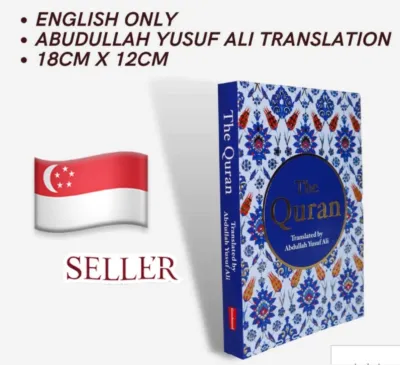
Abdullah Yusuf Ali
For decades, the translation by Abdullah Yusuf Ali has served as a classic staple in the English-speaking Muslim world, offering a deeply poetic and highly detailed study companion.
- Language and Structure: Yusuf Ali’s translation is famous for its majestic, poetic language, which attempts to capture the grand literary rhythm of the original Arabic. It is highly valued by readers who appreciate a solemn, traditional tone.
- Contextual Support: This edition is renowned for its vast, comprehensive footnotes and detailed chapter introductions, providing a wealth of historical, philosophical, and spiritual commentary.
- Limitations: The early 20th-century English style, complete with archaic pronouns, can present a steep learning curve for modern beginners. Additionally, physical copies containing the full commentary and parallel Arabic text are exceptionally thick and heavy, making them less practical for travel or daily commuting.
The Meaning of the Holy Quran by Marmaduke Pickthall
As one of the earliest English translations written by a native English-speaking Muslim, Marmaduke Pickthall’s work remains a historic milestone of literal translation.
- Language and Structure: Pickthall’s translation is highly literal and direct, aiming to remain as close as possible to the literal structure of the Arabic text. The tone is consistently solemn, formal, and deeply respectful.
- Contextual Support: Each chapter begins with a brief introduction outlining its historical setting and the general period of revelation.
- Limitations: The language is distinctly dated, relying on early 20th-century literary English. It features minimal explanatory footnotes and lacks modern thematic headings, meaning beginners may need to consult supplementary study guides to fully grasp the context of more complex verses.
Formats and Editions: Print, Digital, and Audio
Once you have decided on a translator, you must choose the physical or digital format that best fits your lifestyle. Each medium offers distinct advantages and requires careful verification of product specifications before you make a purchase.
Print Editions Physical books provide a tactile, distraction-free reading experience that many find conducive to study and reflection. When purchasing a print copy, verify whether the edition is English-only or bilingual (containing parallel Arabic script). Bilingual editions are excellent for reference but are significantly larger. Check the publisher’s specifications for paper quality and binding style; in Singapore’s humid tropical climate, high-quality acid-free paper and sturdy hardcover bindings will help prevent pages from yellowing or warping over time. Standard print editions typically range from S$15 to S$50 depending on the binding, size, and inclusion of commentary.
Digital and E-books Digital editions offer unmatched portability and convenience, allowing you to carry the text on your phone, tablet, or e-reader. Key features to look for include adjustable font sizes, text search capabilities, bookmarking, and night modes for comfortable low-light reading. Before purchasing an e-book, verify device compatibility and check for digital rights management (DRM) restrictions to ensure the file will open on your preferred reading application. Always download digital editions from authorized, reputable publishers to ensure the text is complete and free of formatting errors.
Audio and Multimedia Audiobooks and multimedia applications are excellent tools for experiencing the oral nature of the scripture. Listening to professional audio recitations allows you to appreciate the natural rhythm, pronunciation, and flow of the original Arabic, even if you are reading along in English. When choosing an audio version or app, verify the audio quality, the style of the reciter, and whether the application supports verse-by-verse highlighting so you can easily follow along in real-time.
Pre-Purchase Verification Before finalizing any purchase, always verify the specific edition, publisher, language, and content completeness. Do not rely solely on cover art or generic online titles, which can sometimes be misleading. Ensure you are purchasing an unabridged version rather than a collection of selected excerpts, unless an abridged format is specifically what you are seeking. Checking these details beforehand guarantees that you receive a reliable, high-quality edition that matches your expectations.
Frequently Asked Questions (FAQ)
Do I need to know Arabic to read an English translation of the Quran?
You do not need to know Arabic to read an English translation. Modern English translations are specifically designed to convey the core messages, stories, and ethical teachings of the scripture to non-Arabic speakers. While reading in English is highly effective for comprehension, utilizing a bilingual edition or listening to audio recitations alongside your reading can help you appreciate the linguistic beauty and rhythm of the original Arabic text.
Is it better to read a translation with or without commentary (Tafsir)?
For absolute beginners, starting with a translation that features light commentary, concise footnotes, and thematic headings is generally highly recommended. This approach provides necessary historical context without overwhelming you with dense theological debates. As you become more familiar with the structure and narratives of the text, you can gradually transition to reading pure, uninterrupted text for reflection, or progress to multi-volume, exhaustive Tafsir works for advanced academic study.
Can I read the Quran on my smartphone or e-reader?
Yes, reading on a smartphone, tablet, or e-reader is a highly practical and popular option for modern readers. Digital formats allow you to carry the text wherever you go, making it easy to read during your daily commute or travel. When selecting a digital platform or mobile application, ensure you source it from an authorized publisher, and look for useful features such as offline reading access, customizable text sizes, and robust search functions.
Community discussion
Share your experience or ask a question. Comments are reviewed before publication.