
Preparing for the Cambridge Lower Secondary Science Stage 7 Checkpoint is a significant milestone. This assessment tests a broad range of scientific inquiry skills, biological concepts, chemical reactions, and physical phenomena. To help students navigate this comprehensive syllabus, relying on a single textbook is rarely enough. A well-structured exam preparation bundle offers a cohesive, multi-layered approach that bridges the gap between theoretical understanding and practical exam performance.
The ideal preparation bundle acts as a complete study ecosystem. By combining core content guides, structured workbooks, and realistic practice papers, these packages ensure that students do not just memorize facts but actually learn how to apply them under exam conditions. Selecting the right bundle requires evaluating how well the materials align with the current curriculum, how they match the student’s learning style, and whether they provide the necessary tools for independent self-assessment.
What to Look for in a Stage 7 Science Prep Bundle
When evaluating a Cambridge Lower Secondary Science Stage 7 prep bundle, your first priority should be comprehensive syllabus coverage. The Stage 7 curriculum is divided into distinct scientific strands, including biology, chemistry, physics, and Earth and space, alongside crucial science inquiry skills. A high-quality bundle must explicitly address all of these areas, ensuring that no topic is left unexamined. Look for resources that clearly map their chapters to the specific learning objectives of the Cambridge curriculum.
Products mentioned in this guide
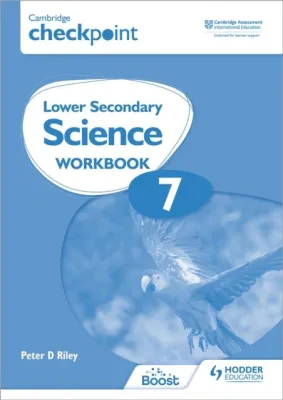
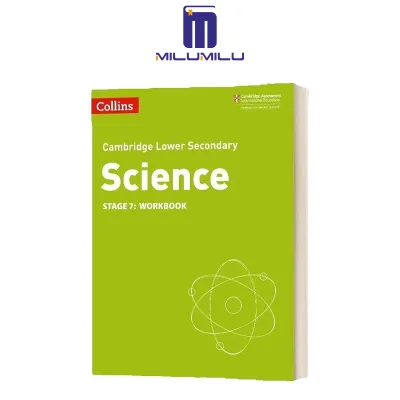
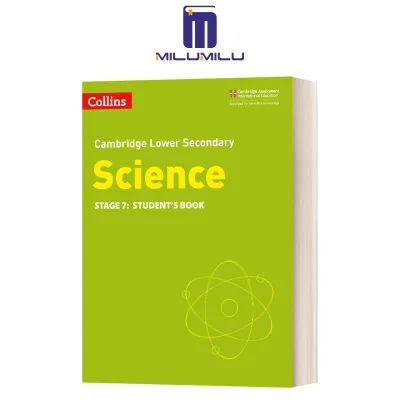
![Cambridge Lower Secondary Science Studentbook +Workbook Stage7/8/9 [ colored reprinted physical book without digital access code]](https://img.lazcdn.com/g/p/3a91440d579d953ec90df465e8b49fe6.jpg_400x400q80.jpg_.webp)
Prices are valid at publication and may change. Please refer to the product page for the latest price.
Beyond content coverage, active recall and application tools are essential for long-term retention. Static reading materials often lead to passive learning, where students believe they understand a concept simply because it looks familiar on the page. Effective bundles counter this by incorporating active learning elements such as end-of-chapter quizzes, quick-fire flashcards, or digital interactive modules.
Another critical component is the inclusion of complete answer keys and detailed marking schemes. For a bundle to be truly useful for self-study or guided tutoring, it must explain not just what the correct answer is, but why it is correct. Look for bundles that break down multi-step calculations in physics or provide sample explanations for open-ended biology questions. This level of detail helps students understand the specific keywords and phrasing that examiners look for during grading.
Finally, consider the format of the bundle. Many modern educational packages offer a choice between physical books, purely digital access, or hybrid formats. Physical workbooks are highly beneficial for practicing handwritten answers and drawing scientific diagrams, which matches the actual exam format. However, digital components can offer convenient portability and instant feedback on interactive quizzes.
Types of Exam Prep Bundles for Different Study Needs
Not all students approach exam preparation from the same starting point. Some may require a complete, ground-up review of the entire Stage 7 syllabus, while others might only need to fine-tune their exam-taking speed and technique. Understanding your student’s current academic standing and study habits is key to choosing a bundle that provides the highest return on investment.

By categorizing bundles based on their primary educational focus, you can match the resource to the specific phase of the student’s preparation timeline.
Comprehensive Revision Bundles
Comprehensive revision bundles are designed as all-in-one packages for long-term, structured study. These bundles typically contain a core textbook, a condensed revision guide, and a matching workbook. They are ideal for students who are starting their preparation early in the academic year and need a steady, paced review of the entire Stage 7 curriculum.
The primary advantage of a comprehensive bundle is its continuity. Because the textbook, revision guide, and workbook are designed by the same editorial team, they use consistent terminology, diagrams, and formatting. This reduces cognitive load, allowing the student to focus entirely on the scientific concepts rather than adapting to different teaching styles.
However, these bundles do come with trade-offs. They generally have a larger physical footprint and require a higher upfront financial investment.
Practice-Heavy and Past Paper Bundles
For students who have already mastered the core scientific concepts but struggle with the pressure of the exam room, practice-heavy bundles are the ideal choice. These packages focus almost exclusively on exam technique, containing mock examination papers, timed practice tests, and detailed examiner reports.
These bundles are highly effective for building exam stamina and improving time management. They teach students how to allocate their time across different sections, how to interpret complex question phrasing, and how to avoid common pitfalls highlighted in examiner feedback.
The main limitation of practice-heavy bundles is that they are not designed to teach foundational concepts. If a student attempts to complete mock papers without a solid understanding of Stage 7 biology, chemistry, and physics, they will likely become frustrated and discouraged. These resources should be reserved for the final phase of preparation, once the core syllabus has been thoroughly reviewed.
Concept-Building and Workbook Bundles
Some students struggle with the abstract nature of scientific principles or find it difficult to analyze practical experiments. Concept-building and workbook bundles are tailored specifically for these learners. These packages often feature heavily illustrated workbooks, step-by-step guides to scientific experiments, and highly scaffolded practice exercises.
These bundles excel at breaking down complex topics into manageable, bite-sized lessons. They are particularly beneficial for visual learners who benefit from diagrams, flowcharts, and color-coded explanations. By focusing on foundational understanding and practical science skills, these workbooks help students build the confidence needed to tackle more advanced problems.
How to Verify Syllabus and Edition Compatibility
One of the most common mistakes when purchasing exam preparation materials is buying outdated or incompatible editions. The Cambridge Lower Secondary Science curriculum undergoes periodic updates to ensure the content remains relevant and aligned with modern educational standards. Using an outdated bundle can result in a student studying topics that are no longer tested, or missing entirely new sections of the syllabus.
To avoid this, always verify the official syllabus code on the publisher’s product description or the back cover of the books. For Cambridge Lower Secondary Science, ensure the materials explicitly state they are aligned with the current curriculum framework.
Additionally, pay close attention to publisher authorization. Officially endorsed materials have undergone rigorous quality checks by education boards to ensure complete alignment with the syllabus. If you are considering third-party or independent publishers, take the time to cross-reference their table of contents with the official Cambridge Stage 7 syllabus. This ensures that all required topics—such as forces, chemical changes, and plant biology—are explicitly covered.
Finally, check for regional restrictions, particularly when purchasing bundles that include digital access codes or online learning platforms. Some publishers restrict digital content to specific geographic regions, which can prevent students from accessing online resources if the bundle was imported from another market. Always read the product specifications carefully to confirm that the digital components can be activated in your location.
Maximizing Your Study Bundle: A Preparation Strategy
Owning a high-quality exam prep bundle is only half the battle; the key to success lies in how effectively the student integrates these resources into their daily study routine. A structured, sequential approach prevents overwhelm and ensures that every component of the bundle is used to its full potential.
Start by using the concept guides or textbooks to review a specific topic, such as the structure of cells or the properties of metals. Once the theoretical knowledge is fresh, immediately transition to the corresponding workbook exercises to reinforce the concepts through active practice.
As the exam date approaches, begin incorporating the practice papers under simulated exam conditions. Find a quiet study space, set a timer to match the official exam duration, and remove all textbooks and notes. This practice is crucial for building the mental stamina required for the actual test and helps students identify whether they are spending too much time on specific sections.
After completing a practice paper, use the provided answer keys to conduct a thorough review. Do not simply look at the final score; analyze every incorrect answer to understand where the mistake occurred. Keep a dedicated error log where the student rewrites the correct scientific explanation.
Frequently Asked Questions (FAQ)
Are digital bundles as effective as physical books for Science prep?
Digital bundles offer excellent portability, instant searchability, and often include interactive quizzes that provide immediate feedback. However, they can also lead to screen fatigue and digital distractions. For science preparation, physical books are often preferred because they allow students to easily draw diagrams, write out chemical equations, and show step-by-step working for physics calculations, which closely mirrors the actual paper-based exam environment. A hybrid approach, using physical workbooks alongside digital revision tools, often yields the best results.
Do I need to buy bundles exclusively from official university presses?
While officially endorsed materials from university presses guarantee strict alignment with the syllabus and authentic question styling, reputable third-party educational publishers also offer high-quality alternatives. Third-party bundles often provide alternative explanations, unique practice questions, and different visual layouts that may resonate better with certain learning styles. If you choose a third-party bundle, simply ensure you cross-reference its table of contents with the official Cambridge Stage 7 syllabus to verify that all required topics are fully covered.
Community discussion
Share your experience or ask a question. Comments are reviewed before publication.