
Finding the right folding music stand in Singapore involves balancing your playing environment, the weight of your sheet music, and how often you travel. Whether you are practicing in a cozy HDB apartment, commuting via the MRT to a gig at a downtown venue, or setting up for a school band rehearsal, the stand you choose directly impacts your posture and performance. A stand that is too heavy becomes a burden during a daily commute, while one that is too flimsy risks dropping your expensive tablet or heavy music anthology mid-song.
By understanding the distinct trade-offs between stability, weight, and material construction, you can select a folding music stand that perfectly matches your musical lifestyle. This guide breaks down the essential evaluation criteria and highlights the ideal stand profiles for home practice, professional gigs, and student use, helping you make an informed decision.
Key Features to Evaluate Before Buying a Folding Music Stand
When shopping for a folding music stand, the most critical decision revolves around the trade-off between stability and portability. A music stand must remain upright and steady under the weight of your music, yet many musicians require a model that can collapse into a compact form for easy transport. Heavy-duty steel stands with wide tripod bases offer exceptional stability, making them virtually immune to accidental bumps or drafts from open windows and air conditioning units. However, this stability comes at the cost of weight, often exceeding two kilograms, which quickly becomes exhausting to carry over long distances. Conversely, ultra-lightweight stands made of thin wire or aluminum are incredibly easy to pack into a gig bag, but they are highly susceptible to wobbling, especially when loaded with heavy binders or used in breezy outdoor settings.
Products mentioned in this guide
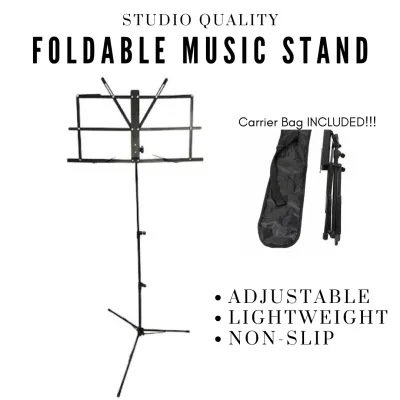
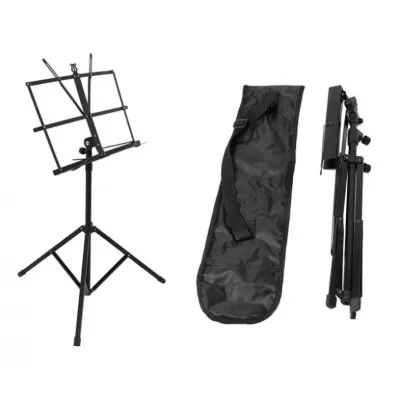
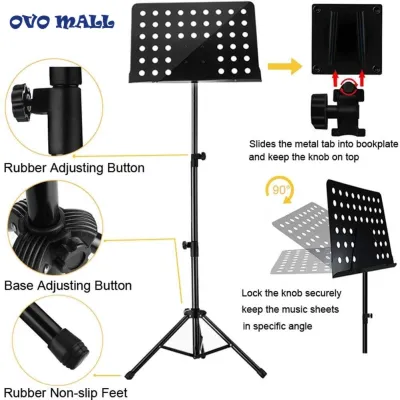
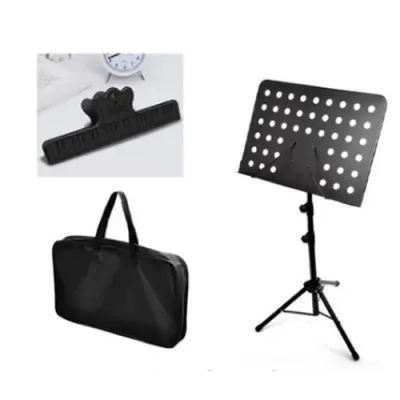
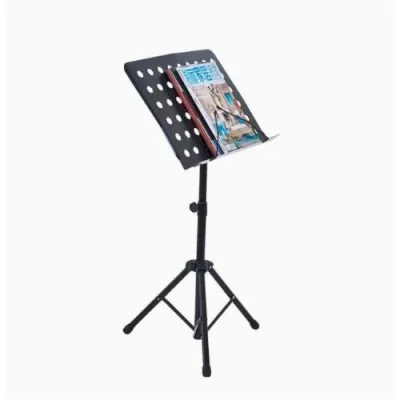
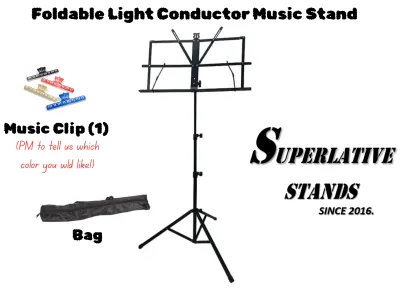

Prices are valid at publication and may change. Please refer to the product page for the latest price.
The height adjustment range and the design of the tray tilt mechanism are vital for maintaining proper ergonomic posture while playing. Whether you perform seated, such as a cellist, or standing, like a violinist or vocalist, your music stand must adjust so that the sheet music sits directly at eye level to prevent neck strain. Look for stands that offer a wide height range, typically from 60 centimeters to over 140 centimeters. The locking mechanisms that secure these height adjustments generally fall into three categories: threaded screw knobs, friction clutches, and quick-release lever clamps. Threaded knobs are highly secure but can strip over time if over-tightened, while friction clutches offer rapid adjustments but may slip if the internal tension wears down. Additionally, the joint connecting the music tray to the vertical shaft must feature a robust tilt mechanism to prevent the tray from suddenly flopping forward under the weight of your music.
Weight capacity and the structural design of the music tray dictate what kind of reading materials you can safely display. Traditional wire folding stands feature collapsible desks with open frameworks, which are excellent for saving space but fail to support single sheets of paper without them sagging through the gaps. These wire trays are also unsuitable for holding heavy music anthologies, thick three-ring binders, or digital tablets. For heavy or diverse reading materials, a solid or perforated metal desk tray is far superior, providing a continuous flat surface that supports everything from individual sheets to heavy books. Furthermore, pay close attention to the depth of the bottom lip on the tray. A shallow lip of less than two centimeters will struggle to hold thick books or tablets in protective cases, whereas a deeper lip of three to five centimeters securely cradles bulkier items.
The choice of materials directly influences both the durability and the weight of your music stand. Steel frames are highly rigid, durable, and cost-effective, but they are heavy and vulnerable to rust if the protective powder coating chips or scratches in Singapore’s highly humid tropical climate. Aluminum frames offer an excellent alternative, providing a rust-proof construction that is significantly lighter than steel, though they are generally more expensive and can be prone to denting if subjected to rough handling. Beyond the main tubes, inspect the quality of the joints, collars, and adjustment hardware. Stands that utilize cheap, thin plastic collars at the adjustment joints are highly prone to cracking under pressure, whereas professional-grade stands employ high-impact ABS plastic or solid metal collars with threaded brass inserts to ensure long-term reliability over years of frequent folding and unfolding.
Top Folding Music Stands for Stable Home Practice
For musicians who primarily practice at home, a heavy-duty folding music stand with a solid or perforated desk tray and a robust steel tripod base offers the ideal balance of performance and space-saving convenience. Unlike permanent, non-folding orchestral stands, these heavy-duty folding models allow you to reclaim floor space in your living room or study when they are not in use, folding flat to slide into a closet or behind a door. However, when set up, they provide a rock-solid platform that mimics the feel of a professional studio stand. The substantial weight of the steel base ensures that the stand remains completely stable, even when placed on plush rugs or uneven flooring, preventing any distracting wobbles while you focus on your technique.

The primary justification for choosing a heavy-duty folding profile for home use is its ability to support heavy, bulky practice materials without risk of tipping. Many classical methods, exam syllabi, and comprehensive songbooks are bound in thick, heavy formats that easily overwhelm lightweight travel stands. A solid metal desk tray provides the continuous backing necessary to write pencil annotations directly onto your sheet music during practice sessions—a critical task for students and professionals alike that is impossible to perform on a flimsy wire stand. Additionally, the solid desk design easily accommodates oversized orchestral scores and wide binder folders, ensuring that your music remains flat, readable, and securely positioned throughout long practice hours.
Despite their excellent stability, these heavy-duty folding stands have clear limitations when it comes to portability. Because the solid or perforated metal desk tray cannot fold or collapse into a smaller shape, the stand remains relatively bulky even when the tripod base is fully retracted. The desk portion must typically be detached from the vertical shaft for storage, resulting in a two-piece package that is awkward to carry without a dedicated, oversized bag. Weighing between two and a half to nearly four kilograms, these stands are not designed for daily commuting on public transport or quick transitions between multiple rehearsal venues, making them strictly suited for stationary home use or permanent studio setups.
Before purchasing a heavy-duty folding stand for your home, there are several key verification checks you should perform to ensure compatibility with your space and equipment. First, measure the maximum height extension to confirm it reaches your eye level when standing, particularly if you play an instrument that requires a standing posture. Second, inspect the underside of the tripod legs to ensure they are fitted with thick, non-marking rubber feet; this is essential for protecting polished parquet, laminate, or delicate tiled floors from scratches and scuffs. Finally, verify the mechanism used to attach the desk to the shaft. Look for quick-release brackets or large, ergonomic hand knobs that allow for smooth, tool-free assembly and disassembly, and check with local music retailers or detailed online specifications to confirm the exact weight and dimensions of the stand.
Highly Portable Folding Stands for Gigging Musicians
Gigging musicians, traveling teachers, and ensemble players require a completely different class of folding music stand—one where ultra-lightweight portability, rapid deployment, and compact folded dimensions take absolute priority. The ideal profile for this use case is an ultra-portable stand constructed from high-grade, lightweight aluminum or specialized thin-walled alloys. These stands are engineered to collapse completely, with both the tripod legs and the music tray folding down into a single, compact cylindrical package, typically measuring under 45 centimeters in length. This allows the entire stand to slide easily into an included padded nylon carrying bag, which can be slung over your shoulder or strapped directly to your instrument gig bag.
The practical advantages of a highly portable aluminum stand are immense for musicians navigating Singapore’s urban landscape. Commuting to rehearsals, wedding gigs, corporate events, or community performances often involves walking long distances through MRT stations, boarding crowded buses, and climbing stairs with an instrument in hand. In these scenarios, every gram of weight saved directly reduces physical fatigue. A premium portable stand can weigh under one kilogram, making it virtually unnoticeable when carried alongside your instrument. Furthermore, these stands are designed for rapid setup and teardown, featuring intuitive folding joints and quick-clamp lever locks that allow you to prepare your performance space in a matter of seconds, even under the pressure of tight soundcheck schedules.
However, achieving such extreme portability requires accepting several significant physical limitations. Because these stands are incredibly light and feature slender structural profiles, they possess a much lower weight capacity compared to their heavy-duty home counterparts. They are not designed to support heavy three-ring binders or thick, hardbound music books, which can easily make the stand top-heavy and cause it to tip over at the slightest nudge. Additionally, the lightweight construction makes these stands highly vulnerable to environmental factors. If you are performing at an outdoor venue—such as an event at the Singapore Botanic Gardens, an outdoor waterfront stage, or even in a room with a powerful floor fan—a sudden gust of wind can easily blow a lightweight stand over, potentially damaging your sheet music or any digital devices resting on the tray.
To ensure a portable stand meets your professional needs, conduct several practical checks before buying. First, measure the exact folded dimensions of the stand and compare them to the accessory pockets of your instrument case to see if you can consolidate your gear into a single bag. Second, closely examine the quality of the included carrying bag; look for water-resistant nylon fabric and reinforced stitching, as Singapore’s frequent tropical downpours can quickly saturate cheap, thin bags and expose your stand to moisture. Third, test the locking levers or knobs to ensure they operate smoothly and hold the telescoping shafts firmly in place without slipping under moderate downward pressure, ensuring reliable performance on stage.
Budget-Friendly Folding Stands for Students and Beginners
For young students, beginners, and parents looking to support a child’s early music education, a budget-friendly wire folding music stand provides an excellent entry point. These stands represent the classic, time-tested design featuring a collapsible wire desk and thin, telescoping steel legs, typically finished in a simple black powder coating or chrome plating. They are highly accessible, offering reliable basic functionality at a fraction of the cost of professional-grade aluminum or solid-desk stands. This makes them an ideal choice for families who want to establish a dedicated practice routine at home without committing to a significant financial investment before the student’s long-term interest in the instrument is fully established.
The primary benefit of a budget-friendly wire stand is its simplicity and ease of handling for younger players. These stands are lightweight enough for a primary or secondary school student to carry to school for band practice, orchestra CCAs, or private lessons without adding excessive weight to their school bags. The folding mechanism, while requiring a specific sequence to open and close, is straightforward to learn, helping young musicians develop independence as they set up and pack away their own equipment. Furthermore, because these stands offer a wide height adjustment range, they can easily grow alongside a child, transitioning seamlessly from a low height for a seated primary school violinist to a much taller height as the student grows.
However, budget-friendly wire stands do come with notable limitations in terms of durability and structural support. The thin steel wires that make up the music tray are relatively flexible and can easily become bent or misaligned if the stand is dropped, packed carelessly, or subjected to rough handling in a crowded school band room. The open wire design also means there is no solid backing to support single sheets of paper, which will often sag or fold backward unless placed inside a rigid plastic folder or binder. Additionally, the adjustment joints on budget stands frequently utilize cheaper plastic knobs and collars that can strip or crack if over-tightened, which can eventually prevent the stand from holding its height.
When selecting a budget-friendly stand for a student, parents should perform a few quick checks to ensure safety and usability. First, examine the adjustment knobs to ensure they are large, textured, and easy for smaller hands to grip and turn securely without needing excessive force. Second, inspect the folding joints and wire tips to ensure there are no sharp metal edges or pinch points that could accidentally cut or pinch young fingers during setup. Finally, prioritize buying bundles that include a basic carrying bag and spring-loaded page clips; these clips are incredibly helpful for securing sheet music to the thin wire frame, preventing pages from sliding off or blowing away during practice sessions.
Comparing Folding Music Stands by Use Case
To help you quickly identify the most suitable folding music stand for your specific needs, the table below summarizes the key characteristics and performance levels of the three primary stand profiles discussed. By matching your primary playing environment and transport requirements to these profiles, you can easily determine which trade-offs align best with your musical routine.
| Use Case | Ideal Stand Profile | Key Strength | Weight Capacity | Portability Level |
|---|---|---|---|---|
| Home Practice | Solid or Perforated Desk, Heavy-Duty Steel Base | Maximum stability, solid writing surface, supports heavy books | High | Low |
| Gigging & Travel | Ultra-Lightweight Aluminum, Compact Folding | Extremely light, rapid setup, fits in small gig bags | Medium-Low | High |
| Student & Beginner | Traditional Wire Folding Stand | Highly affordable, lightweight, simple height adjustment | Low | Medium-High |
This comparison highlights that no single music stand is perfect for every scenario. While a home practice stand offers unmatched stability and support for heavy binders, its bulk makes it impractical for travel. On the other hand, an ultra-portable aluminum stand or a budget wire stand offers excellent mobility but requires careful handling and lighter reading materials to prevent tipping.
Frequently Asked Questions (FAQ)
Can I use a folding music stand for a tablet or laptop?
Standard wire folding music stands are generally not safe or suitable for supporting expensive digital devices like tablets or laptops. The open, flexible framework of a wire tray lacks the continuous solid surface needed to keep a tablet stable, and the shallow bottom lip often cannot accommodate the thickness of a tablet inside a protective case, leaving the device highly vulnerable to sliding off and getting damaged. Furthermore, laptops are far too heavy and bulky for the delicate balance point of standard folding stands, and placing one on a lightweight tripod will almost certainly cause the entire setup to tip over.
If you plan to read music from a tablet, it is highly recommended to use a heavy-duty folding stand with a solid metal desk tray and a lip depth of at least three centimeters to ensure the device rests securely. Alternatively, you can purchase a dedicated, clamp-on tablet holder attachment that mounts directly to the sturdy vertical pole of a medium- or heavy-duty music stand. For laptops, you should avoid standard music stands entirely and instead invest in a dedicated laptop tripod stand, which features a wide, flat platform equipped with safety straps and raised edges specifically designed to hold heavy electronic equipment safely.
How do I prevent a lightweight folding stand from tipping over?
Preventing a lightweight folding stand from tipping over requires a combination of proper physical setup and smart weight distribution. First, always ensure that the tripod base is fully extended to its widest possible footprint; narrowing the legs to save floor space significantly reduces the stand’s lateral stability. When positioning the stand, orient the tripod base so that one of the three legs points directly forward, positioned directly underneath the overhanging music tray. This specific alignment provides the maximum mechanical resistance against the forward-tipping force exerted by the weight of your sheet music.
Second, keep the stand’s center of gravity as low as possible by only extending the vertical telescoping shafts to the minimum height required for comfortable reading, as a taller stand is inherently more top-heavy and unstable. If you are playing in a high-traffic rehearsal room or an outdoor venue where wind or accidental bumps are a concern, you can anchor the stand by draping a small sandbag, a weighted ankle strap, or even your instrument’s carrying case over the lower braces of the tripod legs. Finally, avoid overloading the stand; instead of placing a heavy book on a lightweight wire tray, photocopy the specific pages you need and place them in a lightweight plastic folder to keep the overall load as light as possible.
Community discussion
Share your experience or ask a question. Comments are reviewed before publication.