
Self-studying a new language requires resources that act as both instructor and reference guide. The best grammar books for independent learners are those that bridge the gap between abstract linguistic rules and practical, real-world communication. While classroom students have a teacher to unpack complex syntax, self-directed learners must rely on the clarity, structure, and design of their chosen text to navigate the mechanics of a new tongue. Selecting the right book involves evaluating how explanations are presented, whether the practice exercises provide meaningful feedback, and how well the material aligns with your personal learning style.
Core Criteria for Choosing a Self-Study Grammar Book
Clear, jargon-free explanations A quality self-study book must explain rules in plain language. If a text uses overly dense linguistic terminology without defining those terms first, it creates unnecessary barriers. An effective grammar guide balances target-language examples with clear explanations in your native or fluent language, ensuring you grasp the underlying concept before diving into complex usage.
Abundant practice exercises with detailed answer keys Exercises are critical for cementing new patterns, but they are only half of the equation. Without a teacher, you need an answer key that does more than list letters or single-word answers. The ideal book provides detailed explanations of why a specific answer is correct and why other options are incorrect. This immediate feedback loop prevents you from reinforcing mistakes.
Products mentioned in this guide
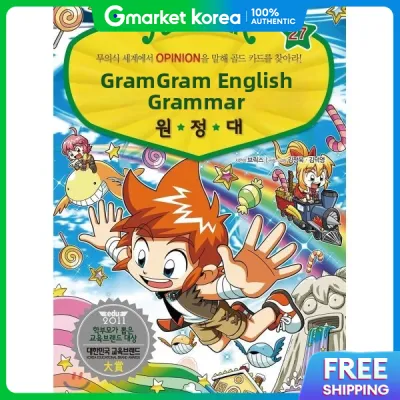
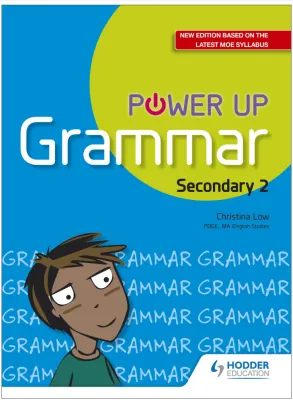
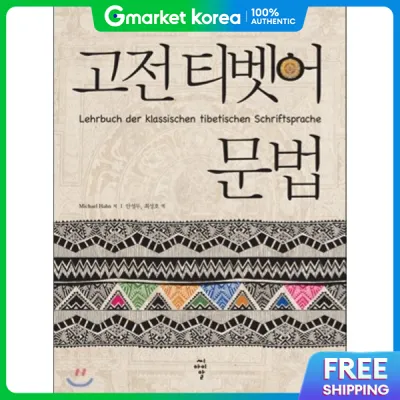
Prices are valid at publication and may change. Please refer to the product page for the latest price.
Logical progression Independent learning requires a carefully scaffolded curriculum. The book should introduce concepts in a progressive sequence, where each chapter builds naturally on the previous one. It must not assume prior classroom knowledge or suddenly introduce advanced sentence structures in early chapters. A smooth learning curve keeps motivation high and prevents cognitive overload.
Contextualized learning Isolated, unnatural sentences do little to prepare you for real-world conversations. Look for books that present grammar within natural contexts, such as dialogues, short stories, or authentic cultural scenarios. This approach helps you understand not just how a grammatical structure is formed, but when and why native speakers actually use it.
How to Match the Book Format to Your Learning Style
Traditional/Comprehensive Guides These volumes are highly structured, rule-heavy, and deeply detailed. They are best suited for analytical learners who appreciate precise linguistic formulas and want to understand the exact mechanics behind every grammatical exception. If you find comfort in exhaustive tables, conjugation charts, and formal rules, a comprehensive reference guide will serve as a reliable anchor for your studies.

Visual/Infographic Books For visual learners, dense blocks of text can make language learning feel tedious and overwhelming. Visual grammar books utilize color-coded sentence diagrams, mind maps, and illustrations to break down complex syntax. By visually mapping out how words connect, these books help you internalize sentence structures and word order rules much faster than standard text-heavy explanations.
Practice-Driven Workbooks If you learn best by doing, a practice-driven workbook is the ideal choice. These books offer minimal theoretical explanations, dedicating the vast majority of their pages to active drills, fill-in-the-blank exercises, and sentence transformation tasks. They rely on the principle of muscle memory through repetition, making them excellent for mastering verb conjugations and basic sentence patterns.
Communicative/Context-Based Books Some learners find abstract rules difficult to retain unless they are tied directly to communication. Context-based books embed grammar lessons within engaging dialogues, narrative chapters, or cultural passages. This format is perfect for conversational learners who prioritize immediate fluency and want to see grammar in action before learning the formal names of the rules.
Recognized Grammar Series for Popular Languages (Illustrative Examples)
To understand how these design principles translate into actual publications, it is helpful to look at several globally recognized grammar series. These examples demonstrate how different publishers structure their materials to support independent study, serving as benchmarks to help you evaluate books in any language you choose to learn.
English as a Second Language (ESL)
Raymond Murphy’s “Grammar in Use” series, published by Cambridge University Press, is a classic example of highly effective self-study design. Its famous two-page layout—presenting grammar theory on the left-hand page and corresponding practice exercises on the right-hand page—has become a blueprint for modern language textbooks. This immediate application of theory prevents cognitive fatigue and allows learners to self-assess their understanding instantly.
When selecting an ESL book, it is important to verify regional spelling and usage variants, such as British English versus American English, as these can affect professional or academic alignment. Additionally, ensure you select the correct proficiency tier, typically categorized from beginner to advanced levels, to match your current capability.
Japanese
For Japanese learners, navigating the writing systems and unique sentence structures requires a thoughtful instructional approach. The “Genki” series is a widely utilized textbook system that balances grammar explanations with progressive vocabulary building. Alternatively, “A Dictionary of Japanese Grammar” series offers an unparalleled reference-style layout, arranging grammatical points alphabetically with exhaustive contextual examples.
When choosing a Japanese grammar book for self-study, always check whether the text relies heavily on romaji (romanised script) or requires prior knowledge of hiragana and katakana. For long-term progress, books that transition quickly to native scripts while providing phonetic guides (furigana) are generally far more beneficial.
Spanish and French
The “Practice Makes Perfect” series, published by McGraw-Hill, is highly regarded for its extensive drill-based format across multiple Romance languages, including Spanish and French. These workbooks are structured to break down complex grammatical concepts, such as the subjunctive mood or past tense distinctions, into bite-sized chapters followed by dozens of practice exercises.
When studying these languages, it is vital to check for regional dialect differences before purchasing. For instance, a book focusing on Peninsular Spanish (used in Spain) will emphasize different pronoun usages (such as vosotros) compared to Latin American Spanish. Similarly, European French and Canadian French feature distinct vocabulary and idiomatic structures that should align with your specific travel or communication goals.
Actionable Strategies for Studying Grammar Without a Teacher
Pacing and Chunking One of the most common mistakes in self-study is trying to absorb too much information at once. Cramming an entire chapter of complex grammar rules into a single study session often leads to confusion and rapid forgetting. Instead, practice “chunking” by focusing on just one or two specific grammar points per day. For example, spend twenty minutes mastering a single verb tense or pronoun rule, and allow your brain time to process that concept before moving on.
Active Output Generation Passively reading through grammar explanations and filling in blanks is rarely enough to build active speaking or writing skills. To truly internalize a rule, you must generate your own original sentences. Try writing five to ten sentences that apply the new grammar structure to your personal life, daily routine, or immediate surroundings. Connecting the rules to real-world scenarios makes the neural pathways stronger and ensures the grammar becomes a natural part of your active vocabulary.
Spaced Repetition Integration Retaining complex conjugation tables, irregular verbs, and word order rules requires consistent review over time. You can supercharge your grammar book study by transferring difficult patterns, exceptions, or conjugation paradigms into digital spaced repetition system (SRS) flashcard applications. By reviewing these cards at mathematically optimized intervals, you prevent the natural decay of memory and ensure that foundational rules remain accessible as you advance to more complex material.
Supplementing with Native Media A grammar book provides the skeleton of a language, but native media provides the flesh. Once you have studied a specific grammatical structure, actively look for it in the real world. Listen to podcasts, read news articles, or watch television shows in your target language with the specific goal of spotting that structure in use. Hearing a native speaker naturally employ a rule you just learned helps bridge the gap between academic theory and conversational reality.
Pre-Purchase Checklist: Verifying Editions, Media, and Answer Keys
Language of Instruction Before purchasing, carefully verify the language used to explain the grammar concepts. While complete immersion books (written entirely in the target language) can be useful in a classroom setting, they are often incredibly frustrating for solo beginners. Ensure that the explanations, instructions, and vocabulary glossaries are written in a language you already speak fluously, allowing you to focus entirely on the new grammar rather than decoding the instructions.
Edition and Publication Year Languages are dynamic, and pedagogical methods evolve over time. Check the publication date and edition number of the book you are considering. Newer editions often feature updated vocabulary, clearer layouts, and corrections to errors found in older printings. Additionally, ensure that any companion workbooks or audio resources you purchase match the exact edition of your main textbook to avoid mismatched page numbers and content discrepancies.
Media and Audio Formats Many modern grammar books rely on accompanying audio tracks to demonstrate pronunciation, listening comprehension, and natural sentence rhythm. Do not assume that these audio files are delivered in a format you can easily access. Check whether the book includes physical CDs, downloadable MP3 files, or requires access to a proprietary mobile application or online portal. Verify that your devices are compatible with these formats before making a purchase.
Answer Key Inclusion A grammar workbook is of limited use to a self-studying learner if it does not include an answer key. Many publishers produce separate answer key booklets that must be purchased individually, or restrict access to registered teachers and classroom environments. Always read the product description carefully to confirm that the specific edition you are buying explicitly includes the answer key, often labeled as “with answers” or “answer key included.”
Purchase Channels To ensure you receive authentic, complete editions with all accompanying digital access codes, purchase your books from reputable sources. In Singapore, visiting established local bookshops such as Books Kinokuniya, or ordering directly from official publisher websites and trusted online academic book retailers, guarantees that you will not end up with poor-quality counterfeit prints or expired digital access tokens.
Frequently Asked Questions (FAQ)
Do I need a grammar book if I use language learning apps?
Yes, a dedicated grammar book is highly beneficial even if you use mobile applications. While language apps are excellent tools for building vocabulary, practicing pronunciation, and developing basic pattern recognition, they often lack the structural depth required for true fluency. Apps frequently gloss over complex grammatical exceptions, syntactic rules, and the structural explanation behind sentence construction. A comprehensive book provides the systematic explanations and structural framework necessary to transition from memorized phrases to independent sentence creation.
Should I buy the physical book or the digital edition?
The choice between physical and digital editions depends largely on your study environment and learning preferences. Physical books are generally superior for interactive workbooks, as physically writing out answers helps reinforce muscle memory and cognitive retention while reducing screen fatigue. However, digital editions offer unmatched portability, searchability, and often feature integrated audio playback. If you study on the go or have limited physical storage space, a digital edition on a tablet with stylus support can offer the best of both worlds.
How do I know if a grammar book is too advanced for my current level?
You can gauge a book’s suitability by previewing the introduction, table of contents, or the first few chapters online or at a local bookstore. If you struggle to comprehend the basic instructions, or if the vocabulary used in the introductory examples is entirely unfamiliar, the book is likely too advanced for your current stage. A good self-study book should challenge you slightly without making you feel completely lost; if you cannot complete the first chapter’s exercises with at least seventy percent accuracy after reading the explanations, consider starting with a lower-level volume in the same series.
Community discussion
Share your experience or ask a question. Comments are reviewed before publication.