
When embarking on the rigorous journey of classical piano training, Charles-Louis Hanon’s “The Virtuoso Pianist in 60 Exercises” stands as an essential cornerstone for developing finger independence, strength, and agility. While sheet music provides the structural map for these exercises, practicing alongside high-quality audio recordings on physical media like CD and vinyl offers a unique, distraction-free pedagogical tool. The best Hanon piano exercise recordings for practice are those that prioritize absolute metronomic precision, crystal-clear articulation, and progressive tempo variations over expressive, rubato-laden performance. By utilizing physical media, you can establish a dedicated, tactile practice environment that keeps you focused at the keyboard without the constant interruptions of digital notifications.
Selecting the ideal physical recording requires an understanding of how audio playback can guide your fingers, how different formats impact your daily practice workflow, and how to verify the completeness of an edition before making a purchase. Whether you are a beginner aiming to master the foundational first twenty exercises or an advanced pianist building stamina for complex scales and arpeggios, the right physical recording serves as a steady, reliable benchmark.
What Makes a Hanon Recording Ideal for Practice?
To serve as an effective practice accompaniment, a Hanon recording must meet strict pedagogical criteria that differ significantly from standard classical music releases. The primary purpose of these recordings is not artistic entertainment, but rather to provide a flawless acoustic model that you can emulate in real-time.
Products mentioned in this guide




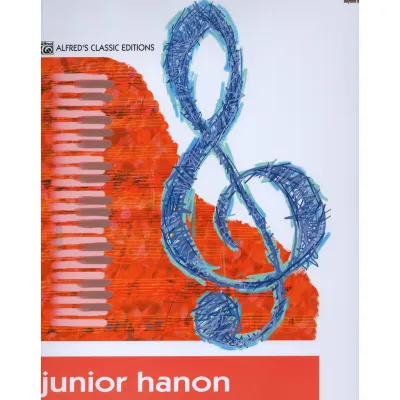

Prices are valid at publication and may change. Please refer to the product page for the latest price.
Articulation Clarity
The pianist on the recording must execute every note with absolute clarity, allowing you to distinguish between non-legato, legato, and staccato touches. In Hanon’s exercises, even the slightest blurring of notes can mask technical deficiencies, such as weak finger joints or uneven weight distribution. A high-quality practice recording features a clean, dry acoustic profile—ideally with minimal room reverb—so that the exact moment of key attack and release is audible. This pristine clarity helps you train your ear to recognize when your own fingers are failing to play with equal force or timing.
Unwavering Metronomic Tempo
In standard classical performances, musicians frequently employ rubato—the subtle speeding up and slowing down of tempo—to convey emotion. For technical exercises, however, rubato is highly detrimental. A Hanon practice recording must maintain a perfectly steady, unwavering tempo from the first note to the last. This strict rhythmic framework forces your hands to develop a reliable internal clock and prevents stronger fingers (like the thumb and index) from rushing ahead of weaker ones (such as the fourth and fifth fingers).
Progressive Speed Variations
Charles-Louis Hanon designed his exercises to be practiced progressively, starting at a slow, deliberate pace and gradually increasing speed as physical stamina and coordination improve. The best practice recordings accommodate this by offering multiple speed variations for each exercise. Having access to slow, medium, and fast tracks allows you to scale the difficulty according to your current technical level, ensuring that you do not attempt high-speed playing before your hands have mastered the necessary muscle memory at slower tempos.
Evaluating CD and Vinyl Formats for Piano Training
Choosing between CD and vinyl for piano practice involves weighing the practical advantages of digital navigation against the focused, ritualistic nature of analog playback. Both formats offer distinct benefits, but they also impose specific limitations on your daily practice routine.

CD Advantages for Practice
For the highly repetitive nature of technical drills, the compact disc remains one of the most efficient physical formats available. CDs allow for instant track skipping, meaning you can jump from Exercise No. 1 to Exercise No. 15 in seconds without interrupting your physical posture at the piano. Furthermore, many dedicated CD players feature programmable playback, allowing you to loop a specific track continuously while you focus on a troublesome passage. If you use a player with digital pitch or tempo manipulation, you can also adjust the playback speed of a track without altering the pitch of the piano, creating a highly customizable practice environment.
Vinyl Limitations in a Practice Context
While vinyl records offer a rich, analog listening experience, they present several practical hurdles when used as a direct practice tool. Dropping a turntable needle repeatedly on a specific, short groove to loop a single exercise causes rapid physical wear to the vinyl, eventually leading to permanent surface damage and sound degradation. Additionally, quickly isolating a specific exercise on a continuous vinyl side is difficult and requires steady hand-eye coordination, which disrupts the flow of your practice session. Standard turntables also lack the ability to alter playback speed without drastically shifting the pitch, making progressive tempo practice highly impractical on this format.
The Ritual of Focused Practice
Despite these limitations, vinyl holds a unique psychological advantage for many pianists. The physical ritual of selecting a record, cleaning the surface, and carefully placing the stylus encourages a mindful, uninterrupted practice session. Unlike digital streaming platforms or mobile devices, which are constant sources of digital distraction, a vinyl record demands your physical presence and attention. This deliberate engagement can foster a deeper level of focus, encouraging you to complete an entire side of exercises without the temptation to check messages or switch tasks.
Recommended Types of Hanon Recordings on Physical Media
When searching for Hanon recordings on physical media, you will generally encounter three distinct categories, each serving a different pedagogical or collecting goal. Understanding these categories will help you target the right type of release for your specific training needs.
Publisher Accompaniment CDs
Many of the most practical Hanon recordings are produced directly by major educational music publishers, such as Alfred Music, Hal Leonard, or G. Schirmer. These CDs are designed strictly for pedagogical use and are often bundled with physical sheet music editions.
These recordings frequently feature specialized audio engineering designed to aid practice. For example, some publisher CDs utilize stereo panning to isolate the left-hand and right-hand parts on separate audio channels. By adjusting the balance control on your stereo system, you can mute the right-hand track to practice your right hand along with the recorded left hand, or vice versa. Additionally, these CDs often include an embedded metronome click track layered over the piano performance, providing an unambiguous rhythmic guide. When purchasing these editions, always verify the physical packaging carefully; many modern reprints of classic instructional books have phased out physical CDs in favor of digital download codes, so you must confirm that a physical disc is indeed included in the package.
Dedicated Teaching and Masterclass Records
Another valuable category consists of standalone audio releases produced by professional piano pedagogues rather than touring concert pianists. These recordings are designed to function as audio masterclasses, prioritizing technical demonstration over performance flair.
On these records, the musical performance is often accompanied by spoken instructions, practice tips, and detailed explanations of the physical mechanics involved in each exercise. The instructor may demonstrate common technical faults—such as collapsing finger joints, excessive wrist tension, or uneven rhythmic spacing—and then play the correct execution for immediate comparison. These teaching records are rarely sold as single releases; instead, they are typically found within comprehensive piano technique box sets or historical conservatory instruction packages, making them excellent resources for self-taught pianists seeking structured guidance.
Historical and Archival Vinyl Pressings
For collectors and advanced students of piano pedagogy, vintage vinyl pressings offer a fascinating window into historical teaching methods. While standalone Hanon vinyl releases are exceptionally rare, these exercises are frequently included in historical “keyboard mastery” or “art of the piano” compilations.
When exploring vintage vinyl, you must inspect the groove condition with extreme care. Because piano music features sustained tones and precise, quiet intervals, surface noise, pops, and clicks can be highly distracting, pulling your attention away from the subtle details of articulation and tone production. Furthermore, historical recordings may showcase older pedagogical approaches to touch—such as the extreme finger-isolation techniques popular in the early twentieth century—which can provide valuable context for understanding how classical piano technique has evolved over the decades.
How to Choose the Right Edition and Tempo for Your Level
To maximize the benefits of practicing with a physical recording, you must align the audio’s characteristics with your current technical proficiency and long-term learning goals. Using a recording that is too fast or too advanced can lead to physical tension and poor habits.
Beginner Guidelines
If you are in the early stages of piano training, your primary focus should be on accuracy, finger independence, and maintaining a relaxed hand posture. Look for recordings that offer slow, deliberate tempos, ideally ranging between 60 and 80 beats per minute (bpm). At these slower speeds, the gaps between notes are wider, making it easier for your ear to detect if your fingers are striking the keys unevenly. A clear, steady metronome backing track is highly beneficial at this stage, as it helps you internalize a consistent pulse before you attempt to play at performance speeds.
Advanced Requirements
For intermediate and advanced pianists, performance-tempo tracks are necessary to build physical endurance and high-speed stamina. As you progress to the more complex exercises in Part 2 and Part 3 of Hanon’s manual—which include scales, arpeggios, octaves, and repeated notes—you will require recordings that reach tempos of 108 bpm or higher. These faster tracks serve as an excellent benchmark for measuring your technical progress, helping you identify the exact speed at which your finger coordination begins to break down.
Verifying Content Completeness
Before purchasing any physical Hanon recording, always check the tracklist or liner notes to confirm exactly which exercises are included. Many standard educational releases only record the first twenty exercises, which cover foundational finger independence. If your practice goals include mastering advanced scale patterns, double thirds, or octave tremolos, you must verify that the recording covers the complete set of sixty exercises. Never rely solely on the cover art or title, as many compilations use the name “Hanon” to refer only to a small selection of introductory drills.
Active Listening and Practice Integration
To use these recordings effectively, avoid treating them as simple background tracks. Instead, engage in active listening. Play a track and focus entirely on the recorded pianist’s tone equality, noting how even the volume is across all five fingers. Then, play along with the track, attempting to match the exact articulation and dynamics of the recording. If you find yourself falling behind or experiencing physical tension in your wrists or forearms, immediately stop, lower the playback speed, and focus on relaxing your hands before attempting the exercise again.
Buying Guide: Verifying Media Compatibility and Condition
Purchasing physical media for educational use requires a practical checklist to ensure that the items you buy are fully compatible with your playback equipment and in excellent physical condition. This is especially critical when sourcing out-of-print CDs, imported instructional sets, or vintage vinyl records.
Verifying CD Formats and Compatibility
While standard audio CDs are universally compatible and region-free, some educational publishers have released hybrid CDs. These discs may contain standard audio tracks alongside supplementary CD-ROM data, such as printable sheet music, MIDI files, or interactive software. Before purchasing, verify that the digital portion of the disc is compatible with your current computer operating system, as older CD-ROM software may not run on modern platforms. Additionally, ensure that the disc is an authorized, professionally pressed CD rather than a low-quality CD-R duplication, which can degrade over time and fail to read on older CD players.
Inspecting Vinyl Condition in Humid Climates
If you are sourcing vintage vinyl records, physical inspection is paramount. In tropical climates like Singapore, high humidity can lead to mold growth inside paper sleeves and on the record surface, which causes severe surface noise and can permanently damage your turntable stylus. Visually inspect the vinyl under a bright light for warping, deep scratches, or heavy spindle marks around the center spindle hole. A warped record will cause pitch fluctuations (wow and flutter) that disrupt the steady tempo required for practice. Always clean used vinyl with a dedicated record cleaning solution and store it in anti-static inner sleeves in a temperature-controlled environment to prevent future degradation.
Confirming Edition and Language Details
For masterclass or instructional records that feature spoken commentary, verify the language of the spoken tracks before finalizing your purchase. Many high-quality pedagogical box sets are imported from Europe or Asia, and the accompanying booklets or spoken instructions may not be in your preferred language. Carefully read the product specifications and check the publisher’s details to ensure the edition matches your learning preferences and device capabilities.
Frequently Asked Questions (FAQ)
Can I change the tempo of a Hanon CD without altering the pitch?
Standard CD players will alter the pitch of the music if you simply change the playback speed, making the piano sound unnaturally high or low. To change the tempo while maintaining the correct pitch, you must use a specialized CD player equipped with digital time-stretching features, often found in professional DJ or dance instruction equipment. Alternatively, you can rip the audio tracks from the CD to a computer or tablet and use free audio editing software, such as Audacity, to adjust the tempo independently of the pitch before practicing.
Are there any famous concert pianists who recorded the complete Hanon exercises?
Because Hanon’s exercises are strictly pedagogical and designed for technical development rather than artistic performance, complete recordings of all sixty exercises are almost exclusively produced by music educators and piano pedagogues. Famous concert pianists rarely record the complete set for commercial release, as these repetitive patterns lack the musical narrative required for a standard concert album. However, some prominent pianists have recorded select Hanon exercises as part of educational masterclasses, technical demonstration albums, or instructional video series.
How do I know if a used vinyl record of piano exercises is in good condition for practice?
To determine if a used vinyl record is suitable for practice, conduct a thorough visual and auditory inspection. Look for a flat, unwarped profile and a clean surface free of deep scratches that could cause the needle to skip during repetitive practice loops. When played, the record should have minimal surface noise, as excessive clicks, pops, or background hiss will distract you from listening to your own finger articulation. Additionally, listen closely for any pitch instability, such as wow or flutter, which can distort the steady tempo necessary for Hanon training.
Community discussion
Share your experience or ask a question. Comments are reviewed before publication.