
For complete beginners, highly suitable Ohana ukulele models are typically found in the brand’s entry-level laminate mahogany series, such as the SK-10 (soprano) or CK-10 (concert). These instruments offer a practical balance of warm, classic tone, robust durability, and comfortable playability at an accessible price point. Because laminate wood is highly resistant to environmental shifts, these models remain stable and easy to maintain, making them an ideal starting point for new players.
Selecting your first instrument involves navigating a variety of sizes, materials, and technical specifications. Ohana has established a strong reputation among educators and enthusiasts for producing reliable instruments with consistent build quality. By understanding how different body sizes affect comfort and how material choices impact both sound and maintenance, you can confidently choose an instrument that supports your learning journey for years to come.
Understanding Ohana's Entry-Level Sizes and Materials
When browsing the Ohana catalog, the first decision you will face is selecting the physical size of the ukulele. The three primary sizes suitable for beginners are soprano, concert, and tenor. Each size features distinct dimensions that directly influence the instrument’s playability, fret spacing, and acoustic projection.
Products mentioned in this guide
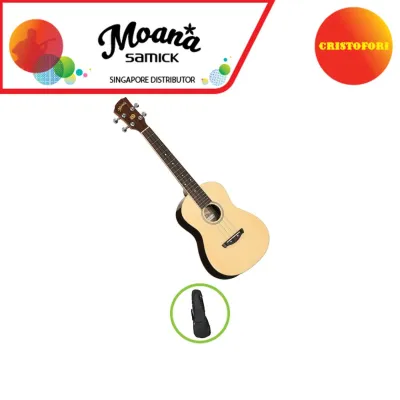
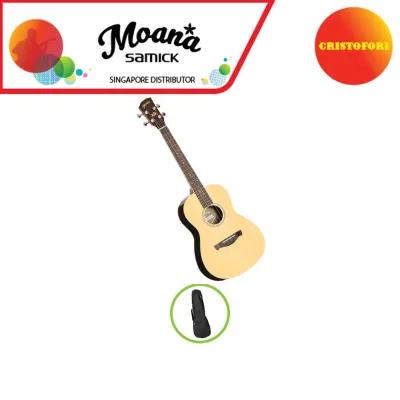
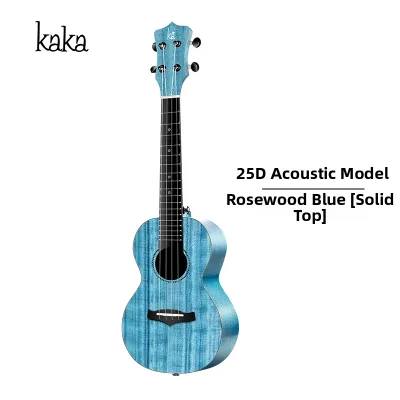
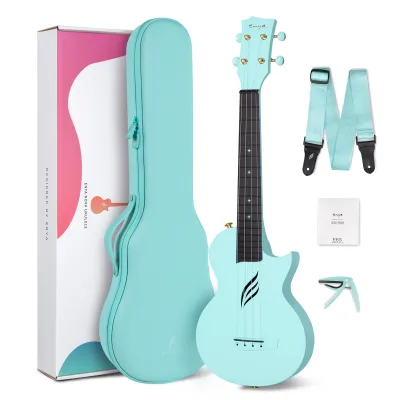
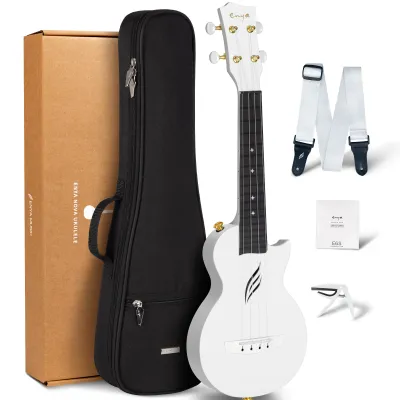
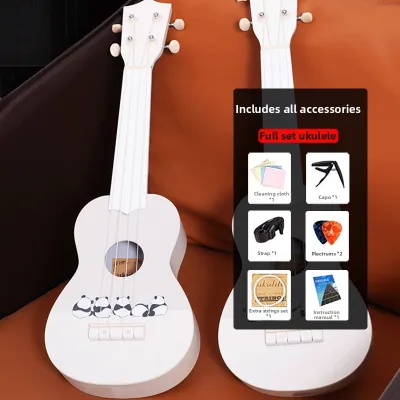
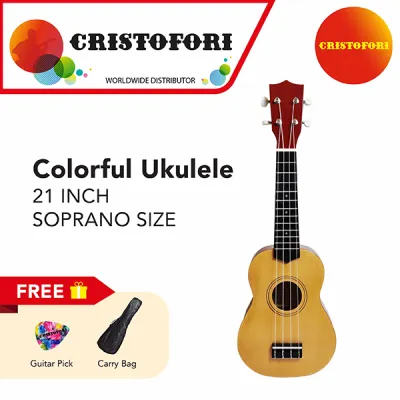
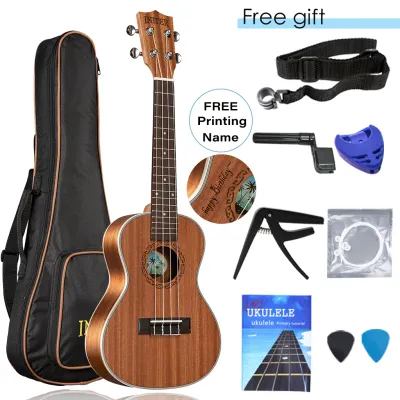
Prices are valid at publication and may change. Please refer to the product page for the latest price.
The soprano is the traditional and smallest standard size, featuring a scale length of approximately 13 inches and an overall length of about 21 inches. Because of its compact body, the soprano produces a bright, punchy, and classic “plucky” ukulele sound. The frets are spaced closely together, which is highly advantageous for players with smaller hands or younger students who may struggle with long finger stretches. However, players with larger fingers might find the tight fret spacing slightly cramped when executing complex chord shapes.
The concert size serves as a highly versatile middle ground, with a scale length of around 15 inches and an overall length of 23 inches. The slightly longer neck translates to wider fret spacing, providing more physical clearance for fingers to press down on strings without accidentally muting adjacent notes. The larger body cavity also allows for greater air movement, resulting in a fuller, warmer tone and increased volume compared to the soprano. For many adult beginners, the concert size offers a comfortable balance of physical manageability and fingerboard space.
The tenor size is the largest of the three primary beginner options, boasting a scale length of roughly 17 inches and an overall length of 26 inches. Tenor ukuleles are favored by performers and those transitioning from the acoustic guitar due to their deep, resonant tone, excellent sustain, and generous fret spacing. While the larger body requires a slightly wider arm reach, the extra room on the fretboard makes it much easier to navigate intricate fingerstyle arrangements.
Beyond size, the construction material of the ukulele body plays a critical role in its durability and acoustic properties. Ohana offers instruments made from either laminate wood, solid-topped wood, or all-solid wood. Understanding the practical differences between these constructions is essential, especially when considering the local climate.
Laminate wood consists of multiple thin layers of wood pressed and glued together, often topped with an attractive outer veneer. This construction method makes the instrument exceptionally robust and structurally stable. Laminate ukuleles are highly resilient against rapid changes in temperature and relative humidity. In tropical environments where homes frequently transition between hot, humid outdoor air and cool, dry air-conditioned interiors, a laminate instrument is far less likely to warp, swell, or develop structural cracks.
Solid wood instruments, conversely, utilize single pieces of seasoned timber for the top, back, or sides. Solid wood vibrates much more freely than laminate, producing a richer, more complex tone that matures and improves in resonance as the wood ages. However, solid wood is highly sensitive to environmental conditions. Without careful climate control, prolonged exposure to high humidity can cause the wood to swell, lifting the bridge or warping the neck, while dry air-conditioned environments can cause the wood to shrink and crack. For absolute beginners who want a low-maintenance instrument that can be easily transported without constant worry, laminate models offer a highly reliable option.
To verify the exact construction of an Ohana model, you should carefully review the manufacturer’s specification sheet. Look closely at the terminology used: terms like “laminate mahogany” or “mahogany laminate” confirm a laminate build, whereas “solid mahogany top” indicates a hybrid construction with a solid top and laminate back and sides. The specification sheet will also detail the exact scale length, nut width, and overall dimensions, allowing you to confirm that the physical proportions of the model align with your personal comfort preferences before making a purchase.
Playability and Setup Checks for New Players
An instrument’s playability—how easy and comfortable it is to press down the strings and play chords—is a critical factor in a beginner’s success. If a ukulele is difficult to play, it will cause rapid finger fatigue and physical discomfort, which often leads new players to abandon their practice. Evaluating specific physical details before finalizing your purchase ensures a smooth learning experience.

The primary measurement of playability is string action, which refers to the height of the strings above the fretboard. Action is measured at two critical points: the nut (the slotted piece near the headstock) and the 12th fret. If the action at the nut is too high, pressing down basic chords like F major or B-flat major will require excessive finger pressure, causing sharp pain in the fingertips and making the chords sound out of tune.
At the 12th fret, standard playability thresholds for a beginner ukulele typically range between 2.5mm and 3.0mm. You can check this height using a small steel ruler placed on top of the 12th fret wire. If the strings sit significantly higher than 3.0mm, the instrument will feel stiff and difficult to play as you move up the neck. Conversely, if the action is excessively low (below 2.0mm), the strings may buzz against the frets when plucked with moderate force, ruining the clarity of your notes.
Another critical component to inspect is the tuning machines, also known as tuners or pegheads, located on the headstock. Most modern Ohana beginner models are equipped with geared tuning machines, which feature a metal gear mechanism that provides precise control over string tension. When inspecting the tuners, turn each button slowly to ensure the movement is smooth, consistent, and free of grinding or slipping.
Stable tuning machines are vital for pitch retention. New ukulele strings, which are typically made of nylon or fluorocarbon, naturally stretch and require frequent tuning during their first few weeks of use. However, once the strings have settled, the tuning machines must hold their position firmly. If a tuner feels loose or slips under the tension of the string, the instrument will rapidly fall out of tune during practice, making it difficult to train your ear or enjoy your playing sessions.
Because wood is a natural, dynamic material that reacts to environmental changes during shipping and storage, even well-crafted instruments can benefit from minor adjustments. This is why requesting a professional setup or inspection from your retailer is highly recommended. A professional setup involves a technician checking the level of the frets, filing the nut slots to the correct depth, adjusting the saddle height, and ensuring the fret ends are smooth and do not protrude from the sides of the neck.
Many dedicated music stores include a basic inspection and setup as part of their service. When purchasing your Ohana ukulele, always ask the retailer if they perform an in-house quality check before shipping or handing over the instrument. A properly set-up ukulele is significantly easier to play, minimizes finger pain, and ensures that you can focus entirely on learning proper hand techniques rather than fighting against a poorly adjusted instrument.
Purchasing from Authorized Retailers and Verifying Value
To ensure you receive a genuine Ohana instrument that is backed by reliable customer support, it is essential to purchase through authorized retail channels. Authorized music stores and official brand distributors maintain direct relationships with the manufacturer, guaranteeing that the instrument has been stored in appropriate climate conditions and is free from counterfeit parts.
When shopping online, avoid unverified third-party sellers on general online marketplaces or ecommerce platforms, as these listings may feature B-stock items, older discontinued models with structural issues, or counterfeit goods. Authorized dealers are easily identifiable through their official websites or by checking the dealer locator on the official Ohana website. Purchasing from these verified sources ensures that your instrument is covered by the manufacturer’s warranty against defects in materials and workmanship.
For beginners, purchasing a starter bundle can offer excellent practical value, provided you evaluate the contents carefully. Many retailers package the ukulele with essential accessories to help you get started immediately. When assessing these bundles, look for the inclusion of a high-quality, padded gig bag. A gig bag with at least 5mm to 10mm of foam padding offers crucial protection against accidental bumps and drops, whereas a thin, unpadded fabric dust cover provides virtually no impact resistance.
Other valuable accessories to look for in a beginner bundle include a reliable clip-on chromatic tuner, a comfortable strap (if the ukulele has strap buttons installed), and an extra set of high-quality strings. A clip-on tuner is particularly useful for beginners, as it detects the vibrations of the instrument directly through the headstock, allowing you to tune accurately even in noisy environments. Verify that these accessories are from reputable brands and are fully functional, rather than low-quality add-ons designed merely to inflate the perceived value of the package.
Finally, pay close attention to the warranty terms, return policies, and after-sales support offered by the retailer, especially when making a local purchase in Singapore. A reputable local music store should provide a clear return window—typically ranging from 7 to 14 days—allowing you to return or exchange the instrument if you discover any manufacturing defects or structural issues after bringing it home.
Inquire about the duration and coverage of the local warranty. A standard manufacturer’s warranty generally covers structural defects, such as a lifting bridge, separating seams, or a warping neck, for a period of one year. Having access to local after-sales support means you can easily bring the instrument back to the physical store for warranty service or seasonal adjustments, avoiding the high costs, long wait times, and potential transit damage associated with shipping the instrument back to an overseas distributor.
Frequently Asked Questions (FAQ)
Do I need a solid wood top for my first Ohana ukulele?
No, a solid wood top is not a necessity for a complete beginner, and in many cases, a high-quality laminate wood construction is actually more practical. Laminate wood is exceptionally durable and highly resistant to fluctuations in temperature and humidity. This makes laminate models ideal for tropical climates like Singapore’s, where instruments frequently move between humid outdoor environments and dry, air-conditioned rooms.
While solid wood tops offer superior tonal resonance and a richer sound that matures over time, they require meticulous maintenance, including consistent humidity monitoring and the use of specialized instrument humidifiers or dehumidifiers. For a beginner, a laminate Ohana ukulele provides a reliable, low-maintenance, and structurally stable instrument that allows you to focus entirely on learning chords and strumming patterns without the added stress of strict climate preservation.
What size Ohana ukulele is easiest for a young child to learn on?
For young children, the soprano size is generally the easiest and most comfortable option to start with. The soprano’s compact body and short scale length of approximately 13 inches match the physical proportions, smaller hands, and shorter arm reach of young learners perfectly. This small size allows children to hold and balance the instrument comfortably against their body without experiencing physical strain.
When selecting an Ohana model for a child, always consult the official product specification sheet to verify the overall weight and scale length. A lightweight instrument with a slim neck profile will be much easier for small fingers to wrap around, making the initial stages of learning chord shapes far more enjoyable and physically manageable.
Community discussion
Share your experience or ask a question. Comments are reviewed before publication.