
Finding the right personal finance book is the first step toward building wealth and achieving financial independence. Because everyone starts with a different financial baseline, income level, and set of goals, there is no single universal textbook that guarantees success. Instead of looking for a one-size-fits-all solution, beginners benefit most from a structured approach to selecting literature that addresses their specific knowledge gaps. This guide provides a comprehensive framework for evaluating, categorizing, and purchasing the right resources to help you build a solid foundation for long-term wealth management.
To unlock your financial potential, you must treat personal finance literature not as a collection of rigid rules, but as a toolkit. The ideal book for your current stage is one that directly addresses your immediate challenges, whether that means learning how to save your first S$10,000, understanding how to manage debt, or figuring out how to allocate your first investment portfolio. By focusing on foundational principles rather than speculative trends, you can build a personalized reading list that serves as a practical roadmap for your financial journey.
How to Evaluate Personal Finance Books for Beginners
Selecting the right financial literature requires a critical eye, especially in an era saturated with self-proclaimed financial gurus and rapid market shifts. The first step in evaluating any personal finance book is to examine the author’s background and credentials. Look for authors who have established professional experience in financial planning, economics, or academic research, or those whose long-term wealth-building strategies have been proven stable across multiple market cycles. Avoid books written by individuals who promise overnight riches or rely heavily on speculative, high-risk investment trends that may not align with a beginner’s risk tolerance.
Products mentioned in this guide
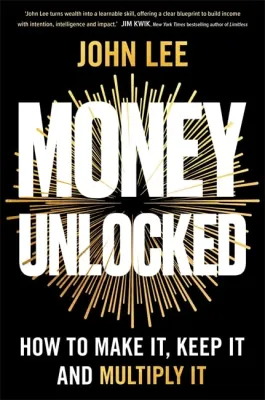
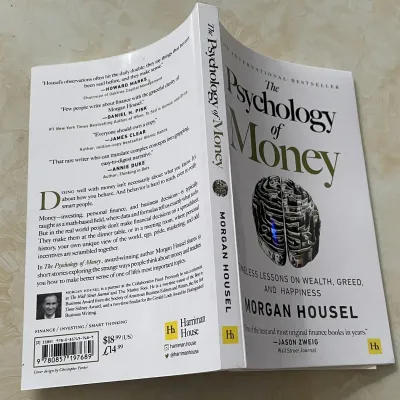
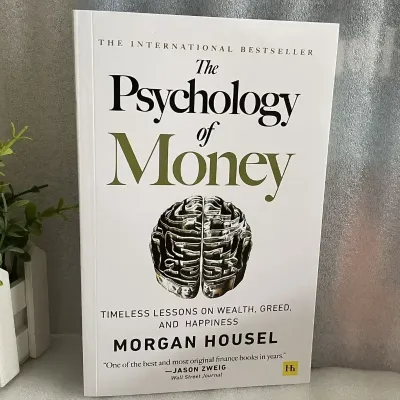
Prices are valid at publication and may change. Please refer to the product page for the latest price.
Another crucial factor is the accessibility of the language and the complexity of the concepts presented. A high-quality book for beginners should demystify financial jargon rather than hide behind it. The author should explain fundamental terms clearly when they are first introduced, ensuring that readers without a background in business or finance can easily follow along. If a book assumes prior knowledge of complex derivative markets or advanced corporate accounting, it is likely too advanced for a beginner and may lead to confusion or costly mistakes.
Actionability is the ultimate test of a personal finance book’s value. Theoretical discussions about economic history or market efficiency can be intellectually stimulating, but they do not help you manage your monthly cash flow. Prioritize books that offer concrete frameworks, step-by-step implementation checklists, or practical worksheets that you can fill out. The advice should translate directly into daily habits, such as how to automate your savings, negotiate your bills, or set up your first investment account.
Finally, look for books that emphasize sustainable, long-term habits over quick fixes. Financial health is built over decades, not weeks. A reputable guide will focus on the slow, steady accumulation of wealth through disciplined saving and diversified investing, rather than promoting volatile trading strategies or niche asset classes that require constant monitoring and high emotional stress.
Core Categories of Wealth-Building Books to Explore
To build a comprehensive understanding of personal finance, it helps to categorize your reading material into distinct thematic areas. Financial literacy is built on three main pillars: cash flow management, wealth multiplication, and behavioral finance. By exploring books in each of these categories, you can ensure a well-rounded education that covers both the practical mechanics of money and the psychological factors that influence your financial decisions.

These categories naturally build upon one another, forming a logical learning sequence. Attempting to master complex investing strategies before you have established a stable budget and a healthy savings rate is a recipe for financial instability. By addressing your cash flow first, you create the capital necessary to invest, while studying financial psychology ensures you have the emotional discipline to maintain your investment strategy during market downturns.
Budgeting and Cash Flow Management
Books focused on budgeting and cash flow management are the cornerstone of any beginner’s financial education. These resources teach you how to track your income and expenses accurately, helping you identify where your money is going and how to optimize your spending. Look for books that introduce practical, adaptable budgeting frameworks, such as zero-based budgeting or the envelope system, which can be easily managed using modern digital spreadsheets or mobile applications.
In addition to daily tracking, a strong cash flow book must address debt management and reduction strategies. It should provide clear, actionable methods for tackling high-interest debt, such as the debt snowball or debt avalanche methods, while helping you maintain a basic emergency fund. The goal of these books is to help you maximize your monthly surplus, which is the raw material you will use to build wealth in the next stages of your journey.
Furthermore, these guides should help you establish a robust emergency reserve. They should offer clear formulas for calculating how many months of living expenses you need to save based on your job security and personal circumstances. By securing this safety net, you protect your future investments from being liquidated prematurely during unexpected financial emergencies.
Investing and Wealth Multiplication
Once you have stabilized your cash flow and built an emergency fund, you can transition to books that focus on investing and wealth multiplication. For beginners, the most effective investing literature focuses on passive, long-term strategies rather than active stock trading. Look for books that explain the power of compound interest, the importance of asset allocation, and the benefits of low-cost index funds or exchange-traded funds (ETFs).
These books should guide you through the process of determining your personal risk tolerance and building a diversified portfolio that aligns with your long-term goals. They should emphasize the importance of minimizing fees, which can quietly erode your investment returns over time. A good introductory investing book will demystify the stock and bond markets, making them accessible and less intimidating to the everyday investor.
Crucially, reliable investing literature warns against speculative behavior, market timing, and get-rich-quick schemes. It teaches you to view market volatility as a normal part of the economic cycle rather than a reason to panic. By focusing on patient, consistent contributions through strategies like dollar-cost averaging, these books help you build sustainable wealth over the long term.
Financial Psychology and Mindset
While understanding the mathematics of budgeting and investing is essential, financial success is ultimately determined by your behavior. Books on financial psychology and mindset explore the emotional triggers behind our spending habits, helping us understand why we make certain financial decisions. These resources address common behavioral traps, such as lifestyle creep, emotional spending, and the social pressure to project wealth.
Look for books that help you examine your personal history with money and identify any limiting beliefs or unconscious biases you may have inherited. By understanding your psychological relationship with money, you can develop the self-discipline needed to resist impulsive purchases and stay committed to your long-term financial goals. These guides help you shift your perspective from viewing saving as a sacrifice to viewing it as an investment in your personal freedom.
Additionally, mindset books encourage you to align your spending with your core values. They teach you to prioritize experiences, security, and independence over material possessions that offer only temporary satisfaction. This psychological alignment is key to maintaining a high savings rate without feeling deprived, ensuring that your wealth-building habits are sustainable for life.
What to Check Before Buying a Finance Book
Before purchasing any personal finance book, it is vital to verify its practical compatibility with your life and location. First, check the publication date and the specific edition of the book. The financial world changes rapidly, with tax laws, interest rate environments, and investment platforms evolving constantly. An outdated book might recommend specific tax loopholes or investment vehicles that are no longer available or beneficial, potentially leading you down the wrong path.
Second, pay close attention to the regional focus of the book. A significant portion of popular personal finance literature is written by authors based in the United States or the United Kingdom. While the core principles of saving, budgeting, and compound interest are universal, the specific regulatory frameworks, retirement accounts, and tax structures discussed in these books will not apply directly to readers in Singapore.
When reading foreign financial literature, you must actively translate these concepts to your local context. For example, discussions about US-specific retirement accounts like 401(k)s or IRAs should be mapped to local equivalents, such as the Central Provident Fund (CPF) or the Supplementary Retirement Scheme (SRS) in Singapore. Similarly, advice on real estate investing or homeownership must be filtered through the unique local housing market, including Housing & Development Board (HDB) regulations and property tax structures.
Finally, consider the format of the book and how it aligns with your learning style. Physical books and e-books are highly recommended for technical guides that contain detailed charts, asset allocation tables, or mathematical formulas, as they allow you to easily highlight text, take notes, and refer back to visual aids. Audiobooks, on the other hand, are incredibly convenient for narrative-driven books focusing on financial history, psychology, and mindset, allowing you to absorb valuable concepts during your daily commute or workout.
Building a Practical Reading and Action Plan
To get the most value out of your personal finance reading, you must transition from passive consumption to active implementation. Start by structuring a sequential reading plan based on your immediate financial needs. If you are currently struggling with debt or do not have a clear picture of your monthly spending, focus exclusively on budgeting and cash flow books first. Do not overwhelm yourself by reading about advanced portfolio construction until your daily finances are stable and organized.
As you read, pair your learning with practical tools to immediately apply the concepts. If a chapter discusses tracking expenses, pause your reading and set up a basic spreadsheet or download a budgeting app to log your transactions for the week. If a book explains the impact of investment fees, use an online calculator to compare the long-term costs of different fund options. Taking immediate, small actions helps cement the knowledge and builds momentum.
Set realistic expectations for your financial progress and avoid trying to change all your habits overnight. Focus on mastering one financial concept or habit at a time. For example, dedicate your first month to establishing a consistent budgeting routine. Once that habit is automated and comfortable, move on to optimizing your emergency fund, and only then begin setting up your monthly investment contributions. This step-by-step approach prevents burnout and ensures lasting behavioral change.
Lastly, view your financial education as an ongoing, lifelong process. As your career progresses, your income grows, and your life stage changes—such as buying a home, starting a family, or preparing for retirement—your financial priorities will shift. Revisit your favorite foundational books periodically to refresh your knowledge, and seek out more advanced literature as your financial situation becomes more complex.
Frequently Asked Questions (FAQ)
Do I need to read books specific to my country's tax system?
You do not need to read local books exclusively, but you must supplement global bestsellers with local context. Universal principles like spending less than you earn, avoiding high-interest debt, and investing consistently apply regardless of geography. However, when it comes to execution, you must understand your local tax laws, retirement schemes, and investment platforms. For readers in Singapore, this means understanding how to optimize your CPF accounts, utilizing the SRS for tax relief, and navigating local brokerage fees and withholding taxes on foreign investments.
Are audiobooks as effective as physical books for learning finance?
The effectiveness of an audiobook depends entirely on the subject matter of the book. Audiobooks are highly effective for narrative-driven topics, such as financial history, behavioral economics, and mindset, where the focus is on shifting your perspective and understanding broad concepts. However, for highly technical books that involve step-by-step calculations, portfolio allocation diagrams, or budgeting worksheets, physical books or e-books are far superior. A hybrid approach—listening to motivational and psychological books while reading and highlighting technical investing guides—often yields the best learning outcomes.
Community discussion
Share your experience or ask a question. Comments are reviewed before publication.