
Starting a musical journey is an exciting step, but for beginners in Singapore, practical considerations often dictate the type of instrument you can bring home. The best portable piano brands for beginners are those that successfully bridge the gap between authentic acoustic feel and digital convenience. For aspiring musicians, choosing a piano portable enough to accommodate compact living while delivering weighted keys and realistic sound is essential for developing proper playing habits from day one.
Why a Piano Portable Design is Ideal for Beginners in Singapore
Singapore’s residential landscape is characterized by high-density living, with the majority of residents residing in Housing & Development Board (HDB) flats or condominiums. In these modern homes, floor space is highly optimized, making a traditional acoustic upright piano—which typically requires a permanent footprint of at least 1.5 meters in width and over 200 kilograms in weight—a challenging addition. A portable digital piano provides a highly practical alternative, offering a full 88-key layout in a slim, lightweight frame that can be set up on a temporary stand and easily moved when necessary.
Beyond physical space constraints, acoustic pianos present a volume challenge in close-quarters living. Sound travels easily through shared concrete walls and floors, meaning that practicing scales, repetitive drills, or playing late at night can easily disturb neighbors or sleeping family members. A portable digital piano resolves this issue entirely through the inclusion of dedicated headphone jacks. Beginners can plug in a pair of headphones and practice silently at any hour of the day or night, allowing for stress-free, focused learning sessions without any external noise friction.
Products mentioned in this guide
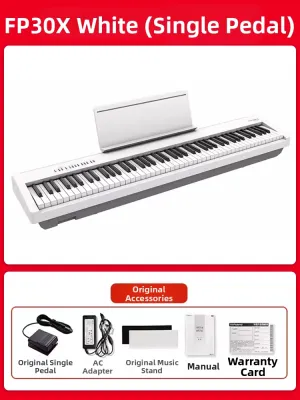
![Roland FP-E50 Digital Piano Portable Electronic 88 Weighted Keys PHA-4 Standard Keyboard Escapement FP E50 SuperNATURAL FPE50 Bluetooth [PREORDER]](https://img.lazcdn.com/g/p/5db2ada92dc8a33ee8382f610822149b.jpg_400x400q80.jpg_.webp)
![Casio CT-S300 Digital Keyboard [FREE X-STAND] Portable 61 Keys Musical Instrument for Beginners](https://img.lazcdn.com/g/p/14f99d647be620f436cc7c94724704b3.jpg_400x400q80.jpg_.webp)
![Yamaha PSR-EW320 PSR-EW310 76-key Portable Digital Electronic Keyboard Touch Response Sensitive The Music Works Singapore [LIMITED STOCK]](https://img.lazcdn.com/g/p/2be0d94091483249c22888c0a53144d8.jpg_400x400q80.jpg_.webp)
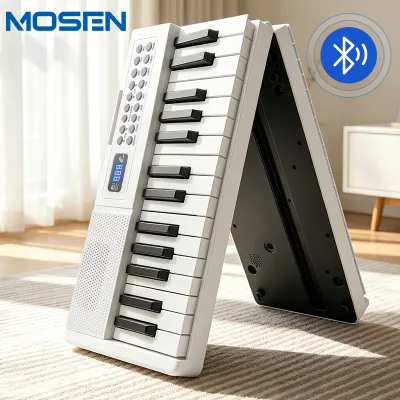
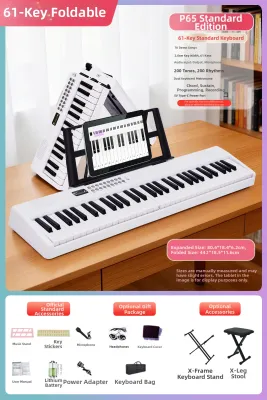
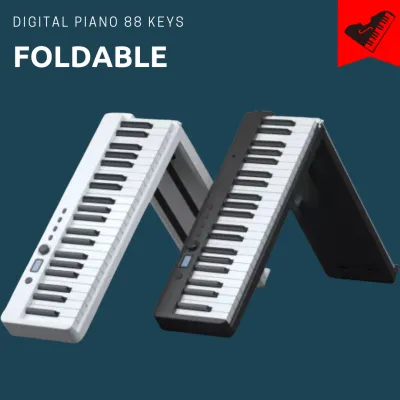
Prices are valid at publication and may change. Please refer to the product page for the latest price.
The inherent flexibility of a portable design also supports multi-purpose living spaces. Unlike heavy acoustic instruments or bulky console-style digital pianos, a portable “slab-style” piano can be easily relocated between rooms. You can set it up in the living room for a family performance, move it to a quiet study for focused practice, or pack it away in a closet or under a bed when hosting guests. This adaptability makes it an exceptionally practical investment for dynamic households where space must serve multiple functions throughout the week.
Key Features to Evaluate in Beginner Portable Pianos
When shopping for a portable digital piano, looking past marketing terms and focusing on the underlying hardware specifications is critical. The right instrument must accurately simulate the physical characteristics of an acoustic piano to ensure that the technical habits you develop will translate seamlessly to any piano you play in the future.

Key Action and Weighted Feel The physical mechanism beneath the keys, known as the key action, is the single most important factor in a beginner’s development. You will encounter three primary types of key actions: fully weighted (hammer action), semi-weighted, and synth-action. Fully weighted keys use actual mechanical hammers or counterweights to replicate the resistance and inertia of an acoustic piano’s wooden keys. This resistance is essential for building finger strength, hand posture, and the fine motor control required to play expressively. Semi-weighted keys use light springs and small weights, which offer some resistance but fail to mimic a true piano feel, while synth-action keys are purely spring-loaded and highly unsuitable for classical or formal piano training. Beginners should exclusively look for fully weighted hammer-action keybeds.
Polyphony Limits Polyphony refers to the maximum number of individual notes or voices that the digital piano can sound at the exact same time. When you hold down the sustain pedal and play a series of chords, every note you strike continues to ring out alongside its natural harmonic overtones. If an instrument has a low polyphony limit, such as 32 notes, older notes will be abruptly cut off to make room for new ones, resulting in an unnatural, choppy sound. For modern beginners, a minimum of 64-note polyphony is acceptable for very basic pieces, but 128-note polyphony or higher is highly recommended to ensure the instrument can handle complex classical pieces, layered sounds, and expressive pedaling as your skills progress.
Sound Engines and Realism The realism of a digital piano’s tone depends on its sound engine, which generally utilizes either sampling or physical modeling. Sampling involves playing back high-quality audio recordings of premium concert grand pianos captured at various volume levels. Physical modeling, on the other hand, uses advanced real-time computer algorithms to calculate the sound dynamically based on how hard you strike the key, how virtual strings vibrate, and how the virtual cabinet resonates. While sampling is more common and provides highly realistic static tones, physical modeling offers a more continuous, organic response to subtle changes in your playing style.
Connectivity and Learning Apps Modern portable pianos offer digital connectivity features that can significantly accelerate the learning process. A USB-to-host port is a standard requirement, allowing you to connect the piano directly to a tablet, smartphone, or computer to interface with interactive learning apps, sheet music readers, and MIDI recording software. Additionally, Bluetooth connectivity has become a highly sought-after feature. Bluetooth MIDI allows for wireless connection to educational platforms, while Bluetooth Audio enables you to stream backing tracks or instructional video audio directly through the piano’s internal speakers or your connected headphones, creating an integrated, modern practice environment.
Evaluating Popular Portable Piano Brands for Beginners
The global musical instrument market features several prominent manufacturers, each approaching portable piano design with a distinct philosophy. Rather than viewing these brands as a simple hierarchy, beginners should understand how each brand’s core focus aligns with their specific learning goals and budget.
Brands Focused on Acoustic Realism and Traditional Feel
Heritage acoustic manufacturers, such as Yamaha and Kawai, leverage over a century of experience building world-class acoustic grand pianos to design their portable digital lines. Their primary design philosophy is to translate the physical mechanical feedback and organic resonance of their acoustic masterpieces into a compact, digital format. These brands are highly favored by traditional piano teachers who prioritize classical training and authentic touch.
When evaluating these brands, pay close attention to the proprietary key action technologies listed on their product specification sheets. Yamaha frequently utilizes their Graded Hammer Standard (GHS) or Graded Hammer Compact (GHC) actions, which replicate the “graded” feel of an acoustic piano where the keys in the lower bass register feel heavier than those in the treble. Kawai is renowned for their Responsive Hammer Compact (RHC) actions, which prioritize key stability and a realistic pivot point to mimic the physical leverage of a grand piano key. These brands typically feature high-fidelity samples of their own flagship concert grand pianos, ensuring a highly authentic auditory experience that prepares students for traditional acoustic performance.
Brands Emphasizing Tech Integration and Sound Modeling
Digital-first manufacturers, with Roland being a primary pioneer, approach piano design from an engineering and synthesis perspective. Rather than relying solely on playing back static audio recordings, these brands focus heavily on advanced digital signal processing and physical modeling sound engines. Their goal is to capture the complex, interactive behavior of an acoustic piano’s internal components in real time.
Roland’s SuperNATURAL sound engine is a prime example of this approach, calculating the continuous tonal transitions and sympathetic string resonances dynamically as you play. These instruments are typically paired with highly durable, modern chassis designs and robust key actions, such as the PHA-4 Standard keyboard action, which features a synthetic ivory feel and simulated escapement (the subtle “click” felt when pressing a grand piano key slowly). Furthermore, these brands emphasize deep integration with proprietary companion apps, allowing beginners to easily access interactive lessons, track their daily practice metrics, adjust the virtual piano’s acoustics, and play along with built-in accompaniment rhythms directly from their mobile devices.
Brands Known for Compact Design and Budget-Friendly Value
For many beginners in Singapore, managing budget constraints and maximizing space efficiency are the top priorities. Brands like Casio, particularly through their Privia series, and value-focused entry-level manufacturers like Donner, excel in this category by offering highly streamlined, ultra-slim profiles without sacrificing the essential 88-key weighted action.
Casio has revolutionized the compact market with their Smart Scaled Hammer Action, which allows them to produce some of the slimmest 88-key digital pianos available, often measuring less than 24 centimeters in depth. This incredibly compact footprint makes them exceptionally easy to place on small desks, narrow keyboard stands, or to store upright in a wardrobe when not in use. These brands focus on providing clean, intuitive user interfaces and the core essential features—such as reliable weighted keys, decent piano tones, and basic connectivity—at a highly accessible price point. This ensures that budget-conscious students can begin their musical education with a proper weighted-key instrument rather than a low-quality toy keyboard.
Where to Buy and What to Verify Before Purchasing in Singapore
Selecting the right brand and model is only half the journey; securing a safe, compatible, and fully supported instrument in Singapore requires careful attention to where you buy and what accessories you choose to complete your setup.
Choosing Authorized Buying Channels To protect your investment, always purchase your portable piano from authorized local music retailers, established brick-and-mortar showrooms, or official brand flagship stores on major online marketplaces. Purchasing from authorized channels ensures that your instrument is a genuine product backed by a valid local manufacturer’s warranty. Avoid purchasing unauthorized parallel imports from unverified online sellers; while they may offer a slightly lower upfront price, they do not carry local warranty support. If an internal circuit board or key sensor fails, you may face expensive repair bills or find yourself unable to source replacement parts locally.
The Importance of In-Store Testing While reading online specifications and watching video reviews is highly informative, nothing replaces the value of testing an instrument in person at a local showroom. The tactile resistance of a weighted keybed, the texture of the keytops, and the spatial projection of the built-in speakers are highly subjective experiences. Visit a showroom to feel how the keys respond to your touch and listen to the sound quality. Ensure you also test the piano with a pair of headphones, as this is how you will likely spend a significant portion of your practice time, and the headphone amplifier’s output quality can vary between models.
Verifying Electrical Safety and Hardware Standards Singapore operates on a 230V, 50Hz electrical grid and uses the British Standard Type G three-pin plug. Before finalizing your purchase, verify that the digital piano comes with an officially certified power adapter featuring the local Safety Mark. Using uncertified, third-party power supplies or relying on cheap, ungrounded travel adapters for foreign plugs poses significant electrical and fire hazards. Confirm with the retailer that a compliant, locally compatible power supply is included in the box.
Budgeting for Essential Accessories Portable digital pianos are typically sold as standalone “slabs,” meaning the base price usually only covers the keyboard itself, a basic music rest, and a simple plastic sustain footswitch. To create a proper, ergonomic practice environment, you must budget for several essential accessories:
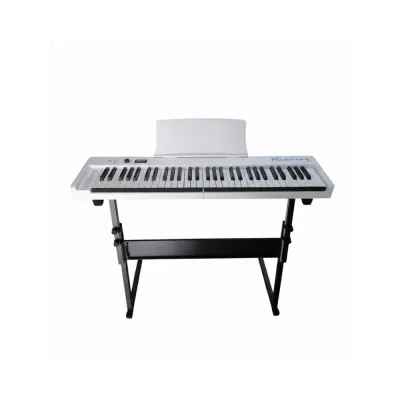
- Keyboard Stand: Avoid placing the piano flat on a standard dining table, as this is usually too high for proper playing posture. Invest in a sturdy, double-braced X-stand for easy storage, a highly stable Z-stand, or the manufacturer's matching wooden stand for a more permanent setup.
- Adjustable Bench: Proper posture is critical to prevent wrist and back strain. An adjustable bench allows you to set the perfect height so your elbows are level with the keyboard.
- Sustain Pedal: The basic plastic footswitch included in most boxes tends to slip around on tile or laminate floors. Upgrading to a chrome, piano-style sustain pedal with a non-slip rubber base provides a much more realistic pedaling experience.
- Closed-Back Headphones: For silent practice, choose a comfortable pair of closed-back studio monitor headphones. These isolate your playing from external room noise and prevent the sound of your practice from leaking out to others.
Frequently Asked Questions (FAQ)
Do I need a full 88-key portable piano as a beginner?
Yes, a full 88-key layout is highly recommended for anyone serious about learning the piano. While smaller 61-key or 76-key keyboards are lighter and more affordable, they lack the low bass and high treble ranges required for standard classical repertoire and modern beginner method books. Practicing on a keyboard with fewer than 88 keys also hinders your development of spatial awareness, making it difficult to transition to a traditional acoustic piano in the future.
Can I use a portable keyboard instead of a portable digital piano?
No, if your primary goal is to learn proper piano playing technique. Standard portable keyboards (often called arranger keyboards) typically feature unweighted, spring-loaded keys that offer no physical resistance. This prevents you from building the finger strength and touch sensitivity required to control an acoustic piano. Portable digital pianos, by contrast, focus heavily on reproducing the authentic weighted feel and dynamic sound of an acoustic instrument, making them the correct tool for piano students.
How do I maintain a portable piano in a humid climate?
Singapore’s high relative humidity can cause moisture to accumulate inside electronic components and affect the mechanical parts of the keybed over time. To protect your instrument, keep it away from open windows, direct sunlight, and external walls. Avoid placing the piano directly in the path of air-conditioning vents, as rapid temperature fluctuations can cause internal condensation. Finally, always cover the keyboard with a fitted dust cover when it is not in use to keep dust and ambient moisture out of the key mechanisms.
Community discussion
Share your experience or ask a question. Comments are reviewed before publication.