
Learning to read the Quran as a beginner is a deeply rewarding spiritual and educational journey, but facing the Arabic script for the first time can feel intimidating. For those who do not yet read Arabic, the most effective way to bridge this gap is by choosing an edition that features three critical components on every page: the original Arabic text, a phonetic transliteration in the Latin alphabet, and a clear English translation. This specific three-part layout allows you to practice pronunciation, follow the correct rhythm of the recitation, and understand the meaning of the verses simultaneously.
By using these comprehensive learning aids, you can engage with the text immediately while gradually building the skills needed to read the original script independently. However, navigating the many available prints requires a clear understanding of what makes an edition truly beginner-friendly, as well as how to verify the contents before making a purchase.
What to Look for in a Beginner-Friendly Quran
When selecting a beginner-friendly Quran, understanding how different features support your learning process is essential. The first and most critical feature for absolute beginners is accurate transliteration. Transliteration maps the phonetic sounds of Arabic words onto the Latin alphabet, enabling you to pronounce the verses even if you cannot yet recognize a single Arabic letter. A high-quality transliteration system will use specific diacritical marks—such as macrons over vowels or dots under consonants—to represent unique Arabic sounds that do not exist in standard English, helping to prevent common pronunciation errors.
Products mentioned in this guide
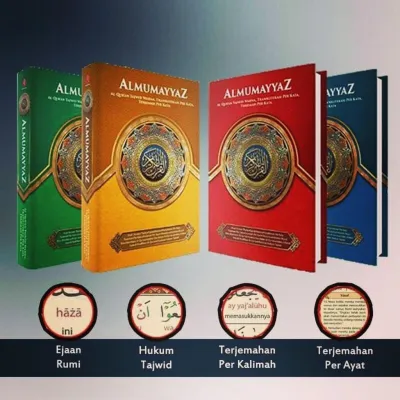
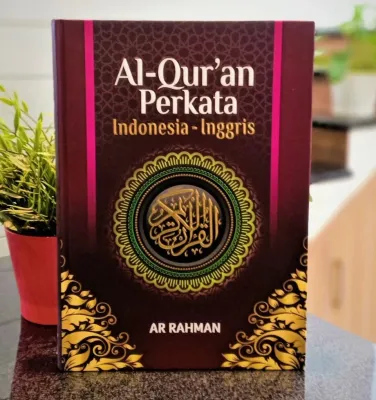
Prices are valid at publication and may change. Please refer to the product page for the latest price.
Equally important is the style of the English translation. Classical translations often employ archaic English, using terms like “thee,” “thou,” and complex grammatical structures that can obscure the immediate meaning of the text. For a beginner, a modern, clear, and accessible English translation is highly recommended. It allows you to grasp the core message and theological context without getting bogged down by outdated vocabulary, serving as a clear window into the text.
The physical and visual layout of the page plays a massive role in how effectively you can study. A stacked, line-by-line format is the gold standard for beginners. In this layout, each line of Arabic text is immediately followed by its corresponding transliteration and English translation directly underneath. This close proximity prevents your eyes from constantly scanning back and forth across the page, which quickly leads to mental fatigue. Additionally, look for editions with large, clear Arabic fonts, as small, cramped scripts make it difficult to distinguish between subtle vowel markings (Harakat) and similar-looking letters.
Finally, you must choose between thematic and word-for-word translations, depending on your primary learning goals. Thematic translations group verses together by topic, providing a smooth narrative flow and clear context, which is ideal for general comprehension and reading. In contrast, word-for-word literal translations map each individual Arabic word directly to its English equivalent. While the resulting English sentence structure can feel disjointed, this format is incredibly powerful for language study, as it helps you build a robust vocabulary and understand the grammatical structure of the Arabic language.
Recommended Quran Editions for New Readers
To help you navigate the vast array of options available, we have compiled a selection of highly regarded Quran editions that are exceptionally well-suited for beginners. Each of these recommendations has been chosen for its reliable combination of Arabic text, transliteration, and accessible English translation. However, because different publishers design their books with distinct pedagogical goals in mind, these editions serve slightly different learning styles.

Whether your primary objective is to grasp the overall thematic message of the text, dive deep into historical and theological context, or systematically learn the mechanics of Arabic pronunciation, one of the following editions will align with your needs. Understanding the unique strengths and limitations of each option will ensure you make an informed decision that supports your personal learning journey.
The Clear Quran by Dr. Mustafa Khattab
Dr. Mustafa Khattab’s The Clear Quran is widely considered one of the most accessible and reader-friendly English translations available today. Its primary strength lies in its modern, contemporary language and its thematic organization. Instead of presenting verses in isolation, Dr. Khattab groups related passages under clear, descriptive headings. This structure provides immediate context, making it much easier for beginners to follow the narrative flow and understand the historical background of the revelations without needing to consult extensive external commentaries.
The translation avoids archaic vocabulary entirely, opting instead for clear, direct English that is easy for readers of all ages to comprehend. This makes it an outstanding choice for those who prioritize understanding the overall message and spiritual guidance of the text over a literal, word-by-word grammatical breakdown. It is highly recommended for daily reading and personal reflection.
Limitation & Buying Check: Because of its immense popularity, The Clear Quran is published in many different formats, including translation-only pocketbooks, standard Arabic-English parallel editions, and study editions. To use this work for learning pronunciation, you must specifically verify that you are purchasing the edition that explicitly includes the Romanized transliteration. Always check the publisher’s product description or look inside the book to confirm that the Latin phonetic script is present alongside the Arabic text and English translation.
The Meaning of the Holy Quran (Abdullah Yusuf Ali)
For readers who desire a deeply academic, historical, and traditional approach to studying the text, Abdullah Yusuf Ali’s The Meaning of the Holy Quran remains a monumental classic. First published in the early 20th century, this translation is celebrated for its poetic, majestic English style and its incredibly comprehensive footnotes. Yusuf Ali provides extensive commentary on the historical occasions of revelation, cultural context, and linguistic nuances, offering an unparalleled educational experience for dedicated students.
Because this translation has been a cornerstone of English-speaking Muslim communities for decades, it is highly integrated into global Islamic study circles. If you plan to attend local lectures, watch online study videos, or use supplementary study guides, you will find that many of them refer directly to Yusuf Ali’s verse numbering and detailed commentary, making it incredibly easy to find additional learning resources.
Limitation & Buying Check: The translation’s poetic style utilizes slightly older English phrasing, which may feel dense or formal to some modern readers. More importantly, because this work is in the public domain, it has been printed by countless publishers worldwide, the majority of whom do not include transliteration in their standard prints. If you choose this classic translation, you must carefully verify that the specific publisher has included a complete transliteration section to assist with your pronunciation practice.
Darussalam Transliteration and Translation Editions
Darussalam is a world-renowned Islamic publisher specializing in high-quality educational materials, and their transliteration and translation editions are specifically engineered for language acquisition. Their layouts are meticulously designed to help beginners bridge the gap between reading phonetic English and reading the original Arabic script. They achieve this by utilizing highly structured, aligned layouts where each Arabic word or line is directly mapped to its transliteration and English translation.
Many of Darussalam’s editions also feature color-coded Tajweed rules. This system uses specific colors to highlight pronunciation rules directly on the Arabic letters, such as red for elongation (Madd) or green for nasalization (Ghunnah). By matching the colors to a simple reference key at the border of the page, beginners can learn to recite with proper pronunciation rules from the very beginning.
The physical production quality of Darussalam books is consistently excellent. They typically use high-opacity paper that prevents ink from bleeding through to the other side, which is crucial when pages are packed with multiple layers of text. The fonts are clear, sharp, and highly legible, making them an exceptional tool for daily, intensive study.
The Noble Quran (Muhsin Khan and Taqi-ud-Din Al-Hilali)
Translated by Dr. Muhammad Muhsin Khan and Dr. Muhammad Taqi-ud-Din al-Hilali, The Noble Quran is highly favored in traditional and academic circles for its literal translation style and orthodox interpretation. What sets this edition apart is its heavy use of inline bracketed explanations. Instead of placing historical context or pronoun clarifications in footnotes at the bottom of the page, the translators insert explanatory words directly into the flow of the verse.
This approach is highly beneficial for beginners who want to understand the exact theological meaning and context of a verse immediately without having to constantly interrupt their reading to look at footnotes. It provides a direct, unvarnished look at the traditional interpretation of the text, making it a powerful tool for serious theological study.
Limitation & Buying Check: The frequent use of brackets and parentheses can make the text feel visually dense and can disrupt the natural reading flow for those who prefer a smooth, narrative style. Furthermore, as with other major translations, standard prints of The Noble Quran often omit the transliteration. You must carefully review the product specifications to ensure that the specific copy you are purchasing is the transliterated edition.
How to Verify the Edition Before You Buy
Purchasing a Quran edition for study is a significant investment in your educational journey, and taking the time to verify the physical and publishing details before buying will save you from common mistakes. The first step is to check the publisher and authenticity of the print. Reputable publishers like Darussalam, Goodword Books, and the Islamic Foundation are known for their rigorous editorial standards. Choosing books from these established institutions ensures that the Arabic text is free from typographical errors and that both the transliteration and translation are highly accurate and standardized.
Next, pay close attention to the physical specifications of the book. Because beginner-friendly editions must accommodate the Arabic text, the English transliteration, and the English translation on the same page, they require a substantial amount of space. For this reason, large print sizes (such as A4 or B5 dimensions) are highly recommended. A larger book allows for a clearer, more spaced-out layout, which significantly reduces eye strain during long study sessions. Additionally, check the paper quality; high-opacity, premium paper is essential to prevent “ghosting”—where the ink from the reverse side of the page shows through and makes the text difficult to read. A durable hardcover or sturdy flexibound binding is also a wise choice, as a study Quran is a reference book that you will open, close, and carry frequently.
The most critical step in the verification process is confirming that the edition actually contains transliteration. Many buyers mistakenly assume that any book labeled “Quran with English Translation” or “Bilingual Quran” automatically includes phonetic transliteration. This is not the case. “Translation” refers solely to the English meaning of the words, while “transliteration” refers to the phonetic spelling of the Arabic words using Latin characters. To avoid disappointment, you must explicitly look for the word “Transliteration” in the book’s title, cover, or detailed product description.
For readers purchasing in Singapore, navigating the local and international market requires a bit of care. While visiting local Islamic bookstores in cultural districts like Geylang Serai, Kampong Glam, or along Bussorah Street allows you to physically inspect the layout, paper quality, and font size before buying, online marketplaces offer incredible convenience. When buying online, always check the seller’s ratings and read customer reviews carefully to ensure that previous buyers received the exact edition advertised. Be cautious of listings with vague descriptions or stock photos, and do not hesitate to message the seller directly to confirm that the book contains the three-part layout (Arabic, transliteration, and English) before finalizing your purchase.
Frequently Asked Questions (FAQ)
Do I need to know Arabic to start reading these editions?
No, you do not need any prior knowledge of the Arabic language or script to begin reading these editions. The inclusion of Latin-based transliteration allows you to pronounce the Arabic words phonetically from day one, while the English translation ensures you understand the meaning of what you are reciting. This dual-support system is designed specifically to help beginners engage with the text immediately. However, while transliteration is an excellent starting tool, it is highly recommended to gradually learn the Arabic alphabet (Abjad) over time. Learning the actual script will eventually allow you to read more fluently, access a wider variety of texts, and avoid the phonetic limitations of Latin spelling.
Is transliteration an accurate replacement for Arabic recitation?
While transliteration is an incredibly helpful stepping stone, it is not a perfect or permanent replacement for reading the original Arabic script. The English alphabet simply lacks the characters and phonetic range required to accurately represent several unique Arabic sounds, such as the deep guttural letters (like ‘Ayn or Ha) or the emphatic consonants (like Sād or Dād). Relying solely on transliteration can lead to mispronunciations that alter the meaning of the words. To ensure your pronunciation is correct, use transliteration in conjunction with high-quality audio recitations (which are widely available online or via mobile apps) or under the guidance of a qualified teacher who can correct your mistakes.
Which translation is best for understanding the context?
The best translation depends entirely on your personal learning goals. If your primary objective is to understand the overall narrative flow, moral lessons, and historical themes in clear, modern English, a thematic translation like The Clear Quran by Dr. Mustafa Khattab is highly recommended. On the other hand, if you want to engage in deep academic or theological study, a heavily annotated translation like Abdullah Yusuf Ali’s The Meaning of the Holy Quran or the inline explanations of The Noble Quran by Muhsin Khan and Al-Hilali will serve you better. These latter editions provide the historical background and classical interpretations necessary to understand the specific context in which each verse was revealed.
Community discussion
Share your experience or ask a question. Comments are reviewed before publication.