
Building a strong foundation in property investment begins with structured, evidence-based reading rather than chasing speculative trends. To transition from a curious observer to a true real estate master, you must first comprehend the underlying mechanics of finance, market cycles, and asset valuation. The right literature provides a systematic framework to analyze risk, calculate returns, and understand leverage before risking capital in the physical market.
This guide outlines how to select the best foundational texts, categorizes essential reading into clear developmental stages, and explains how to adapt international concepts to the unique, highly regulated property landscape of Singapore. By approaching your reading with an analytical mindset, you can build a robust framework for long-term wealth preservation.
How to Select the Best Real Estate Investing Books
With thousands of property guides available, filtering out speculative, overly promotional, or get-rich-quick literature is critical. Focus your reading list on texts that prioritize fundamental financial principles over motivational hype. Look for books that dedicate chapters to cash flow analysis, debt structuring, risk mitigation, and market cycles. These concepts form the bedrock of sustainable investing, regardless of whether you are looking at a suburban residential unit or a commercial development.
Products mentioned in this guide
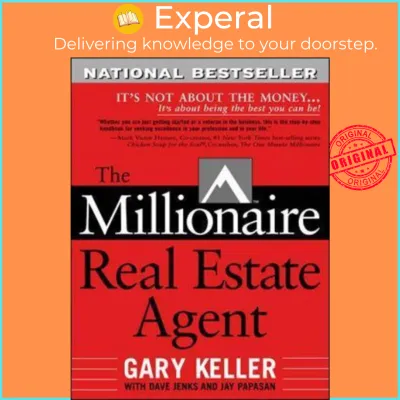

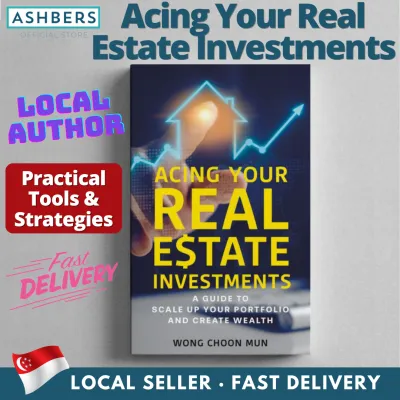

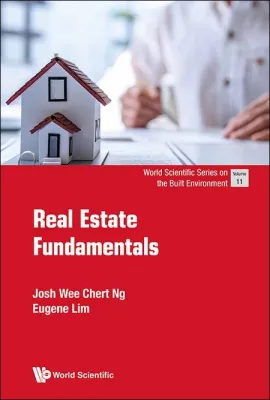
Prices are valid at publication and may change. Please refer to the product page for the latest price.
The author’s professional background is another vital filter. Prioritize authors who have successfully navigated multiple economic cycles as active investors, fund managers, or academic researchers. Be cautious of writers whose primary revenue streams derive from selling high-priced seminars rather than actual property transactions. A credible author provides transparent case studies, discusses failures and risks, and relies on empirical data rather than purely emotional anecdotes.
Additionally, evaluate the publication date and edition of the book. While core economic principles remain stable, tax laws, financing regulations, and lending environments shift constantly. Ensure you are reading the latest edition to understand how modern market conditions affect investment strategies. An outdated book might recommend financing techniques that are no longer legal or viable under current banking regulations.
Finally, distinguish between universal financial frameworks and region-specific legal tactics. A book detailing complex tax-lien strategies or specific foreclosure laws in another country will have little practical utility if your target market operates under a completely different legal system. Focus on extracting the core analytical methodologies that can be applied globally.
Essential Real Estate Books for Beginners and Future Masters
To build a comprehensive understanding of property investment, your reading journey should follow a logical progression. Attempting to master complex portfolio scaling before understanding basic cash flow metrics often leads to costly errors. The following sections categorize highly regarded foundational texts into three developmental stages, highlighting their core focus, target audience, and inherent limitations.

Mindset and Financial Fundamentals
For absolute beginners with no prior background in finance or economics, the primary hurdle is shifting from active income reliance to asset accumulation. Foundational books in this category focus on rewriting how you view money, debt, and wealth. Classic wealth mindset literature introduces the fundamental distinction between assets and liabilities, teaching readers that a true asset must generate cash flow or appreciate in value, whereas liabilities draw money out.
These texts focus heavily on the psychological transition required to build passive income streams. They explain how compounding interest, tax structures, and corporate entities can be leveraged to preserve wealth. By establishing this mental baseline, future investors learn to view property not merely as a physical structure, but as a business entity that must generate yield. This perspective is vital for preventing emotional, impulsive purchases driven by aesthetic appeal rather than financial viability.
However, readers must recognize the limitations of mindset-focused literature. These books are designed to inspire and reframe thinking; they do not contain the technical formulas, legal frameworks, or step-by-step negotiation strategies needed to execute a transaction. Relying solely on mindset books can leave an investor overly optimistic but functionally unprepared to analyze a real-world deal or manage a tenant dispute.
Property Analysis and Rental Strategies
Once you possess the correct financial mindset, you must transition to the mathematical and operational mechanics of property acquisition. This stage requires books that treat real estate as a quantifiable business. Literature in this category serves as an excellent reference point for learning how to evaluate potential deals, helping readers calculate critical metrics such as net operating income (NOI), capitalization rates, cash-on-cash returns, and debt service coverage ratios.
The core focus here is risk management through rigorous underwriting. You will learn how to estimate maintenance reserves, calculate vacancy rates, and account for hidden operational expenses like property management fees, insurance, and local taxes. Furthermore, these texts outline practical strategies for sourcing deals, negotiating purchase prices, and executing thorough tenant screening processes to protect your cash flow.
The primary limitation of these practical guides is their heavy geographic bias. The vast majority of top-tier property analysis books are written by authors based in Western markets. Consequently, they discuss specific financing instruments, tax deductions, and landlord-tenant laws that do not apply internationally. Readers must extract the underlying mathematical frameworks while ignoring the specific localized legal advice.
Market Cycles and Long-Term Wealth Building
For intermediate investors who understand basic deal analysis, the next step is learning how to scale a portfolio and navigate macroeconomic shifts. Real estate is cyclical, influenced heavily by interest rates, population demographics, and government monetary policy. Academic texts on real estate market analysis teach investors how to identify structural shifts in the economy and anticipate changes in property demand.
This advanced literature focuses on institutional-grade investment strategies, portfolio diversification, and sophisticated debt structuring. It explains how to build automated management systems, hire professional property managers, and transition from single-unit residential investing to commercial or multi-family properties. Understanding these concepts allows you to protect your wealth during economic downturns and capitalize on undervalued assets when market sentiment is low.
The limitation of this advanced category is its complexity. For a novice, discussions on yield curves, macroeconomic indicators, and syndication structures can be overwhelming and counterproductive. Applying these high-level strategies without a solid grasp of basic property management and local market dynamics can lead to excessive leverage and severe financial distress.
What to Verify Before Buying Real Estate Books
When purchasing educational materials to guide your investment journey, verifying the physical and structural quality of the books is just as important as evaluating the content. Real estate investing texts are highly technical, often featuring complex mathematical formulas, spreadsheets, amortization tables, and market cycle charts. Because of this, the format and medium you select will directly impact your ability to study and retain the information.
While audiobooks are highly convenient for absorbing high-level concepts, mindset philosophies, or negotiation narratives during a daily commute, they are poorly suited for technical analysis. Trying to visualize a multi-row cash flow projection table or a complex tax depreciation formula via audio is incredibly difficult. For technical guides, opt for physical books or high-quality e-book formats that allow you to highlight text, bookmark reference tables, and easily flip back and forth between formulas and case studies.
Before finalizing your purchase, confirm that you are acquiring the latest edition of the book. Publishers frequently update finance texts to reflect changes in tax codes, lending regulations, and economic shifts. An outdated edition might reference interest rate environments or tax incentives that are no longer valid, leading to incorrect assumptions in your mock calculations. Additionally, verify that the book’s language and vocabulary match your reading proficiency, as misinterpreting precise financial terms can lead to fundamental misunderstandings of investment risk.
Content completeness is another critical factor. Many modern real estate guides come with supplementary digital resources, such as downloadable deal-analysis spreadsheets, PDF checklists, or access to online calculators. Read the product descriptions carefully to ensure these companion materials are included with your purchase.
Finally, pay close attention to seller authenticity. When purchasing books through online marketplaces or local retail channels in Singapore, verify the seller’s rating and reviews. Pirated or low-quality counterfeit prints often suffer from missing pages, severely blurred charts, or formatting errors that render critical financial tables completely unreadable.
Adapting Global Real Estate Concepts to the Singapore Market
Because the global publishing industry is dominated by Western authors, the vast majority of foundational real estate books are written from a US or European perspective. For an investor operating in Singapore, attempting to apply these strategies directly without translation can lead to severe legal and financial consequences. For example, Western strategies that advocate for “no money down” investing or highly leveraged residential acquisitions are virtually impossible to execute under local regulatory frameworks.
However, this does not mean international literature is without value. The universal laws of finance remain completely consistent. The formulas for calculating capitalization rates, the time value of money, the mechanics of compound interest, and the principles of professional tenant management translate perfectly to the Singapore property landscape. Whether you are analyzing a suburban condominium in Pasir Ris or a commercial shophouse in Tanjong Pagar, the math behind cash flow and yield remains identical.
The critical step is recognizing where local regulations override global theories. In Singapore, the property market is tightly managed by government cooling measures designed to maintain stability. You must strictly adapt any reading on leverage to account for local policies such as the Total Debt Servicing Ratio (TDSR), which caps your monthly debt obligations relative to your income.
Furthermore, foreign property acquisition or multiple property ownership locally triggers heavy Additional Buyer’s Stamp Duty (ABSD), which drastically alters the initial capital requirements and net yield calculations. Housing & Development Board (HDB) flats, which house a significant portion of the population, are subject to strict eligibility criteria, minimum occupation periods (MOP), and financing limits that have no equivalent in Western textbooks.
To bridge this gap successfully, use international books to build your analytical foundation and logical frameworks. When it comes to practical execution, always verify current regulations by consulting official local authorities, such as the Inland Revenue Authority of Singapore (IRAS) for tax and stamp duty rates, and the Urban Redevelopment Authority (URA) for zoning and master plans. For actual transactions, seek the guidance of licensed financial advisors, qualified legal professionals, and registered real estate agents who understand the current local legal landscape.
Frequently Asked Questions (FAQ)
How long does it take to read and apply a foundational real estate book?
While you can read a standard 300-page real estate book in a few days, truly mastering and applying its concepts is a gradual process that typically takes several months. Passive reading is insufficient for building investment competence. To solidify your theoretical knowledge, you must actively practice what you learn. Spend time running mock property analyses, calculating potential yields on active local listings, and studying historical transaction data in your target neighborhoods. Consistent, hands-on practice over three to six months will build the analytical intuition needed to evaluate real-world deals confidently.
Are audiobooks effective for learning real estate investing formulas?
Audiobooks are highly effective for absorbing mindset shifts, general investment philosophies, and narrative-driven case studies. However, they are highly inefficient for mastering technical formulas, complex financial tables, and contract structures. For technical and analytical chapters, physical books or e-books are far superior, as they allow you to study visual diagrams, pause to perform calculations, and refer back to complex formulas. A highly effective hybrid approach is to listen to the narrative and conceptual chapters via audiobook, and switch to a physical copy or e-book when studying mathematical models and deal-structuring frameworks.
Community discussion
Share your experience or ask a question. Comments are reviewed before publication.