
The pursuit of personal growth often stalls when we rely solely on fleeting bursts of motivation. True personal transformation requires a shift from raw willpower to systematic behavioral design. A well-chosen self discipline book does not simply tell you to work harder; it provides a structured, evidence-based methodology to automate positive habits and eliminate cognitive friction. By understanding the psychological triggers behind your daily actions, you can construct an environment that makes constructive behaviors default and destructive habits difficult to maintain.
Selecting the right self discipline book depends heavily on identifying your specific behavioral bottlenecks. Some readers struggle with daily consistency, while others face digital distractions or self-sabotaging mindsets. By matching your unique challenges with a book that offers the appropriate cognitive or practical framework, you can transition from passive reading to active, measurable self-improvement.
How We Selected the Best Self-Discipline Books
To curate this selection of outstanding self-discipline literature, we established rigorous evaluation criteria designed to separate practical manuals from generic motivational guides. We prioritized books that offer actionable frameworks over abstract theories, ensuring that every recommendation provides readers with clear, step-by-step instructions they can implement immediately. A high-quality self discipline book must bridge the gap between scientific research and daily life, translating complex neurological or psychological concepts into simple routines.
Products mentioned in this guide
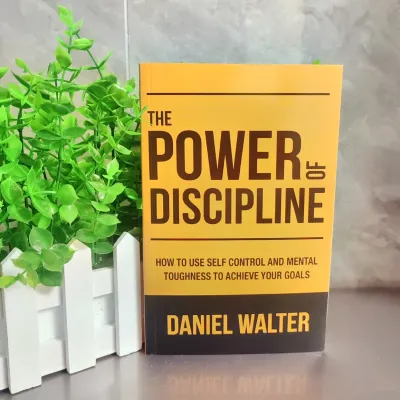
![EBOOK The Power of Discipline How to Use Self Control and Mghness to Achieve Your Goals by Daniel Walter [Full Version]](https://img.lazcdn.com/g/p/d5ef5f4b8074374f6f9b248a382273f5.jpg_400x400q80.jpg_.webp)

![[ebook] Positive Discipline Methods](https://img.lazcdn.com/g/p/655a2b3dafc5f7c0039ea2b15a3e227d.jpg_400x400q80.jpg_.webp)
Prices are valid at publication and may change. Please refer to the product page for the latest price.
We also evaluated each title based on its scientific or psychological backing. The recommended books are grounded in empirical research, cognitive behavioral therapy principles, or extensive behavioral studies rather than purely anecdotal success stories. Furthermore, we assessed long-term applicability and readability, selecting texts that remain relevant across different stages of life and career. By focusing on sustainable habit formation and behavioral change rather than temporary inspiration, these books offer tools that support continuous, lifelong development.
Top Self-Discipline Books for Habit Formation
The books detailed below represent distinct, highly respected approaches to self-discipline and habit formation. They range from tactical guides on micro-habit tracking to deep dives into cognitive focus and psychological resilience. To maximize the value of these texts, assess your current habits and choose the methodology that directly addresses your primary obstacles.

Atomic Habits by James Clear
James Clear’s Atomic Habits operates on the premise that massive life changes do not require drastic overhauls, but rather the compounding effect of 1% daily improvements. Clear introduces the Four Laws of Behavior Change, a practical framework built around the neurological loop of Cue, Craving, Response, and Reward. By making positive habits obvious, attractive, easy, and satisfying—and doing the opposite for negative habits—readers can systematically redesign their environments. A core pillar of this book is identity-based habit formation, which encourages individuals to focus on who they wish to become rather than merely what they want to achieve, aligning daily actions with self-image.
This book is best suited for readers who struggle with daily consistency, want to break long-standing bad habits, or prefer highly structured, step-by-step systems over abstract theory. Clear’s writing is exceptionally clear and direct, offering immediate, practical tools like habit stacking and environment design. However, a primary limitation is that the heavy emphasis on tracking, metrics, and rigid system-building may feel overly mechanical or clinical for individuals who prefer intuitive, fluid, or highly flexible daily routines. For those who find joy in spontaneous productivity, the highly structured nature of atomic habits might induce unnecessary pressure.
When choosing a format, the physical paperback or hardcover editions are highly advantageous, as they feature clean summary charts, visual diagrams, and habit-tracker templates that are easy to reference and photocopy. The audiobook version, narrated by Clear himself, is exceptionally well-paced and serves as an excellent companion for long commutes on the MRT or during daily walks, though listeners may miss the immediate visual aid of the book’s diagrams.
The Power of Habit by Charles Duhigg
Charles Duhigg’s The Power of Habit explores the neurological and psychological foundations of habit loops. Duhigg, a Pulitzer Prize-winning journalist, breaks down behavioral patterns into a three-step cycle: the cue (the trigger), the routine (the behavior), and the reward (the payoff). By understanding this loop, readers learn how to diagnose their own behaviors and replace destructive routines with constructive ones without altering the underlying cue or reward. Duhigg also introduces the concept of “keystone habits”—pivotal behaviors, such as regular exercise or meticulous household budgeting, that naturally trigger a positive cascade of secondary habits across all areas of life.
This text is ideal for readers who are deeply curious about the science and psychology behind human behavior, as well as those looking to understand organizational and societal habit patterns. It provides a macro-level view of how habits operate within corporations, sports teams, and communities, making it highly valuable for leaders and managers. The primary limitation of The Power of Habit is its heavy reliance on narrative-driven journalistic case studies and academic explanations. While fascinating, it offers fewer direct, personal worksheets, daily templates, or step-by-step personal exercises compared to more hands-on self-help guides.
For this reason, the physical book or e-book format is highly recommended. These formats allow readers to actively highlight key passages, annotate margins, and easily flip back to reference the detailed case studies and scientific research notes that form the backbone of Duhigg’s arguments.
Deep Work by Cal Newport
Cal Newport’s Deep Work addresses self-discipline through the lens of cognitive focus, attention management, and the elimination of modern distractions. Newport defines deep work as professional activities performed in a state of distraction-free concentration that push cognitive capabilities to their limit. He contrasts this with “shallow work,” which consists of logistical, non-cognitively demanding tasks like answering emails or attending superficial meetings. The book outlines rigorous strategies for time-blocking, practicing digital minimalism, and protecting finite cognitive bandwidth from the constant pull of smartphones and social media.
This book is highly recommended for knowledge workers, software developers, students, and creative professionals whose primary discipline challenge is digital distraction and fragmented attention. Newport provides a compelling argument for why deep focus is becoming increasingly rare and valuable in the modern economy. However, a major limitation is that his strict boundaries around digital communication—such as ignoring emails for hours or quitting social media entirely—can be incredibly difficult, if not impossible, to implement for professionals working in highly collaborative, client-facing, or fast-paced corporate environments.
The audiobook format is excellent for absorbing Newport’s philosophical arguments and conceptual frameworks during an initial listen. However, purchasing the physical book is highly recommended for those who want to study, adapt, and transcribe his specific scheduling philosophies, rules, and daily time-blocking templates into their personal planning routines.
Mindset: The New Psychology of Success by Carol S. Dweck
Carol S. Dweck’s Mindset: The New Psychology of Success addresses the foundational psychological beliefs that enable or hinder self-discipline and habit persistence. Dweck, a Stanford University psychologist, introduces the concepts of the “fixed mindset” and the “growth mindset.” Individuals with a fixed mindset believe that their intelligence, talents, and abilities are static traits that cannot be changed, leading them to avoid challenges and fear failure. Conversely, those with a growth mindset believe that their basic abilities can be developed through dedication, hard work, and learning. This underlying belief system dictates how individuals handle setbacks, persist through difficulties, and maintain long-term discipline.
This book is best for readers who suffer from self-sabotage, perfectionism, or a fear of failure, as well as those who tend to abandon new habits the moment they encounter an initial setback or fail to see immediate, flawless results. Dweck’s work helps readers reframe failure as an essential component of the learning process rather than a reflection of their personal worth. The primary limitation of Mindset is that it focuses almost entirely on cognitive reframing and psychological attitude adjustments. It does not provide daily scheduling tools, physical habit-tracking mechanics, or tactical step-by-step behavioral blueprints.
When purchasing this book, it is highly beneficial to seek out updated editions. Recent editions include crucial new reflections and chapters on the “false growth mindset”—a common misunderstanding where individuals praise effort without tying it to actual learning, progress, and outcomes. Verifying the publication year ensures you receive the most refined and complete version of Dweck’s research.
Quick Comparison of Recommended Self-Discipline Books
To help you quickly identify which methodology aligns with your current personal or professional goals, the table below summarizes the core attributes of each recommended book.
| Book Title | Core Framework | Best For | Primary Limitation |
|---|---|---|---|
| Atomic Habits | 1% daily improvements; Four Laws of Behavior Change; Identity-based habits | Readers struggling with daily consistency or looking to replace specific bad habits | System-building can feel overly mechanical for intuitive personalities |
| The Power of Habit | The Habit Loop (Cue, Routine, Reward); Keystone habits | Readers interested in the scientific and organizational psychology of habits | Leans heavily on narrative case studies with fewer direct personal templates |
| Deep Work | Distraction-free focus; Time-blocking; Digital minimalism | Knowledge workers and creatives struggling with digital distraction | Strict boundaries can be difficult to maintain in highly collaborative roles |
| Mindset | Fixed Mindset versus Growth Mindset; Cognitive reframing | Individuals prone to self-sabotage, perfectionism, or fear of failure | Focuses on psychological beliefs rather than daily scheduling mechanics |
What to Check Before Buying a Self Discipline Book
When purchasing a self discipline book, taking a few practical steps can ensure you select the best edition and format for your learning style and lifestyle.
First, verify the edition and publication updates. Many popular self-improvement titles undergo revisions, anniversary updates, or expansions that include new forewords, updated scientific research, or additional practical chapters. Checking the publication details ensures you do not accidentally purchase an outdated print that lacks these valuable additions. For instance, newer editions of classic texts often address modern digital challenges that were not prevalent when the books were originally written.
Second, consider language and translation. While English is widely spoken and read in Singapore, readers who prefer translated editions should verify if official, authorized translations are available. It is wise to check customer reviews specifically for translation quality, as complex psychological terms and behavioral frameworks can sometimes lose their original nuance when translated poorly.
Third, evaluate format compatibility. E-books are highly versatile, allowing you to highlight key passages, search for specific terms, and carry multiple titles easily on a single device. Physical books are unmatched for tactile learners who prefer to write in margins, flip back and forth between chapters, and keep visual reminders on their desks. Audiobooks are outstanding for passive learning during commutes, but you must check the narrator’s pacing and ensure the audio version includes supplementary PDF downloads for worksheets, diagrams, and reference charts.
Finally, ensure content completeness. Some digital or abridged versions of books may omit crucial appendices, reference lists, or summary charts that are vital for applying the book’s frameworks to your daily life. Always read the product description carefully to confirm you are purchasing the complete, unabridged version.
Frequently Asked Questions (FAQ)
How long does it take to build a new habit using these frameworks?
While popular culture often repeats the myth that it takes exactly 21 days to form a new habit, behavioral research indicates a much wider variance. Studies show that establishing a new routine can take anywhere from 18 to 254 days, depending heavily on the complexity of the habit, your personality, and your environment. Simple habits, like drinking a glass of water in the morning, are established much faster than complex ones, such as daily deep-work sessions. The frameworks in these books emphasize that focus should remain on consistency, system-building, and identity alignment rather than reaching a strict, arbitrary calendar deadline.
Are audiobooks as effective as physical books for self-discipline?
The effectiveness of audiobooks compared to physical books depends entirely on how you intend to use the material. Audiobooks are highly effective for absorbing high-level conceptual frameworks, maintaining motivation, and utilizing passive time during commutes on the MRT or while exercising. However, physical books or e-books are significantly better for titles that require active study, note-taking, or referencing visual diagrams. If a book contains specific exercises, worksheets, or complex habit-tracking templates, having a physical copy makes it far easier to engage with the material and apply the frameworks directly to your daily routine.
Community discussion
Share your experience or ask a question. Comments are reviewed before publication.