
Navigating your 20s and 30s is one of the most critical phases of professional life, marked by rapid transitions, rising financial responsibilities, and the challenge of establishing a sustainable work-life balance. Finding the right self-help books during this period can provide the structured frameworks needed to accelerate career growth, build long-term financial security, and protect your mental well-being. Rather than relying on generic motivational slogans, the most effective literature for young professionals offers evidence-based strategies, practical exercises, and adaptable systems that align with modern workplace realities. By focusing on books that target career strategy, financial literacy, and psychological resilience, you can build a personalized toolkit to navigate the complexities of the modern corporate landscape.
How to Choose the Right Self-Help Book for Your Career Stage
To make the most of your reading time, select books that address your immediate professional challenges. The self-help market is vast, and not every highly recommended title will be relevant to your current situation. A junior executive trying to master basic time management needs a very different resource than a mid-career manager learning how to lead cross-functional teams or negotiate executive compensation.
When evaluating a book, start by assessing the author’s credibility. Authors generally fall into three categories: academic researchers, seasoned industry practitioners, and motivational speakers. Academic researchers, such as organizational psychologists or behavioral economists, base their advice on peer-reviewed studies and systematic data, making their frameworks highly reliable for long-term behavioral change. Seasoned industry practitioners offer practical, battle-tested strategies from the front lines of business, which are invaluable for understanding corporate politics, leadership, and industry-specific dynamics. Motivational speakers, while engaging, often rely on anecdotal success stories that may be difficult to replicate. Prioritize authors whose expertise aligns with the type of guidance you need.
Products mentioned in this guide
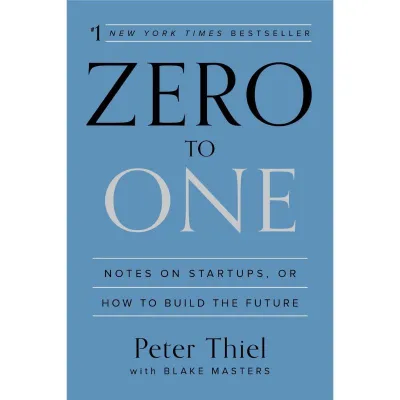
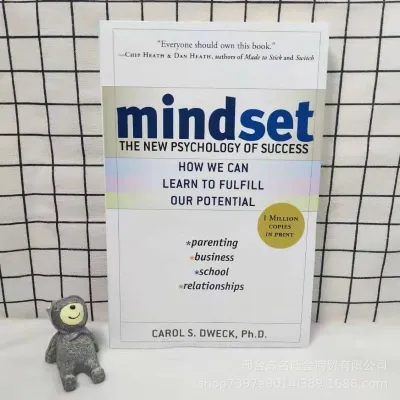

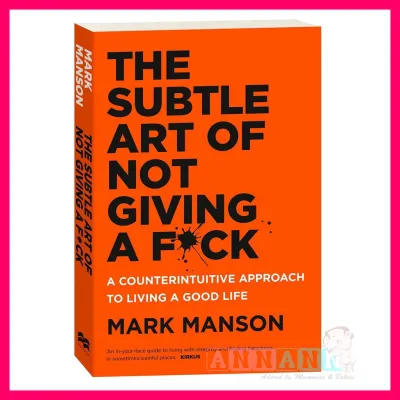

Prices are valid at publication and may change. Please refer to the product page for the latest price.
Next, evaluate the publication context and relevance to modern workplace dynamics. The professional landscape has shifted dramatically over the last decade, with the rise of hybrid work, decentralized teams, and rapid technological disruption. A career guide written in the early 2000s may advocate for rigid corporate ladder-climbing strategies that no longer apply in today’s flatter, more agile organizational structures. Look for books that address contemporary challenges, such as managing digital distractions, collaborating across time zones, and maintaining visibility in a remote or hybrid work environment.
Before finalizing your purchase, verify the specific edition, language, medium or file format, regional restrictions, device compatibility, and content completeness of the book. Never infer the exact contents or included resources of an edition solely from its title or cover art. Ensure you are purchasing from an authorized source to guarantee you receive the complete, unabridged text and any accompanying digital worksheets or supplementary materials.
Finally, cross-reference reader reviews and professional recommendations to identify which specific career stages or industries benefit most from the book’s frameworks. Look for detailed reviews from professionals who share your background or career aspirations. Pay attention to feedback regarding how actionable the advice is; a book that receives praise for its practical templates and step-by-step exercises is often more valuable than one that only offers high-level conceptual theories.
Core Categories of Self-Help Books for Young Professionals
To build a comprehensive career development plan, it is helpful to categorize your reading into three core areas: career strategy, financial literacy, and mental resilience. Balancing your reading across these categories ensures that you do not just excel at your daily tasks, but also secure your financial future and protect yourself from professional exhaustion.

Career Strategy and Skill Development
Developing a successful career requires a combination of high-level strategy and sharp execution. Books in this category focus on building essential professional skills, optimizing daily productivity, and mapping out long-term career trajectories. For young professionals in their 20s and 30s, the primary goal is often to transition from executing assigned tasks to driving strategic value and managing complex projects.
When selecting books on career strategy, look for actionable frameworks regarding time management, deep work, and technical skill acquisition. Effective productivity literature should move beyond basic to-do lists and introduce systematic methods for prioritizing high-impact tasks, eliminating cognitive distractions, and structuring your workday for maximum focus. These frameworks are particularly crucial in an era where constant notifications and fragmented communication can easily derail deep, analytical thinking.
Additionally, verify if the strategies are adaptable to hybrid or remote work environments. The ability to communicate clearly in writing, manage your own schedule without direct supervision, and build professional relationships virtually has become a core competency. A high-quality career strategy book should offer guidance on how to demonstrate your value, negotiate promotions, and collaborate effectively when you are not physically present in the office every day.
Financial Literacy and Wealth Building
Building a career is only half the equation; managing the income generated by that career is equally vital. Your 20s and 30s represent a critical window where the decisions you make regarding budgeting, debt, and investing will have a compounding effect on your long-term financial freedom. Financial literacy books for this demographic should focus on establishing a healthy relationship with money and building sustainable wealth-building habits.
Prioritize books that cover debt management, emergency funds, and long-term compounding over get-rich-quick schemes or highly speculative investment strategies. A solid financial guide should explain the mechanics of compound interest, the importance of automated savings, and how to allocate capital across different asset classes. It should provide clear, step-by-step instructions on how to eliminate high-interest debt and establish a robust financial safety net before embarking on more aggressive investment paths.
For young professionals in Singapore, managing expenses and planning for long-term goals like home ownership or retirement requires a clear understanding of local financial structures alongside general wealth-building principles. It is also important to check if the financial principles discussed are adaptable to different economic conditions and personal risk tolerances. Economic landscapes are cyclical, and a framework that relies on a perpetual bull market or specific interest rate environments may fail during a downturn. Look for authors who emphasize timeless principles of diversification, living below your means, and aligning your spending with your personal values, allowing you to navigate inflation, market volatility, and career transitions with confidence.
Mindset, Resilience, and Burnout Prevention
The pressure to perform, combined with the constant connectivity of modern work, has made burnout a significant risk for young professionals. To sustain a long and successful career, you must develop the psychological tools to manage workplace stress, overcome imposter syndrome, and establish healthy professional boundaries. Books in this category focus on emotional intelligence, cognitive behavioral techniques, and resilience.
Ensure the book you choose relies on evidence-based psychological research rather than purely anecdotal motivation or toxic positivity. True resilience is not about ignoring difficulties or working through exhaustion; it is about understanding your cognitive patterns, recognizing early signs of stress, and implementing healthy coping mechanisms. Look for authors with backgrounds in psychology, neuroscience, or counseling who back their advice with scientific studies on human behavior and mental health.
Practical exercises are a hallmark of high-quality mindset books. Look for resources that offer structured activities for cognitive reframing—the process of identifying and challenging negative or unhelpful thoughts—as well as stress recovery protocols and boundary-setting scripts. Learning how to say no to excessive workloads, communicate your capacity limits to managers, and disconnect from work during your personal time are essential skills that require deliberate practice and clear frameworks.
Red Flags to Avoid When Buying Self-Help Books
With thousands of self-help titles published every year, the quality of advice varies dramatically. To avoid wasting time and money on low-value literature, you must develop a critical eye and learn to spot common red flags that indicate a book may be superficial, misleading, or impractical.
One of the most prominent warning signs is the promise of overnight success or effortless wealth. Career development and financial stability require consistent effort, deliberate practice, and time. Any book that promises to reveal a “secret shortcut” or guarantees rapid advancement with minimal work should be approached with extreme skepticism. These titles often rely on survivorship bias, highlighting a few exceptional cases while ignoring the systemic factors, luck, and baseline resources that contributed to those outcomes.
Another red flag is a book that offers a rigid, one-size-fits-all template without acknowledging individual context, cultural differences, or industry variations. A strategy that works perfectly in a fast-paced technology startup may be entirely inappropriate or even detrimental in a highly regulated government agency or a traditional corporate environment. High-quality self-help books acknowledge these nuances and provide flexible principles that readers can adapt to their unique professional circumstances, rather than demanding strict adherence to a single formula.
Finally, be cautious of authors whose primary business model is selling the book itself, or using the book as a lead-generation tool for expensive coaching programs, seminars, or proprietary software. While many legitimate experts write books to share their knowledge, some titles are designed primarily as marketing brochures. Check the author’s background to ensure they have a proven track record of real-world expertise in their field, rather than simply being a professional self-help writer whose only successful venture is teaching others how to be successful.
How to Apply Self-Help Concepts to Your Daily Work
Reading a self-help book can provide a temporary boost of motivation, but without deliberate application, the insights are quickly forgotten. To translate the concepts you read into tangible career progress, you must transition from passive consumption to active implementation.
Start by designing a structured post-reading action plan with measurable, short-term milestones. As you read, keep a notebook dedicated to actionable takeaways. At the end of each chapter or book, select one or two specific concepts that you can immediately apply to your daily routine. For example, if you read a book on time management, your immediate milestone might be to implement a specific time-blocking technique for two weeks. Keep these initial goals small and highly achievable to build momentum and avoid overwhelming yourself.
Establish a regular review cadence to assess what frameworks are working and what needs adjustment. At the end of each week or month, take fifteen minutes to reflect on your progress. Ask yourself: Did the new communication strategy improve my interactions with my team? Is my new budgeting system sustainable? If a framework feels too rigid or is causing unnecessary friction, do not hesitate to modify it. The goal is to find systems that work for you, not to conform perfectly to an author’s exact specifications.
Finally, combine insights from multiple books to build a personalized career development system. No single book contains all the answers to your professional challenges. By synthesizing the productivity techniques of one author, the financial habits of another, and the communication strategies of a third, you can create a customized framework tailored to your specific career goals, personality, and work environment. This iterative process of reading, testing, and refining is the most effective way to achieve long-term professional growth.
Frequently Asked Questions (FAQ)
How many self-help books should I read at the same time?
It is generally most effective to focus on one or two self-help books at a time, especially if they cover different areas, such as one book on career strategy and one on personal finance. Reading too many books simultaneously can lead to cognitive overload and dilute your focus, making it difficult to implement any of the strategies effectively. By limiting your active reading list, you can dedicate more mental energy to deeply understanding the concepts and executing the practical exercises. If you find yourself drawn to multiple titles, keep a structured reading list and move through them sequentially, ensuring you have fully processed and attempted to apply the concepts of one book before starting the next.
Are audiobooks as effective as physical books for self-improvement?
Audiobooks can be highly effective for self-improvement, but their utility depends on how you consume them and the nature of the book’s content. Audiobooks are excellent for high-level conceptual books, memoirs, and motivational literature, allowing you to utilize commute times or household chores for learning. However, for books that contain complex frameworks, detailed financial formulas, or interactive exercises, physical books or e-books are often superior. Physical formats allow you to easily highlight key passages, write notes in the margins, and flip back and forth between sections to review complex diagrams. For maximum retention, consider a hybrid approach: use audiobooks for general concepts and inspiration, and keep physical or digital copies of highly practical, reference-heavy guides that you plan to study and implement systematically.
Community discussion
Share your experience or ask a question. Comments are reviewed before publication.