
Dmitri Shostakovich stands as one of the most compelling, dramatic, and enigmatic composers of the twentieth century. For a newcomer, however, diving into his vast catalog of 15 symphonies, 15 string quartets, and numerous concertos can feel like standing before a massive, intimidating musical fortress. His works are famous for their sudden shifts between profound sorrow, biting sarcasm, and overwhelming, thunderous power—qualities that require a thoughtful entry point to fully appreciate. To begin your journey, you do not need to listen to everything at once; instead, focusing on a few landmark recordings of his most accessible masterpieces will help you build a solid foundation.
The ideal starting points for any beginner are his Symphony No. 5, Symphony No. 10, Piano Concerto No. 2, and String Quartet No. 8. These works showcase the full spectrum of his musical voice, from his public, politically charged orchestral statements to his deeply personal, intimate chamber confessions. When selecting your first physical copies on CD or vinyl, prioritizing high-fidelity stereo or modern digital recordings over historic mono releases will ensure that the intricate details of his orchestration are not lost in a muddy soundstage. By choosing interpretations that balance emotional intensity with structural clarity, you can experience the true depth of this legendary composer’s world.
Understanding Shostakovich: Criteria for Beginner-Friendly Recordings
To appreciate Shostakovich’s music, it helps to understand the unique environment in which it was created. Operating under the constant, watchful eye of the Soviet regime, Shostakovich developed a highly complex musical language. His pieces often carry double meanings: a triumphant march might actually be a bitter parody of forced celebration, while a quiet, melancholic melody might express a deeply private grief that could not be spoken aloud. This tension between public duty and private defiance gives his music an incredible emotional weight that continues to resonate with listeners all over the world.
Products mentioned in this guide
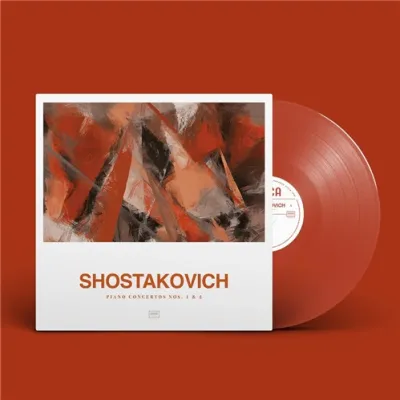

Prices are valid at publication and may change. Please refer to the product page for the latest price.
For those new to his style, the quality of the recording itself plays a massive role in how easily this music can be digested. Shostakovich was a master orchestrator who utilized the extreme limits of the orchestra, from the lowest growls of the contrabassoon to the highest shrieks of the piccolo, often punctuated by massive brass chorales and explosive percussion. Historical mono recordings from the mid-twentieth century, while documentarily valuable, often compress these dynamics, making the louder passages sound harsh and the quieter moments difficult to hear. Beginning your collection with modern stereo or digital recordings (often labeled DDD on CDs) allows you to experience the full, natural physical impact of these orchestral contrasts.
The interpretive style of the conductor is another crucial factor to consider. Some conductors emphasize the raw, chaotic, and theatrical elements of Shostakovich’s scores, which can sometimes result in an exhausting listening experience for beginners. Others take a more architectural, controlled approach, focusing on clean playing, precise tempos, and instrumental balance. For your first purchases, look for conductors who strike a sensible middle ground—interpreters who can deliver the necessary emotional punch without letting the orchestra devolve into unstructured noise.
Essential Symphony Recordings to Start Your Collection
The symphonies are the grand pillars of Shostakovich’s legacy, serving as musical diaries of his life and the turbulent times in which he lived. While some of his symphonies are highly experimental or deeply challenging, others possess a direct, cinematic narrative quality that makes them instantly gripping for a first-time listener.

Symphony No. 5: The Accessible Emotional Breakthrough
Symphony No. 5 in D minor, Op. 47, is widely considered the single best starting point for anyone exploring Shostakovich. Written in 1937 during the height of Stalin’s Great Purge, the composer was under immense pressure to write a work that would appease the Soviet authorities after his opera was publicly condemned. The resulting symphony is a masterpiece of structural clarity, featuring a traditional four-movement design filled with memorable melodies, intense drama, and a final movement that builds to a massive, brass-heavy climax. It is a work that operates on multiple levels, offering a thrilling symphonic journey on the surface while hiding a tense, psychological struggle underneath.
When looking for a benchmark recording of the Fifth Symphony, several outstanding options stand out for their exceptional sound quality and interpretive nuance. Vasily Petrenko conducting the Royal Liverpool Philharmonic Orchestra (released on Naxos) is highly recommended for beginners; the digital recording is exceptionally clean, offering a wide, detailed soundstage at an affordable price point. For a more opulent, structurally cohesive reading, Bernard Haitink’s recording with the Concertgebouw Orchestra (Decca) provides a beautifully balanced performance with rich, warm brass and impeccable string playing. If you prefer a high-voltage, intensely dramatic interpretation, Leonard Bernstein’s famous 1959 recording with the New York Philharmonic (Sony Classical) remains a historic reference that captures the raw excitement of the work, though the analog tape hiss is slightly more noticeable than on modern digital releases.
As you listen to this symphony, pay close attention to the contrast between the movements. The third movement (Largo) is a deeply moving, song-like lament where the brass instruments are completely silent, leaving the strings and woodwinds to create an atmosphere of quiet, heartbreaking intimacy. In the final movement, listen to the relentless, steady pounding of the timpani beneath the soaring brass chords in the final minutes. While some conductors play this ending as a straightforward, joyful victory, others slow the tempo down to emphasize a heavy, forced march, inviting you to decide whether the triumph is genuine or a simulated celebration under duress.
Symphony No. 10: The Psychological Masterpiece
Composed in 1953, shortly after the death of Joseph Stalin, Symphony No. 10 in E minor, Op. 93, is regarded by many music critics as Shostakovich’s finest symphonic achievement. It is a deeply personal work that feels like a profound sigh of relief after decades of living in fear. The symphony is tightly structured and highly cohesive, taking the listener on a dark, psychological journey from a brooding, expansive opening movement to a wild, celebratory conclusion.
For a beginner-friendly recommendation, Herbert von Karajan’s 1981 digital recording with the Berlin Philharmonic (Deutsche Grammophon) is an absolute masterpiece of orchestral execution. Karajan and his Berlin players deliver a performance of terrifying precision, with incredibly lush string textures and a relentless, driving energy that keeps you on the edge of your seat. For those who want to experience the raw, authentic Russian orchestral sound, Evgeny Mravinsky’s recordings with the Leningrad Philharmonic (Melodiya) offer unmatched historical authority, though the older analog sound quality requires a bit more tolerance from the listener.
A key element to track throughout this symphony is the “DSCH” motif, a four-note musical sequence (D, E-flat, C, B-natural) that corresponds to the composer’s initials in German musical notation. Shostakovich uses this motif as a musical signature, asserting his personal identity against the forces of oppression. Listen for how this short, sharp theme is introduced quietly in the third movement and then blasted triumphantly by the entire brass section in the final movement, ultimately conquering the dark, brooding themes that dominated the earlier parts of the symphony.
Symphony No. 7 "Leningrad": The Historical Epic
Symphony No. 7 in C major, Op. 60, subtitled “Leningrad,” is Shostakovich’s most famous historical monument. Written in 1941 during the brutal Nazi siege of the city, the symphony was composed amidst the sounds of falling bombs and artillery fire. It quickly became a global symbol of heroic resistance, with the score being microfilmed and flown across enemy lines to be performed in London and New York. Because of its massive scale and historical significance, it remains an essential experience for any classical music collector.
The defining feature of the first movement is the famous “invasion theme.” Starting as a quiet, innocent tune played by the violins over a soft, repetitive snare drum rhythm, the theme repeats twelve times, gradually accumulating instruments, volume, and dissonance until it transforms into a terrifying, mechanical wall of sound. This long, steady buildup requires immense control from the conductor; if the tempo drags or the volume peaks too early, the movement can lose its terrifying momentum.
To fully appreciate the massive acoustic scale of the “Leningrad” Symphony, beginners should look for modern digital recordings that can handle the enormous dynamic swings without distortion. Paavo Järvi conducting the Russian National Orchestra (Pentatone) is an excellent choice, captured in high-resolution multi-channel sound that places you right in the middle of the concert hall. Valery Gergiev with the Mariinsky Orchestra (Mariinsky) also delivers a reading filled with authentic, heavy brass power and dramatic tension. Avoid older, historical live recordings for your first listen, as poor microphone technology and audience noise can easily ruin the quiet, suspenseful moments of the invasion theme’s long buildup.
Beyond Symphonies: Essential Concertos and Chamber Music
While Shostakovich’s symphonies are monumental public statements, his concertos and chamber works offer a more intimate, direct look into his musical personality. These smaller-scale pieces are often highly lyrical, rhythmically exciting, and deeply moving, making them excellent entry points for listeners who prefer solo instruments or chamber ensembles.
Cello Concerto No. 1 and Piano Concerto No. 2
If you enjoy the thrilling interplay between a solo virtuoso and a full orchestra, Shostakovich’s concertos are incredibly rewarding. His Cello Concerto No. 1 in E-flat major, Op. 107, written in 1959 for the legendary cellist Mstislav Rostropovich, is a tour de force of rhythmic drive and athletic solo playing. The work opens with a memorable, snappy four-note motif that returns throughout the piece, driving the music forward with relentless energy. Rostropovich’s historical recording with Eugene Ormandy and the Philadelphia Orchestra (Sony Classical) remains the gold standard for its raw, physical intensity, but modern digital recordings like Alisa Weilerstein with the Bavarian Radio Symphony Orchestra (Decca) offer a stunningly clear, detailed alternative that highlights every nuance of the cello’s voice.
In complete contrast, the Piano Concerto No. 2 in F major, Op. 102, is one of the most cheerful, lighthearted, and optimistic works Shostakovich ever wrote. Composed in 1957 as a 19th birthday present for his son, Maxim, the concerto is filled with youthful energy, playful rhythms, and sparkling piano passagework. The second movement (Andante) is particularly famous for its breathtakingly beautiful, romantic melody, which feels like a warm, sunlit oasis in the midst of Shostakovich’s otherwise stormy catalog. Excellent, high-energy recordings can be found featuring Dmitri Alexeev with the English Chamber Orchestra (Classics for Pleasure) or Leonard Bernstein conducting from the keyboard with the New York Philharmonic (Sony Classical).
When shopping for these works on physical media, it is highly beneficial to check the album’s coupling. Because these concertos are relatively short, record labels frequently pair them together on a single CD or vinyl release, or bundle them with his other concertos. Purchasing an album that features both the driving, aggressive Cello Concerto No. 1 and the lyrical, joyful Piano Concerto No. 2 provides a fantastic, cost-effective way to experience the two extreme sides of Shostakovich’s musical personality on a single disc.
String Quartet No. 8: Intimate and Haunting
For those who appreciate the quiet intensity of chamber music, String Quartet No. 8 in C minor, Op. 110, is an absolute masterpiece that every music lover should own. Written in just three days in 1960 during a visit to the war-ravaged city of Dresden, Germany, the quartet is a deeply personal, autobiographical work. Although officially dedicated “to the victims of fascism and war,” Shostakovich privately admitted to friends that he wrote the piece as a self-elegy, believing his life was coming to an end. The work is saturated with his personal DSCH motif and quotes heavily from his own previous symphonies, operas, and concertos, creating a haunting, circular narrative.
To experience the raw, emotional core of this work, the historical recordings by the Borodin Quartet (available on Decca or Melodiya) are legendary, as the ensemble worked closely with the composer himself and captured the unique, mournful character of the Russian string style. For a modern recording with immaculate technical precision and superb spatial imaging, the Emerson String Quartet’s complete cycle (Deutsche Grammophon) or the Ébène Quartet (Erato) offer incredible clarity, allowing you to hear the precise scraping of the bow and the subtle breathing of the players.
Because of the delicate, transparent nature of a string quartet, this work is best experienced in a quiet, distraction-free listening environment. The stark contrasts between the weeping, slow outer movements and the screeching, violent middle movements benefit immensely from a high-quality pair of headphones or a well-positioned stereo system, allowing you to appreciate the subtle shifts in dynamics and the profound silence that lies between the notes.
What to Verify Before Buying Classical CDs and Vinyl
Collecting classical music on physical media is a highly rewarding hobby, but it requires a bit more scrutiny than buying standard pop or rock albums. Because classical works are recorded repeatedly by different artists, orchestras, and labels over many decades, a single symphony might have dozens of different editions available on the market. To ensure you get the best possible listening experience, keep the following verification steps in mind before making a purchase.
- Version and Remastering: Always check the original recording date and the remastering details on the back cover of the CD or vinyl jacket. A recording made in the 1960s might be reissued today, but its sound quality will depend heavily on the quality of the transfer. Look for reputable remastering series, such as Deutsche Grammophon's "Originals" series or Decca's "Legends" series, which utilize advanced digital technologies to reduce tape hiss and expand the soundstage without altering the warmth of the original analog performance.
- Media Format and Compatibility: If you are purchasing vinyl, pay close attention to the weight of the record and the reputation of the pressing plant. Classical music features extreme dynamic swings, meaning a single LP might contain incredibly quiet, delicate passages followed by sudden, explosive orchestral climaxes. High-quality 180-gram audiophile pressings from plants like Optimal Media or Pallas are highly recommended, as they offer a much lower noise floor, ensuring that distracting surface noise, pops, and clicks do not ruin the quiet moments of the music. Additionally, ensure your turntable cartridge is properly aligned and capable of tracking wide dynamic swings without introducing inner-groove distortion during loud finales.
- Content Completeness and Labeling: Classical tracklists can sometimes be confusing or misleading. Before buying, verify that the album contains the complete work and matches the correct Opus (Op.) number. Budget compilation albums or "best of" releases sometimes include only single movements of a symphony, which completely ruins the narrative flow of Shostakovich's carefully structured works. Furthermore, when buying vinyl, check if a long symphony has been split across multiple sides or discs, as having to flip the record mid-movement can disrupt your immersion.
- Region and Import Restrictions: When purchasing imported CDs, vinyl, or box sets in Singapore, be mindful of potential regional restrictions on any accompanying media. While standard audio CDs and vinyl records are globally compatible, deluxe box sets often include bonus DVD or Blu-ray discs containing documentaries, concert footage, or high-resolution audio mixes. Always verify that these companion discs are region-free (Region 0 or Region All) or compatible with your local playback equipment to avoid disappointment.
Frequently Asked Questions (FAQ)
Should I choose CD or vinyl for Shostakovich's large orchestral works?
For Shostakovich’s massive, highly dynamic symphonies, compact discs (CDs) or high-resolution digital formats are generally the superior choice. CDs offer a wider dynamic range and a completely silent background, which is essential for preserving the dramatic contrast between near-silent string passages and thunderous brass climaxes. While vinyl offers a warm, tactile collecting experience, the physical limitations of the format can sometimes lead to inner-groove distortion during loud, complex orchestral finales, and surface noise can easily distract from the quiet, tense moments of his music.
Are historical mono recordings necessary for a beginner?
No, historical mono recordings are not necessary when you are first starting your Shostakovich collection. While historical recordings by legendary Russian conductors like Evgeny Mravinsky carry immense artistic authority and provide valuable historical context, their restricted frequency range and lack of stereo separation can make the dense, complex orchestration sound muddy or harsh to unfamiliar eyes. It is highly recommended to start with modern stereo or digital recordings to fully appreciate the rich colors and spatial depth of his orchestration, saving historical mono releases for later study once you are familiar with the music.
Community discussion
Share your experience or ask a question. Comments are reviewed before publication.