
Selecting the ideal speakers from TC Acoustic’s distributed lineup for a home karaoke setup in Singapore requires a systematic evaluation of your physical space, budget, and technical requirements. High-density living in HDB flats and condominiums imposes unique acoustic and neighborly constraints, meaning choosing the right speaker is not simply about finding the loudest option. Instead, the goal is to identify a system that delivers exceptional vocal clarity, low latency, and manageable bass response. By matching driver sizes, power ratings, and connectivity options to your specific room layout, you can create a high-performing KTV experience right in your living room or bedroom.
TC Acoustic distributes several premium audio brands in Singapore, offering a wide range of active and passive speaker configurations. Navigating this selection involves understanding how physical speaker specifications translate to real-world performance in typical local homes. Whether you are setting up a compact system in a study room or a powerful multi-speaker arrangement in a landed property’s basement, verifying the physical and electrical attributes of your equipment before purchasing ensures a seamless integration with your microphones and mixers.
Assessing Your Space and Budget for Home Karaoke
Before examining specific speaker specifications, you must define the physical constraints of your singing environment and establish a realistic budget. In Singapore, residential layouts vary significantly, and each presents distinct acoustic challenges. A standard HDB bedroom, typically measuring between 9 and 12 square meters, has limited physical space and thin walls that easily transmit sound. An open-plan condominium living room, which often merges with the dining area, offers a larger volume of air to fill but features hard surfaces like glass sliding doors that can cause harsh sound reflections. Dedicated entertainment rooms in landed properties provide the most freedom but still require careful planning to optimize sound coverage.
Products mentioned in this guide
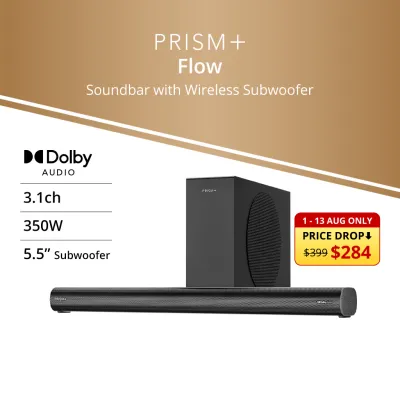
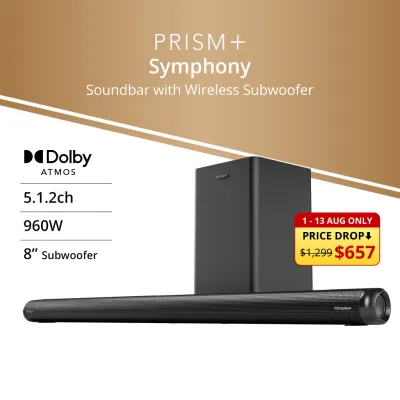
Prices are valid at publication and may change. Please refer to the product page for the latest price.
Establishing a clear budget helps narrow down your choices across the different tiers of speakers distributed by TC Acoustic. An entry-level setup, costing between S$400 and S$800, generally relies on compact active speakers that keep hardware clutter to a minimum. A mid-range budget of S$800 to S$1,800 allows you to explore larger active monitors or high-quality bookshelf speakers paired with a dedicated analog mixer. If you are willing to invest S$2,000 or more, you can access premium passive speaker arrays, dedicated external power amplifiers, and advanced digital signal processors that replicate the acoustic depth of a professional commercial KTV lounge.
One of the most critical decisions you will make is choosing between active (powered) and passive speaker architectures. Active speakers feature built-in amplifiers specifically tuned to the drivers inside the cabinet. This integrated design simplifies your setup, eliminates the need for bulky external amplifiers, and reduces the risk of damaging your speakers through power mismatches. Passive speakers, on the other hand, do not have built-in amplification and must be powered by an external amplifier or receiver. While passive systems require more technical knowledge to configure and demand careful impedance matching, they offer greater long-term flexibility, allowing you to upgrade your amplifier or speakers independently as your needs evolve.
Regardless of the architecture you choose, your primary objective should be vocal clarity and adequate headroom rather than maximum volume. Human vocals are highly dynamic, featuring sudden peaks in volume when a singer hits a high note or increases their projection. If your speaker system lacks sufficient headroom—the safety margin between normal operating levels and the point of distortion—these vocal peaks will cause harsh clipping, which can ruin the performance and potentially damage your speaker’s high-frequency drivers. A system with clean headroom ensures that vocals remain natural, warm, and articulate, even during the most passionate performances.
Matching Speaker Specifications to Your Room Size
To select the most appropriate speakers from the TC Acoustic distribution catalog, you must match the physical and electrical specifications of the drivers to the dimensions of your room.

Compact Setups (8-inch to 10-inch woofers): For smaller spaces such as HDB bedrooms, study rooms, or enclosed home offices, speakers with 8-inch to 10-inch woofers are highly effective. These smaller cabinets are easy to position on bookshelves, desks, or compact stands, making them ideal for tight spaces. They excel at near-field vocal projection, delivering clear and immediate mid-range frequencies directly to the performer. Because smaller woofers do not produce deep, room-shaking bass, they are inherently easier to manage in small, untreated rooms where low-frequency sound waves can easily bounce off walls and create a muddy, boomy sound.
Mid-Sized Setups (10-inch to 12-inch woofers): The standard choice for the majority of Singaporean living rooms is a speaker system utilizing 10-inch to 12-inch woofers. This driver size strikes an excellent balance between low-frequency reproduction and vocal clarity. The larger surface area of a 10-inch or 12-inch woofer allows it to reproduce the backing tracks of your favorite songs with satisfying depth and punch, while still maintaining a dedicated, clean midrange for vocals. These speakers are capable of projecting sound evenly across a typical 20 to 35 square meter living area without requiring you to push the volume levels to their absolute limits.
Large Setups (12-inch+ or dual-woofer configurations): If you are configuring a dedicated media room, a large open-plan living-dining area, or a spacious basement in a landed home, you should look for speakers with 12-inch or larger woofers, or systems featuring dual-woofer configurations. These large-format systems are engineered to deliver high sound pressure levels (SPL) and wide horizontal dispersion. They provide a massive dynamic range and deep, resonant bass that can fill expansive spaces with ease. However, because these systems move a significant amount of air, they must be paired with proper acoustic treatment to prevent chaotic room reflections from washing out the vocals.
Reading the Spec Sheet: When evaluating potential speakers, it is vital to understand how to read the manufacturer’s specification sheet. Always focus on the RMS (Root Mean Square) power rating, which represents the continuous power the speaker can handle or produce safely over extended periods. Ignore “Peak” or “Max” power ratings, as these are often inflated marketing figures that only indicate what the speaker can withstand for a fraction of a second before sustaining permanent damage. If you are opting for a passive setup, you must also verify the nominal impedance—usually rated at 4, 6, or 8 ohms. Your external amplifier must be rated to deliver its power safely into that specific impedance load; pairing a low-impedance speaker with an incompatible amplifier can cause the amplifier to overheat and trigger its thermal protection circuits.
Verification Check: Because product lineups and brand distributions can change over time, always cross-reference these physical and electrical specifications with the current official TC Acoustic catalog. Look for models within their distributed brands—such as Klipsch, Sonos, or Marshall—that align with these woofer sizes and power requirements to ensure you are purchasing a system optimized for your room’s physical dimensions.
Essential Connectivity and Features to Verify
Integrating your chosen speakers into a functional home karaoke system requires a thorough inspection of the input, output, and processing features available on the hardware.
Input Interfaces: Traditional consumer audio speakers often feature limited input options, but a dedicated karaoke setup requires robust analog connectivity. When selecting your speakers, check for the presence of XLR or 1/4-inch TRS balanced inputs. Balanced connections are highly recommended for karaoke because they utilize a three-conductor cable design that actively cancels out external electromagnetic interference and radio frequency noise. This is especially important if you are running long cables from a mixer to your speakers. If your setup relies on a consumer-grade karaoke machine or a standard home theater receiver, ensure the speakers also offer unbalanced RCA inputs or an optical (Toslink) digital input for straightforward, plug-and-play compatibility.
Wireless and Streaming: Many modern active speakers distributed by TC Acoustic come equipped with advanced wireless capabilities, including Bluetooth and Wi-Fi streaming. While wireless streaming is incredibly convenient for playing background music or casting karaoke videos from a tablet or smart TV, it introduces a critical challenge: latency. Wireless audio transmission involves compressing and decompressing digital signals, which creates a slight delay between the moment you sing into the microphone and the moment the sound exits the speakers. Even a tiny latency of 30 to 50 milliseconds can be highly disorienting to a singer, making it difficult to stay on beat. For this reason, always use wired analog connections for the vocal signal path (microphone to mixer to speaker), reserving wireless connections strictly for non-critical background music playback.
Built-in DSP and Effects: High-quality active speakers often feature integrated digital signal processing (DSP) engines that can greatly simplify your karaoke chain. When reviewing speaker specifications, look for features such as multi-band parametric equalization (EQ), automatic feedback suppression, and built-in vocal effects like reverb or delay. Onboard EQ allows you to adjust the speaker’s frequency response to compensate for the acoustic deficiencies of your room, such as taming boomy bass or boosting clear vocal frequencies. Automatic feedback suppression is another invaluable tool; it continuously monitors the audio signal and applies narrow notch filters to cut ringing frequencies before they escalate into painful feedback squeals. Having these features built directly into the speaker cabinet can eliminate the need for complex, expensive external processors.
Pre-Purchase Verification: Before making a final purchasing decision, download the official user manual or product specification sheet directly from the manufacturer’s website. Carefully verify the exact physical port layout, the supported wireless audio codecs (such as aptX, AAC, or LDAC for high-quality Bluetooth transmission), and whether the speaker supports firmware updates via a dedicated mobile app or USB connection. This proactive step ensures that the physical hardware you receive is fully compatible with your existing microphones, mixers, and media players, preventing frustrating compatibility issues during setup.
Setup and Noise Management for Singapore Homes
Once you have selected the right speakers, proper installation and acoustic management are essential to achieving great sound quality while maintaining harmony with your neighbors in high-density Singapore estates.
Speaker Placement: Correct physical placement is one of the most effective ways to maximize vocal clarity without needing to increase the overall volume. Position your speakers so that the high-frequency drivers (tweeters) are positioned at ear level when you are standing or sitting in your primary singing spot. Angle the speakers slightly inward toward the center of the room—a technique known as “toe-in.” Because high frequencies are highly directional, this alignment ensures that the critical details of your voice travel directly to your ears, rather than bouncing off side walls and creating muddy acoustic reflections that degrade vocal intelligibility.
Noise and Vibration Control: In HDB flats and condominiums, structural noise transmission is a common source of neighbor complaints. Low-frequency sound waves from bass drums and bass guitars travel easily through concrete floors and shared walls. To prevent this, you must decouple your speakers from the building’s structure. Place your speakers on high-density acoustic isolation pads made of foam or rubber, or mount them on sturdy speaker stands equipped with decoupling isolation spikes. These accessories absorb mechanical vibrations before they can transfer into your floors or walls, allowing you to enjoy a full, rich sound inside your home while keeping the acoustic transfer to adjacent units to an absolute minimum.
Power and Safety: Singapore’s electrical grid operates on a nominal mains voltage of 230V at a frequency of 50Hz, utilizing the Type G three-pin plug standard. Always confirm that any active speakers or external amplifiers you purchase are rated to operate safely under these electrical standards. To safeguard your sensitive audio electronics from sudden voltage spikes, electrical noise, or lightning-induced power surges, always connect your karaoke equipment to a high-quality surge protector or power conditioner rather than plugging them directly into a wall outlet or chaining multiple cheap extension cords together.
Volume Management: You can make your karaoke setup sound perceptually louder, clearer, and more immersive at lower physical volume levels by addressing your room’s internal acoustics. Hard, reflective surfaces such as tiled floors, concrete walls, and large glass windows reflect sound waves back into the room, creating a chaotic echo chamber. This acoustic clutter forces you to raise the volume to hear your voice clearly over the reflections. To tame these reflections, introduce soft, sound-absorbing materials into the space. Hanging heavy blackout curtains over windows, placing a thick fabric rug on the floor, and adding fabric-upholstered furniture will absorb excess high-frequency reflections. This simple acoustic treatment results in a much cleaner, tighter vocal mix, allowing you to sing comfortably at neighbor-friendly volume levels.
Frequently Asked Questions (FAQ)
Do I need a separate mixer or amplifier for TC Acoustic karaoke speakers?
Whether you require additional hardware depends entirely on whether you choose active or passive speakers from the TC Acoustic distribution lineup. Active (powered) speakers feature built-in amplifiers, so you do not need an external power amplifier to drive them. However, you will still typically need a small karaoke mixer or a microphone preamplifier. This device is necessary to combine your vocal microphone signals with the background music track and adjust their relative volume levels before sending the unified audio signal to the active speakers. If you choose passive speakers, you must purchase a separate external power amplifier. This amplifier must be carefully matched to the impedance of your speakers (usually 8 ohms) and should deliver an RMS power output that meets or slightly exceeds the speakers’ continuous power rating to ensure clean, distortion-free performance.
How can I prevent audio feedback in a small room?
Audio feedback is the loud, high-pitched squeal that occurs when a microphone picks up its own amplified sound from a speaker and re-amplifies it in a continuous loop. In small rooms, this issue is amplified due to the close proximity of the equipment. To prevent feedback, always position your microphones behind the physical plane of the speakers, ensuring the sound projects away from the microphone’s sensitive capsule. Never point a live microphone directly at a speaker’s tweeter. Additionally, choose microphones with a cardioid or supercardioid polar pattern, which are designed to reject sound coming from the rear and sides. Finally, use your mixer’s built-in equalizer to slightly reduce the high-mid frequencies (typically between 2 kHz and 5 kHz) where feedback most commonly occurs, or utilize the speaker’s automatic feedback suppression features if available.
Community discussion
Share your experience or ask a question. Comments are reviewed before publication.