
Practicing the drums in a high-density residential environment like Singapore is a constant balancing act between musical passion and neighborly peace. To prevent low-frequency vibrations from traveling through structural concrete floors, investing in a dedicated soundproof thick mat is the most effective first step a drummer can take. These specialized mats are engineered to decouple your drum kit from the building’s structure, absorbing the kinetic energy generated by your pedals and sticks before it can radiate into adjacent living spaces.
While electronic drum kits are often marketed as quiet alternatives to acoustic setups, the physical impact of the kick pedal and hi-hat controller still transmits substantial mechanical energy directly into the floor. In a typical Singaporean home, this energy manifests as a dull, repetitive thudding sound in the room below, which can easily disrupt your neighbors. By understanding how sound travels through residential structures and selecting a high-quality soundproof thick mat designed specifically for percussion, you can create a quiet, stable practice environment that respects your community.
The Reality of Drum Noise in Singapore Homes
To address drum noise effectively, you must first distinguish between airborne noise and structure-borne noise. Airborne noise consists of the high-frequency and mid-frequency sound waves that travel through the air, such as the bright ring of a cymbal, the sharp crack of a snare drum, or the click of plastic beaters hitting electronic mesh heads. While airborne noise can be muffled by closing windows, sealing door gaps, or hanging heavy curtains, it is only half of the acoustic equation that home drummers must solve.
Products mentioned in this guide
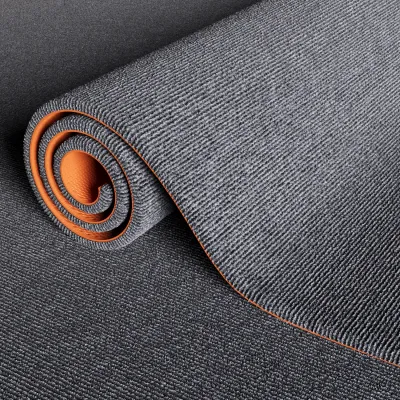
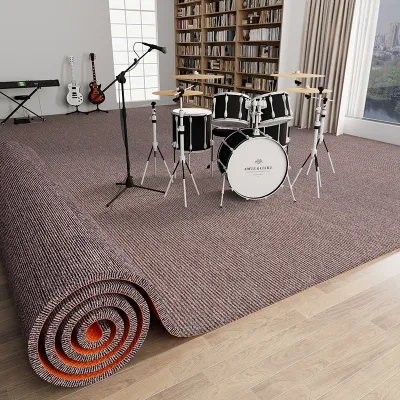
Prices are valid at publication and may change. Please refer to the product page for the latest price.
Structure-borne noise, on the other hand, is the vibrational energy created by physical impacts. When your foot strikes the kick drum pedal or your stick hits a pad, that kinetic energy travels down the stand or pedal assembly and directly into the floor. This energy turns the floor itself into a massive speaker cone, radiating low-frequency vibrations throughout the building. Because low frequencies carry immense physical energy, they can travel through solid structures over surprising distances, affecting neighbors several floors away.
In Singapore, the vast majority of residential units in Housing & Development Board (HDB) blocks and private condominiums are constructed using reinforced concrete slabs. While concrete is an exceptionally strong and durable building material, its high density makes it an incredibly efficient medium for transmitting structural vibrations. Unlike timber-framed buildings that naturally dampen some high-frequency impacts, a solid concrete floor slab acts as a direct highway for the low-frequency energy of a drum kit, carrying the sound of your practice sessions straight into the bedrooms and living rooms of your neighbors.
This structural reality is why standard household floor coverings like thin decorative carpets, woven rugs, or standard yoga mats are entirely insufficient for drum practice. These materials are designed for comfort underfoot or minor slip resistance, not acoustic isolation. Under the heavy weight of a drum throne, hardware stands, and the repetitive high-velocity impact of your feet, these thin materials compress completely. Once compressed, they lose whatever minimal cushioning properties they had, allowing vibrational energy to pass directly into the concrete floor slab without any resistance.
What Makes a Soundproof Thick Mat Effective for Drums?
When evaluating options for a soundproof thick mat, thickness alone is not a reliable indicator of performance. A common mistake is choosing a very thick but soft material, such as a 20mm thick low-density foam play mat. While this might feel soft to walk on, the heavy, concentrated weight of drum hardware and the force of your kick pedal will quickly bottom out the foam, rendering it useless for soundproofing. Instead, you must look at the relationship between thickness and density.

Density, typically measured in kilograms per cubic meter, determines how well a material can resist compression while absorbing energy. A high-density 10mm rubber mat will outperform a 20mm soft foam mat because the rubber retains its structural integrity under load. The ideal mat must be dense enough to support the heavy, pointed legs of your drum hardware without letting them sink to the floor, while remaining elastic enough to deform slightly under impact, converting kinetic vibrational energy into harmless trace heat.
Different materials handle these acoustic forces in distinct ways, and a high-performance soundproof thick mat often utilizes a combination of the following layers:
- High-Density Recycled Rubber: Excellent for stability, durability, and high-frequency dampening, though it requires significant mass to stop low-frequency vibrations.
- Closed-Cell EVA Foam: Provides lightweight cushioning and decent shock absorption, but can degrade or permanently compress over years of heavy use.
- Mass-Loaded Vinyl (MLV): A thin, extremely dense limp-mass barrier that is highly effective at blocking both airborne sound and low-frequency vibration transmission.
- Open-Cell Acoustic Foam or Felt: Often used as a decoupling middle layer to trap airborne reflections and prevent resonance between the mat and the hard floor.
Beyond material composition, the overall footprint and coverage of your mat play a critical role in noise reduction. The mat must be large enough to accommodate your entire drum setup, including the drum throne. Many drummers overlook the throne, assuming that because they do not strike it, it does not contribute to floor noise. However, your body weight is coupled to the throne, and as you play, your shifting weight and foot movements transfer significant kinetic energy down the throne legs. If the throne sits directly on the bare floor while the drums are on a mat, you create a direct path for vibration to bypass your acoustic isolation entirely.
Recommended Mat Types for Home Drum Practice
To choose the right isolation setup for your Singapore home, you must weigh the performance, durability, and practical limitations of different mat categories. Each type addresses structure-borne vibration through different mechanical principles.
High-Density Rubber Drum Mats
High-density rubber mats, often constructed from recycled tire crumb rubber, serve as the industry baseline for drum isolation. These mats are incredibly durable, easily resisting the sharp metal spikes of kick drum spurs and the heavy, pointed feet of double-braced hardware stands. They provide an exceptionally high-grip surface, ensuring that your kick drum and hi-hat stand do not slide away from you during intense practice sessions, which is a common frustration on polished tile or laminate flooring.
While a thick rubber mat (typically ranging from 5mm to 10mm) is excellent at dampening high-frequency metallic rattles and light stick impacts, its ability to isolate low-frequency vibrations on its own is limited. Because rubber is highly dense, it still possesses a degree of rigidity that can allow very low-frequency thuds from a heavy acoustic kick drum to pass through to the concrete floor. However, for electronic drum kits with mesh heads or as a protective, non-slip base layer for a more advanced multi-layer setup, a high-density rubber mat is an indispensable component.
Multi-Layered EVA Foam and Carpet Composites
Multi-layered mats, which often feature a soft carpet top surface bonded to a dense ethylene-vinyl acetate (EVA) foam or rubberized underlay, offer a more balanced approach to home soundproofing. These mats are frequently sold as interlocking puzzle tiles or roll-up utility mats, making them easy to customize to the exact dimensions of your drum kit and room layout. The carpeted top layer provides excellent traction for your pedals and stands, while the foam backing offers a thicker, more compliant cushion to absorb impact energy.
Pros and Cons of Composite Mats
- Pros: They are lightweight, comfortable to stand on, easy to transport, and highly effective at absorbing mid-to-high frequency airborne reflections within your practice room.
- Cons: Over time, the constant, heavy pressure from your drum throne and kick pedal will cause the EVA foam layer to compress permanently in high-wear areas, reducing its long-term isolation performance. Additionally, because EVA foam is relatively light, it lacks the sheer mass required to block deep, low-frequency vibrations from heavy acoustic bass drums.
These composite mats are highly suited for budget-conscious drummers using electronic kits, or as a secondary comfort layer placed on top of a heavier, denser rubber base mat.
Drum Risers and Isolation Platforms
For drummers playing acoustic kits or practicing with heavy double-kick pedals in HDB flats, standard floor mats may not provide enough isolation to keep the peace. In these high-impact scenarios, a dedicated drum riser or isolation platform is the ultimate structural solution. These systems work on the principle of complete mechanical decoupling, creating a physical air gap between the drum kit and the structural floor of your building.
Commercial isolation platforms utilize specialized elastomeric dampeners, rubber isolation feet, or air-cushioned chambers suspended between two rigid panels to float the entire drum kit. Alternatively, many Singaporean drummers construct highly effective DIY risers using a layered sandwich design. This typically involves placing a high-density rubber mat on the floor, followed by a layer of tennis balls or industrial vibration-damping pads, topped with a sturdy sheet of medium-density fibreboard (MDF) or plywood, and finished with a non-slip carpet. By breaking the direct physical connection to the floor, these platforms prevent low-frequency impact energy from ever reaching the concrete slab, making them the most effective defense against neighbor complaints.
Maximizing Noise Reduction: Setup and Layering Tips
Simply purchasing a soundproof thick mat is only part of the solution; how you install and configure your practice space will heavily influence the actual noise reduction you achieve. To get the maximum performance out of your acoustic treatment, you must prevent the drum kit’s energy from finding alternative paths into your home’s structure.
First, always observe the “Air Gap Rule” when positioning your drum kit and mat. Ensure that no part of your drum kit, hardware, throne, or the isolation mat itself makes direct contact with the walls of your room. If your mat or a cymbal stand rests tightly against a concrete wall, the vibrational energy will bypass the floor isolation and travel directly into the wall, a phenomenon known as flanking transmission. Keeping a clear gap of at least 5 to 10 centimeters between your setup and the walls ensures that all kinetic energy must pass through your primary floor isolation mat.
Second, pay special attention to your kick drum pedal and spurs, as this area represents the single highest point of impact on your entire kit. Even with a high-quality mat, the concentrated force of a heavy bass drum beater can overwhelm a single layer of material. Consider adding a dedicated, smaller isolation pad or a thick piece of high-density neoprene rubber directly beneath the kick pedal assembly and the bass drum spurs. This targeted, double-layer approach provides extra cushioning right where the impact energy is most intense, preventing the spurs from digging through the mat and contacting the hard floor.
Finally, the most effective home soundproofing setups rely on a smart layering strategy rather than a single material. By combining materials of different densities and elastic properties, you can target a much wider range of frequencies. A highly effective, low-risk layering recipe for a Singapore home practice space includes:
- Bottom Layer: A 5mm to 10mm high-density recycled rubber mat to protect your flooring, provide a stable base, and dampen high-frequency vibrations.
- Middle Layer: A sheet of 2mm to 3mm mass-loaded vinyl (MLV) to act as a high-density acoustic barrier against low-frequency thuds.
- Top Layer: A durable, tight-weave utility carpet or a specialized drum mat with a non-slip backing to secure your hardware, absorb airborne reflections, and provide a comfortable playing surface.
Pre-Purchase Checklist for Singapore Drummers
Before you purchase a soundproof thick mat, take the time to run through these critical checks to ensure the product is compatible with your home, your health, and your specific drum hardware.
Space Measurement and Room Layout
Begin by fully assembling your drum kit exactly how you prefer to play, including your drum throne in its most extended position. Measure the maximum width and depth of your setup’s footprint, adding at least 15 to 20 centimeters of clearance on all sides to ensure no hardware legs hang off the edge of the mat. Additionally, measure the clearance of your practice room door. Thick mats or multi-layered platforms can raise the height of your setup significantly, which may block the swing of inward-opening doors or conflict with low-hanging light fixtures and ceiling fans common in modern HDB flats.
Off-Gassing and Odor Considerations
Many high-density industrial rubber mats, particularly budget-friendly options designed for outdoor gyms or agricultural use, release strong volatile organic compounds (VOCs) known as off-gassing. In Singapore’s hot, humid climate, these chemical odors can quickly become overwhelming when trapped inside an enclosed, air-conditioned bedroom or study. When shopping, look for mats certified as low-VOC or specifically marketed for indoor residential use. If you do purchase a mat with a strong rubber smell, plan to let it air out on a balcony or service yard for several days before bringing it into your living space.
Floor Compatibility and Protection
Before laying down any heavy rubber or composite mat, verify the manufacturer’s care instructions for your specific home flooring. Certain raw rubber compounds contain plasticizers that can chemically react with vinyl, laminate, or engineered wood floors over time, leaving permanent dark stains or causing the flooring adhesive to degrade. If you have these sensitive floor types, always check if your floor manufacturer recommends a protective, non-reactive underlayment (such as a thin polyester felt or a specialized silicone barrier) to place between your hardwood or vinyl floor and your new soundproof thick mat.
Frequently Asked Questions (FAQ)
Will a thick mat completely silence my acoustic drums in an HDB?
No, a thick mat will not completely silence an acoustic drum kit. Soundproof mats are designed primarily to address structure-borne impact noise, such as the physical vibrations of your pedals traveling through the floor slabs. They do not block high-frequency airborne noise, meaning the loud acoustic crack of your snare drum and the bright wash of your cymbals will still travel freely through the air, vibrating your room’s windows, doors, and walls. To achieve true silence in an HDB flat, you must combine a high-density floor mat with comprehensive room-in-a-room acoustic treatments, or transition to low-volume mesh drumheads and low-volume practice cymbals.
Can I just use thick gym floor mats for my drum kit?
While thick gym floor mats are readily available and highly durable, they are generally not ideal as a primary drum isolation solution. Gym mats are engineered for heavy shock absorption—such as dropping loaded barbells—and are often made of highly compressed, rigid rubber that lacks the specific elasticity needed to decouple delicate, continuous acoustic vibrations. Furthermore, because gym mats are designed to cushion high-impact drops, they can be overly spongy or uneven, which may cause your heavy drum hardware to wobble, tilt, or slide during play. For the best results, look for mats specifically engineered for acoustic decoupling or build a dedicated multi-layered platform.
Community discussion
Share your experience or ask a question. Comments are reviewed before publication.