
Choosing your first set of ukulele strings can feel overwhelming, especially with the wide variety of materials, sizes, and tensions available on the market. For beginners in Singapore, this choice is even more critical because the local tropical climate, characterized by high humidity and warmth, directly impacts how strings behave, stretch, and hold their tune. The right set of strings will not only make your instrument sound warm and vibrant but will also feel comfortable under your fingertips, reducing the physical fatigue that often discourages new players during their first few weeks of practice.
To find the ideal strings, you must match them to your specific ukulele type, understand how different materials interact with your fingers, and learn how to care for them in a humid environment. Whether you play a tiny soprano or a larger tenor, selecting beginner-friendly strings involves balancing comfort, durability, and ease of tuning. By focusing on observable characteristics and practical verification steps, you can confidently select a set that supports your learning journey and keeps your ukulele sounding its best.
How to Choose Beginner-Friendly Ukulele Strings
The first and most critical step in choosing ukulele strings is matching the string set to the scale length of your instrument. Ukuleles come in four primary sizes: soprano, concert, tenor, and baritone. Each size has a different scale length, which is the distance from the nut to the bridge. If you attempt to install soprano strings on a tenor ukulele, the strings will be too short to reach the tuning pegs, or they will be stretched to an extreme tension that risks snapping the string or warping the instrument. Conversely, putting tenor strings on a soprano ukulele results in loose, floppy strings that cannot hold their pitch and produce a muddy, out-of-tune sound. Always check your ukulele’s size before purchasing and verify that the string packaging explicitly matches that size.
Products mentioned in this guide
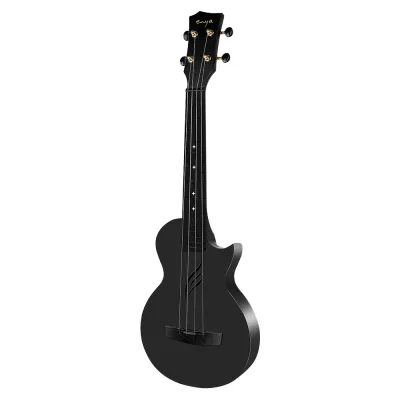
Prices are valid at publication and may change. Please refer to the product page for the latest price.
For a beginner, finger comfort is paramount. When you first start learning chords, your fingertips have not yet developed the protective calluses that seasoned players rely on. This makes the physical texture and hardness of the strings highly influential to your practice habits. Strings that are too stiff or rough can cause discomfort, leading to shorter practice sessions and slower progress. Lighter-tension strings are generally preferred for beginners because they require less downward pressure to fret cleanly against the fingerboard. This ease of fretting allows you to focus on proper finger placement and chord transitions without struggling against excessive physical resistance.
String tension is determined by both the material composition and the gauge, which refers to the thickness of the strings. Lighter-gauge strings have a thinner profile and lower tension, making them highly responsive to a gentle touch. While they may produce slightly less volume than heavy-gauge strings, their playability makes them the ideal starting point for novices. As you gain finger strength and dexterity, you can experiment with medium or high-tension strings if you desire a louder, punchier projection. For now, prioritizing a low-fatigue playing experience will keep your practice sessions enjoyable and productive.
When shopping for strings, always inspect the packaging labels carefully to ensure you are getting exactly what your instrument needs. Look for clear indicators of the intended ukulele size, the tuning configuration, and the material type. Most standard sets are designed for re-entrant tuning, where the fourth string is tuned to a high G. If your learning materials or classes require a linear low-G setup, you will need to look for a specialized set that includes a thicker or wound low-G string. Verifying these details on the label prevents the frustration of opening a package only to find it is incompatible with your instrument or curriculum.
Recommended String Materials and Profiles for Beginners
The material of your ukulele strings dictates both the physical feel under your fingers and the overall tonal character of your instrument. One of the most popular choices for beginners is synthetic gut, often referred to as Nylgut-style material. This innovative synthetic compound is designed to mimic the warm, rich, and resonant qualities of traditional animal gut strings without the environmental sensitivity or high cost. Synthetic gut strings offer a soft, slightly textured feel that is highly forgiving on beginner fingertips. They produce a classic, sweet ukulele tone with excellent projection, making them a fantastic all-around option for players who want a traditional acoustic sound.

Another highly recommended material, particularly for players in Singapore, is fluorocarbon. Fluorocarbon strings are made from a dense polymer that is virtually impervious to moisture absorption. In Singapore’s high relative humidity, materials that absorb moisture can suffer from inconsistent tension, dull tone, and poor tuning stability. Fluorocarbon strings resist these environmental changes beautifully, maintaining their bright, clear, and crisp tone even during rainy seasons. Because fluorocarbon is denser than nylon, these strings can be made thinner while maintaining the same tension. This thinner gauge makes them incredibly easy to fret, offering a smooth, sleek texture that allows your fingers to glide effortlessly across the fretboard.
Standard nylon strings remain a highly accessible and budget-friendly option for absolute beginners. Nylon strings are known for their smooth, glossy texture and warm, mellow sound. They exert relatively low tension on the instrument, making them very gentle on sensitive fingers. While cheap, generic nylon strings can sometimes suffer from poor intonation and require frequent retuning, high-quality nylon strings from reputable manufacturers offer a reliable and cost-effective entry point. They are excellent for casual strumming and help new players focus on basic techniques without a significant upfront financial investment.
Before finalizing your purchase, perform a few key verification steps to ensure you are getting a high-quality product. Inspect the packaging for specific material claims rather than generic descriptions. Reputable brands will clearly state whether the strings are made of fluorocarbon, synthetic gut, or rectified nylon. Check for detailed gauge specifications on the back of the pack, which list the exact thickness of each individual string. Additionally, ensure the package is sealed properly to protect the strings from environmental moisture before they are installed on your instrument.
Where to Buy Authentic Ukulele Strings in Singapore
Finding authentic, high-quality ukulele strings in Singapore is straightforward if you know where to look, but it requires some diligence to avoid counterfeit products. Visiting local music stores and specialized ukulele shops is highly recommended for beginners. Physical stores allow you to speak directly with experienced staff who can recommend the best strings for your specific ukulele model. Furthermore, buying in person gives you the immediate opportunity to inspect the packaging for authenticity and physical integrity. Many local shops also offer string-changing services for a nominal fee, which can be incredibly helpful if you are not yet comfortable installing them yourself.
If you prefer the convenience of online shopping, navigate to reputable online music retailers or official brand storefronts on major e-commerce platforms. Many established local music shops maintain official digital storefronts, allowing you to browse their inventory from home while still supporting local businesses. When shopping on general online marketplaces, look for sellers with high ratings, positive customer feedback, and clear return policies. Avoid purchasing from unverified third-party merchants who offer premium string brands at prices that seem too good to be true, as these are often counterfeit.
Counterfeit strings are a growing issue in the musical instrument market, and using them can severely hinder your learning progress. Fake strings are often made from low-grade plastics that stretch endlessly, refuse to hold their tune, and produce a dull, lifeless sound. To identify red flags, look closely at the print quality on the packaging; blurry text, washed-out colors, or spelling errors are clear indicators of a counterfeit. Authentic strings almost always feature manufacturer batch codes, holographic stickers, or unique serial numbers that you can verify on the manufacturer’s official website. Additionally, be skeptical of unusually low prices in S$, as genuine high-quality strings generally fall within a consistent, moderate price bracket.
When purchasing online, take the time to read through customer reviews specifically looking for mentions of packaging condition and tuning stability. If a seller has multiple reviews complaining that the strings arrived in unsealed packaging or snapped immediately during installation, it is best to look elsewhere. Choosing a reputable seller ensures that you receive genuine strings that perform as intended, saving you time, money, and frustration.
Installation and Break-In Expectations for New Players
Installing new strings is a valuable skill that every ukulele player should eventually master, but it requires patience and the right tools. Before you begin, gather a few basic items to make the process smooth and safe. A simple string winder will save you significant time when turning the tuning pegs. A reliable chromatic tuner, or a dedicated tuning application on your smartphone, is essential for bringing the new strings up to the correct pitch. Finally, keep a pair of flush cutters or small wire cutters handy to trim the excess string ends once they are securely wound around the tuning pegs, keeping your headstock neat and preventing loose ends from buzzing.
It is vital for beginners to understand that new synthetic and nylon strings do not hold their tune immediately. Because these materials are highly elastic, they undergo a significant stretching and break-in period once they are brought up to tension. During the first few days of play, your ukulele will go out of tune frequently, sometimes even in the middle of a single song. This is completely normal behavior and is not a sign of defective strings or a broken instrument. As the strings settle and adapt to the tension, they will gradually stabilize and hold their pitch for much longer periods.
To accelerate this stabilization process, you can apply gentle manual stretching techniques. After tuning a new string to pitch, slide your fingers under the string near the soundhole and gently pull it upward, away from the fretboard, by a centimeter or two. Run your hand along the length of the string to distribute the stretch evenly, being careful not to pull too hard or jerk the string, which could cause it to snap. After stretching, you will find that the pitch has dropped significantly. Use your tuner to bring it back up to pitch, and repeat this process three or four times for each string. This manual stretching helps take the initial elasticity out of the material, reducing the break-in period from weeks to just a few days.
While changing strings is a manageable task, there are times when you should stop and consult a qualified instrument technician. If your ukulele uses bridge pins and you notice them slipping or popping out of their holes as you tighten the strings, do not force them down repeatedly, as this can damage the bridge. Similarly, if your instrument features a complex tie-block bridge and you are unsure how to tie the secure knots required, seeking professional help can prevent the strings from slipping and scratching the body of your ukulele. If you encounter any structural resistance, cracks, or lifting at the bridge during the installation process, have a professional inspect the instrument to avoid causing permanent damage.
Frequently Asked Questions (FAQ)
How often should beginners change their ukulele strings?
Beginners should generally aim to change their ukulele strings every six to twelve months, depending on how frequently they practice and how they store their instrument. You can identify the need for a change by looking for visual cues such as discoloration, dark spots from finger oils, or physical fraying near the frets. If you run your finger along the underside of the strings and feel flat spots or indents caused by pressing against the metal frets, it is time for a replacement.
Tonal degradation is another clear indicator that your strings have reached the end of their lifespan. Over time, strings lose their elasticity, resulting in a dull, muddy sound with significantly reduced sustain. You may also notice persistent intonation problems, where the strings are in tune when played open but sound noticeably out of tune when you fret chords higher up the neck. In Singapore’s humid climate, sweat and environmental moisture can accelerate the accumulation of dirt and oils on the strings, making regular cleaning with a dry cloth after each session essential to prolonging their life.
Do I need wound strings for a low-G tuning setup?
Whether you need a wound string for a low-G setup depends largely on your ukulele’s scale length and your personal preferences regarding tone and feel. Standard ukulele tuning is re-entrant, meaning the strings do not progress sequentially from lowest to highest pitch. A low-G setup replaces the high fourth string with a lower G string, creating a linear tuning that expands the instrument’s lower range. This setup is particularly popular on tenor and concert ukuleles.
To achieve this lower pitch at an appropriate tension, the low-G string must be significantly thicker than a standard high-G string. An unwound fluorocarbon or nylon low-G string is quite thick, which some players find physically awkward to fret. A wound low-G string, which features a thin synthetic or metal core wrapped in a fine metal wire, provides the necessary mass and tension at a much thinner gauge. This results in a brighter, clearer bass response and excellent projection. However, wound strings do introduce the trade-off of finger squeak when sliding between frets and have a different tactile feel compared to the smooth, unwound strings next to them.
Community discussion
Share your experience or ask a question. Comments are reviewed before publication.