
Learning the principles of value investing directly from Warren Buffett’s philosophy is one of the most effective ways to build long-term wealth, yet beginners often struggle to find the right starting point. Because Buffett has never written a single, comprehensive textbook detailing his entire investment strategy, his wisdom is instead distributed across decades of annual shareholder letters, authorized biographies, and analytical texts written by close associates. For a beginner, the most suitable books are those that demystify complex corporate finance, focus on building a disciplined psychological mindset, and teach you how to evaluate a company’s intrinsic business value rather than focusing on daily stock market fluctuations.
To build a strong foundation, you should begin with books that explain the core concepts of value investing—such as “economic moats” and the “margin of safety”—using clear, non-technical language. By starting with highly accessible guides and structured compilations of Buffett’s own writings, you can gradually develop the analytical skills needed to evaluate businesses and manage your own investment portfolio with confidence.
How to Choose the Right Warren Buffett Book for Your Learning Stage
Selecting the right book requires understanding where you are on your financial literacy journey. The market is filled with quick-read summaries and unauthorized guides that claim to reveal secret formulas, but genuine value investing relies on a structured, disciplined approach to business analysis.
Products mentioned in this guide
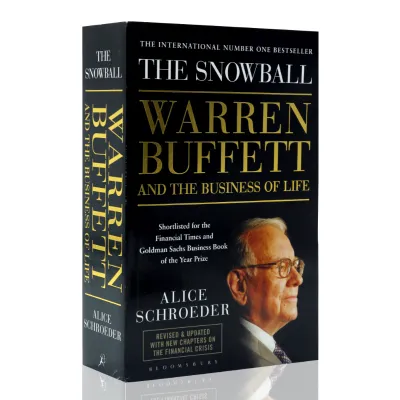
Prices are valid at publication and may change. Please refer to the product page for the latest price.
Philosophy vs. Technical Accounting
When you are starting out, it is easy to get overwhelmed by dense accounting textbooks or complex financial modeling guides. However, Warren Buffett’s primary investing edge has always been his psychological discipline, patience, and qualitative business evaluation. Beginners should prioritize books that focus on his core mindset and business analysis principles rather than highly technical accounting formulas. Look for texts that explain how to identify high-quality businesses with durable competitive advantages, rational management teams, and predictable cash flows. Understanding these qualitative concepts is far more valuable for a beginner than memorizing advanced mathematical valuation models.
Author Credibility
To ensure you are learning accurate representations of Buffett’s methods, pay close attention to the author’s background. The most reliable books fall into distinct categories: compilations of Buffett’s actual writings edited by respected legal and financial scholars, authorized accounts by biographers who spent hundreds of hours interviewing him, or analytical works by direct associates and professional investors who have successfully practiced value investing for decades. Checking the author’s credentials helps you avoid speculative interpretations or oversimplified trading strategies that contradict Buffett’s long-term wealth-building philosophy.
Edition and Publication Date
Financial markets, corporate regulations, and economic landscapes are constantly changing. While the core principles of value investing are timeless, older editions of books may rely on historical case studies, tax laws, or market conditions that are no longer directly applicable. When purchasing a book, verify the publication year and check for the most recent edition. Updated editions often include newer case studies, revised commentary, and modern prefaces that bridge historical concepts with contemporary market realities, such as the rise of technology companies and digital business models.
Format and Accessibility
Before finalizing your purchase, verify the specific edition, language, medium, and file format to ensure it fits your learning style and device compatibility. If you prefer reading on an e-reader or mobile device, confirm that the digital file format supports clear rendering of charts, tables, and footnotes, which are essential for studying financial examples. If you are ordering physical books from online marketplaces in Singapore, check for regional availability and language editions to guarantee you receive the complete, unabridged text. Those who prefer learning on the go may want to consider audiobook formats, particularly for conversational, narrative-driven books that focus on historical anecdotes and philosophical lessons.
Best Warren Buffett Books for Beginners to Build a Value Investing Mindset
The following books represent the most accessible, highly regarded resources for beginners. Each book approaches Buffett’s philosophy from a slightly different angle, ranging from structured analytical frameworks to direct compilations of his personal letters.

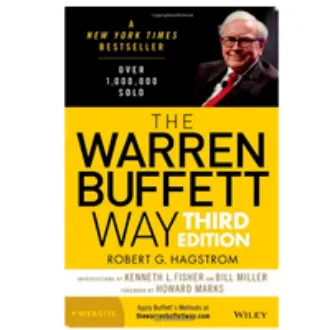
The Warren Buffett Way by Robert G. Hagstrom
Core Focus This foundational book systematically breaks down Buffett’s investment strategy into twelve actionable tenets. Hagstrom organizes these tenets into four critical categories: business principles (such as evaluating a company’s simplicity and operating history), management principles (assessing executive rationality and candour), financial principles (focusing on return on equity and owner earnings), and market principles (determining intrinsic value and purchasing at a discount).
Why It Suits Beginners The Warren Buffett Way acts as an exceptional translation layer for those who find financial markets intimidating. Instead of viewing stocks as volatile pieces of paper or abstract ticker symbols, Hagstrom teaches you to view a stock as a fractional ownership stake in a real, operating business. The book guides you through the process of analyzing a company’s qualitative strengths, making it incredibly easy for beginners to understand how Buffett determines whether a business is worth buying.
Limitations The book relies heavily on historical case studies, such as Buffett’s classic investments in Coca-Cola, Geico, and the Washington Post. While these examples are excellent for illustrating the twelve tenets, beginners must recognize that modern market conditions, technology sectors, and global economic dynamics have evolved since these acquisitions were made.
Pre-purchase Check Ensure you purchase the latest revised edition (such as the third edition). The updated versions contain highly valuable modern context, including discussions on how Buffett’s principles apply to the digital economy and technology-driven businesses, helping you bridge the gap between mid-20th-century case studies and today’s market.
The Essays of Warren Buffett: Lessons for Corporate America edited by Lawrence A. Cunningham
Core Focus This volume is widely considered the definitive compilation of Buffett’s annual shareholder letters. Rather than presenting the letters in chronological order, which can be highly repetitive and disjointed, Cunningham meticulously reorganizes decades of Buffett’s writings into thematic chapters. The essays cover essential topics including corporate governance, investment philosophy, common stock alternatives, mergers and acquisitions, accounting practices, and taxation.
Why It Suits Beginners This book provides direct, unmediated access to Buffett’s own words, logic, and dry wit without a middleman’s interpretation. Buffett is a master of clear, conversational communication, frequently using analogies, humor, and plain English to explain complex corporate actions. Reading his direct explanations of concepts like “economic moats” and “owner earnings” serves as a masterclass in business analysis and corporate ethics.
Limitations Because these essays deal directly with corporate finance, accounting rules, and capital allocation, certain sections can be intellectually demanding for absolute beginners. Reading this book requires patience, focus, and a willingness to look up basic financial terms as you progress through the chapters.
Pre-purchase Check Verify the edition year before purchasing. Cunningham periodically releases updated editions of this book to incorporate Buffett’s most recent annual shareholder letters. To ensure you have the most comprehensive and up-to-date collection of essays, select the newest edition available from authorized sellers.
University of Berkshire Hathaway by Daniel Pecaut
Core Focus This book compiles thirty years of detailed notes, observations, and Q&A sessions from the Berkshire Hathaway annual shareholder meetings. It captures the real-time wisdom, side remarks, and philosophical life advice shared by Warren Buffett and his late business partner, Charlie Munger, from 1986 through the mid-2010s.
Why It Suits Beginners The tone of University of Berkshire Hathaway is highly conversational and reads like an informal mentorship session. It avoids dry, academic financial theory and instead focuses on the behavioral, psychological, and ethical aspects of long-term investing. It is an outstanding resource for beginners who want to understand how Buffett and Munger think about risk, patience, human nature, and decision-making under pressure.
Limitations Because the book is structured as a chronological series of meeting notes and reflections, it lacks a structured, step-by-step technical framework. It is designed to cultivate the correct investing mindset and behavioral discipline rather than teach you how to perform precise financial valuations or read balance sheets.
Pre-purchase Check Consider your preferred learning medium. Because of its narrative, conversational style, many readers find the audiobook version of this text highly engaging and easy to digest. If purchasing a physical or digital copy, verify that the publisher is authorized and that the book contains the complete chronological span of meeting notes.
The Intelligent Investor by Benjamin Graham (Buffett’s Essential Foundation)
Core Focus Written by Buffett’s mentor and the father of value investing, this classic text introduces the foundational concepts that shaped Buffett’s entire career. The book focuses heavily on two core ideas: the “margin of safety” (purchasing assets at a significant discount to their real value to minimize downside risk) and “Mr. Market” (an allegory explaining how to exploit daily market emotionality rather than be influenced by it).
Why It Suits Beginners Before you learn how to pick individual stocks, you must learn how to manage your emotions and protect your capital. Graham’s masterpiece teaches the vital psychological discipline and risk-management framework required to survive in the financial markets. It helps beginners develop the emotional fortitude to view market downturns as investment opportunities rather than sources of panic.
Limitations Originally published in 1949, the book’s specific corporate examples, historical bond yields, and outdated regulatory references can be incredibly dry and difficult for modern readers to relate to.
Pre-purchase Check Do not purchase the original, unannotated version of this book. It is highly recommended to select the revised edition featuring parallel commentary and footnotes by financial journalist Jason Zweig. Zweig’s modern commentary runs alongside Graham’s chapters, illustrating how Graham’s timeless principles apply directly to modern market events, technology companies, and contemporary investment products.
How to Read and Apply These Investment Books to Your Own Portfolio
Reading about value investing is only the first step; the true value lies in how you apply these concepts to your personal financial decisions. Moving from theory to practice requires a deliberate, structured approach.
- Engage in Active Reading: Do not read these books passively. Maintain a dedicated journal or digital notebook to write down core concepts such as "circle of competence," "economic moats," and "intrinsic value." As you read financial news or look at companies in the market, try to identify these concepts in real-world scenarios. Ask yourself whether a company has a strong brand, high switching costs, or low-cost advantages that protect it from competitors.
- Cross-Reference with Primary Sources: Use these books as a guide to navigate primary financial documents. You can download Warren Buffett’s original, unedited annual shareholder letters for free directly from the Berkshire Hathaway website. Read these letters alongside your books to see how the theoretical concepts you are learning are applied to real-world corporate decisions in real time. This practice helps demystify corporate annual reports and builds your confidence in reading primary financial data.
- Manage Your Expectations: It is vital to approach these books with the correct mindset. Warren Buffett’s philosophy is built on long-term wealth compounding, capital preservation, and thorough business analysis. It does not teach short-term market timing, day trading, or get-rich-quick schemes. If your goal is to find rapid trading setups, these books will disappoint you. They are designed to help you build sustainable, long-term wealth over years and decades.
- Practice with Familiar Businesses: Before committing your hard-earned capital (whether in S$ or other currencies), practice analyzing simple, familiar businesses. Start with companies whose products or services you use and understand in your daily life. Use the frameworks from The Warren Buffett Way to evaluate their management, financial health, and competitive position. You can start by tracking a "paper portfolio" (a simulated portfolio with no real money) to test your assumptions about a company's intrinsic value and observe how your selected businesses perform over several quarters before investing real funds.
Frequently Asked Questions (FAQ)
Should I read Warren Buffett's shareholder letters instead of books?
While Warren Buffett’s raw shareholder letters are completely free and represent the most authoritative source of his thoughts, reading them chronologically from the beginning can be overwhelming for beginners. The letters span several decades and often jump between complex corporate transactions, insurance accounting, and specific historical market events. Curated books provide the necessary structural organization, historical context, and thematic grouping, making them a much more logical and accessible starting point. Once you have built a foundation through these books, you can transition to reading the raw annual letters with greater ease.
Are there any official autobiographies written by Warren Buffett?
No, Warren Buffett has never written a formal, self-penned autobiography. If you are looking for a comprehensive account of his life, personal history, and the growth of Berkshire Hathaway, the most highly recommended resource is the authorized biography The Snowball: Warren Buffett and the Business of Life by Alice Schroeder. While The Snowball offers unparalleled insight into his personal habits, relationships, and historical deals, readers should note that it is primarily a detailed biography rather than a step-by-step, actionable investing manual.
Do I need a finance degree to understand these books?
You do not need a finance degree or an advanced background in mathematics to understand and apply the lessons in these books. Buffett’s value investing philosophy is rooted in business logic, psychological discipline, and common sense. While basic financial literacy—such as knowing how to read a simple income statement or balance sheet—is highly beneficial, these are skills you will naturally develop as you read the commentary and case studies provided in the recommended books. The most important prerequisite is a patient, analytical mindset and the discipline to ignore short-term market noise.
Community discussion
Share your experience or ask a question. Comments are reviewed before publication.