
Choosing your very first acoustic guitar is a major milestone, but the sheer number of options can quickly feel overwhelming. For decades, Yamaha has been the go-to recommendation for music teachers, experienced players, and retail specialists worldwide. In Singapore, where factors like high tropical humidity and typical apartment living spaces influence instrument care and comfort, selecting the right model is especially important.
If you are looking for a reliable, highly durable, and budget-friendly instrument to test the waters, the Yamaha F310 (part of the F Series) is an exceptional starting point. If you are committed to the instrument for the long term and want a richer, more resonant tone that actually improves as the wood ages, the Yamaha FS800 (with its compact concert body) or the Yamaha FG800 (with its traditional, larger dreadnought body) are the definitive choices. Navigating these options requires understanding how different tonewoods, body shapes, and maintenance routines will affect your playing experience in the local environment.
Why Yamaha is a Top Choice for Beginner Acoustic Guitars
Yamaha has earned its reputation in the music industry through an unwavering commitment to manufacturing consistency. Unlike many budget brands where two guitars of the exact same model can vary wildly in quality, Yamaha employs strict quality control standards across all its factories. This means that even their most affordable entry-level instruments arrive with straight necks, level frets, and accurate intonation. For a beginner, this consistency is vital because a poorly constructed guitar that constantly goes out of tune or buzzes will only cause frustration and discourage practice.
Products mentioned in this guide
![Yamaha FG800 FG800M Acoustic Guitar FG 800 M Full Size Solid Spruce Top Beginners Series [LIMITED STOCK]](https://img.lazcdn.com/g/p/ebccdae0f44bc8448a2d98fc192a14d6.jpg_400x400q80.jpg_.webp)
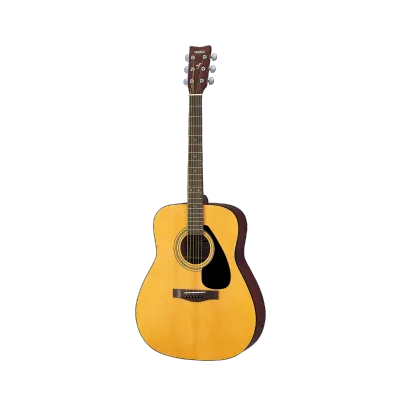
![Yamaha FS400C Spruce Top Beginner Acoustic Guitar Concert Body Venetian Cutaway Natural/Black Colors [LIMITED STOCK]](https://img.lazcdn.com/g/p/e1839da3899e1bc61f5f647e54220e63.png_400x400q80.png_.webp)
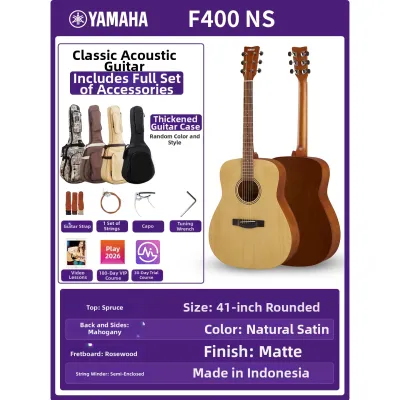
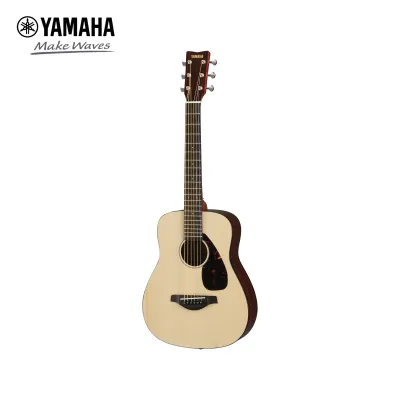
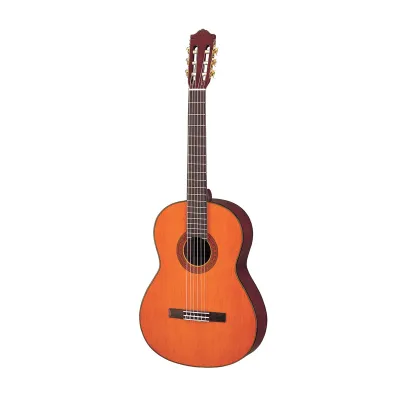
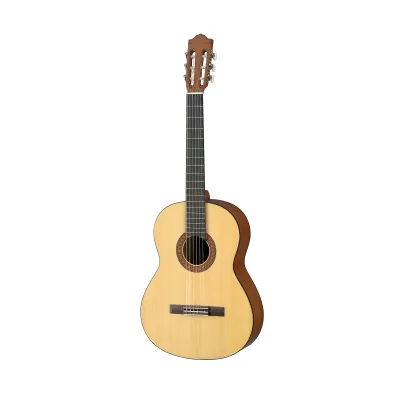
![Yamaha CS40 Classical Guitar 3/4 Size Spruce Top 36 inch Nylon Strings CS 40 Beginner Series [LIMITED STOCK]](https://img.lazcdn.com/g/p/945bea2cc63a8a821dbe33940abc1866.jpg_400x400q80.jpg_.webp)
Prices are valid at publication and may change. Please refer to the product page for the latest price.
Another major benefit for new players is the ergonomic design of Yamaha’s guitar necks. When you first start learning, your hand muscles and fingertips must adapt to pressing down metal strings, which naturally causes fatigue and soreness. Yamaha designs its beginner necks with a comfortable, slim profile and a smooth satin finish. This shape fits naturally into the hand, making it much easier to form clean chord shapes and transition between frets without requiring excessive hand strength.
Additionally, Yamaha instruments hold their value remarkably well in the secondhand market. In Singapore, platforms for used musical instruments are highly active, and a well-cared-for Yamaha guitar is always in demand. Should you decide to upgrade to a premium solid-wood instrument later, or if you find that playing the guitar is not for you, you can easily resell your beginner Yamaha model to recoup a significant portion of your initial investment. This makes choosing a Yamaha a highly practical and low-risk financial decision.
Key Features to Look for in a Beginner Yamaha Guitar
Understanding the physical and material specifications of an acoustic guitar will help you make an informed decision that aligns with your budget and goals. The choices you make regarding tonewoods, body shapes, and hardware will directly impact how the instrument sounds, how comfortable it is to play, and how well it survives over time.

Tonewood Configurations
Acoustic guitars are constructed using either laminate wood, solid wood, or a combination of both. Laminate wood consists of several thin layers of wood pressed and glued together. While laminate does not vibrate as freely as solid wood, it is incredibly tough and highly resistant to changes in temperature and humidity. Solid-top guitars feature a single, continuous piece of solid wood for the guitar’s face (the soundboard). This allows the guitar to produce a much louder, richer, and more resonant tone. Furthermore, solid wood “opens up” over time, meaning the sound matures and improves the more the instrument is played.
Body Shapes
The shape and size of a guitar body dictate its volume, frequency response, and physical comfort. The two most common shapes you will encounter in Yamaha’s beginner lineup are the traditional Western (dreadnought) and the concert shape. Dreadnought bodies are larger and deeper, producing a powerful projection with a strong, booming bass response. Concert bodies are smaller, shallower, and feature a tighter waist. They produce a more balanced, mid-range focused sound and are significantly easier to hold and wrap your arms around, especially during long practice sessions.
Hardware and Tuning Stability
For a beginner, there is nothing more frustrating than an instrument that slips out of tune every few minutes. Tuning stability relies heavily on the quality of the tuning machines (the pegs at the head of the guitar). Yamaha equips its entry-level guitars with robust, covered or die-cast chrome tuners that turn smoothly and hold string tension reliably. This ensures that once you tune your guitar, it remains in pitch through extended practice sessions, which is also essential for training your ears to recognize correct notes.
Neck and Action
“Action” refers to the height of the strings above the fretboard. If the action is too high, you must press down incredibly hard to fret a note, which causes severe finger pain and makes clean chord transitions nearly impossible. If the action is too low, the strings will rattle against the metal frets, creating an annoying buzzing sound. A beginner-friendly guitar requires a moderate, comfortable action that balances ease of play with clean, buzz-free projection. Yamaha’s factory setups are designed to strike this balance right out of the box.
Recommended Yamaha Acoustic Guitar Series for Beginners
To help you find the right match, it is helpful to look closely at Yamaha’s two primary entry-level families: the budget-conscious F Series and the solid-topped FG/FS Series. Both lines serve different player needs, budgets, and commitment levels.
Yamaha F Series: The Accessible Entry Point
The Yamaha F Series, highlighted by the incredibly popular F310, is designed specifically for absolute beginners, casual hobbyists, and those operating on a tighter budget. Typically priced between S$150 and S$230, these instruments offer a highly accessible entry point into the world of guitar playing without compromising on basic structural integrity.
- Body Shape and Construction: The F310 features a traditional dreadnought-style body, though it is designed with a slightly shallower body depth and a shortened scale length compared to standard dreadnoughts. This subtle design tweak makes it much easier for beginners to handle. The entire body is made of laminate tonewoods, featuring a spruce laminate top and meranti back and sides.
- Climate Resilience: Because the F Series utilizes all-laminate construction, it is exceptionally durable and stable. In a tropical environment like Singapore, where relative humidity levels can fluctuate wildly between air-conditioned bedrooms and humid outdoor spaces, laminate wood is highly stable. It is far less prone to warping, cracking, or swelling than solid wood, making the F310 a low-maintenance option that can sit safely on a guitar stand in almost any room.
- The Verdict: The F Series is an excellent, low-risk option. If you are buying a guitar for a child, or if you are not yet certain whether you will stick with the instrument long-term, the F310 provides a fully functional, reliable, and comfortable platform to learn your first chords without a significant upfront financial commitment.
Yamaha FG and FS Series: The Standard for Growth
For players who are highly committed to learning and want an instrument that can transition from beginner practice to intermediate performance, the Yamaha 800 Series (comprising the FG and FS models) is widely considered the industry benchmark. Generally priced between S$350 and S$500, these guitars represent a step up in both sound quality and craftsmanship.
- Solid Spruce Top: The defining feature of the FG800 and FS800 is a solid Sitka spruce top, paired with nato or okoume back and sides. The solid top acts as a highly responsive soundboard, giving the guitar a vibrant, dynamic, and clear tone. Because it is solid wood, the sound will naturally mature and become richer and warmer as the years go by.
- FG vs. FS Body Styles: This series allows you to choose the body shape that best fits your physical build and playing style. The Yamaha FG800 features a traditional dreadnought body. It delivers a bold, loud, and bass-heavy sound that is perfect for flatpicking, robust strumming, and accompanying vocalists. The Yamaha FS800 features a smaller concert body. It is shallower, narrower at the waist, and highly responsive to a lighter touch, making it incredibly comfortable to hold and the ideal choice for fingerstyle playing.
- The Verdict: The FG and FS 800 models are the ultimate "grow-with-you" guitars. The superior tonal quality, enhanced projection, and refined hardware mean you will not feel the urge to upgrade your instrument after a year of progress. It is a highly rewarding investment for the serious beginner.
Matching the Guitar to the Player: Size, Shape, and Comfort
When choosing between the FG and FS series, physical comfort must be your primary consideration. A guitar that feels too large or awkward to hold will create physical tension in your shoulders, wrist, and neck, which can lead to bad habits or even repetitive strain injuries over time.
- Dreadnought (FG Series) Considerations: The lower bout of a dreadnought guitar is wide and deep. When sitting down, this large body pushes your strumming arm upward and outward. If you have a larger physical frame or longer arms, this posture will feel natural. However, for younger players, teenagers, or adults with smaller frames, wrapping your arm around a dreadnought can feel like holding a large cardboard box, leading to shoulder discomfort.
- Concert (FS Series) Considerations: The FS series, with its tighter waist and thinner body, sits lower on your lap. This allows your strumming arm to drape naturally over the top of the guitar, keeping your shoulder relaxed. The shorter scale length also means the frets are spaced slightly closer together, which reduces the finger stretching required to play complex chord shapes.
- The Importance of a Physical Test: While ordering a guitar online is incredibly convenient, nothing replaces the experience of holding the instrument in person. We highly recommend visiting an authorized showroom in Singapore. Sit down on a stool, place the guitar on your leg, and pay attention to how your body reacts. If you find yourself hunching over or straining your shoulder to reach the strings, try the smaller FS model. The guitar that feels the most effortless to hold is the one you will practice with the most.
Essential Setup and Maintenance for Singapore's Climate
Singapore’s tropical climate presents unique challenges for wooden musical instruments. The average relative humidity in Singapore regularly hovers between 70% and 90%. Wood is a natural, porous material that acts like a sponge, absorbing moisture from the air when humidity is high and releasing it when the air is dry.
Climate Management
When an acoustic guitar absorbs excess moisture, the wood swells. On an acoustic guitar, this swelling typically causes the solid spruce top to bulge upward behind the bridge. As the top rises, it pulls the bridge and the strings up with it, resulting in high, uncomfortable action that makes the guitar incredibly difficult to play. In extreme cases, high humidity can cause the internal wooden braces to detach or cause the glue joints to fail.
To protect your investment, consider these humidity management strategies:
- Dehumidifiers: If you store your guitar on a stand, keeping it in a room with a running compressor dehumidifier is the most effective way to maintain a safe relative humidity level of 45% to 55%.
- Case Storage with Desiccants: If a room dehumidifier is not practical, store your guitar inside a high-quality padded gig bag or a hard case when you are not playing. Place silica gel packs or specialized two-way humidity control packets inside the case. These packets will automatically absorb excess moisture to keep the micro-climate inside the case stable.
- Avoid Extreme Temperature Swings: Do not leave your guitar directly in front of an air conditioning unit or in a hot, parked car, as rapid temperature shifts can cause the wood to expand and contract too quickly, leading to structural damage.
Professional Setup
When guitars are manufactured, they are set up at the factory to withstand international shipping across various climate zones. Consequently, the factory string action is often set slightly high. One of the best steps a beginner can take is to bring their new Yamaha guitar to a professional local guitar technician for a “setup.”
During a professional setup, the technician will perform several key adjustments:
- Truss Rod Adjustment: They will adjust the internal metal rod running through the neck to ensure the neck has the perfect amount of relief (slight curvature).
- Nut and Saddle Filing: They will file down the slots on the nut (at the headstock) and sand down the bottom of the bridge saddle to lower the strings to a comfortable height.
- Fret Polishing: They will ensure there are no sharp fret ends or uneven frets that could cause buzzing or discomfort.
A professional setup typically costs between S$40 and S$80 in Singapore, but it completely transforms the playability of the instrument, making it significantly easier and more enjoyable to practice.
Routine Care
Sweat from your hands contains salt and acids that will quickly corrode metal guitar strings, causing them to rust, feel rough, and lose their bright tone. Make it a habit to wipe down the strings, the fretboard, and the back of the neck with a clean, dry microfiber cloth after every single playing session. This simple, two-minute routine will dramatically extend the lifespan of your strings and keep your fretboard clean and comfortable.
Buying Safely: Authorized Retailers and Authenticity Checks
Because Yamaha acoustic guitars are highly sought after, counterfeit models and poorly maintained instruments are common on unauthorized online marketplaces and peer-to-peer classified sites. Purchasing a counterfeit or a badly damaged guitar can ruin your learning experience, as these instruments often suffer from warped necks or unadjustable truss rods.
To ensure you are getting a genuine instrument, always purchase from established, authorized brick-and-mortar music stores or official brand distributors in Singapore. Buying through these official channels guarantees that you receive a genuine product, a valid local manufacturer’s warranty, and access to professional after-sales support should you ever need assistance with your instrument.
When buying or inspecting your guitar, you can verify its authenticity and condition by checking several key details:
- Serial Number: Genuine Yamaha guitars feature a unique serial number stamped inside the soundhole (on the internal bracing) or on the back of the headstock. This serial number can be registered on the official Yamaha website to activate your warranty.
- Finishing Quality: Inspect the edges of the frets along the side of the neck. On a genuine Yamaha, these edges will be smooth and rounded, not sharp or jagged. Check the binding, the bridge placement, and the finish for any signs of messy glue or uneven lacquer.
- Tuning Pegs: Turn the tuning pegs slowly. They should feel smooth, firm, and offer consistent resistance without any slipping, grinding, or loose play.
Avoid deals that seem unusually cheap or come from unverified overseas sellers. Investing in a genuine Yamaha from an authorized local source ensures that your musical journey starts on a reliable, high-quality foundation.
Frequently Asked Questions (FAQ)
Is a solid top guitar necessary for a complete beginner?
No, a solid top is not strictly necessary, but it is highly recommended if your budget allows. An all-laminate guitar like the Yamaha F310 is highly durable, budget-friendly, and very resistant to Singapore’s humidity, making it a great low-risk option. However, a solid-top guitar like the FS800 or FG800 offers a vastly superior, richer sound that matures over time, which provides a more rewarding playing experience and can keep you motivated to practice longer.
How does Singapore's high humidity affect an acoustic guitar?
Singapore’s high humidity causes the wood of an acoustic guitar to absorb moisture and swell. This swelling typically causes the guitar’s top soundboard to bulge upward, raising the bridge and the strings. This results in high action, which makes the strings much harder to press down and causes finger pain. Excess moisture can also make the guitar sound dull or muddy and, in severe cases, weaken the glue holding the internal braces and bridge in place.
Should I buy an acoustic or an acoustic-electric Yamaha as my first guitar?
For most beginners, a standard acoustic guitar without built-in electronics is the best choice. This ensures that your entire budget goes directly toward the quality of the wood and the construction of the instrument. You only need an acoustic-electric model (such as the Yamaha FGX or FSX series) if you plan to plug into an amplifier or PA system for live performances, church worship services, or direct recording right from the start of your learning journey.
Community discussion
Share your experience or ask a question. Comments are reviewed before publication.