
For complete beginners in Singapore, choosing the right Yamaha keyboard is the first step toward a successful musical journey. Yamaha has long been a dominant force in the music education world, offering a diverse lineup of instruments that cater to different learning styles, budgets, and home environments. However, navigating the differences between portable arranger keyboards and dedicated digital pianos can be challenging if you have no prior musical experience.
Your decision should rest primarily on your long-term musical goals, your budget, and the space available in your home. Some beginners want a fun, versatile instrument to explore different sounds and play casual pop melodies, while others are committed to classical training and preparing for formal graded examinations. By understanding the distinct design philosophies of Yamaha’s beginner-friendly lines, you can select an instrument that keeps you motivated and supports your progress for years to come.
Quick Picks: Top Yamaha Keyboards for Beginners
Yamaha divides its entry-level instruments into two primary paths, each tailored to a specific type of learner and practice style. Understanding these categories helps narrow down your choices immediately based on what you hope to achieve.
Products mentioned in this guide
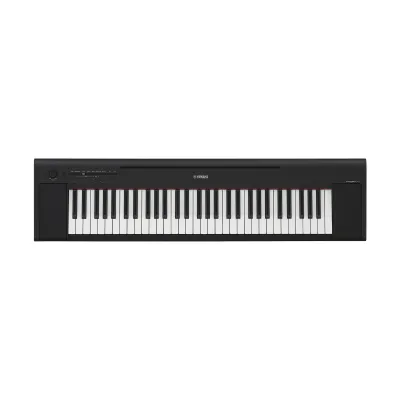
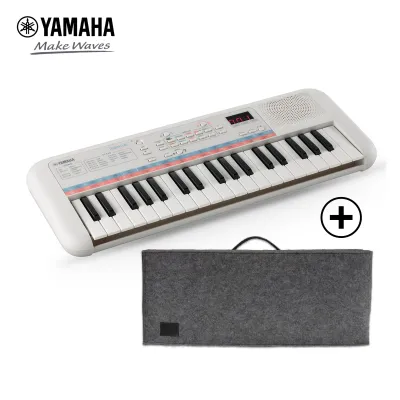
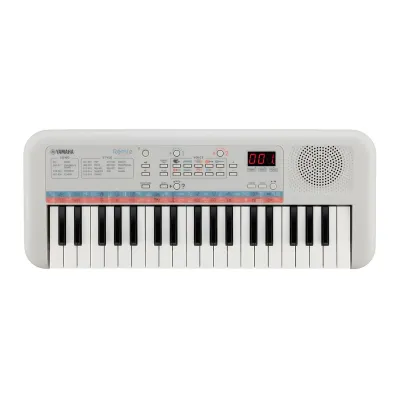
Prices are valid at publication and may change. Please refer to the product page for the latest price.
Portable arranger keyboards, such as the PSR-E series, are designed for casual hobbyists who value versatility, interactive features, and portability. These instruments are lightweight, budget-friendly, and packed with hundreds of different instrument sounds and auto-accompaniment styles. They are excellent for players who want to explore music production, play popular songs with a virtual backing band, or need an instrument that can be easily packed away in a closet when not in use.
Entry-level digital pianos, such as the P-series or compact console models, are built for dedicated students who want to learn traditional piano technique. These instruments focus on replicating the authentic touch and tone of an acoustic grand piano. While they represent a mid-range investment and require a more permanent placement in your home, they feature fully weighted keys that are essential for building correct finger strength and preparing for classical music exams.
What Beginners Should Look for in a Yamaha Keyboard
Selecting a keyboard requires looking past the surface aesthetics to evaluate the technical specifications that directly impact your learning experience. For beginners in Singapore, these features must also align with local living conditions and practice habits.

Key Action and Touch Response
The physical feel of the keys is the most critical factor in developing proper playing technique. Yamaha keyboards generally offer three types of key action:
- Unweighted keys: Found on basic, budget-friendly models, these keys use simple springs to return to their position. They offer very little resistance, which can make transitioning to a real piano difficult because you will not develop the necessary hand and finger muscles.
- Semi-weighted or touch-sensitive keys: These keys do not have physical weights but are engineered to detect how hard or soft you strike them. This touch sensitivity allows you to play with dynamics, meaning the sound is quiet when you press gently and loud when you strike firmly.
- Fully weighted keys (Hammer Action): These keys use actual mechanical hammers to mimic the resistance of an acoustic piano. Yamaha's Graded Hammer Standard (GHS) and Graded Hammer Compact (GHC) actions replicate this physical experience precisely, with keys that feel heavier in the lower bass register and lighter in the treble register.
If your goal is to learn classical piano or take graded exams, practicing on fully weighted keys is essential. Starting on unweighted keys can lead to poor finger posture and a lack of control over dynamics when you eventually play on an acoustic instrument.
Polyphony and Sound Engine
Polyphony refers to the maximum number of individual notes or voices a keyboard can produce at the same time. When you play a chord while holding down the sustain pedal, the keyboard must play multiple notes simultaneously, along with any background accompaniment or stereo effects. If a keyboard has low polyphony, older notes will be cut off abruptly to make room for new ones.
For a complete beginner, a minimum of 64-note polyphony is recommended, though 128-note or 192-note polyphony is ideal for seamless, expressive play. Yamaha’s proprietary sound engines, such as the Advanced Wave Memory (AWM) stereo sampling, capture high-quality digital recordings of acoustic grand pianos. This ensures that the instrument produces a rich, natural, and resonant tone that inspires you to practice.
Built-in Learning Features
Self-guided practice is highly effective when supported by the right educational tools. Many Yamaha keyboards feature built-in lesson functions, such as “Keys to Success” or the Yamaha Education Suite, which break down songs into individual left- and right-hand parts. The keyboard can pause and wait for you to press the correct key before advancing, helping you learn at your own pace.
An adjustable built-in metronome is another indispensable tool for developing a steady sense of rhythm. Furthermore, modern Yamaha instruments are compatible with companion apps like Smart Pianist or flowkey. These apps connect to your smart device to display digital sheet music, analyze your favorite songs to generate chord charts, and provide interactive video lessons.
Size, Portability, and Silent Practice
Housing configurations in Singapore, such as HDB flats and condominiums, require careful consideration of space and sound levels. A traditional acoustic piano takes up significant floor space, is incredibly heavy, and can easily disturb neighbors during late-night practice sessions.
A compact digital keyboard or portable piano addresses these urban living challenges perfectly. Portable models can be set up on a folding stand and stored away when space is needed. Most importantly, every beginner Yamaha keyboard includes a dedicated headphone jack. This feature allows for silent practice at any hour of the day or night, giving you the freedom to repeat challenging passages as many times as necessary without causing noise issues for your family or neighbors.
Top Yamaha Keyboard Recommendations for Beginners
To help you make an informed decision, let us look closely at how Yamaha’s primary beginner-focused product lines perform in real-world scenarios.
Best for Casual Learning and Portability (Arranger Keyboards)
Yamaha’s portable arranger keyboards, primarily represented by the PSR-E series, are designed to make learning engaging, interactive, and fun. These models typically feature 61 keys, which is a highly practical size for smaller rooms and casual play.
The core strength of the PSR-E line lies in its massive library of instrument voices and accompaniment styles. You can easily switch from a grand piano sound to a violin, synthesizer, or drum kit. The built-in accompaniment styles act as a virtual backing band that follows the chords you play with your left hand, making even simple melodies sound rich and complete. This immediate musical feedback is highly motivating for young children and casual adult hobbyists who want to play popular music or explore songwriting.
These keyboards are exceptionally lightweight, often weighing under five kilograms, and can run on standard AA batteries. This makes them easy to move around the house or transport for casual jamming sessions. However, it is important to recognize their limitations. Arranger keyboards in this class do not have fully weighted keys. The spring-loaded keys do not build the finger strength required for classical piano, and the 61-key range will eventually limit your ability to play advanced pieces that span the full 88-key layout of a standard piano.
Best for Serious Piano Practice (Digital Pianos)
For beginners who are committed to classical piano training, preparing for formal examinations, or seeking the most authentic acoustic piano experience, Yamaha’s portable digital pianos—specifically the P-series—are the ideal choice.
These instruments feature a full 88-key layout and utilize Yamaha’s weighted key action, such as the Graded Hammer Compact (GHC) system. This mechanical design replicates the physical resistance of an acoustic piano’s hammers, ensuring that your fingers develop the strength, dexterity, and muscle memory needed to play on any traditional piano. The keys are also designed to resist slipping, even during long practice sessions, providing a secure feel under your fingertips.
Unlike arranger keyboards, digital pianos prioritize a minimalist interface with fewer buttons. This design minimizes distractions, allowing you to focus entirely on your physical technique and musical expression. The sound engines in these models are highly sophisticated, delivering detailed samples of Yamaha’s flagship concert grand pianos, complete with virtual damper resonance that mimics the internal acoustics of a physical piano cabinet.
While these digital pianos are heavier than arranger keyboards and require a sturdy, dedicated stand and bench, they are still remarkably compact compared to acoustic upright pianos. They represent a long-term investment that will comfortably support a student from their very first lesson through several years of intermediate and advanced study.
Where to Buy in Singapore and Pre-Purchase Checks
Once you have decided on the right type of Yamaha keyboard, taking the correct steps during the purchasing process ensures you receive a genuine product with reliable support.
Authorized Dealers
It is highly recommended to purchase your instrument from authorized Yamaha Music Singapore showrooms or established local music retailers, such as those located in the Bras Basah Complex or major regional shopping malls. Buying from an authorized source ensures that your keyboard is a genuine product and comes backed by an official local warranty, which typically covers parts and labor for 12 months. Purchasing from parallel importers or unverified online marketplaces may leave you without local warranty coverage, meaning you would have to pay high out-of-pocket costs for repairs if an electronic component fails.
Pre-Purchase Verification
Before finalizing your purchase, verify that the electrical specifications are correct for the local market. Singapore operates on a 230V, 50Hz power supply and uses Type G (UK-style) three-pin plugs. Ensure that the bundled AC power adapter (such as the Yamaha PA-130 or PA-150) is designed for this voltage and plug type. Utilizing an incorrect power supply or a domestic adapter designed for a different region (such as a 110V adapter from Japan or the United States) without a proper voltage transformer can cause permanent damage to your keyboard’s internal circuitry and will void your warranty.
Accessory Checks
Always check exactly what accessories are included in the retail box, as package configurations can vary. While most Yamaha arranger keyboards include a music rest and a power adapter, they rarely come with a stand or a bench. Portable digital pianos may include a basic pedal switch, but serious students will want to upgrade to a proper piano-style sustain pedal (such as the Yamaha FC4A) that offers realistic physical resistance. Budget for a sturdy, double-braced X-stand or a dedicated wooden furniture stand to prevent the keyboard from shaking while you play. A comfortable, height-adjustable bench is also vital for maintaining correct posture and preventing back strain.
Language and App Compatibility
Ensure that the physical user manual, quick-start guides, and any on-screen menus on the keyboard’s LCD interface are in English. Additionally, confirm that the companion applications, such as Yamaha’s Smart Pianist or flowkey, are fully compatible with your specific smartphone or tablet and are available for download from the Singapore region of the Apple App Store or Google Play Store. Some parallel-imported models intended for other regional markets may have firmware restrictions that prevent them from connecting properly to local app services.
Frequently Asked Questions (FAQ)
Do I need an 88-key keyboard as a complete beginner?
Whether you need a full 88-key keyboard depends entirely on your musical goals and the style of music you want to play. If you are a casual hobbyist learning popular songs, basic chords, and simple melodies, a 61-key keyboard is perfectly adequate for your first year or two of learning. It is more compact, easier to store, and highly budget-friendly.
However, if you plan to take formal classical piano lessons, prepare for graded exams, or play classical repertoire, an 88-key keyboard is absolutely necessary from day one. Classical music frequently utilizes the extreme high and low registers of the piano. Practicing on a shorter keyboard will make it impossible to play these pieces and will disrupt your spatial awareness, making it difficult to transition to a standard acoustic piano.
Can I use a Yamaha keyboard with a tablet or smartphone for lessons?
Yes, modern Yamaha keyboards offer excellent connectivity options for smart devices, though the specific connection method depends on the model. Most entry-level Yamaha keyboards feature a USB-to-Host port, which allows you to establish a direct connection to a tablet, smartphone, or computer using a standard USB cable and a suitable adapter for your device.
This wired connection transmits MIDI data, allowing interactive learning apps to detect exactly which notes you are playing in real-time and provide instant feedback on your accuracy. Some mid-range and higher-end Yamaha models also feature built-in Bluetooth MIDI or Bluetooth Audio. It is important to check your specific model’s specifications, as Bluetooth Audio (which lets you stream music through the keyboard’s speakers) is a separate feature from Bluetooth MIDI (which connects your playing data to educational apps wirelessly).
Community discussion
Share your experience or ask a question. Comments are reviewed before publication.