
Starting your musical journey with a Yamaha keyboard is one of the most reliable paths for beginners in Singapore. Yamaha has established a long-standing reputation for producing durable, high-quality instruments that cater to every stage of learning. However, choosing the right model can feel overwhelming given the vast array of options, from compact portable keyboards to full-sized digital pianos. The ideal choice depends on your specific musical goals, budget, and living space. If you aspire to play classical music or transition to an acoustic piano, a model with 88 fully weighted keys is essential. If you want to explore diverse sounds, play modern pop music, or require an instrument that can be easily stored in a compact HDB flat, a portable arranger keyboard or space-saving digital keyboard is a more practical fit.
Key Features to Evaluate Before Buying Your First Yamaha
Key Action and Touch Response
The feel of the keys is the most critical factor in your development as a pianist. Keyboards generally fall into three categories of key action: synth-action, semi-weighted, and fully weighted (often called hammer action). Synth-action keys are light, springy, and offer virtually no resistance, which is suitable for playing organ sounds or fast synthesizer leads but inadequate for building finger strength. Semi-weighted keys offer a moderate amount of resistance using springs and light weights, providing a middle ground for casual players. Fully weighted keys replicate the mechanical hammer action of an acoustic piano, where the keys feel heavier in the lower register and lighter in the higher register. If your long-term goal is to play classical repertoire or sit for formal graded examinations, starting with fully weighted keys is vital to develop the correct finger technique and muscle memory.
Space and Living Situation Constraints
Singapore’s residential landscape consists primarily of high-density housing, such as HDB flats and condominiums, where space optimization is a daily priority. Before purchasing a keyboard, you must measure your designated practice area. A standard 88-key digital piano spans approximately 1.3 meters in width, which requires a dedicated permanent or semi-permanent spot. If you live in a compact apartment, a slab-style digital piano placed on a folding X-stand or Z-stand offers excellent flexibility, as it can be tucked away in a closet or under a bed when not in use. Furniture-style digital pianos with integrated wooden stands provide superior stability and aesthetic appeal but occupy a fixed footprint. Additionally, consider the weight of the instrument; lightweight portable keyboards are easy to move around the home, whereas fully weighted models can weigh upwards of 12 kilograms, making frequent relocation a two-person task.
Products mentioned in this guide
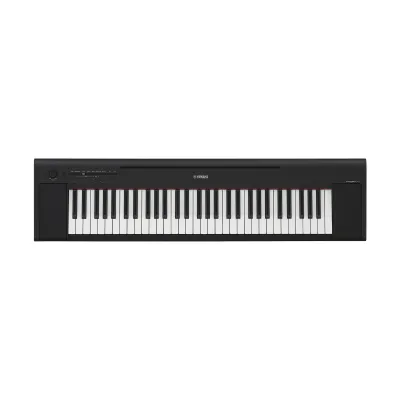
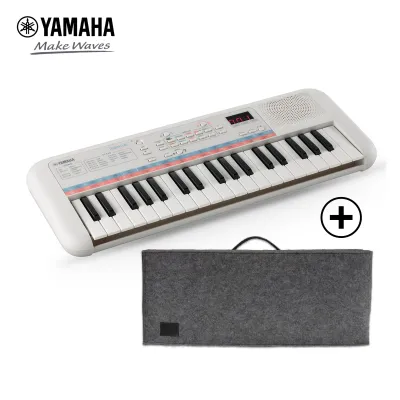
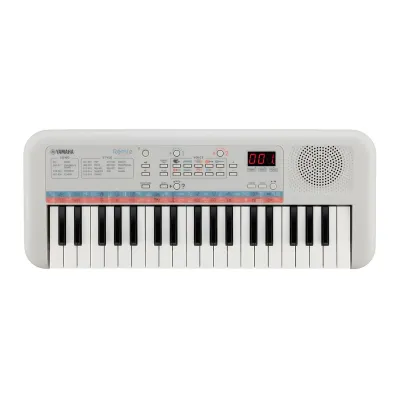
Prices are valid at publication and may change. Please refer to the product page for the latest price.
Built-in Learning Tools and Connectivity
Self-directed learning has become highly accessible thanks to modern digital features. When evaluating beginner keyboards, look for built-in tools such as a metronome, which is indispensable for developing a steady sense of rhythm. Many entry-level Yamaha models feature integrated lesson functions that guide you through built-in songs step-by-step. Connectivity options are equally important for modern learners. A USB-to-Host port allows you to connect the keyboard to a tablet, smartphone, or computer, enabling you to use interactive learning applications like Yamaha’s Smart Pianist or third-party platforms. Some advanced beginner models also feature Bluetooth MIDI or Bluetooth Audio, allowing you to stream instructional videos or backing tracks directly through the keyboard’s internal speakers for a more immersive practice experience.
Recommended Yamaha Series for Different Beginner Needs
Best for Small HDBs and Condos (Portable and Compact)
For beginners living in cozy apartments or those who require an instrument that can be easily transported, Yamaha’s compact and portable keyboard lines offer an excellent compromise. These models, such as the Piaggero series, focus on simplicity, space-saving design, and lightweight construction. They typically feature 61 or 76 keys rather than the full 88, which significantly reduces their physical footprint and makes them easy to place on a study desk or a small folding stand.

A key advantage of these compact models is their portability; many weigh under 6 kilograms and can operate on battery power, allowing you to practice anywhere without being tethered to a wall outlet. This flexibility is ideal for casual hobbyists or younger students who may not have a dedicated music room.
However, buyers should be aware of the inherent limitations of these compact instruments. The keys are generally non-weighted or semi-weighted, meaning they do not offer the physical resistance required to build classical piano finger strength. Furthermore, the limited key range of 61 or 76 keys means you will eventually run out of notes when attempting to play advanced classical compositions or pieces that utilize the extreme ends of the keyboard. If you choose this path, view it as a highly accessible entry point with the expectation of upgrading to a full-sized weighted instrument as your skills progress.
Best for Developing Proper Technique (Fully Weighted Keys)
If you are committed to learning proper piano technique from day one, investing in an 88-key digital piano with fully weighted keys is highly recommended. Yamaha’s portable digital piano lineup, particularly the P-series, is designed specifically for this purpose. These instruments utilize advanced key actions, such as Graded Hammer Standard (GHS) or Graded Hammer Compact (GHC), which successfully mimic the dynamic resistance and physical feel of an acoustic grand piano.
The primary benefit of a weighted key action is the development of finger independence, strength, and expressive control. Beginners learn how to control the volume and tone of each note based on the force applied to the key, a skill known as dynamic expression that is fundamental to piano playing. Despite having a full set of 88 keys, slab-style digital pianos maintain a relatively slim profile, making them highly suitable for placement along a bedroom wall or in a study corner in a condominium or HDB flat.
When purchasing a weighted digital piano, you must plan for essential accessories. A sturdy, double-braced stand or a dedicated wooden stand is crucial to prevent the instrument from shaking during energetic playing. You will also require a sustain pedal to play legato passages smoothly, a comfortable bench that supports correct posture, and a pair of quality headphones. Beginners should verify whether these accessories are included in local retail bundles or if they need to be purchased separately to avoid unexpected additional costs.
Best for Budget and Casual Exploration (Arranger Keyboards)
For beginners who want to explore a wide variety of musical genres, experiment with different instrument sounds, or engage in casual songwriting, an arranger keyboard is an exceptional choice. Yamaha’s PSR-E series represents the benchmark for entry-level arranger keyboards, offering an extensive library of built-in voices, backing styles, and creative tools at an affordable price point.
These keyboards are packed with hundreds of realistic instrument sounds, ranging from traditional grand pianos and organs to orchestral strings, brass, and modern synthesizer tones. The standout feature of an arranger keyboard is its auto-accompaniment capability. By playing simple chords with your left hand, the keyboard automatically generates a full backing band—complete with drums, bass, and rhythm instruments—that follows your playing in real-time. This feature is incredibly engaging for beginners, as it allows you to sound like a complete ensemble from your very first week of practice.
The trade-off for this wealth of creative features lies in the physical key action. Arranger keyboards almost exclusively feature light, unweighted synth-action keys. While this action is perfectly suited for playing fast organ runs, synth leads, and drum patterns, it is not designed for classical piano training. If your primary goal is to play traditional piano music, the lack of key weight may hinder your technical development. However, for those focused on pop, electronic music, composition, or general musical exploration, the arranger keyboard offers unmatched versatility and fun.
How to Choose Between Portable, Weighted, and Arranger Models
Comparison Matrix
| Category | Key Action | Number of Keys | Space Requirement | Primary Use Case | Ideal Beginner Profile |
|---|---|---|---|---|---|
| Portable / Compact | Semi-weighted / Non-weighted | 61 or 76 | Minimal (fits in closet or desk) | Casual play, travel, space-saving | Hobbyists with limited space |
| Weighted Digital Piano | Fully weighted (Hammer Action) | 88 | Moderate (requires dedicated spot) | Classical training, exam prep | Serious learners, piano students |
| Arranger Keyboard | Synth-action (Unweighted) | 61 | Minimal to Moderate | Creative play, songwriting, pop | Budget buyers, creative explorers |
Decision Flow
To quickly determine which category aligns with your needs, run through this simple checklist:
- Choose a Weighted Digital Piano if: Your primary goal is to learn classical piano, you plan to take graded music exams, you want an authentic acoustic feel, and you have a dedicated corner in your home for a full-sized instrument.
- Choose a Portable / Compact Keyboard if: You have very limited space, you need to store the instrument in a closet when not in use, you want the option to run on battery power, and you are comfortable upgrading to a larger model in the future.
- Choose an Arranger Keyboard if: You are on a tight budget, you want to experiment with a wide variety of instrument sounds and backing rhythms, you are interested in modern pop or electronic music, and realistic piano key weight is not a priority for you.
Future-Proofing
One of the most common dilemmas for beginners is whether to buy a cheap keyboard to “test the waters” or invest in a higher-end weighted model immediately. While starting with an inexpensive unweighted keyboard minimizes your initial financial risk, it can lead to higher cumulative costs if you remain committed to learning. Within 12 to 18 months, most students outgrow unweighted keys as their repertoire demands greater dynamic control and a wider range of notes. Upgrading to an 88-key weighted digital piano later means buying two instruments instead of one. If your budget allows and you are serious about learning, investing in an entry-level weighted digital piano from the start is the most cost-effective and pedagogically sound decision.
Buying Safely in Singapore: Dealers, Warranties, and Setup
Authorized Dealers
When purchasing a Yamaha keyboard in Singapore, it is highly recommended to buy directly from authorized Yamaha music showrooms or their certified retail partners. Purchasing through authorized channels guarantees that you receive a genuine product eligible for Yamaha’s official local warranty (typically 12 months). While parallel imports or grey market models sold on various online marketplaces may feature slightly lower price tags, they do not carry local warranty protection. If a component fails or the keyboard develops a technical fault, authorized local service centers may refuse to repair parallel imports, or charge high out-of-warranty diagnostic and repair fees, quickly wiping out any initial savings.
Power and Voltage Verification
Singapore’s domestic electrical supply operates at 230V, 50Hz, utilizing Type G three-pin plugs. While the vast majority of modern Yamaha keyboards and digital pianos are packaged with universal power adapters (capable of handling 100-240V), it is essential to verify the adapter specifications printed on the box or the adapter housing itself. If you purchase a model intended for a foreign market, you must ensure it does not require a step-down transformer, which can add bulk and introduce electrical noise. Always use the original Yamaha power adapter (such as the PA-130 or PA-150 series, depending on the model’s power requirements) to protect the sensitive internal circuitry of your instrument from voltage fluctuations.
Bundle Verification
A frequent point of confusion for first-time buyers is the distinction between “body only” listings and “bundle packages.” Many digital pianos, particularly portable slab-style models, are shipped from the factory with only the keyboard body, a music rest, and a basic power adapter. Essential components like a keyboard stand, a bench, a sustain pedal, and headphones are often sold separately. Before finalizing your purchase, carefully read the product description to verify exactly what is included in the box. Opting for a comprehensive local dealer bundle can save you significant time and money, ensuring you have a stable, comfortable, and fully functional practice setup from day one.
Frequently Asked Questions (FAQ)
Do I need an 88-key keyboard to start learning?
For the first year of learning, an 88-key keyboard is not strictly mandatory. A 61-key or 76-key instrument is entirely sufficient for practicing basic scales, simple chords, introductory pop songs, and fundamental music theory. However, as you progress to intermediate classical pieces or complex arrangements, you will find yourself running out of keys at the lower and upper registers. If you plan to stick with the piano long-term, starting with an 88-key instrument prevents the need for an early upgrade.
Can I use headphones for silent practice in shared apartments?
Yes, virtually all modern Yamaha keyboards and digital pianos are equipped with a dedicated headphone jack, making them ideal for high-density living in Singapore. Practicing with headphones allows you to play at any hour of the day or night without disturbing family members or neighbors. Most models feature either a 3.5mm (mini-jack) or a 6.35mm (standard quarter-inch) headphone port. Be sure to check the connection size of your keyboard and invest in a pair of comfortable, closed-back headphones to minimize external sound leakage.
What is the difference between a digital piano and a keyboard?
The primary difference lies in their design focus and key action. A digital piano is engineered specifically to replicate the sound, feel, and playing experience of a traditional acoustic piano, featuring 88 fully weighted keys and a focus on high-quality piano tones. A portable keyboard, on the other hand, is designed for versatility and portability, typically offering unweighted or semi-weighted keys, a wider variety of instrument sounds, auto-accompaniment rhythms, and a more compact, lightweight frame.
Community discussion
Share your experience or ask a question. Comments are reviewed before publication.