
Finding the right book to follow up on Cal Newport’s Deep Work depends entirely on the specific nature of your daily distractions. If you are a professional operating in a fast-paced, highly connected environment, a generic list of productivity titles rarely provides a lasting solution. Instead, the most effective alternative will directly target your unique cognitive bottleneck. Whether your focus leaks stem from digital overload, poor habit design, or sheer task saturation, matching your primary challenge to the correct thematic category of productivity literature is the most reliable path to reclaiming your attention.
Cal Newport’s seminal work established the immense value of undistracted focus, but implementing those principles in a modern workplace requires a highly personalized strategy. Many readers finish the book inspired but struggle to apply its rigorous demands to their specific job roles. By treating your attention deficit as a diagnostic problem, you can identify the precise areas where your focus breaks down and select reading material designed to address those exact vulnerabilities.
Diagnose Your Distraction Triggers to Match the Right Book Theme
To select the most impactful reading material, you must first diagnose the root causes of your inability to enter deep work states. Distractions generally fall into two categories: external and internal. External triggers are environmental and situational, such as constant notifications on workplace messaging apps, the ambient noise of open-plan offices, or frequent unscheduled meetings. Internal triggers, on the other hand, are psychological and emotional, including the anxiety of tackling a difficult project, the boredom of repetitive tasks, or physical fatigue that makes sustained concentration difficult.
Products mentioned in this guide

![EBOOK Deep Work by Cal Newport [Full Version]](https://img.lazcdn.com/g/p/f8595c8563026fdd8fa27173305903ae.jpg_400x400q80.jpg_.webp)
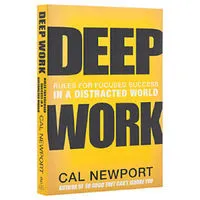
Prices are valid at publication and may change. Please refer to the product page for the latest price.
Your level of professional autonomy also plays a critical role in determining which strategies will work for you. For instance, a software engineer or a creative writer may have the flexibility to block out four hours of uninterrupted time, whereas a project manager or client-facing consultant in a fast-paced corporate setting might have to remain accessible throughout the day. If your workplace culture demands rapid responses on platforms like Microsoft Teams or WhatsApp, attempting to implement extreme isolation strategies without adjusting for these constraints will only lead to professional friction.
Finally, you must identify where your focus breaks down in the productivity cycle. Do you struggle to initiate difficult tasks, frequently procrastinating before you even begin? Or do you find it easy to start but difficult to sustain attention for more than fifteen minutes without checking your phone? Alternatively, you might have no trouble focusing but find yourself dedicating deep attention to low-value tasks while high-priority projects languish. Pinpointing this exact friction point allows you to bypass irrelevant advice and focus on books that offer targeted solutions.
Core Themes to Explore When Seeking Deep Work Alternatives
Rather than relying on rigid, subjective rankings of popular business books, it is far more practical to categorize focus and productivity literature by the core problems they solve. Authors approach the challenges of the modern attention economy from various angles, including behavioral psychology, philosophical inquiry, and tactical time management.

By understanding these distinct thematic categories, you can make an informed decision about which book will deliver the highest return on your reading time. If your primary struggle is digital distraction, you require a different set of tools than someone whose main challenge is saying no to administrative overhead.
Digital Minimalism and Attention Management
For professionals who find themselves constantly overwhelmed by digital devices, endless email threads, and the psychological pull of social media, books focusing on digital minimalism and attention management are highly relevant. This category addresses the phenomenon of attention residue—the cognitive lag that occurs when you rapidly switch between tasks, leaving a portion of your focus stuck on the previous activity.
Literature in this space explores how modern technology platforms are engineered to exploit human psychology through variable rewards, creating an addictive loop of checking and scrolling. To counter this, authors often advocate for structured digital declutters, the establishment of strict communication boundaries, and methods for managing the internal triggers that drive us to seek distraction. Non-exhaustive examples of this theme include Cal Newport’s own Digital Minimalism, which provides a philosophical framework for technology use, and Nir Eyal’s Indistractable, which offers practical strategies for identifying and disarming the internal discomforts that lead to digital distraction.
Habit Formation and Routine Building
If your primary struggle is initiating deep work or maintaining a consistent daily routine, books centered on habit formation and behavioral psychology offer the most practical path forward. These works shift the focus away from sheer willpower—which is a finite cognitive resource—and instead emphasize the design of your physical and digital environments to make focus the default choice.
Key concepts in this category include habit stacking, where you anchor a new focus routine to an existing daily habit, and identity-based behavior change, which encourages you to view yourself as a focused professional rather than someone trying to focus. By automating the transition into deep work through micro-habits and clear environmental cues, you reduce the friction of starting difficult tasks. Classic, non-exhaustive examples of this theme include James Clear’s Atomic Habits and BJ Fogg’s Tiny Habits, both of which break down the mechanics of human behavior into actionable, repeatable steps.
Essentialism and Priority Filtering
Many professionals struggle with focus not because they are easily distracted by smartphones, but because they are overwhelmed by an excessive volume of work. If you find yourself constantly busy yet feeling unproductive, your bottleneck is likely task prioritization rather than attention management.
Books in this category focus on the concept of opportunity cost, teaching readers how to ruthlessly filter commitments and protect their time for high-value activities. This literature emphasizes the art of saying no to good opportunities so you can say yes to truly great ones, helping you distinguish between actual high-impact work and “pseudo-work” that merely mimics productivity. Greg McKeown’s Essentialism: The Disciplined Pursuit of Less is a prominent example of this theme, offering a systematic discipline for discerning what is absolutely essential and eliminating everything else.
Pre-Purchase Checklist: Evaluating Editions, Formats, and Context
Before purchasing any productivity book, it is essential to evaluate the specific edition, format, and context to ensure it aligns with your practical needs. First, verify the publication date and edition of the book. The digital landscape changes rapidly; a book written before the widespread adoption of hybrid work models and instant messaging platforms may offer advice that feels outdated or impractical for today’s hyper-connected professional environments. Look for revised editions or newer titles that explicitly address modern workplace communication norms.
Second, carefully consider the medium through which you will consume the book. Audiobooks are highly convenient for commutes on public transport or during daily exercise, but they can make active note-taking and referencing specific frameworks difficult. Physical books and e-ink readers, by contrast, are excellent for deep, active reading, allowing you to highlight key passages, write notes in the margins, and easily flip back to reference diagrams. Furthermore, reading a physical book or using a dedicated e-ink device helps minimize screen fatigue and eliminates the risk of notification interruptions that come with reading on a smartphone or tablet.
Third, check the book’s availability, regional shipping constraints, and local pricing. If you prefer physical copies, verify whether the title is stocked at local bookstores or if you will need to order it through an online marketplace, which may incur international shipping fees and longer delivery times. Additionally, consider whether the author’s professional context matches your own. A book written by a freelance creative may offer strategies that are difficult to apply if you work in a highly structured, corporate environment with strict reporting lines.
Translating Book Concepts Into an Actionable Deep Work Plan
Reading a productivity book provides a temporary boost of motivation, but long-term improvement requires translating theoretical concepts into an actionable, iterative plan. When implementing a new focus strategy, establish a controlled testing period of at least two to three weeks. It is natural to experience initial friction and discomfort when changing your working habits; abandoning a method after only a few days prevents you from experiencing its cumulative benefits.
To objectively measure your progress, define clear, personal focus metrics rather than relying on subjective feelings of productivity. For example, track the number of uninterrupted ninety-minute focus blocks you successfully complete each week, or monitor the daily reduction in your screen time. These tangible metrics provide clear evidence of whether a specific strategy is working for you.
At the same time, it is crucial to establish clear stopping conditions. If a book’s methodology fundamentally conflicts with your mandatory workplace collaboration requirements—such as requiring you to go completely offline for days at a time when your role demands daily client contact—you must adapt or discard that specific advice. The goal is to build a sustainable system that enhances your professional output without causing unnecessary friction with your team or clients.
Frequently Asked Questions (FAQ)
Is it better to read productivity books in physical or digital formats?
Choosing between physical and digital formats depends on your susceptibility to distraction and your reading habits. Physical books offer a tactile experience that encourages active engagement, and they carry zero risk of digital notifications interrupting your flow. If you prefer digital reading for its portability, dedicated e-ink devices are an excellent middle ground. They allow you to carry an entire library without the constant temptation of web browsers, social media apps, and instant messaging notifications that are present on standard tablets and smartphones.
How long should I practice a new focus strategy before deciding it doesn't work?
You should generally commit to practicing a new focus strategy for at least twenty-one days before evaluating its effectiveness. This timeframe allows you to move past the initial phase of discomfort and adapt to the behavioral shift. During this testing period, focus on adjusting minor variables—such as the length of your time blocks, the time of day you schedule deep work, or your physical workspace setup—before deciding that the core philosophy of the book is fundamentally incompatible with your professional role.
Community discussion
Share your experience or ask a question. Comments are reviewed before publication.