
When Freakonomics first hit bookshelves, it transformed how millions of readers viewed the world. By stripping away the dry equations of traditional macroeconomics and replacing them with provocative questions—such as what schoolteachers and sumo wrestlers have in common—it proved that economic principles govern our most mundane decisions. If you have finished that eye-opening journey and are looking to expand your library, you are likely searching for books that share this same intellectual DNA. The best alternatives do not just teach economics; they provide a new lens to decode human behavior, incentives, and the hidden structures of daily life.
How We Selected the Best Freakonomics Alternatives
The primary appeal of Freakonomics lies in its ability to apply microeconomic theory and behavioral science to unexpected, real-world phenomena. Instead of analyzing interest rates or gross domestic product, it looks at incentives, information asymmetry, and the unintended consequences of human choices. To curate this selection of alternative titles, we established rigorous criteria based on these same foundational pillars.
First, each recommended book must rely heavily on empirical data or real-world case studies rather than abstract, untested theories. Second, the writing must remain highly accessible to non-academic readers, avoiding dense mathematical proofs in favor of engaging narrative storytelling. Finally, the selection focuses on microeconomics and behavioral economics—the fields that directly explain individual decision-making. This guide is tailored for curious general readers, students seeking practical context for their studies, and professionals looking to build a robust behavioral economics library. You do not need a background in advanced mathematics to appreciate these insights; a curious mind is the only prerequisite.
Products mentioned in this guide
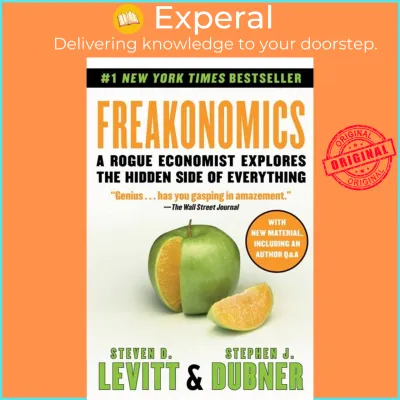
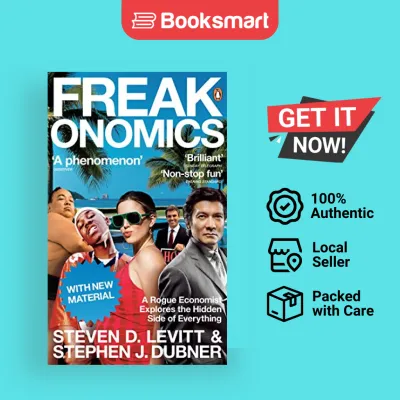
![EBOOK Freakonomics [Full Version]](https://img.lazcdn.com/g/p/d824522efc36fdcc67f2b18a9481445e.jpg_400x400q80.jpg_.webp)
Prices are valid at publication and may change. Please refer to the product page for the latest price.
Top Book Recommendations for Everyday Economics
Navigating the vast landscape of popular economics can be overwhelming, as books often range from dense academic texts to overly simplified self-help guides. The following curated selection represents the standard of accessible economics and behavioral science literature. Each of these books offers a distinct entry point into understanding the hidden forces that shape our societies, markets, and individual minds.

To help you choose the right addition to your bookshelf or digital library, we have broken down each recommendation by its core concept, why it aligns with the Freakonomics philosophy, and who will benefit most from reading it. Additionally, we have included essential pre-purchase checks for each title to ensure you secure the correct edition, format, and layout for your preferred reading device.
Thinking, Fast and Slow by Daniel Kahneman
Core Concept: Daniel Kahneman, a Nobel laureate in Economics, details the dual-system framework that governs human thought. System 1 operates automatically, quickly, and with little or no effort, relying on intuition and heuristics. System 2 allocates attention to the effortful mental operations that demand it, representing slow, deliberate, and logical thinking. The book explores how our reliance on System 1 leads to systematic cognitive biases, such as anchoring, loss aversion, and the availability heuristic, which directly disrupt classical economic models of rational decision-making.
Why It Fits: While Freakonomics showcases the quirky outcomes of human incentives, Thinking, Fast and Slow explains the underlying cognitive machinery that drives those outcomes. It challenges the traditional economic assumption of the “rational actor” by demonstrating, through decades of psychological experiments, that humans are systematically biased and predictably irrational.
Target Audience: This book is ideal for readers who want to explore the deep psychological roots of human judgment and economic choices. It is significantly denser and more academic than Freakonomics, making it perfect for those who appreciate a rigorous, intellectually demanding exploration of behavioral science.
Pre-Purchase Checks: Before purchasing, verify the edition to ensure you are receiving the complete text, as some international prints may feature different forewords or introductory essays. If you prefer the audiobook format, verify whether the publisher provides a supplementary PDF containing the essential charts and visual diagrams used to illustrate Kahneman’s cognitive experiments. Some e-reader devices may require manual font scaling to display the book’s structured tables and logical flowcharts clearly.
Predictably Irrational by Dan Ariely
Core Concept: Dan Ariely explores the hidden, systematic forces that drive human decision-making, showing that our irrational behaviors are neither random nor senseless. Through a series of clever and highly relatable experiments, Ariely demonstrates how emotions, social norms, relativity, and expectations consistently lead us to make suboptimal economic choices. He covers topics such as the peculiar power of “free” items, the decoy effect in consumer pricing, and the conflict between social norms (doing a favor) and market norms (working for wages).
Why It Fits: This title shares the exact narrative energy and experiment-driven storytelling style of Freakonomics. Ariely focuses on highly familiar, everyday scenarios—such as ordering food at a restaurant, buying a cup of coffee, or navigating workplace motivation—and reveals the hidden behavioral traps that influence our wallets.
Target Audience: It is highly suited for readers looking for a fast-paced, engaging, and practical introduction to behavioral economics. Marketers, entrepreneurs, and anyone interested in personal finance will find immediate, actionable applications within its pages.
Pre-Purchase Checks: When shopping, look specifically for the “Revised and Expanded Edition,” which contains additional chapters on personal and political dishonesty, along with updated experimental findings. For digital e-book formats, download a sample first to verify that your e-reader correctly renders the experimental diagrams and formatting of the quiz questions scattered throughout the text.
Nudge by Richard H. Thaler and Cass R. Sunstein
Core Concept: This book introduces the concept of “choice architecture” and how subtle changes in the way choices are presented can significantly influence human behavior. Richard Thaler, another Nobel laureate, and Cass Sunstein argue for “libertarian paternalism”—the idea that institutions can actively nudge people toward better decisions regarding health, wealth, and retirement without restricting their freedom of choice. Examples include changing the default option for retirement savings from opt-in to opt-out, which dramatically increases participation rates.
Why It Fits: While Freakonomics looks at how individuals react to existing incentives, Nudge demonstrates how those incentives and environments can be intentionally designed to produce better social and economic outcomes. It bridges the gap between individual micro-decisions and macro-level public policy.
Target Audience: This text is highly recommended for readers interested in public policy, urban planning, corporate management, and product design. It is perfect for anyone who wants to understand how the architecture of our environments shapes our daily habits.
Pre-Purchase Checks: It is highly recommended to seek out the “Final Edition” (often subtitled The Final Edition), which was extensively updated to include modern research, responses to critics, and new chapters on digital nudging. Digital audiobook listeners should verify regional availability, as licensing restrictions can sometimes limit access to specific narrations depending on your geographical location.
The Undercover Economist by Tim Harford
Core Concept: Tim Harford acts as an economic detective, using core microeconomic principles to explain the hidden logic behind everyday market behaviors. He explains why coffee shops charge premium prices for coffee in busy transit hubs (the power of location-based scarcity), how supermarkets use price discrimination to target different customer segments, and why buying a used car is notoriously risky due to asymmetric information.
Why It Fits: This book is perhaps the closest direct parallel to Freakonomics in terms of tone and structure. Harford takes mundane observations that we take for granted and systematically peels back the layers to reveal the elegant, sometimes ruthless, economic mechanics operating beneath the surface.
Target Audience: It is perfect for readers who want a lightweight, highly entertaining, and practical introduction to market economics. It serves as an excellent starting point for those who want to understand how businesses price their products and how markets function in daily life.
Pre-Purchase Checks: Check the publication date of the copy you are purchasing, as some older editions contain economic examples from the early 2000s that have since been updated in newer prints. If purchasing the audiobook, listen to the sample to verify that the narrator’s pacing and tone match your listening preferences, and confirm that the audio file is fully compatible with your playback device.
Naked Economics by Charles Wheelan
Core Concept: Charles Wheelan strips away the complex mathematical equations, dense jargon, and dry academic charts to deliver a highly intuitive primer on how the modern economy works. The book covers both microeconomics and macroeconomics, explaining essential concepts such as incentives, utility maximization, negative externalities (such as pollution), the role of government, human capital, and the mechanics of global trade.
Why It Fits: Although broader in scope than the micro-focused Freakonomics, Wheelan’s book shares the absolute commitment to making economics engaging, humorous, and highly relevant to everyday life. It uses memorable anecdotes—like why it is difficult to buy a good used car or how global trade benefits developing nations—to explain complex systemic issues.
Target Audience: This is the ultimate guide for absolute beginners who want a complete, foundational understanding of economics without the dry textbook feel. It is highly recommended for students preparing for introductory courses or citizens who want to better understand economic policy debates.
Pre-Purchase Checks: Ensure you are purchasing the fully revised and updated edition, which includes critical context regarding the post-2008 financial crisis, modern monetary policy, and digital currencies. If reading on an e-reader, verify that the device displays the bulleted summaries and conceptual charts without breaking the text flow.
Quick Comparison: Which Book Should You Read First?
To help you decide which book best aligns with your current reading goals and preferences, we have compiled a comparative overview of these top recommendations. Use this table to match your specific interests—whether you are drawn to cognitive psychology, market mechanics, or public policy—with the appropriate reading difficulty and optimal format.
| Book Title | Primary Focus | Reading Difficulty | Best Format for Commuters |
|---|---|---|---|
| Thinking, Fast and Slow | Behavioral Psychology | Moderate to High | E-book (for highlighting key concepts) |
| Predictably Irrational | Behavioral Economics | Accessible | Audiobook (engaging narrative style) |
| Nudge | Policy Design & Choice Architecture | Moderate | Physical (excellent for reference) |
| The Undercover Economist | Market Mechanics | Accessible | Audiobook (conversational and fast-paced) |
| Naked Economics | General Economic Principles | Accessible | Physical or E-book (structured chapters) |
When selecting your first book from this list, consider how much time you can dedicate to dense concepts. If you want a quick, highly engaging read, starting with Predictably Irrational or The Undercover Economist is highly recommended. If you are prepared for a deeper, more academic exploration of cognitive biases, Thinking, Fast and Slow remains the definitive masterpiece in the field.
Tips for Buying and Reading Economics Books in Singapore
Sourcing the right edition of these popular economics titles in Singapore requires a bit of planning to ensure you get the best value and the most complete content. If you prefer the tactile experience of browsing physical books, major local brick-and-mortar bookstores such as Books Kinokuniya (especially the main outlet at Ngee Ann City) or Popular Bookstore frequently stock these foundational titles in their business and social sciences sections. Physical books offer a distinct advantage for titles like Thinking, Fast and Slow or Nudge, as they allow you to easily flip back and forth to consult footnotes, charts, and experimental diagrams.
For those who prefer digital formats, audiobooks are highly convenient for daily commutes on Singapore’s MRT or bus networks. However, before purchasing digital audiobooks or e-books from international e-commerce platforms, always verify the regional licensing restrictions associated with your account. Some digital storefronts restrict access to specific translations or narrations based on your IP address or billing address.
Additionally, always perform a thorough pre-purchase verification of the book’s metadata. Check that the seller is offering the authorized English language edition and verify the publication year. As behavioral science and economics evolve rapidly, securing the most recently updated edition is crucial for obtaining accurate data, corrected charts, and contemporary case studies that reflect our modern economic landscape.
Frequently Asked Questions (FAQ)
Is Freakonomics considered a behavioral economics book?
Yes, Freakonomics is widely considered a gateway to popular behavioral economics, though it technically sits at the intersection of microeconomics and sociology. While traditional economics assumes that humans always act as rational, utility-maximizing agents, Freakonomics focuses on how people actually respond to real-world incentives, which often leads to unexpected or seemingly irrational behaviors. This focus on real-world human behavior rather than abstract mathematical models aligns it closely with the core principles of behavioral economics.
What is the easiest book to read if I have no economics background?
If you have no prior background in economics, the most accessible starting points are Predictably Irrational by Dan Ariely or The Undercover Economist by Tim Harford. Both books feature highly conversational writing styles, short chapters, and a reliance on relatable, everyday anecdotes rather than dense academic theories or mathematical equations. They are designed to be immediately engaging and require no prior knowledge of economic principles to fully enjoy and understand.
Community discussion
Share your experience or ask a question. Comments are reviewed before publication.