
Building your first guitar pedalboard is an exciting milestone, but connecting your effects requires reliable patch cables that preserve your tone without draining your wallet. For beginner guitarists in Singapore, navigating the sheer volume of cable options can be overwhelming. The key is finding a balance between physical durability, signal clarity, and cost-effectiveness. By understanding basic cable specifications and knowing how to allocate your budget, you can assemble a clean, quiet, and reliable pedalboard that performs beautifully in both home practice spaces and local rehearsal studios.
Decoding Patch Cable Specs: What Actually Matters
Connector profiles play a massive role in how efficiently you can use your pedalboard space. Right-angle connectors are the standard for pedalboards because they allow pedals to sit closely together. Flat or “pancake” style right-angle plugs are particularly popular because they minimize the gap between adjacent pedals, saving valuable board real estate. Straight connectors are rarely used on a pedalboard unless you are connecting to a pedal with top-mounted jacks that sit higher than the surrounding inputs.
Cable capacitance is another critical specification to understand, as it directly impacts your high-frequency tone. Every cable acts as a tiny capacitor, storing and releasing electrical charge as the signal passes through. High capacitance rolls off the high frequencies of your guitar signal, resulting in a muddy or “dark” tone, often referred to as “tone suck.” While premium cables boast ultra-low capacitance, a beginner with a short signal chain of three to five pedals will rarely notice a difference. Keeping your overall cable runs short is the most effective way to prevent high-frequency loss on a budget.
Products mentioned in this guide
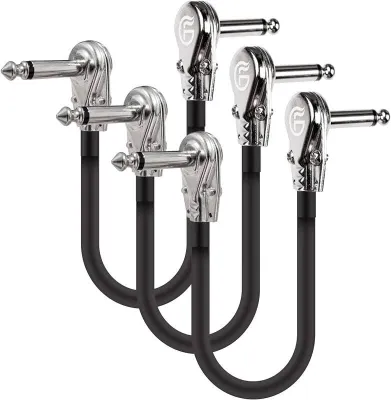
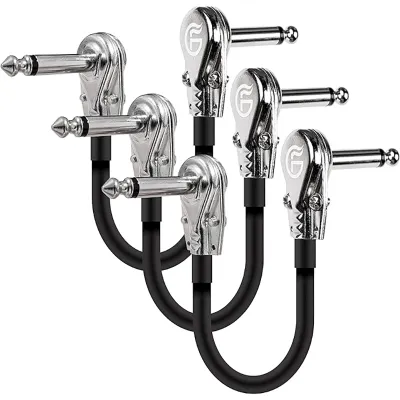
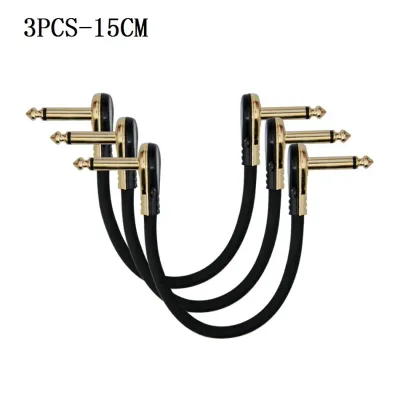
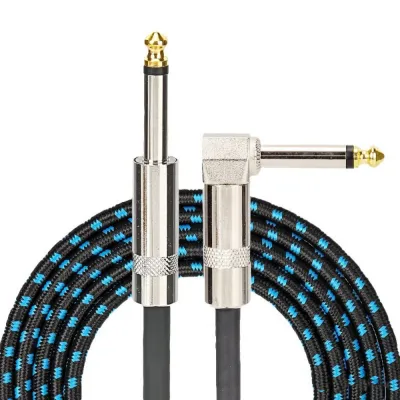
Prices are valid at publication and may change. Please refer to the product page for the latest price.
Shielding protects your audio signal from electromagnetic interference (EMI) and radio frequency interference (RFI). In typical Singapore home environments, such as HDB apartments filled with Wi-Fi routers, mobile devices, and household appliances, good shielding is essential to prevent unwanted hum. Spiral shielding is highly flexible and cost-effective, making it excellent for tight pedalboard layouts. Braided shielding offers superior coverage and durability but is stiffer and more expensive. For most beginners, a well-made spiral shield provides more than enough protection against interference.
Allocating Your Pedalboard Budget Wisely
When planning your first pedalboard, it is easy to spend all your money on the pedals themselves, leaving cables as an afterthought. A practical rule of thumb is to allocate approximately 10% to 15% of your total pedalboard budget to connectivity. If your pedals and power supply cost S$400, spending around S$40 to S$60 on a set of reliable patch cables ensures you will not bottleneck your signal quality with cheap, unreliable links.

You must also choose between pre-made multi-packs and DIY solderless kits. Pre-made multi-packs of three or six cables are highly cost-effective and ready to use out of the box, making them the ideal starting point for beginners. DIY solderless kits allow you to cut cables to the exact length you need, creating an incredibly neat board, but they carry a higher upfront cost for the bulk cable, specialized connectors, and cutting tools. For a first board, starting with pre-made cables is generally the more sensible financial decision.
Do not forget to factor in hidden costs when ordering online. Many budget-friendly cable brands are shipped from overseas warehouses. Always verify international shipping fees to Singapore and check if your total purchase exceeds local tax thresholds, as import duties or goods and services tax (GST) can quickly turn a budget purchase into an expensive one.
Essential Features vs. Premium Upgrades
To get the best value, you must distinguish between mandatory structural features and premium upgrades that offer diminishing returns. The absolute must-have feature for any patch cable is robust strain relief. The point where the flexible cable meets the rigid metal connector is the most common failure zone. Look for molded boots or heat-shrink tubing that prevents the cable from bending too sharply at this junction.
On the other hand, premium upgrades like gold-plated plugs or oxygen-free copper (OFC) cores are often marketed as essential, but their practical benefits are minimal for beginners. Gold plating resists corrosion, which is helpful in Singapore’s humid climate, but standard nickel-plated connectors are highly durable and perform perfectly well if kept clean. Similarly, while ultra-low capacitance specs sound impressive on paper, the difference is virtually imperceptible in a standard home practice setup.
When evaluating budget cables online, pay close attention to jacket materials. A highly flexible PVC jacket allows you to route cables around tight corners without putting stress on your pedal jacks. Stiff, rigid cables are difficult to manage and can pull on your pedals, potentially damaging the input and output sockets over time. Read user reviews to verify if a cable is supple and easy to bend.
Where to Shop: Local Stores vs. E-Commerce Platforms
Sourcing your cables involves choosing between local music shops and online marketplaces. Visiting physical stores in Singapore, such as those located in Peninsula Shopping Centre or Bras Basah Complex, allows you to handle the cables in person. You can assess their flexibility, inspect the build quality of the connectors, and get immediate advice from experienced shop staff. Furthermore, buying locally means you can start building your board the very same day.
Online marketplaces offer a much wider selection and often lower prices, but they require extra vigilance. Watch out for red flags in product listings, such as unbranded “generic” cables, missing technical specifications, or prices that seem too good to be true. Extremely cheap cables often use thin copper conductors and poor shielding, leading to excessive noise and early failure.
Before finalizing any online purchase, always check the seller’s return policy and warranty terms. A reputable brand or seller will offer a clear return window if a cable arrives defective. If you buy from an overseas seller with no clear return policy, you may end up stuck with a non-functional cable and no easy way to get a refund or replacement.
Maintaining Your Cables and Spotting Failures
Proper care can dramatically extend the lifespan of even the most budget-friendly patch cables. When storing loose cables, never wrap them tightly around your hand or elbow, as this twists the internal copper conductors and causes premature failure. Instead, use the “over-under” coiling method, which follows the natural coil of the wire. Secure the coiled cables with hook-and-loop ties rather than tight plastic bands.
Regularly inspect your pedalboard for signs of cable degradation. Auditory clues include crackling sounds when you step on a pedal, intermittent signal loss, or a sudden drop in volume and high-end clarity. Visually check for physical wear, such as cuts in the outer jacket, exposed shielding, or loose connector casings that wiggle when touched.
If a cable begins to fail, stop using it immediately. Continuing to use a faulty cable can introduce loud pops that could damage your amplifier speaker or create frustrating troubleshooting sessions during a practice session. If you are handy with a soldering iron, you can often repair a loose connection yourself; otherwise, it is safest to replace the damaged cable entirely to maintain a reliable signal chain.
Frequently Asked Questions (FAQ)
Are Gold-Plated Connectors Necessary for Beginners?
No, gold-plated connectors are not strictly necessary for beginners. While gold does not oxidize, making it highly resistant to corrosion in Singapore’s humid climate, standard nickel or brass connectors are incredibly durable and offer excellent conductivity. As long as you keep your gear in a dry, climate-controlled indoor environment and occasionally wipe down the plugs, standard connectors will perform reliably for years without any signal degradation.
Can Standard Instrument Cables Replace Patch Cables?
While standard instrument cables will technically carry the signal between your pedals, they are highly impractical for a pedalboard. Standard cables are much longer, thicker, and heavier, which creates immense physical clutter and increases the risk of tripping. Furthermore, using several long cables significantly increases the total capacitance of your signal chain, leading to noticeable high-frequency tone loss and a muddy overall sound.
Are Solderless DIY Kits Worth It for a First Board?
For most beginners, solderless DIY kits are not worth the initial investment. While they allow you to customize your cable lengths for a perfectly neat board, they require precise cutting and assembly. If the cable is not cut perfectly square or the connector is not tightened correctly, you will experience intermittent signal loss or complete failure. Pre-made budget patch cables are far more reliable, cost-effective, and user-friendly for your very first setup.
Community discussion
Share your experience or ask a question. Comments are reviewed before publication.