
Readers drawn to the pragmatic, analytical, and often uncompromising view of human behavior in Robert Greene’s work typically seek books that demystify the hidden mechanics of influence, strategy, and organizational dynamics. To expand your reading list, look for books that bridge historical statecraft, modern corporate politics, and behavioral psychology. The key is finding texts that offer actionable frameworks for navigating complex hierarchies, managing competing interests, and understanding the underlying motives of others, rather than relying on idealized business theories.
By shifting focus from simple management checklists to deep strategic thinking, you can develop a more sophisticated approach to career advancement and organizational leadership. This guide outlines how to evaluate and select your next strategy book, categorizes the essential reading paths, and provides a conditional framework to help you match your selection to your current professional objectives.
How to Choose Your Next Strategy Book
Selecting a follow-up to a highly specific text requires a structured evaluation framework. First, assess the thematic focus of the book. Are you looking for macro-level historical statecraft, modern corporate politics, or the micro-level behavioral psychology of negotiation? Each category serves a different professional need. Historical texts offer broad, timeless principles of power but require significant translation to apply to modern office environments. Corporate politics books address immediate, day-to-day workplace dynamics, while behavioral psychology provides empirical tools for individual persuasion.
Products mentioned in this guide



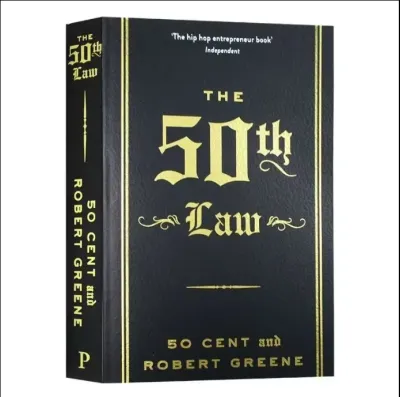


Prices are valid at publication and may change. Please refer to the product page for the latest price.
Next, verify the author’s background. An academic researcher offers data-driven, peer-reviewed frameworks that provide high reliability but may lack immediate tactical utility. Conversely, an executive or practitioner shares battle-tested insights from the field, though these can sometimes be limited by personal bias or specific industry contexts. Historical analysts provide objective distance, helping you see patterns across centuries, but their work requires you to do the heavy lifting of modern translation.
Finally, check the publication context. A book written during a period of rapid industrial expansion or geopolitical tension will carry different assumptions than one written in the digital era. Understanding when and why a book was written helps you gauge its applicability to your current business environment. For instance, older corporate strategy books might assume rigid, top-down hierarchies, whereas modern texts often address matrix organizations and decentralized influence.
Core Themes and Reading Paths
To build a balanced strategic mindset, it is helpful to categorize your reading into distinct thematic paths. This structured approach ensures you do not rely on a single perspective of power and influence, allowing you to synthesize historical wisdom with modern empirical science.

Historical Strategy and Statecraft
Historical strategy books extract macro-level principles from military campaigns, political shifts, and classical statecraft. These texts, which include ancient treatises and historical biographies, analyze how leaders consolidated authority, managed alliances, and navigated existential threats. The primary value of this genre lies in its high-level perspective, teaching you to think several moves ahead and view organizational challenges through a long-term lens.
When reading modern interpretations of classical texts, look for authors who provide rigorous analytical breakdowns of decision-making processes. These analyses should explain not just what a historical figure did, but the environmental constraints and psychological factors that influenced their choices. This depth helps you move beyond superficial historical anecdotes to understand the underlying strategic logic.
However, you must recognize the limitations of directly applying historical statecraft to modern corporate structures. A medieval battlefield or a Renaissance court operates under vastly different ethical, legal, and social rules than a modern multinational corporation. Attempting to apply ancient military tactics literally in a corporate boardroom can lead to severe reputational damage and organizational friction. The goal is to adapt the abstract strategic principles—such as resource conservation, information asymmetry, and alliance building—rather than the literal methods.
Corporate Politics and Organizational Influence
For immediate workplace application, books focusing on corporate politics and organizational influence are indispensable. These resources demystify the informal power structures that exist alongside official organizational charts. They address how decisions are actually made behind closed doors, how coalitions are formed, and how to manage relationships with key stakeholders, peers, and direct reports.
Look for frameworks that address office politics, alliance building, and upward management. A valuable text in this category will offer practical advice on reading an organization’s cultural landscape, identifying informal influencers, and presenting ideas in a way that aligns with the self-interest of decision-makers. It should help you navigate the delicate balance of being cooperative while protecting your professional boundaries and career trajectory.
A critical distinction to maintain when reading this literature is the line between ethical influence and manipulative tactics. While some books may lean into Machiavellian maneuvers, sustainable professional success in modern business environments relies heavily on trust, transparency, and mutual benefit. Focus on strategies that emphasize win-win scenarios, constructive alliance building, and organizational alignment, rather than zero-sum games that can destroy long-term professional relationships.
Behavioral Economics and Negotiation Tactics
If you want to understand the micro-dynamics of influence, turn to behavioral economics and negotiation tactics. This field moves away from historical anecdotes and corporate folklore, relying instead on empirical research into human cognitive biases, decision-making processes, and game theory. It explains why people make irrational choices and how you can structure choices to guide outcomes.
Prioritize books that offer actionable frameworks for high-stakes negotiations and daily persuasion. These texts should teach you how to read non-verbal cues, manage emotional dynamics, and use tactical empathy to uncover the true motivations of your counterpart. By understanding cognitive biases—such as loss aversion, anchoring, and status quo bias—you can design negotiation strategies that minimize resistance and facilitate agreement.
Furthermore, understanding these psychological mechanisms is essential for strategic planning and competitive advantage. It allows you to anticipate how competitors, clients, and team members are likely to react under pressure. This predictive capability is a powerful tool, enabling you to mitigate risks and capitalize on market opportunities before others recognize them.
Evaluating Book Formats and Editions
Before purchasing any strategy or business book, it is essential to verify the specific edition, language, and format to ensure you receive the most relevant and complete content. Many classic strategy texts exist in multiple translations and editions, some of which may be heavily abridged or lack critical commentary.
Always verify the publication year and edition details. For modern business books, check if the author has released an updated edition that includes contemporary case studies, as older examples may no longer be relevant to today’s digital economy. For historical or translated works, research the translator’s credentials and read the introduction to ensure the translation is accurate and preserves the original strategic nuances. Some editions also include valuable annotations that contextualize ancient terms for modern readers.
Compare formats based on your learning style and lifestyle. Audiobooks are excellent for absorbing high-level concepts during a commute, but they can make it difficult to reference specific frameworks or take detailed notes. E-books offer searchability and portability, making them ideal for quick reference. However, physical books remain highly valued by serious students of strategy, as they allow for active reading practices such as margin annotation, highlighting, and physical bookmarking of key diagrams or tables.
Finally, confirm regional availability and licensing. When purchasing from online marketplaces or digital platforms, ensure the edition you select is authorized for your region to avoid compatibility issues with e-readers or missing content. Some regional editions may also feature localized case studies or forewords that add valuable context for your specific market. Budgeting S$25 to S$60 for premium hardcovers or annotated translations is a reasonable expectation when building a high-quality reference library.
Building Your Condition-Based Reading Shortlist
To maximize the return on your reading time, tailor your book selection to your current career stage and immediate professional objectives. Rather than reading strategy books at random, use a conditional framework to match your specific challenges with the right strategic literature.
For professionals navigating the fast-paced corporate landscape of multinational hubs like Singapore, where cross-cultural communication and matrixed organizational structures are the norm, selecting the right strategic literature is crucial.
For startup founders and corporate executives, the primary challenges are survival, resource allocation, and competitive positioning. Your reading should focus on macro-strategy, game theory, and market disruption. Look for books that analyze how resource-constrained organizations can outmaneuver larger competitors, how to manage high-stakes risk, and how to build defensible market positions. The strategic focus here is on external competition and long-term organizational viability.
For mid-level managers, the challenge shifts to navigating internal complexity, managing upward, and building cross-departmental coalitions. Your reading should prioritize corporate politics, organizational psychology, and lateral influence. Focus on texts that offer frameworks for breaking down departmental silos, managing competing internal interests, and driving initiatives forward without formal authority. Understanding how to build alliances and manage reputation is critical at this stage.
For sales professionals, procurement specialists, and negotiators, the focus is on interpersonal dynamics and persuasion science. Your reading list should be dominated by behavioral economics, tactical negotiation, and cognitive psychology. Seek out books that provide structured methodologies for high-stakes conversations, uncovering hidden leverage, and managing emotional tension under pressure.
Before finalizing your purchase, always cross-reference recent reader reviews and verify the table of contents of the latest edition. This step ensures the book’s depth matches your expectations and that the case studies are still relevant to your professional context.
Frequently Asked Questions (FAQ)
Are these books suitable for beginners in business strategy?
Yes, but the approach should be deliberate. Beginners should start with modern, highly structured business strategy texts that define core terminology and frameworks clearly before moving on to dense historical statecraft or complex behavioral economics. Starting with a book that requires heavy translation to be useful can lead to frustration or misapplication of concepts. Look for introductory texts that balance theory with clear, modern case studies to build a foundational understanding of strategic principles.
How can I apply historical power laws to modern corporate environments?
Applying historical power laws requires a process of abstract translation rather than literal imitation. When reading about historical conflicts or court intrigues, identify the core strategic dynamic at play—such as managing information flow, conserving resources, or building defensive alliances. Once you have isolated the abstract principle, look for its modern corporate equivalent. For example, a historical siege can be translated into a long-term market entry strategy, while courtly alliances map closely to cross-functional steering committees in a modern corporation. Always filter these strategies through modern ethical standards and your organization’s specific code of conduct.
Community discussion
Share your experience or ask a question. Comments are reviewed before publication.